Showing posts from category community-based.
-
Watch: Janani Vivekananda on Climate Change and Stability in Fragile States
›At International Alert, the starting point for thinking about how climate change affects stability is recognizing that climate change will interact with and amplify existing social, economic, and political stressors in fragile communities, said Janani Vivekananda in this interview with the ECSP.
“Rather than climate change being this single, direct causal factor which will spark conflict at the national level,” Vivekananda said, these stressors “will shift the tipping point at which conflict might ignite.” In places that are already weakened by instability and conflict, climate change will simply be an additional challenge.
To address this additional challenge, Vivekananda said two things must be understood about the effects of climate change on fragile states: 1) Environmental, social, economic, and political stressors will be most evident at the household and community level; and 2) Those stressors are interrelated.
“You can’t address one of these things in isolation from the others. You have to understand how they all interact together to be able to respond appropriately,” she said. “We can’t think about food security, for example, without thinking about land degradation.” In addition, responses need to be relevant to their context, and that context “can only be understood through very sub-national, context-specific evidence.” Vivekanada explained that this kind of evidence can only come from a “bottom-up” approach, which should be coordinated as part of a broader effort.
For more on the connections between climate change and stability, see The New Security Beat’s summary of “Connections Between Climate and Stability: Lessons From Asia and Africa,” with Janani Vivekanada, Jeffrey Stark of the Foundation for Environmental Security and Sustainability, and Cynthia Brady of USAID speaking at the Woodrow Wilson Center on May 10. -
Health Development: Providing Free Care and Overcoming Gender-Based Violence
›In The Lancet’s “How Did Sierra Leone Provide Free Health Care?,” author John Donnelly of the Ministerial Leadership Initiative attributes the unanticipated success of a free health care program for women and children in Sierra Leone to good organization, transparency, and a high degree of cooperation between the government, donors, and development partners. One distinctive factor that has contributed to the health system’s turnaround is the unusually high level of political will on the part of President Ernest Bai Koroma, writes Donnelly. Similar to Egypt’s health and population initiatives, Sierra Leone’s marked commitment, accountability, and investment as a host country has contributed highly to the success of its program and triggered further investment from donors. In “Systematic Violence: A Barrier to Achieving the Millennium Development Goals for Women,” from the Journal of Women’s Health, authors Joia S. Mukherjee, Donna J. Barry, Hind Satti, Maxi Raymonville, Sarah Marsh, and Mary Kay Smith-Fawzi assert that the elevation of women is integral to the achievement of the Millennium Development Goals, to which structural violence serves as a significant barrier. Murkherjee et al. recommend community-based programs to combat structural violence and prevent disease, such as the Partners in Health (PIH) program in Haiti. PIH trains community health workers, expands health care as a public good, and bolsters social determinants, which include increasing access to family planning and education, providing compensation for medical workers, and improving health infrastructure.
 -
Environmental Action Plans in Darfur: Improving Resilience, Reducing Vulnerability
›Many villagers in Baaba, a community of 600 in South Darfur, remember a shady forest of mango and guava trees that provided food and a valuable income for the villagers and a pleasant picnic spot for people in Nyala, the nearby state capital. Over the last decade, that forest has degraded into eroded brush dotted by the occasional baobab – a transformation that is unfortunately a familiar sight throughout Darfur.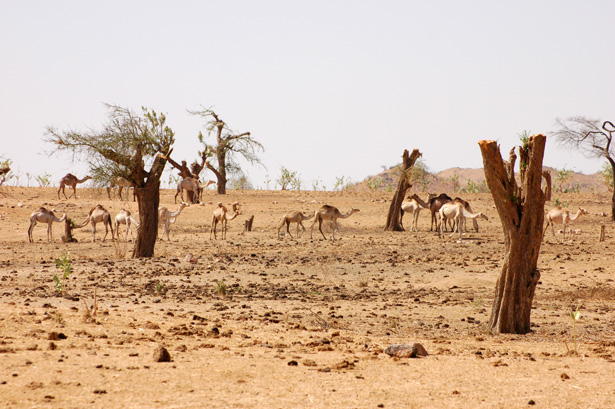
Most of Baaba’s trees have become firewood and charcoal for the people living in nearby internally displaced persons (IDP) camps. Baaba’s residents, who themselves returned from the camps to try to rebuild their lives at home, struggle to coax enough food from the soil, which has largely eroded away following deforestation. Afraid to venture any further than necessary from home for fear of violence and banditry in the countryside, they farm and graze the same land year after year without fallow periods – further depleting the soil and driving yields ever lower.
Baaba is like hundreds of Darfuri villages, which face a brutal mix of insecurity and environmental decline that leaves them one poor harvest away from being forced into the IDP camps. Baaba, however, is also a pilot participant in a new approach – the Community Environmental Action Plan – that aims to rehabilitate the local environment, enable people to sustainably manage natural resources, and ultimately to make communities more prosperous and resilient.
Most of Darfur has always been marginal land where farming and herding provide a meager livelihood and natural resources are few. Even before war broke out in 2003, soaring population growth (total population has quintupled since the 1970s) was putting intolerable pressure on the land, water, and trees of Darfur. The conflict in Darfur has since heavily disrupted traditional methods for sharing and maintaining natural resources, leading to environmental devastation. The worsening effects of climate change – though hard to separate from local environmental depletion – are also beginning to disrupt weather patterns and farming. The disheartening result is that even where fighting has subsided and displaced persons return home, they often find that the land no longer sustains them.
Traditional humanitarian aid and infrastructure projects are ill-suited to help, since persistent insecurity deprives humanitarian actors of access to communities for weeks or months at a time. Environmental decline didn’t start the humanitarian crisis in Darfur, but it threatens to prolong it and put a sustainable peace out of reach.
Community Environmental Action PlansThe International Organization for Migration (IOM), mandated to work on IDP and return issues in Darfur, aimed to address these challenges with Community Environmental Action Plans (CEAPs) in three pilot villages. CEAPs build comprehensive local capacity, enabling communities to manage natural resources sustainably and address environmental problems themselves without relying on outside support. The ultimate goal is to build the resilience and adaptive capacity of vulnerable communities. IOM worked with Baaba and two other villages to implement CEAPs, in partnership with the Swiss-based environmental NGO ProAct, the UN Environment Programme (UNEP), the government of South Darfur, and Darfuri environmental organizations. The project, funded by the Government of Japan, ran from early 2009 until mid-2010.
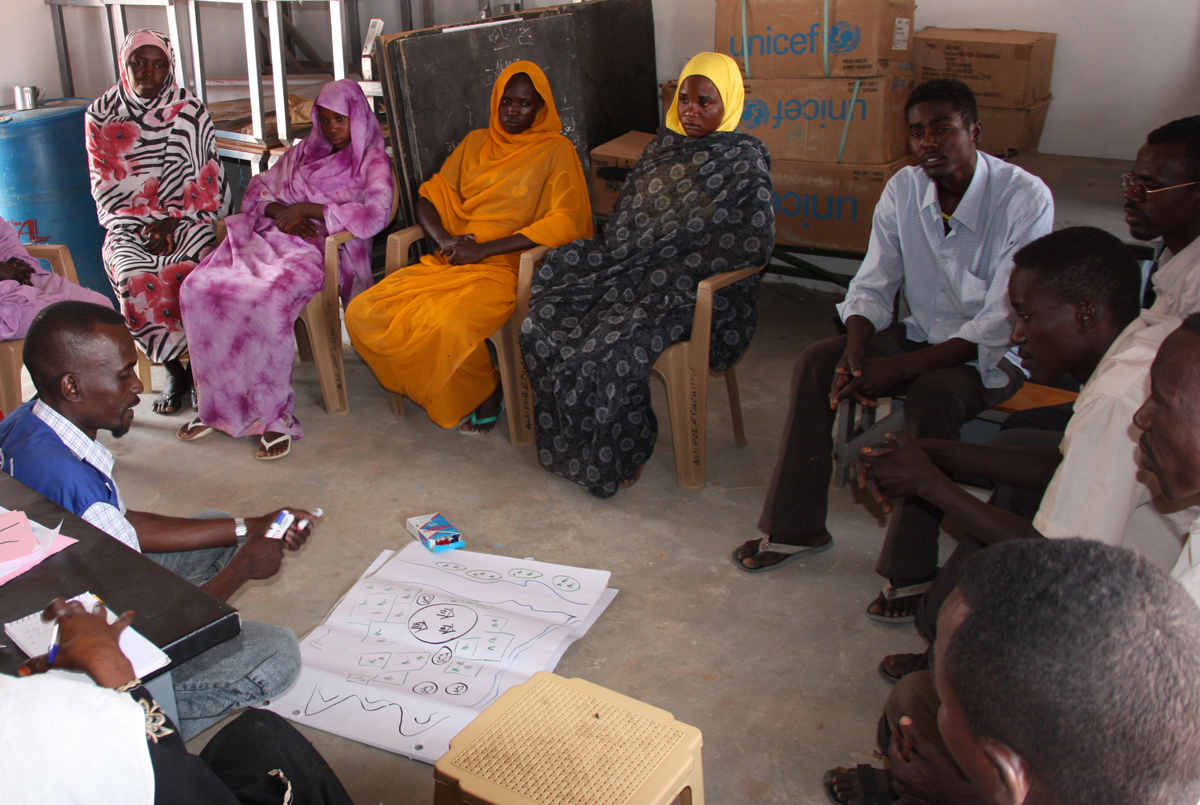
The CEAP process trains communities to understand the connections between a healthy ecosystem and a prosperous community and to promote livelihoods by rehabilitating the environment. Each participating village formed a CEAP governance committee, which was then trained to understand the environment as a single integrated system and to see how damaging one resource like trees can devastate other ecosystem services – such as pollination, groundwater retention, and soil fertility – that enable and promote human livelihoods. The communities then identified essential needs, including reforestation, water harvesting, and improved sanitation, and worked with IOM to develop appropriate responses. These activities were all implemented by the villages themselves, with technical and material support from IOM and its partners.
Building Local Capacity
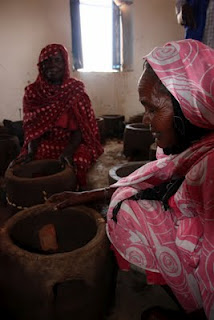
The communities built low-tech but highly productive tree nurseries, producing and planting over 200,000 seedlings to restore damaged land and provide a sustainable wood supply. Local women learned how to make highly fuel-efficient stoves using locally available materials, cutting their need for firewood and allowing them to sell stoves in the nearby Nyala market.Farmers received extensive training in sustainable agriculture techniques, including water harvesting, composting, agro-forestry, and intercropping (mixing complementary plant species together in the same fields). Volunteers were trained in effective hygiene practices and built latrines for each household. Water committees were trained to repair and maintain the villages’ indispensable but fragile water hand pumps, ensuring a more reliable source of drinking water. Each of these activities was governed by a community committee, including women and youth, trained to manage the projects for the benefit of the entire community and continue the work after the project’s end.
Through this approach, all three villages significantly boosted their livelihoods and agricultural productivity while becoming less dependent on the unsustainable exploitation of their fragile environment. The CEAP approach benefits greatly from focusing on capacity-building and local implementation, which fosters a strong sense of community ownership that persists after the project ends. Equally important, CEAPs attempt to address most or all of a community’s environmental issues simultaneously, reducing the risk that neglected environmental problems – particularly agricultural failure – will critically destabilize and displace a community in the future.
A Replicable Model
CEAPs aren’t a panacea, particularly in the conflict-prone areas where they are most needed. Insecurity, particularly a series of abductions of humanitarian workers from several organizations in 2010, cut off IOM’s access to the communities late in the project. Though the core activities were completed by working through local partners with more reliable access, the security situation left few opportunities for follow-up activities. Longer-term threats, particularly unrestrained population growth – which requires a comprehensive approach that includes addressing unmet need for family planning services – could undo much of the good that CEAPs accomplish.
Though insecurity prevented IOM from continuing the project, other organizations including UNEP are implementing and refining the CEAP approach elsewhere in Darfur and other regions in sub-Saharan Africa. As climate changes intensifies and the potential for related conflicts looms, the CEAP approach should be considered as a powerful and flexible tool to rehabilitate the environment and strengthen vulnerable communities.
Paul Rushton is a consultant for the International Organization for Migration, Sudan, and worked as a Programme Officer managing the CEAP projects in South Darfur from 2009 to 2010.
Sources: International Organization for Migration, UN.
Photo Credit: Camels graze in a destroyed and degraded village in Western Darfur, courtesy of UNEP; and pictures from CEAP sites in Southern Darfur, courtesy of Paul Rushton. -
Connections Between Climate and Stability: Lessons From Asia and Africa
›“We, alongside this growing consensus of research institutes, analysts, and security agencies on both sides of the Atlantic, think of climate change as a risk multiplier; as something that will amplify existing social, political, and resource stressors,” said Janani Vivekananda of International Alert, speaking at the Wilson Center on May 10. [Video Below]
Vivekananda, a senior climate policy officer with International Alert’s Peacebuilding Program, was joined by co-presenter Jeffrey Stark, the director of research and studies at the Foundation for Environmental Security and Sustainability (FESS), and discussant Cynthia Brady, senior conflict advisor with USAID’s Office of Conflict Management and Mitigation, to discuss the complex connections between climate change, conflict, stability, and governance.
A Multi-Layered Problem
Climate change and stability represent a “double-headed problem,” said Vivekananda. Climate change, while never the only cause of conflict, can increase its risk in certain contexts. At the same time, “states which are affected by conflict will already have weakened social, economic, and political resilience, which will mean that these states and their governments will find it difficult to address the impacts of climate change on the lives of these communities,” she said.
“In fragile states, the particular challenge is adapting the way we respond to climate change, bearing in mind the specific challenges of operating in a fragile context,” said Vivekananda. Ill-informed intervention programs run the risk of doing more harm than good, she said.
For example, Vivekananda said an agrarian village she visited in Nepal was suffering from an acute water shortage and tried adapting by switching from rice to corn, which is a less water-intensive crop. However, this initiative failed because the villagers lacked the necessary technical knowledge and coordination to make their efforts successful in the long term, and in the short term this effort actually further reduced water supplies and exacerbated deforestation.
“Local responses will only be able to go so far without national-level coordination,” Vivekananda said. What is needed is a “harmony” between so-called “top-down” and “bottom-up” initiatives. “Adapting to these challenges means adapting development assistance,” she said.
“What we’re finding is that the qualities that help a community, or a society, or in fact a government be resilient to climate change are in fact very similar qualities to that which makes a community able to deal with conflict issues without resorting to violence,” said Vivekananda.
No Simple, Surgical Solutions
“The impacts of environmental change and management of natural resources are always embedded in a powerful web of social, economic, political, cultural, and historical factors,” said Stark. “We shouldn’t expect simple, surgical solutions to climate change challenges,” he said.
Uganda and Ethiopia, for example, both have rich pastoralist traditions that are threatened by climate change. Increasing temperatures, drought, infrequent but intense rains, hail, and changes in seasonal patterns are threatening pasture lands and livelihoods.
At the same time, pastoralists are confronting the effects of a rapidly growing population, expanding cultivation, forced migration, shrinking traditional grazing lands, anti-pastoralist attitudes, and ethnic tensions. As a result, “any intervention in relation to climate adaptation – whether for water, or food, or alternative livelihoods – has to be fully understood and explicitly acknowledged as mutually beneficial by all sides,” Stark said. “If it is seen in any way to be favoring one group or another it will just cause conflict, so it is a very difficult and delicate situation.”
Yet, the challenges of climate change, said Stark, can be used “as a way to involve people who feel marginalized, empower their participation…and at the same time address some of the drivers of conflict that exist in the country.”
Case Studies: Addressing the “Missing Middle”
When doing climate change work in fragile states, “you have to think about your do-no-harm parameters,” said Brady. “Where are the opportunities to get additional sustainable development benefit and additional stabilization benefit out of reducing climate change vulnerability?”
More in-depth case studies, such as the work funded by USAID and conducted by FESS in Uganda and Ethiopia, are needed to help fill the “missing middle” between broad, international climate change efforts – like those at the United Nations – and the community level, Brady said.
The information generated from these case studies is being eagerly awaited by USAID’s partners in the Departments of State, Defense, and Treasury, said Brady. “We are all hopeful that there will be some really significant common lessons learned, and that at a minimum, we may draw some common understanding about what climate-sensitive parameters in fragile states might mean.”
Image Credit: “Ethio Somali 1,” courtesy of flickr user aheavens. -
Our Shared Future: Environmental Pathways to Peace
›Download Our Shared Future: Environmental Pathways to Peace from the Wilson Center.
How does globalization affect natural resource issues such as water on local, national, and international levels? Can our common dependence on these stressed resources be a force for bringing people together rather than dividing us? What lessons can we learn from sharing insights from communities at these very different levels of organization?
Pathways to Peace
In January 2010, the Woodrow Wilson International Center for Scholars and the Fetzer Institute invited 22 scholars and practitioners to a two-day seminar to discuss these questions and the deep connection between caring for the environment and caring for community. Pathways to Peace: Defining Community in the Age of Globalization was the second seminar in a three-year initiative to combine scholarship, public policy, and local practice to articulate and support global conflict transformation and reconciliation in communities throughout the world. Examining the effect of environmental peacebuilding on communities, the discussion explored how governments, NGOs, the private sector, and other interested parties can generate positive outcomes while minimizing negative ones.
Participants from Canada, Ecuador, Ethiopia, Israel, Kenya, Nepal, Switzerland, the Philippines, and the United States brought to the table a wide range of experience and expertise from diverse fields, including peacebuilding, community building, health care, economic development, conflict resolution, and foundation management. By convening leaders in environmental peacebuilding and community building, the Wilson Center and the Fetzer Institute drew on a wide range of experience and perspectives related to environment, conflict, and peacebuilding practice and research. The group used water access and peacebuilding case studies as a means to enter into dialogue about the challenges of global community engagement.
Shared Waters
In preparation for the seminar, geographer and renowned water expert Aaron Wolf of Oregon State University contributed a paper, “The Enlightenment Rift and Peacebuilding: Rationality, Spirituality, and Shared Waters,” in which he laid out the complicated, sometimes conflictual, and often surprisingly collaborative aspects of negotiations over water resources. For Wolf, given water’s life-sustaining quality but limited quantity, it seems intuitive that “water should be the most conflictive of resources.” However, he maintains that “while press reports of international waters often focus on conflict, what has been more encouraging is that, throughout the world, water also induces cooperation, even in particularly hostile basins, and even as disputes rage over other issues…there is a long, and in many ways deeper, history of water-related cooperation.”
On this foundation, Wolf illustrates four stages of water conflict: from adversarial, to reflective, to integrative, to action. Lessons from the “spiritual understanding of water conflict transformation” he says, “offer not only new understanding of current disputes, but also models, tools, and strategies for more effective water conflict management and transformation.”
Seminar participants used Wolf’s paper as a starting point from which to write short papers based on their own expertise and experience. From Kenya to Nepal to Harlem, participants shared their perspectives on the challenges and promises of environmental issues, community building and organizing, and peacebuilding.
This report, Our Shared Future: Environmental Pathways to Peace, draws from the rich dialogue of the seminar and seminar papers to share the broad range of experience and the insight of the participants. To learn more about these remarkable programs and the people working on natural resources, peacebuilding, and community development, see the complete list of papers on page 120, which can be downloaded from the Wilson Center. -
Integrating Development: A Livelihood Approach to Population, Health, and Environment Programs
›Rural communities in developing countries understand that high population growth rates, poor health, and environmental degradation are connected, said Population Action International’s Roger-Mark De Souza at a recent Wilson Center event. An integrated approach to development – one that combines population, health, and environment (PHE) programs – is a “cost-effective intervention that we can do very easily, that responds to community needs, that will have a huge impact that’s felt within a short period of time,” said De Souza. “This is how we live our lives, this makes sense to us – it’s completely logical,” community participants in PHE projects told him.
-
Madagascar, Past and Future: Lessons From Population, Health, and Environment Programs
›In Madagascar, “today’s challenges are even greater than those faced 25 years ago,” said Lisa Gaylord, director of program development at the Wildlife Conservation Society. At an event at the Woodrow Wilson Center on March 28, Gaylord and her co-panelists, Matthew Erdman, the program coordinator for the Population-Health-Environment Program at Blue Ventures Conservation, and Kristen Patterson, a senior program officer at The Nature Conservancy, discussed the challenges and outcomes of past and future integrated population, health, and environment (PHE) programs in Madagascar. [Video Below]
Nature, Health, Wealth, and Power
Gaylord, who has worked in Madagascar for nearly 30 years, gave a brief history of USAID’s activities on the unique island, which she called a “mini-continent.” She used the “nature, health, wealth, and power” framework to review the organization’s environment, health, and livelihoods programs in Madagascar and their results. Governance, she said, is the centerpiece of this framework, but this piece “maybe didn’t have an adequate foundation” in Madagascar to see the programs through the political crisis.
Though its programs started at the community level, Gaylord said USAID’s objective was to scale up to larger levels. “You can’t always work on that level and have an impact,” she said, and there was “tremendous hope” in 2002 for such scaling up when Madagascar elected a new president, Marc Ravalomanana.
Unfortunately, changes in funding, a lack of economic infrastructure, and poor governance forced development programs to scale down. After President Ravalomanana was overthrown in a military coup in 2009, the situation got worse – the United States and other donors pulled most funding, and only humanitarian programs were allowed to continue.
“What worries me is that I think we have gone back” to working on a village level, Gaylord said. “We want to go up in scale, and I think that we felt that we could in Madagascar, but that’s where you have the political complexities that didn’t allow us to continue in that direction.”
Going forward, Gaylord said that it is important to maintain a field-level foundation, take the time to build good governance, and maintain a balance in the funding levels so that no one area, such as health, dominates development activities.
Living With the Sea
Based in southwestern Madagascar, the Blue Ventures program began as an ecotourism outfit, said Erdman, but has since grown to incorporate marine conservation, family planning, and alternative livelihoods. One of its major accomplishments was the establishment of the largest locally managed marine protection area in the Indian Ocean, called Velondriake, which in Malagasy means “to live with the sea.” This marine area covers 80 kilometers of coastline, incorporates 25 villages, and includes more than 10,000 people. The marine reserves for fish, turtles, and octopus, as well as a permanent mangrove reserve, protect stocks from overfishing.
One of the biggest challenges facing the region is its rapidly growing population, which threatens the residents’ health and their food security, as well as the natural resources on which they depend. More than half the population is under the age of 15 and the infant and maternal mortality rates are very high, Erdman explained. Blue Ventures, therefore, set up a family planning program called Safidy, which means “choice” in Malagasy.
“If you have good health, and family size is based on quality, families can be smaller and [there will be] less demand for natural resources, leading to a healthier environment,” said Erdman.
The region’s isolation and lack of education and health services are a challenge, said Erdman, but over the past three years, the contraceptive prevalence rate has increased dramatically, as has the number of clinic visits. The program uses a combination of clinics, peer educators, theater presentations, and sporting events, such as soccer tournaments, to spread information about health and family planning.
A Champion Community
“There is a long history of collaborative work in Madagascar,” Patterson said. Focusing on the commune (county) level, she worked in conjunction with USAID, Malagasy NGOs, and government ministries to try to scale up PHE programs in Madagascar’s Fianarantsoa province, which has a target population of 250,000 people.
“We essentially worked at two different levels,” said Patterson. At the regional level, a coordinating body for USAID and local partners called the “Eco-Regional Alliance” met monthly. The “Champion Commune” initiative, which worked at local levels, had three main goals, she explained:
Though working in such remote areas is expensive, and all non-humanitarian U.S. foreign aid has been suspended since the coup, Patterson hopes that development programs will return to Madagascar. Pointing to its vast rural areas, she stressed the importance of integrated efforts: “The very nature of multi-sectoral programs is that they have the highest benefit in the areas that are most remote. These are the areas where people are literally left out in the cold.”- Create a strong overlap with neighboring communes;
- Promote activities that benefited more than one sector (such as reforesting with vitamin-rich papaya trees); and
- Capitalize on the prior experiences of Malagasy NGOs in implementing integrated projects to help build up civil society.
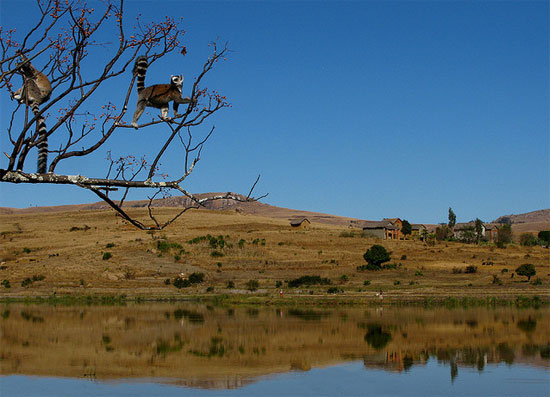
Image credit: “Untitled,” courtesy of flickr user Alex Cameron.
Sources: The New York Times, Velondriake. -
Watch: Dan Smith on How International Alert Builds Peace
›April 6, 2011 // By Schuyler NullAddressing violent conflict is complex and difficult, but one universally important aspect of any peacebuilding operation is to understand the unique context of each situation, said Dan Smith, secretary general of International Alert, in this interview with ECSP. International Alert is a London-based NGO that works in 23 countries and territories in West and Central Africa, the Southern Caucasus, Central Asia, Nepal, Sri Lanka, and the Philippines.
The goal of International Alert, said Smith, is to help people “move from situations of danger and vulnerability…towards positions of greater safety.” In addition, the NGO tackles broader international policy questions, he said, such as how to manage and minimize the risks of conflict and hasten recovery from it.
Peacebuilding defies simplification, said Smith, but there are two broad recommendations to keep in mind. First, “going in with a preset form of analysis or of the action you will undertake, or the problems you will look at,” is the most significant mistake international actors can make. “If you’re a hammer, every problem for you is going to be a nail,” he said. “But there are many countries where you need screwdrivers or monkey wrenches… you’ve got to be open-minded about that.”
Second, “realize that the outsider, like us, is not going to make peace or build peace in a country – it’s the people there who are going to do it,” said Smith. The international community’s job is to assist.
“Sometimes it’s as simple as experience from other places,” he said, which can be provided by an NGO and transferred from one context to another. “As long as you don’t shove it down anybody’s throats – it’s always an assisting and a helping role.”