-
Environmental Security Weekly Watch: September 8-12, 2025
›
A window into what we’re reading at the Stimson Center’s Environmental Security Program
New Report On Women’s Access to UN Indigenous and Community Land Rights Funding (Mongabay)
A study published by the Rights and Resources Initiative and the Women in the Global South Alliance reveals that despite the central role women play in conservation and community resilience, 50% of women’s organizations lack core funding and rely heavily on volunteer labor. The report assessed how network members are benefitting in real terms from the $1.7 billion in funding for Indigenous and community land rights pledged at the 2021 UN climate conference.
-
Economic and Political Fragility and Insecurity: A Climate Triple Threat in South Sudan
›September 3, 2025 // By Rachel Stromsta
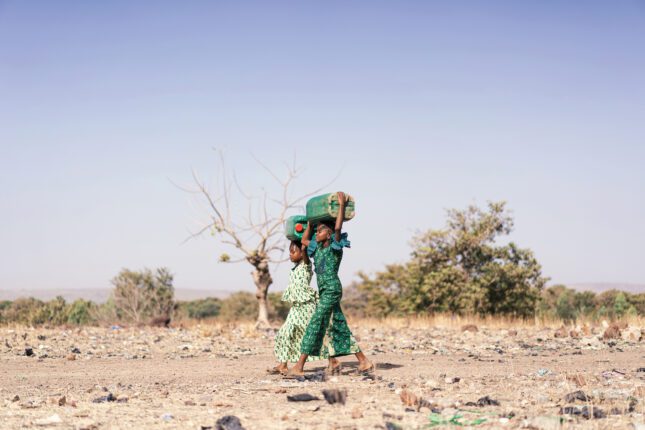
Climate-related catastrophes are posing significant challenges in already-fragile South Sudan. When record-breaking floods again swept across the country in mid-2024, for instance, the disaster affected 1.4 million people, with the cumulative years of flooding submerging two-thirds of the country.
-
Environmental Security Weekly Watch: August 18-22, 2025
›A window into what we’re reading at the Stimson Center’s Environmental Security Program
Bolivian Presidential Vote Raises Environmental Concerns (Associated Press)
Bolivia’s presidential runoff election on October 19 between centrist Senator Rodrigo Paz and right-wing former president Jorge “Tuto” Quiroga has seen both candidates promise change. Yet Indigenous and environmental leaders remain skeptical that either hopeful will effectively address Bolivia’s severe environmental crises.
-
The Cost of Ceding the Field to China on Climate Change
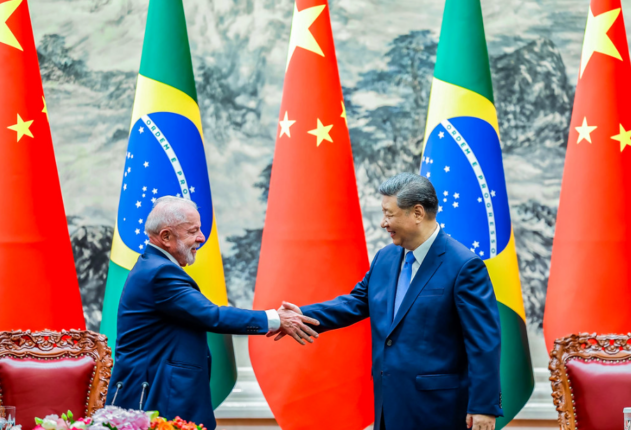
›Summer is often a time for grim climate milestones, as ever-more intense heatwaves scorch large swathes of the planet. But this year, the bad news arrived earlier than usual when the United States refrained from sending representatives to the UN-sponsored climate talks in Bonn, Germany, for the first time in the talks’ 30-year history. The intercessional talks are in some ways more important ever than the more widely reported on climate COPs because they are where many especially tricky issues are negotiated. The Trump Administration’s unilateral withdrawal from international negotiations is bad news for the climate. But it is even worse news for US national security. Climate diplomacy is a big part of soft power and influence, and Washington is rapidly losing out to Beijing.
-
Northern Myanmar’s Rare Earths Are Shaping Local Power and Global Competition
›August 4, 2025 // By Amara ThihaThis article is adapted from “Rare Earths and Realpolitik: Kachin Control, Chinese Calculus, and the Future of Mediation in Myanmar,” written by Amara Thiha for the Stimson Center.
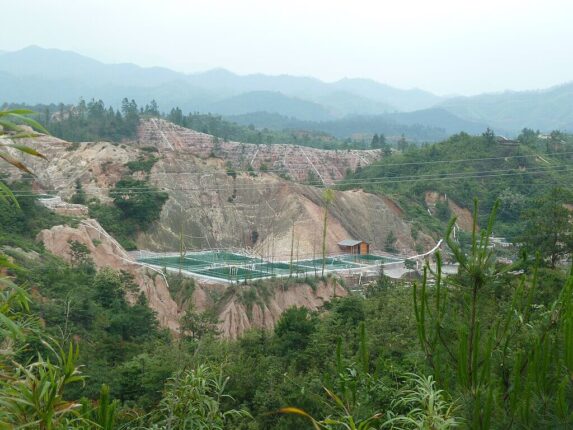
As global powers race to secure critical minerals, Myanmar’s rare earths have emerged as both prize and flashpoint. Last week, Reuters reported that the Trump administration has been privately reviewing competing proposals to access Myanmar’s heavy rare earth minerals, including potential engagement with Myanmar’s military junta and direct negotiation with the Kachin Independence Army (KIA), an ethnic armed group that now controls key extraction sites. Since the February 2021 military coup, rare earth mining has surged in northern Kachin State near the Chinese border, where the KIA has seized highly valuable rare earth mines and a critical corridor in the global supply chain. What began as a local insurgency has evolved into resource-backed diplomacy, drawing in China, India, and now the United States.
-
Environmental Security Weekly Watch: July 28-August 1, 2025
›A window into what we’re reading at the Stimson Center’s Environmental Security Program
Low Political Will and Depleted Supplies: Inside Iran’s Water Crisis (The New York Times)
Water shortages are a day-to-day reality for many Iranians, as reservoirs shrink, taps run dry for hours, and water pressure remains so low that it doesn’t reach above the second floor. This acute water crisis is driven by a confluence of climatic changes and poor water policies, as Iran’s five-year drought has combined with overdevelopment, excessive dam development, and draining groundwater for agriculture to push already dwindling supplies to the brink.
-
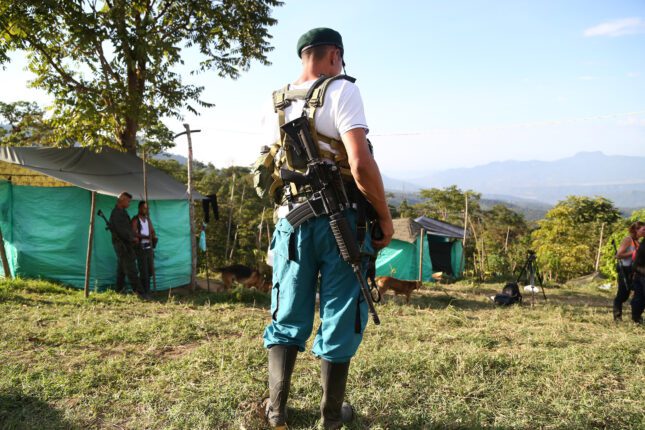
Rebel Governance in an Age of Climate Change
›July 30, 2025 // By Elisabeth Gilmore, Kathleen Cunningham, Leonardo Gentil-Fernandes, Reyko Huang, Danielle F. Jung & Cyanne E. LoyleIn Myanmar’s resource-rich Kachin State, deforestation linked to illegal logging and mining has surged over the past decade. While the national government struggles to assert control, the Kachin Independence Organization (KIO)—a political organization seeking autonomy for Kachin State in Myanmar—has also stepped in to regulate land use, restrict timber harvests, and manage permits. These activities serve to conserve local ecosystems and extract revenue. KIO’s environmental governance is strategic, aiming to bolster civilian support and consolidate territorial control. It is also shaping how communities cope and adapt to climate change.
-
Somalia’s New Climate Roadmap as a Blueprint for Peace
›Somalia’s new Nationally Determined Contribution (NDC)—the country’s roadmap for climate mitigation and adaptation—does more than outline the country’s climate ambitions. It recognizes the connections between climate change and conflict and charts a course for peace.
Showing posts from category climate change.