• woodrow wilson center
  • ecsp

New Security Beat

Subscribe:
  • rss
  • mail-to
  • Who We Are
  • Topics
    • Population
    • Environment
    • Security
    • Health
    • Development
  • Columns
    • China Environment Forum
    • Choke Point
    • Dot-Mom
    • Friday Podcasts
    • Navigating the Poles
    • Reading Radar
  • Multimedia
    • Water Stories (Podcast Series)
    • Backdraft (Podcast Series)
    • Tracking the Energy Titans (Interactive)
  • Films
    • Water, Conflict, and Peacebuilding (Animated Short)
    • Paving the Way (Ethiopia)
    • Broken Landscape (India)
    • Scaling the Mountain (Nepal)
    • Healthy People, Healthy Environment (Tanzania)
  • Publications
  • Events
  • Contact Us

NewSecurityBeat

The blog of the Wilson Center's Environmental Change and Security Program
Showing posts from category climate change.
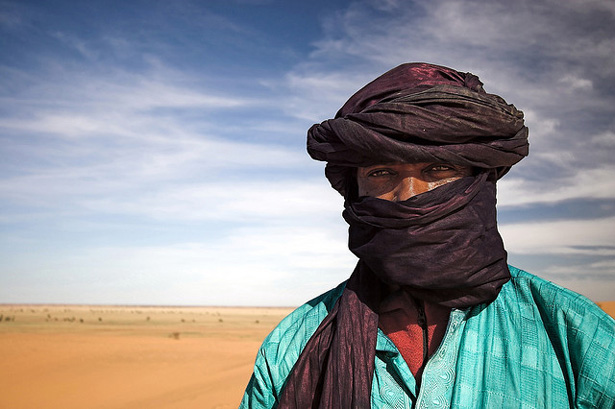
  • VIDEO: Environment Key to Resolving Conflicts, Building Peace, Says UN Environment Programme Director Achim Steiner

    ›
    June 2, 2009  //  By Rachel Weisshaar
    “Addressing the issue of the environment in the context of conflict resolution, conflict prevention, peacekeeping, [and] peacebuilding becomes ever more important because we know from everything we have learned—and are learning every day—about climate change that one thing is for certain: The world is going to be under more stress,” says UN Environment Programme (UNEP) Director Achim Steiner in a short expert interview on YouTube.

    Yet in another original Environmental Change and Security Program (ECSP) video, Steiner emphasizes that environmental issues do not lead inexorably to conflict. “History shows that human societies are not prone to looking for conflict but rather for conflict resolution, particularly when it comes to fundamental elements of life support systems, be it water, or be it clean air or other issues—we have seen the model of cooperation emerge.”

    Steiner was at the Wilson Center in March 2009 for the launch of From Conflict to Peacebuilding: The Role of Natural Resources and the Environment, a new report by UNEP’s Disasters and Conflicts Programme. According to From Conflict to Peacebuilding:
    • Forty percent of intrastate conflicts within the past 60 years have been strongly linked to natural resources.
    • Such conflicts are twice as likely to relapse within the first five years of peace.
    • Less than a quarter of peace agreements for these conflicts address natural-resource issues.
    Watch other short expert commentaries—on water, demographic security, climate change and security, and other issues—on ECSP’s YouTube channel.
    MORE
  • Climate Change Not the Only Environmental Problem, Says U.K. Environment Secretary

    ›
    May 22, 2009  //  By Rachel Weisshaar
    The Copenhagen climate conference will be “the most important gathering in human history,” said the United Kingdom’s environment secretary, Hilary Benn, at the Wilson Center on May 14, 2009 (full text of speech). While “an agreement on cutting emissions would be the biggest single step we could take to safeguard [natural] resources,” said Benn, “even such an agreement will not—indeed cannot—encompass all of the things we need to do to safeguard our environment.”

    “The most glaring threat is that of dangerous climate change. But it is not the only example of the problems we create when we exploit the world’s resources unsustainably,” explained Benn.

    “The spiraling price of food in 2008 was a wake-up call. Riots threatened political stability. Export bans threatened world trade. Wheat prices doubled, rice quadrupled. And another 75 million people were threatened by poverty and hunger,” Benn said.

    Although food prices have fallen recently, continuing growth in the global population—expected to reach at least 9 billion by 2050—and rising standards of living in poor and middle-income countries mean that world food production will need to double by 2050. This demand for food—especially more meat and dairy products—will put increasing pressure on land and water. Conflicts could erupt over these scarce resources if they are not managed properly, Benn warned.

    Already, wealthy governments and corporations are buying farmland in Africa and other parts of the developing world—leading to unrest. Widespread anger at South Korean company Daewoo’s proposal to purchase more than half of Madagascar’s arable land contributed to the ouster of former Malagasy President Marc Ravalomanana.

    Benn highlighted an apparent Catch-22: “Development is the best way of lowering the rate of population growth and so, in turn, lowering the pressure on resources. But development also increases income, and therefore demand.”

    The way to free ourselves from this cycle, Benn said, is to create an environmentally sustainable economy, so that economic development does not degrade the environment. He proposed:
    • Starting to build tomorrow’s sustainable economy even as we work to contain today’s economic crisis;

    • Changing the incentives in our economies—through regulation and financial inducements—to promote environmentally sustainable choices;

    • Creating the jobs that will power this new sustainable economy; and

    • Working together as an international community to address water scarcity, food security, and biodiversity loss.

    Benn called for U.S. leadership on climate change and other environmental issues: “We need America to apply all of its great energy to the task we, together, face.”


    Photo: Hilary Benn. Courtesy of Dave Hawxhurst and the Wilson Center.
    MORE
  • The High Politics of a Humble Resource: Water

    ›
    May 19, 2009  //  By Geoffrey D. Dabelko
    Troubled Waters: Climate Change, Hydropolitics, and Transboundary Resources, a recent report by the Stimson Center’s “Regional Voices: Transnational Challenges” project, exemplifies the kind of integrated analysis that needs to be done on global security, governance, and environmental issues. I want to highlight four areas where the report points us in the right direction for this kind of work:

    1. It takes a regional approach. Regions have historically been neglected as units of analysis, and there has not been enough focus on regional institutions. We organize our foreign assistance on an overwhelmingly bilateral basis; we have country strategies and spend much of our money bilaterally. Yet river basins or other ecosystems are almost always transboundary and therefore regional. The chapters in this report show time and again that bilateral approaches are not sufficient to meet the challenges posed by climate change’s impacts on the hydrological cycle.

    2. It examines what climate change means in specific contexts. In year of Copenhagen, we need to be talking about global targets and timetables, grand bargains, and massive mitigation. But we must keep a parallel focus on what climate change will mean in specific sectors (e.g., water, food, desertification), in specific locations, and for specific groups (e.g., the poor).

    The report has many examples of where glacial and snowmelt patterns have big impacts many hundreds and thousands of miles away. My own program just hosted a conference in Bangkok where we had the India-based expert on glacial melt in the Tibetan plateau talking with USAID environment officers in Southeast Asia. We need more of these kinds of conversations.

    3. It takes a holistic, integrated approach toward analyzing problems and recommending responses. This report makes explicit the importance of the analytical and policy connections among climate change, water, governance, conflict, and cooperation. However, governments, NGOs, donors, and international bodies remain wedded to stovepiped, single-sector approaches to diagnosing and responding to problems. This must change.

    In 2009 in Washington, there is a greater appetite and a better political environment for taking on a broader approach. This has been framed as rebalancing the “3Ds” of defense, diplomacy, and development; as “sustainable security”; and as “smart power.” Whatever the name, environmental issues such as climate change and water should be front and center in these discussions.

    4. It has a nuanced view of conflict and cooperation over natural resources. The report—and David Michel’s chapter in particular—successfully highlights the geopolitical implications of changes in climate and water without inaccurately hyping “water wars.” As we know, there is extensive subnational conflict around water, and we are likely to see more of this type of conflict under the conditions described in Troubled Waters. But states frequently work hard to cooperate and deflect violent conflict over transboundary water.

    However, we need greater political and financial investment in transboundary institutions, as international cooperation around water doesn’t happen without a lot of effort. It needs to happen, though, because the future may be more dangerous than the past when it comes to water conflict and cooperation.

    As we move forward on the water conflict and cooperation agenda, let’s not just focus on onset of conflict. Let’s be sure to look all along the conflict continuum, from prevention, to conflict, to post-conflict, and evaluate the high-politics importance of water at each of these stages.

    I’ll end with an example of where we could broaden our approach to water in a current Washington policy context. Senator Dick Durbin recently introduced the Senator Paul Simon Water for the World Act of 2009, which builds on the Senator Paul Simon Water for the Poor Act of 2005. The new bill is heavily focused on access to safe drinking water, sanitation, and hygiene, which are indeed pressing priorities. It says some of the right things about transboundary water, but historically, this has received little funding.

    Further complicating efforts to secure more robust funding for transboundary water management and security is the fact that other water activities are usually funded through the Department of State, but transboundary efforts are often put through a multilateral institution like the World Bank—and the Department of the Treasury, not State, typically manages that relationship. This complicated tangle of agencies and institutions emphasizes my earlier point that foreign assistance is too stovepiped, and that we must get better at working across sectors.

    Photo: The Nile River Basin is shared by 10 countries. Courtesy of Flickr user Michael Gwyther-Jones.

    MORE
  • Energy, Climate Change, National Security Are Closely Linked, Assert Retired Generals, Admirals

    ›
    May 18, 2009  //  By Rachel Weisshaar
    The United States’—and the Department of Defense’s (DoD)—dependence on fossil fuels poses a significant national-security threat, concludes Powering America’s Defense: Energy and the Risks to National Security (summary), the second report from CNA’s Military Advisory Board (MAB), a group of 12 retired three- and four-star admirals and generals. At the report’s launch this morning, several members of the MAB were joined by several of the people they are trying to influence, including Under Secretary of Defense for Acquisition, Technology, and Logistics Ashton Carter and Deputy Assistant Secretary of State for Energy, Sanctions, and Commodities Douglas Hengel.

    Carter outlined some of the ways DoD is attempting to increase its energy efficiency, from insulating air-conditioned tents in Iraq with foam, which can lead to a 45 percent reduction in energy usage, to incorporating the fully burdened cost of fueling vehicles into the acquisitions process, to tripling the amount of spending on energy research and development over the past two years.

    Hengel echoed the report’s emphasis on the interconnectedness of energy, climate change, and security, explaining that President Obama added the Secretary of Energy to the National Security Council for precisely this reason.

    On May 28 at 3:00 p.m., ECSP will host a discussion of the report’s findings, featuring CNA General Counsel Sherri Goodman; General Charles Wald USAF (Ret.), chairman of the MAB; and Vice Admiral Dennis McGinn USN (Ret.), a member of the MAB. ECSP also hosted a discussion of the MAB’s previous report, National Security and the Threat of Climate Change.
    MORE
  • Weekly Reading

    ›
    Reading Radar  //  May 15, 2009  //  By Wilson Center Staff
    Focus author Gladys Kalema-Zikusoka, who founded and directs the Ugandan NGO Conservation Through Public Health, won the Whitley Gold Award (see video of her work) for her efforts to protect the endangered mountain gorillas while improving local communities’ quality of life. The other five finalists were also seeking to reduce human-wildlife conflict in diverse contexts.

    In Seed magazine, seven experts—including Peter Gleick and Mark Zeitoun—weigh in on whether “water wars” are a serious menace or an improbable threat, inflated by breathless media coverage of water shortages.

    A major report on managing the health effects of climate change, co-authored by University College London and The Lancet, claims that climate change is the biggest health threat of the 21st century.

    On his blog, Signs From Earth, National Geographic editor Dennis Dimick has collected a variety of resources about the possibility of “climate refugees.”

    It’s not news that the U.S. and U.K. militaries are studying climate change’s potential security impacts, or seeking to increase energy efficiency on bases and in combat zones. But Geoffrey Lean, the environment editor of the Independent, is surprised that legendary Vietnamese General Vo Nguyen Giap has come out against bauxite mining in Vietnam’s central highlands, which he says “will cause serious consequences on the environment, society and national defense.”

    Photo: Gladys Kalema-Zikusoka receives the Whitley Gold Award from Her Royal Highness The Princess Royal. Courtesy of the Whitley Fund for Nature.
    MORE
  • Next QDR Could Include Climate Adaptation Measures

    ›
    May 14, 2009  //  By Rachel Weisshaar
    Climate-change adaptation measures, including military-to-military collaboration on disaster preparedness and response, could be part of the 2010 Quadrennial Defense Review (QDR), currently under preparation, reports Defense Environment Alert (one free article provided to new users). Congress mandated that the next QDR address the national-security impacts of climate change in 2008 defense-authorization legislation.

    “Speaking at a conference hosted by the International Institute for Strategic Studies (IISS) in Washington, DC, May 5, Kent Butts, a professor with the US Army War College and global warming expert, told delegates that while much attention is being paid to climate change mitigation measures, preparations for inevitable global warming effects have garnered too little attention at the Pentagon,” said Defense Environment Alert. “The armed services have invested considerable resources in developing new energy strategies to reduce consumption and switch to alternative sources of energy, but have yet to really focus on adaptation, Butts says.”

    “While the military should not be the lead agency handling climate change impacts in the United States or other developed countries, Butts said, in many developing nations the military may be the only government agency capable of providing services such as disaster response and preparedness work. Civilian government in the developing world is often weak and lacks basic resources such as manpower, transportation and engineering capability, Butts said.”

    Environmental-security concerns appear to enjoy considerable traction in the Obama administration. Director of National Intelligence Dennis Blair cited energy, food, and water scarcity, as well as the impacts of climate change, as potential security threats in his February 2009 testimony to the Senate Select Committee on Intelligence. Last month, Under Secretary of Defense for Policy Michele Flournoy echoed these concerns.
    MORE
  • Weekly Reading

    ›
    Reading Radar  //  May 8, 2009  //  By Wilson Center Staff
    In Conservation magazine, David Malakoff examines how cellulosic ethanol may threaten biodiversity around the world.

    A Comprehensive Approach to Congo’s Conflict Minerals, a report by the Enough Project, argues that ending resource-related violence in the DRC will require:
    • Making the consumer-electronics supply chain transparent;
    • Pinpointing and securing strategic mines;
    • Reforming and expanding governance; and
    • Providing miners with economic opportunities.
    Food shortages pose the greatest threat to global stability, argues Lester Brown in the May Scientific American.

    The New Agriculturalist describes how some African farmers are adapting to climate change.

    Worldchanging features an interview with Wangari Maathai, founder of the Green Belt Movement and recipient of the 2004 Nobel Peace Prize.
    MORE
  • Cowboy Logging to Carbon Cowboys: Natural Resources in Indonesia and India

    ›
    May 6, 2009  //  By Rachel Weisshaar
    “Indonesia’s forest loss continues more or less unabated, despite global concern for the resource and forest-dependent people, as well as a wealth of knowledge about the problems and solutions: poor governance, corruption, perverse incentives in the industrial sector,” said AAAS Science and Technology Policy Fellow Steve Rhee. Rhee was joined by Henrik Urdal of the International Peace Research Institute, Oslo (PRIO), who also studied the effects of environmental degradation on conflict in Indonesia, for “Demography, Environment, and Conflict in Indonesia and India,” an April 21, 2009 event sponsored by the Environmental Change and Security Program.

    Parsing the Patterns: Population, Resources, and Conflict

    Urdal argued that case studies have sometimes overstated the links among population, resource scarcity, and conflict. Researchers tend to choose cases where there is conflict and then look for a population or resource dimension. If you look hard enough, “it’s always possible to find some connection,” said Urdal.

    However, quantitative studies are also imperfect, cautioned Urdal, because most of them use national-level data, which do not capture local dynamics. In addition, they have a tendency to ignore conflicts in which the state is not involved.

    Two Sub-National Studies: India and Indonesia

    Urdal sought to avoid these problems by using sub-national data and including political violence and riots, as well as armed conflict, in his quantitative studies of India and Indonesia. From 1956-2002, he found that high rural population growth and density, as well as declining agricultural wages, increased the likelihood of violence in Indian states. Surprisingly, those states with high rates of urban population growth were less likely to experience conflict.

    In Indonesian provinces, Urdal and his colleagues found a relationship, albeit a weak one, between population growth and non-ethnic violence between 1990-2003. They also found an increased risk of non-ethnic violence in provinces with high population growth and high levels of inequality between different religious groups. However, there was no relationship between land scarcity and conflict.

    Forests, Conflict, and Participatory Mapping in Kalimantan: Unintended Consequences

    Forty million Indonesians—one-fifth of the population—depend on forests for their livelihoods, said Rhee. Yet much of Indonesia’s forests have never been surveyed, so the people who live there are considered squatters and receive little or no compensation from the logging and mining industries. This inequity has generated both violent and non-violent conflict between the indigenous dayaks, the government, and extractive-industry companies.

    In an attempt to resolve some of this conflict, the Center for International Forestry Research initiated a participatory mapping project in 27 villages in the Malinau district of Kalimantan in 1999. Participatory mapping enables dayaks to establish land rights and negotiate compensation from companies.

    Following the 1998 ousting of President Suharto, district governments, rather than the central government, began issuing timber permits. The villages in Malinau often used the maps they had created to justify their claims to the land. But the district government did not cross-check the claims, so this generated inter- and intra-village conflict—roadblocks, protests, and lock-ups of timber equipment.

    Although the “cowboy logging” that characterized the late 1990s and early 2000s has largely ceased, Rhee believes it may be replaced by “carbon cowboys” seeking to capitalize on the UN Reduced Emissions from Deforestation and Degradation (REDD) program, which aims to reduce carbon emissions by paying governments to preserve forests. “With climate change, and the link between climate change and forests, Indonesia is very much on the map again,” said Rhee.

    MORE
Newer Posts   Older Posts
View full site

Join the Conversation

  • RSS
  • subscribe
  • facebook
  • G+
  • twitter
  • iTunes
  • podomatic
  • youtube
Tweets by NewSecurityBeat

Trending Stories

  • unfccclogo1
  • Pop at COP: Population and Family Planning at the UN Climate Negotiations

Featured Media

Backdraft Podcast

play Backdraft
Podcasts

More »

What You're Saying

  • Volunteers,At,The,Lagos,Food,Bank,Initiative,Outreach,To,Ikotun, Pan-African Response to COVID-19: New Forms of Environmental Peacebuilding Emerge
    Rashida Salifu: Great piece 👍🏾 Africa as a continent has suffered this unfortunate pandemic.But it has also...
  • A desert road near Kuqa An Unholy Trinity: Xinjiang’s Unhealthy Relationship With Coal, Water, and the Quest for Development
    Ismail: It is more historically accurate to refer to Xinjiang as East Turkistan.
  • shutterstock_1779654803 Leverage COVID-19 Data Collection Networks for Environmental Peacebuilding
    Carsten Pran: Thanks for reading! It will be interesting to see how society adapts to droves of new information in...

What We’re Reading

  • Rising rates of food instability in Latin America threaten women and Venezuelan migrants
  • Treetop sensors help Indonesia eavesdrop on forests to cut logging
  • 'Seat at the table': Women's land rights seen as key to climate fight
  • A Surprise in Africa: Air Pollution Falls as Economies Rise
  • Himalayan glacier disaster highlights climate change risks
More »
  • woodrow
  • ecsp
  • RSS Feed
  • YouTube
  • Twitter
  • Facebook
  • Home
  • Who We Are
  • Publications
  • Events
  • Wilson Center
  • Contact Us
  • Print Friendly Page

© Copyright 2007-2021. Environmental Change and Security Program.

Woodrow Wilson International Center for Scholars. All rights reserved.

Developed by Vico Rock Media

Environmental Change and Security Program

Woodrow Wilson International Center for Scholars

Ronald Reagan Building and International Trade Center

  • One Woodrow Wilson Plaza
  • 1300 Pennsylvania Ave., NW
  • Washington, DC 20004-3027

T 202-691-4000