-
Minister Izabella Teixeira at the Wilson Center
A Review of Brazil’s Environmental Policies and Challenges Ahead
›Stressing the need for concrete, tangible institutional policies, Izabella Teixeira, Brazil’s Minister of the Environment, discussed the challenges and goals of her ministry at the Wilson Center on October 20. Sustainable development, not just conservation, must be the focus, and that requires bringing lots of different players to the table, taking into account not only environmental but also social and economic agendas. To do this, she argued, one must take the rather ephemeral and hypothetical notions of environmental stewardship and put them into the realm of a practicable, institutionalized framework, built on a social pact that engages all sectors of society.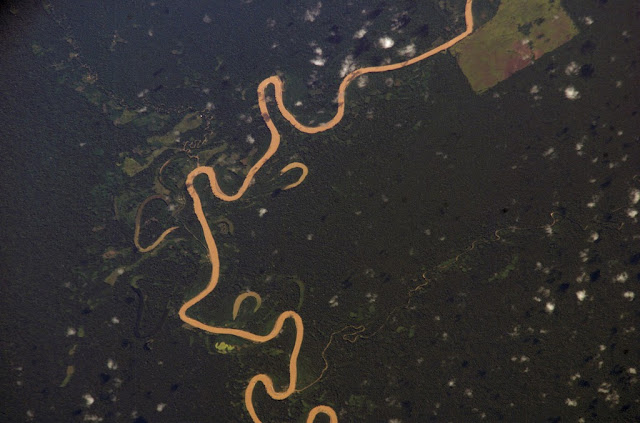 The foundation of sustainable development and environmental policy must be biodiversity, according to Teixeira. Central concerns, such as food and energy security and combating climate change, all rely on a diverse array of natural resources. These need to be conserved, but they must also be developed in a responsible, sustainable way. A legal international framework toward this end, covering access to biodiversity and genetic resources, has yet to be implemented. Developing and developed countries need to find a middle ground on allocating the benefits that accrue from the use of genetic resources found in areas such as the Amazon, and this agreement must then be linked into existing political institutions.
Teixeira noted the strides Brazil has made toward protecting its environment – including having set aside the equivalent of 70 percent of all protected areas in the world in 2009 and the establishment of the Amazon Fund. Nevertheless, Brazil must continue to protect and maintain these nature preserves, not just establish them. Creating a program that pragmatically implements international goals in a national context is an ongoing process, and countries like Brazil now need to focus on the “how” of implementing these goals, rather than just the “what.”
Teixeira also highlighted the complexity of formulating environmental policy that integrates all the various points of view that must be taken into consideration. At recent meetings to discuss transitioning to a low-carbon economy, 17 different cabinet ministers had to be present to coordinate government positions and policies. The complexity is due in part to the need to create alternatives, not just to prevent certain activities. For example, one must not only use legal enforcement to stop illicit deforestation, but also create paths to legal, sustainable logging. Once again, attempting to balance environmental, social, and economic concerns is difficult, to say the least, but crucial for long-term effectiveness.
Also a unique challenge for Brazil is the natural diversity that exists within such a large country. While much of the attention paid to the environment goes (rightly so) to the Amazon, there are many other biomes and local environments that must be taken into consideration, Teixeira observed.
The cerrado, Brazil’s enormous savanna, requires a different strategy than the Amazon, which is different than the coastal Atlantic forest. Furthermore, urban areas need their own environmental policies that can take into account issues of human development and population density.
To illustrate the need for an inclusive, well-thought-out policy, Teixeira discussed–rather frankly–the controversy surrounding the recent proposed amendments to the Forest Code. She argued that the proposal makes blanket changes that do not take into consideration differences in biomes, differences between large agribusinesses and family farms, and between historic, settled communities and recent developments. The implications of this proposal, according to the minister, could have enormous social costs. Teixeira said she believes that it would be virtually impossible to enforce the amended Forest Code if it was approved by Congress. She used this example to underscore her role in offering legislative alternatives that seek to provide a more nuanced, and ultimately more effective, institutional framework that can use Brazil’s many natural resources to help its population to the greatest extent possible.
J.C. Hodges is an intern with the Brazil Institute at the Wilson Center; Paulo Sotero is the director of the Brazil Institute.
Photo Credit: “Rio Jurua, Brazil (NASA, International Space Station Science, 05/29/07),” courtesy of flickr user NASA’s Marshall Space Flight Center, and David Hawxhurst/Wilson Center. -
Latin America’s Future: Emerging Trends in Economic Growth and Environmental Protection
›Economic development and environmental sustainability in Latin America and the Caribbean are intrinsically connected, as evidenced by a seminar this summer organized by the Woodrow Wilson Center’s Brazil Institute (on behalf of the Latin American Program), and co-sponsored by the U.S. Agency for International Development (USAID). The seminar — the culmination of six workshops and a regional meeting in Panama — presented the new Wilson Center report Emerging Trends in Environment and Economic Growth in Latin America and the Caribbean (also available in Portuguese and Spanish), which identifies key trends likely to shape the economy and natural environment in Latin America and the Caribbean over the next 10 years.
Janet Ballantyne, acting deputy assistant administrator of USAID’s Latin America and the Caribbean Bureau, stated that Latin America is “not our backyard, it’s our front yard.” It’s time that we “open the front door,” she claimed, and address the issues facing Latin America — issues that have long-term consequences for not only the region, but the United States and the world as well.
A Broad Range of Challenges
Christine Pendzich, principal author of the report and technical adviser on climate change and clean energy to USAID, covered the five interrelated economic and environmental trends that the report discusses: climate change, clean energy, indigenous and minority issues, challenges facing small economies, and urban issues. To capitalize on the Latin American demographic transition that will soon result in a large number of working age adults, Pendzich argued that the region needs to increase skilled job creation, educate workers to fill those positions, and maintain economic stability. She also declared that recent climate change trends are a “game changer,” which can fundamentally alter development paths.
While closer economic ties with China have contributed to Latin America’s above-average recovery from the global economic downturn, Pendzich argued that this economic relationship could add to the social and environmental problems facing the region. She added that insufficient innovation could lead to the continuation of the region’s dependence on commodity exports, while also noting that the inadequate economic integration and educational opportunities for indigenous and minority groups “drags everyone down.”
In terms of the regional economic trends, Eric Olson, co-author of the report and senior associate of the Mexico Institute, highlighted six challenges and opportunities for Latin America and the Caribbean. Olson claimed that the recovery of the global economy will hurt net importers of fossil fuels, especially in Central America and the Caribbean; have a negative impact on the environment; increase natural resource exploitation that may exacerbate inequality and social conflict; increase demand for primary products that will decrease the incentive to diversify Latin American economies; provide opportunities to promote environmentally friendly growth; and allow for increased utilization of existing trade benefits and intra- and sub-regional trade opportunities.
Recognizing the Need for an Integrated Response
Three of the 77 participants involved in the formation of the report explored in greater depth what Geoffrey Dabelko with the Environmental Change and Security Program described as the “integration and interconnectivity” of the five trends discussed in the report. Blair Ruble, chair of the Comparative Urban Studies Project, noted that with 78 percent of the Latin American population living in urban areas, “cities and urban life create a context in which there are opportunities for solutions to problems,” opportunities that can be used to further innovation, encourage social equality, and promote good governance.
Meanwhile, working with rural indigenous communities and minority groups can also provide valuable opportunities for change, specifically in the area of climate change, according to Judith Morrison, senior adviser at the Inter-American Development Bank’s Gender and Diversity Unit. Morrison argued that indigenous populations are the ones most affected by climate change, but also the most able to improve environmental stewardship as a result of their unique knowledge of the local geography.
Maria Carmen Lemos, associate professor at the University of Michigan, highlighted that vulnerability to climate change depends on two sets of factors: geographical location and socioeconomic factors. As a result, Lemos asserted that climate-change adaption measures must focus on poverty reduction as well as the vulnerability of specific geographic locations.
Julie L. Kunen, senior adviser to the Bureau of Policy, Planning, and Learning at USAID, applauded the report for its cross-trend analysis and called the development community to work together to address these trends in the Latin American and Caribbean region. The next step, Kunen claimed, must be to develop an ambitious strategy and “convene everyone who cares about the issues and rally them around the agenda.”
Elizabeth Pierson is an intern with the Brazil Institute at the Woodrow Wilson Center.
Photo Credit: “The River Runs Through the Andes,” courtesy of flickr user Stuck in Customs. -
Time to Give a Dam: Alternative Energy as Source of Cooperation or Conflict?
›July 8, 2010 // By Kayly OberMitigation can be a means to peace, not just conflict, said Stacy VanDeveer in the lead up to Backdraft: The Conflict Potential of Climate Mitigation and Adaptation at the Woodrow Wilson Center on June 10. VanDeveer believes that mitigation techniques, particularly alternative energy sources like hydroelectric dams, could stimulate cooperation rather than exacerbate threats.
-
Land Grab: Sacrificing the Environment for Food Security
›January 27, 2010 // By Wilson Center StaffAccording to the United Nations, 74 million acres of farmland in the developing world were acquired by foreign governments and investors over the first half of 2009 – an amount equal to half of Europe’s farmland. -
New Tool Maps Deforestation
›A new tool from the Center for Global Development, Forest Monitoring for Action (FORMA) tool, uses satellite data to monitor tropical deforestation on a monthly basis. Using publicly available feeds from NASA and other sources, FORMA detects the spread of deforestation in areas as small as 1 square kilometer. The video above uses FORMA to animate the rapidly growing damage in Indonesia over the last four years.
CGD hopes FORMA will help countries monitor the success of forest preservation efforts, as well as verify that those receiving payments to maintain forest cover are, in fact, doing so. Currently limited to Indonesia, FORMA will soon cover the rest of the global tropics.
The tool can be combined with third-party content, such as overlay maps of demographic and forest carbon content data, for additional applications. -
In Rio de Janeiro, an Opportunity to Break Barriers
›January 23, 2009 // By Will RogersThe city of Rio de Janeiro’s plan to erect a 650-meter long, three-meter high concrete wall between the 7,500 residents of the Dona Marta slum and the surrounding rainforest signals the government’s reluctance to address the underlying causes of environmental degradation. Although it is heralded by authorities as an “eco-barrier” that will protect the rainforest and “improve living standards and protect slum residents from the armed gangs that control many of Rio’s 600 or so slums,” the wall does not address the issues of acute poverty and lack of access to affordable housing that keep many Brazilians living in slums, harvesting resources from the rainforest.
Without access to decent housing and living-wage jobs, many slum residents will continue to encroach on the hillsides, warn Brazilian environmentalists. “It is hypocrisy to talk about protecting the Atlantic rainforest without considering the issues of housing and transport to take the pressure off the forest,” said Sergio Ricardo, a leading environmental campaigner in Rio de Janeiro, in an interview with the Jornal do Brasil.
Slums have often stalled Rio’s efforts to improve its environmental report card, as slum residents tend to be focused more on daily survival than on the environmental consequences of their actions. But slums do not have to be a thorn in the side of the government’s eco-friendly image. In fact, Rio’s previous attempts to reverse deforestation through grassroots reforestation projects have been extremely successful.
According to a 2005 article in the San Francisco Chronicle, municipal reforestation projects around Rio employed several hundred slum residents to plant millions of trees surrounding their communities. The projects “resulted in the return of dozens of species of birds, monkeys and other animals—many not seen in decades,” as well as cooler air temperatures, writes William Bennett. At the same time, the municipal projects became a source of steady work for residents. “Before this job, I worked as a day laborer; one day I would have work—the next day nothing,” said Carlos Alberto Ribeiro, a reforestation worker who earned about $200 a month planting trees. By 2005, community reforestation projects had employed 914 slum residents in 93 projects that had restored a total of 4,500 acres of native-species trees to the region.
Rather than segregating slum residents from the rest of the city in what some critics have called “social apartheid,” perhaps Rio should scale up community forestry projects, employing greater numbers of slum residents to improve the health of the Atlantic rainforest. While the government still has far to go in providing affordable housing, a steady wage could help residents secure access to adequate housing and reduce pressure on the region’s delicate environment.
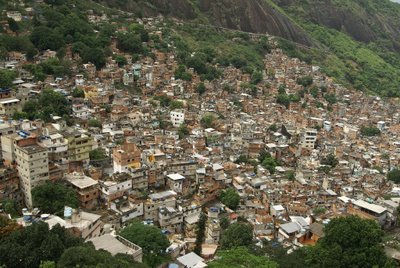
Photo: Rocinha, one of Rio de Janeiro’s largest slums with an estimated 200,000 residents, is one of hundreds of slum neighborhoods surrounding Rio, putting extreme pressure on the region’s environment. Courtesy of flickr user andreasnilsson1976.
-
Prostitution, Agriculture, Development Fuel Human Trafficking in Brazil
›October 28, 2008 // By Ana Janaina NelsonModern-day slavery, also known as human trafficking, is the third most lucrative form of organized crime in the world, after trade in illegal drugs and arms trafficking. Today, 27 million people are enslaved—mostly as a result of debt bondage. The UN Office on Drugs and Crime (UNODC) report Trafficking in Persons: Global Patterns found that Brazil is the third-largest source of human trafficking in the Western hemisphere, after Mexico and Colombia. According to the U.S. Department of State’s Trafficking in Persons Report 2008, 250,000-500,000 Brazilian children are currently exploited for prostitution, both domestically and abroad. NGOs estimate that 75,000 Brazilian women and girls—most of them trafficked—work as prostitutes in neighboring South American countries, the United States, and Europe.
In addition, notes the Trafficking in Persons Report 2008, 25,000-100,000 Brazilian men are forced into domestic slave labor. “Approximately half of the nearly 6,000 men freed from slave labor in 2007 were found exploited on plantations growing sugar cane for the production of ethanol, a growing trend,” says the report. According to the International Labour Organization (ILO), the “agricultural states of the north, like Piaui, Maranhao, Pará and Mato Grosso, are the most problematic.” Agriculture and development have also been linked to sex trafficking. A 2003 study by the Brazilian NGO CECRIA found that in the Amazon, sexual exploitation of children often occurs in brothels that cater to mining settlements. The study also highlighted the prevalence of sex trafficking in regions with major development projects.
In response to growing awareness of the magnitude of this problem, the Brazilian Ministry of Justice has stepped up its efforts to combat human trafficking, adopting the ILO and UNODC’s “three-P” approach: prevention, prosecution, and protection. Prevention measures in Brazil focus on sexual exploitation, the most common type of forced labor for trafficked Brazilians. These measures include educating vulnerable populations about avoiding human trafficking, as well as drawing tourists’ attention to criminal penalties under Brazilian law for patronizing prostitutes.
Prosecution efforts in Brazil are also improving: In 2004, Brazil ratified the Palermo Protocol (pdf), the main international legal instrument for combating human trafficking. A year later, the country adopted a National Plan to Combat Human Trafficking, which aims to train those responsible for prosecuting traffickers and protecting victims—primarily police and judges. In addition, notes the Trafficking in Persons Report 2008:The Ministry of Labor’s anti-slave labor mobile units increased their operations during the year, as the unit’s labor inspectors freed victims, forced those responsible for forced labor to pay often substantial amounts in fines and restitution to the victims, and then moved on to others locations to inspect. Mobile unit inspectors did not, however, seize evidence or attempt to interview witnesses with the goal of developing a criminal investigation or prosecution because inspectors and the labor court prosecutors who accompany them have only civil jurisdiction. Because their exploiters are rarely punished, many of the rescued victims are ultimately re-trafficked.
The U.S. Department of State established a four-tiered assessment system to rate countries’ compliance with international trafficking mandates. In 2006, Brazil was listed on the Tier 2 Special Watch List, the second-worst rating, despite recognition that the government made “significant efforts” to combat human trafficking. Brazil recently moved into the Tier 2 category, however, due to more concerted interagency efforts, as well as greater compliance with international guidelines. Yet one wonders whether Brazil will be able to achieve Tier 1 status any time soon, given the Brazilian government’s focus on biofuel- and agriculture-fueled economic growth and the fact that the global financial crisis is likely to drive people into increasingly desperate economic straits.
By Brazil Institute Intern Ana Janaina Nelson.
Photo: A poster warns African women of the dangers of human trafficking; Brazilian women are subject to similar dangers. Courtesy of Flickr user mvcorks. -
Exploring Brazil’s Urucu Natural Gas Fields Sustainably: An Impossible Task?
›September 29, 2008 // By Wilson Center StaffWhat does the Arctic National Wildlife Refuge (ANWR) have in common with Brazil’s Urucu natural gas fields? They both epitomize the struggle to balance energy independence and environmental conservation.
Located in the southern Amazon region and discovered in 1978, the Urucu fields are the largest onshore natural gas reserves in Brazil. Exploration began in 1988, but not without controversy. The Amazon rainforest, like ANWR, is a sensitive, biologically unique environment. Plans for exploration of the Urucu fields sparked heated debate over the extent of the environmental damage caused by such exploration—much like the current debate over oil drilling in ANWR.
Conservationists’ arguments revolved around two main issues: preservation of the environment and local communities’ livelihoods. The extraction complex will consist of three pipelines (map): Urucu-Coari (in existence); Urucu-Manaus; and Urucu-Porto Velho. The two new pipelines, which will total 621 miles of additional pipe, will also require the clearing of a 65-foot-wide strip along the entire pipeline. For the pipeline to reach Manaus, it needs to cross the six-mile wide Rio Negro, a tributary of the Amazon river. The project’s critics argue that even a small oil spill, especially in the stretches of the pipeline in the river, would harm the region’s biodiversity and the livelihoods of indigenous communities and others who depend on the river.
Petrobrás has sought to assuage activists’ concerns over the pipeline’s impact on local communities by assuring them that the Urucu gas fields will employ at least 3,800 local workers. In addition, Petrobrás is sponsoring community development projects to stimulate alternative economic activities.
Bolivia’s political crisis triggered Brazil’s decision to build the gas extraction pipelines, in spite of environmentalists’ misgivings. The December 2006 “nationalization” of natural gas in Bolivia, which provided Brazil with approximately half of its natural gas supply, made energy security and diversification of energy suppliers priorities for the government, and prompted Petrobrás to jumpstart a natural gas independence project in which Urucu features prominently.
While environmentalists may not have succeeded in stopping the development of the Urucu fields, their efforts have forced Petrobrás to significantly diminish the project’s environmental footprint. In conjuction with local universities and research centers, Petrobrás carried out an impact and risk analysis (Piatam) that led to the implementation of several environmental precautions. For example, the pipeline must be built eight feet under any river it crosses and permanently monitored by a cable embedded within the pipes. In addition, the extraction wells are very small, taking up very little forest area, and a remote control center that tracks any leaks in the pipeline is able to isolate and disable leaking pipes or valves, according to Jeff Hornbeck, an international trade and finance specialist at the Congressional Research Service (via email).
Moreover, all equipment is transported to the site by helicopters in order to avoid building roads, which frequently open up areas to logging and wider-scale development. Petrobrás also plans to use robots to monitor changes in environmental conditions, including the level of oil in the water; and to gather information to help prepare for emergency situations (e.g., flooding or other natural disasters) that threaten to damage the pipelines.
If Petrobrás executes the development of the Urucu fields successfully—with minimal negative consequences for communities and the Amazon—it could serve as an example for other energy projects in sensitive habitats. As growing energy needs increase demand for more exploration, environmentally conscious projects will become even more important.
By Brazil Institute Intern Ana Janaina Nelson.
Video: You can glimpse unspoiled forest outside the window of a plane landing at the Urucu fields, the product of Petrobrás’ efforts to minimize damage to the Amazon.
Showing posts from category Brazil.


 According to the United Nations, 74 million acres of farmland in the developing world were acquired by foreign governments and investors over the first half of 2009 – an amount equal to half of Europe’s farmland.
 The city of Rio de Janeiro’s plan to erect a