-
Gordon Mumbo on Water and Livelihoods in the Mara River Basin
›Friday Podcasts // Water Security for a Resilient World // Water Stories (Podcast Series) // November 15, 2019 // By Benjamin Dills This article is part of ECSP’s Water Security for a Resilient World series, a partnership with USAID’s Sustainable Water Partnership and Winrock International to share stories about global water security.
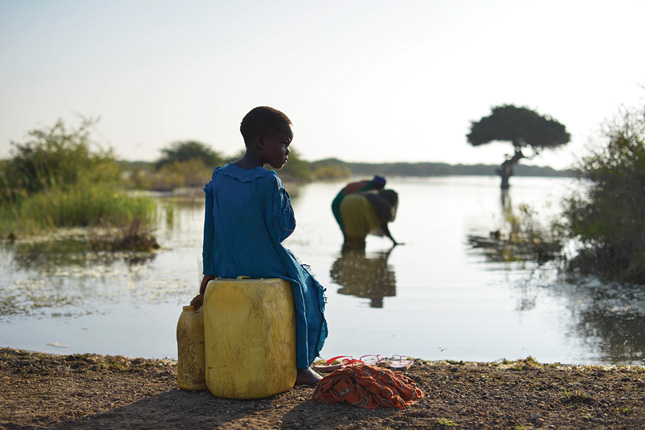
“If you live in the developed world or in some urban centers, then the supply of water is guaranteed,” said Gordon Mumbo, team leader for Sustainable Water for the Mara River Basin, a project of Winrock International and USAID’s Sustainable Water Partnership, in this week’s Water Stories podcast. When you wake up, you expect water to flow from your tap. “If you don’t find it flowing, you get upset and will probably call the utility company.” But people living in the Mara River Basin don’t have that luxury. “They have to walk to the river to get water and bring it home,” said Mumbo.
-
Hidden Forces: The Role of Water in Economic Prosperity
›From the Wilson Center // Water Security for a Resilient World // October 22, 2019 // By Brigitte Hugh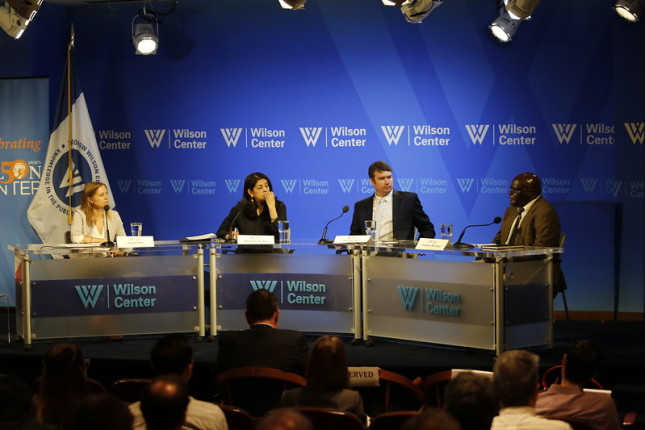
“If you woke up one morning and found the taps in your house were dry, the first thing many of us here would do is pick up our phone and call the utility,” said Gordon Mumbo, Team Leader for Sustainable Water for the Mara River Basin, Winrock International. But for people living in the Mara River Basin, if their taps run dry, there is no utility to call, said Mumbo. Their only choice is to grab the water container and head down to the river where water quality may be poor. Mumbo spoke at the September 30th event, “Hidden Forces: The Role of Water in Economic Prosperity,” part of the “Water Security for a More Resilient World” series co-hosted by the Wilson Center, Winrock International, and the Sustainable Water Partnership.
-
David DeArmey on Engaging Communities to Increase Water Point Functionality
›Friday Podcasts // Water Security for a Resilient World // Water Stories (Podcast Series) // September 6, 2019 // By Benjamin BoslandThis article is part of ECSP’s Water Security for a Resilient World series, a partnership with USAID’s Sustainable Water Partnership and Winrock International to share stories about global water security.
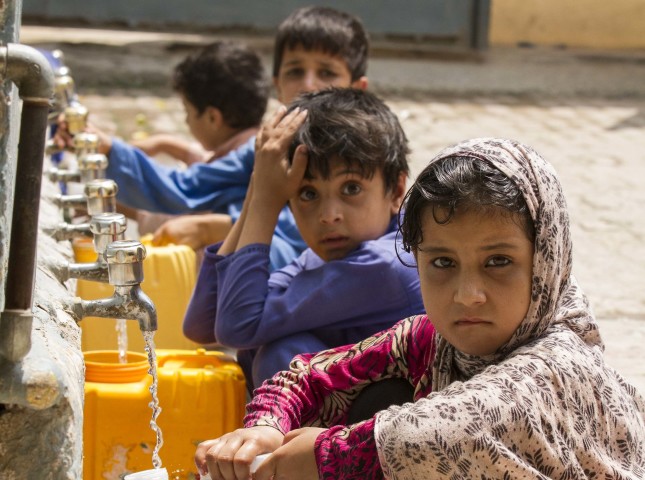
“Water point functionality goes beyond the mechanical structure of a pump,” says David DeArmey, Director of International Partnerships at Water for Good in this week’s Water Stories podcast. “Community dynamics play a role in how the water point is managed on a daily basis.”
-
Untapped Opportunities? The Need to Integrate Young Women in Water Management
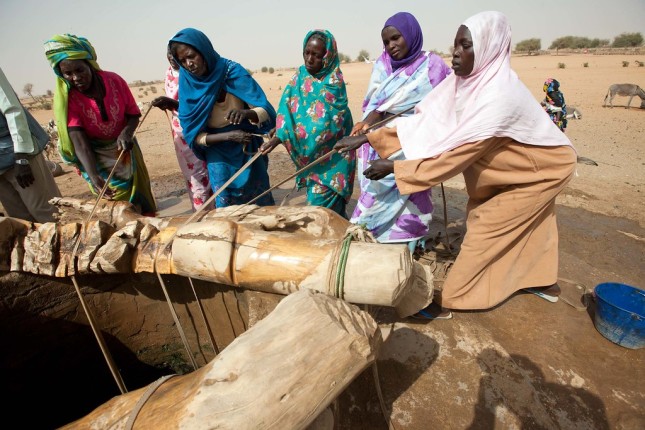
›Water security is a pervasive climate issue and one that has increasingly been viewed as a gendered issue. Worldwide, women and girls spend 200 million hours collecting water every day. While doing so, they place themselves at increased risk of assault and become more likely to develop medical issues related to physical labor. They also pay an opportunity cost, as this time could be better spent in school or performing other productive tasks.
-
Water as a Tool for Resilience in Times of Crisis
›Water serves as a tool for resilience only when access to it is consistent and the system for making it consistent is in place, said David De Armey, Director of International Partnerships for Water for Good, an international NGO. He spoke at a recent Wilson Center event, “Water as a Tool for Resilience in Times of Crisis,” the second event in a three-part series, Water Security for a Resilient World, sponsored by the Wilson Center, Winrock International, the Sustainable Water Partnership, and USAID. Water for Good monitors 80 percent of wells across seven provinces in Central African Republic (CAR), he said. By keeping the water infrastructure working, the nonprofit creates a stable environment within an unstable country. “Thus,” he said, “we see reliability and services as a tool for resilience.”
-
Better Water Security Translates into Better Food Security
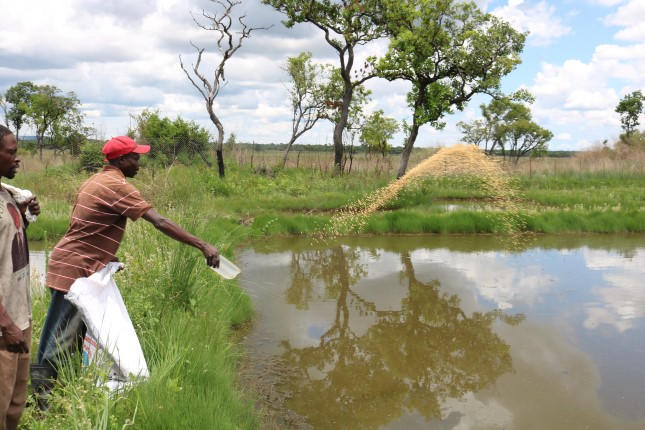
›“Food production is the largest consumer of water and also represents the largest unknown factor of future water use as the world’s population continues to balloon, and we face increasing weather-related shocks and stresses,” said Laura Schulz, Acting Deputy Assistant Administrator in USAID’s Bureau for Economic Growth, Education and Environment. She spoke at “Feeding a Thirsty World: Harnessing the Connections Between Food and Water Security,” an event sponsored by the Wilson Center, Winrock International, the Sustainable Water Partnership, and USAID. Currently about 70 percent of global water goes to agriculture, a number that is projected to rise “as high as 92 percent,” said Rodney Ferguson, the President and CEO of Winrock International.
-
Sustainable Water, Resilient Communities: The Challenge of Erratic Water
›From the Wilson Center // Water Security for a Resilient World // June 7, 2018 // By Rebecca LorenzenWater variability is increasing “due to climate change and to more frequent natural disasters,” said Jonathan Cook, Senior Climate Change Adaptation Specialist with the U.S. Agency for International Development, at the fourth and final event in a series on water security organized by the Wilson Center and the Sustainable Water Partnership. To solve the problem of increasingly erratic water, “business as usual is really not acceptable anymore,” said Will Sarni, founder of WetDATA.org, who called for new, innovative ideas: “Hope is not a strategy.”
-
Sustainable Water, Resilient Communities: The Unique Challenges and Opportunities of Wastewater
›From the Wilson Center // Water Security for a Resilient World // April 27, 2018 // By Connor Chapkis“Globally, nearly one billion people still lack access to safe water,” said Sasha Koo-Oshima, Senior International Water Advisor for the U.S. Environmental Protection Agency, at a recent Wilson Center event on the potential challenges and opportunities of wastewater treatment. “In emerging developing countries, children lose 443 million school days per year due to diseases related to water, sanitation, and hygiene,” she said.
Showing posts from category Water Security for a Resilient World.
 This article is part of ECSP’s