Showing posts from category *Blog Columns.
-
Top 10 Posts for September 2010
›Marc Levy’s response to Halvard Buhaug’s paper on climate-security linkages, a critique of the World Bank’s latest report on land grabs, and resource conflicts top the list this month:
1. On the Beat: Climate-Security Linkages Lost in Translation
2. New World Bank Report on Land Grabs Is a Dud
3. India’s Maoists: South Asia’s “Other” Insurgency
4. U.S. v. China: The Global Battle for Hearts, Minds, and Resources
5. DRC’s Conflict Minerals: Can U.S. Law Impact the Violence?
6. Historic Floods Plague Pakistan
7. Iraq at the Crossroads: Water, Power, Trash, and Security: Interview with Iraq’s First Minister of the Environment Mishkat Al Moumin
8. UK Royal Society: Call for Submissions “People and the Planet” Study To Examine Population, Environment, Development Links
9. Demographics, Depleted Resources, and Al Qaeda Inflame Tensions in Yemen
10. Guest Contributor Serge Dedina: Environmental Security Along the U.S.-Mexico Border -
India’s Threat From Within
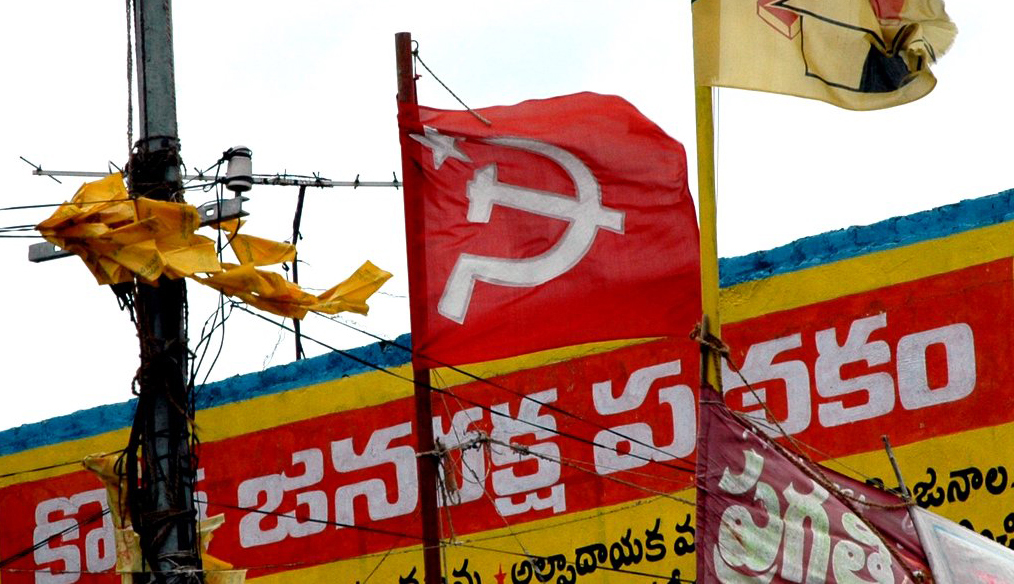
›Once a modest pro-peasant movement, India’s Maoist (or Naxalite) insurgency has become what New Delhi describes as the nation’s biggest internal security threat. The insurgency has spread to 20 of India’s 29 states, and across more than a third of the country’s 626 districts, most of them in the impoverished east. Earlier this summer, the Woodrow Wilson Center’s Asia Program, with assistance from the Environmental Change and Security Program, hosted, “The ‘Gravest Threat’ to Internal Security: India’s Maoist Insurgency,” to examine the insurgency’s main drivers, identify its prime tactics and strategies, and consider the best ways to respond.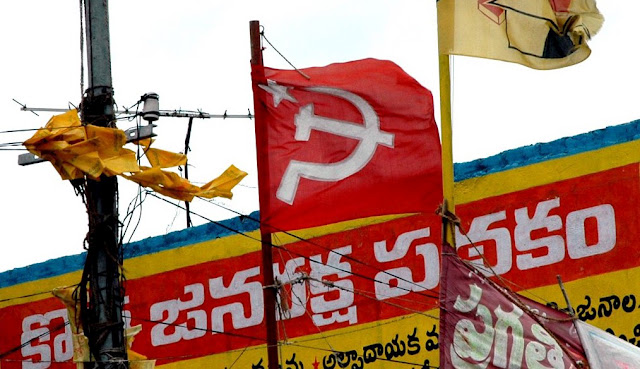
Same Insurgency, Different Motivations
P.V. Ramana, a research fellow at the New Delhi-based Institute for Defense Studies and Analyses, discussed the motivations that draw people to the insurgency. Some people are aggrieved by the resource exploitations they witness in their villages. Others join the Maoist cause because of the “high-handedness” of Indian security forces. Still others do so because family members are already in the movement.
Ramana underscored a “serious disconnect” at play — people have such varied reasons for joining the insurgency, yet top Maoist leaders are inspired by one sole motivation: capturing political power. Ramana also highlighted the “increasing militarization” of the insurgency. Maoists have amassed an immense arsenal of weaponry, from “crude” tools to more sophisticated weapons such as rocket launchers and landmines. Their attacks increasingly target not only government security forces, but also national infrastructure such as power lines and railways.
Andhra Pradesh: Leading By Example
K. Srinivas Reddy, a Hyderabad-based deputy editor for The Hindu, offered a case study of the insurgency in his home state, Andhra Pradesh (AP), in southeastern India. He noted that New Delhi’s response to the insurgency in AP is often cited as a success story. This response, according to Reddy, can be attributed to an “attitudinal change” within the security ranks. From the 1970s through the mid-1990s — a period of mass Maoist recruitment and escalating insurgent violence — New Delhi’s counterinsurgency measures had been “panicky,” haphazard, and reactive, Reddy said. The “turning point” came in 1996, when a new “unity of thought” emerged within the government that emphasized better training of security forces, stronger intelligence, and greater attention to economic development. Later in the 1990s, security forces further softened their strategies and tactics, emphasizing “problem-solving rather than hunting Naxals.” As a result, in the early 2000s, popular support for Maoists in AP began to wane.
Is the Government Also to Blame?
Nandini Sundar, a professor of sociology at Delhi University, focused on the human impact of both the insurgency and the government’s response. Much of her presentation centered around Bastar, a sparsely populated, heavily forested, mineral-rich district of Chhattisgarh state — one of the areas hardest-hit by the insurgency. Maoist “entrenchment” is strong, she argued, because locals are treated so dreadfully by the government. “Very poor people are jailed” for committing minor forestry transgressions, Sundar explained, while “powerful people” get away with large-scale offenses. Additionally, the police are deeply unpopular and “a source of repression.” They also regularly rape women and extort money, she said.
Sundar identified and condemned a raft of repressive government policies — from throwing locals off their land to commandeering schools — and insisted that such repression constitutes the prime reason for recruitment to the insurgency. “Injustice more than inequality” explains why people join the Maoists, she said.
The panel was far from sanguine about the future. Ramana contended that immediate prospects for peace talks between the government and the Maoists are slim, and that civil society has been “quiet” and has offered little assistance. While he predicted that some sort of resolution could be reached in “7 to 10 years,” Sundar countered that the harsh nature of New Delhi’s response means that 7 to 10 years “could finish off” not just the Maoists, but also village populations.
Compounding the challenge is what Sundar described as “official contempt” toward the culture of the Adivasi, the tribal peoples of India whose homeland comprises the insurgency’s epicenter. Dehumanizing, anti-adivasi language from the government enables New Delhi to justify the waging of forceful counterinsurgency, Sundar argued.
Glimmers of Hope
Several speakers, however, gave reasons to be guardedly optimistic about the Maoist issue. Pointing to Maoist strategies in Andhra Pradesh, Reddy suggested that the insurgency’s poor policies could spell its demise. Maoists in this state chose to escalate violence, but their inability to spread their ideology along with this violence has cost them public support, particularly in urban areas. (A recent survey by The Times of India actually found that 58 percent of those in AP think Naxalism has been good for the area – a devastating poll for those in the government who thought they were winning there – Ed.)
Sundar, meanwhile, noted that much good would come out of simply implementing long-dormant constitutional protections for the rural poor in Maoist-affected areas. This, she concluded, would reflect rights-based development, which is necessary for success — as opposed to development based on “hand-outs” by the elite, which is destined to fail.
Michael Kugelman is a program associate with the Woodrow Wilson Center’s Asia Program.
For more on the resource conflict aspect of the insurgency see The New Security Beat’s, “India’s Maoists: South Asia’s ‘Other’ Insurgency.”
Sources: BBC, Foreign Policy, Times of India.
Photo Credit: Adapted from “CPI Flag (Andhra Pradesh),” courtesy of flickr user Shreyans Bhansali. -
Jon Barnett on Climate Change, Small Island States, and Migration
›
Contrary to the iconic image of lapping waves submerging low-lying countries, few Pacific islanders are emigrating from their homes due to climate change, according to Australian geographer Jon Barnett of the University of Melbourne.
-
Scarcity, Climate, Population, and Natural Resources
Integrated Analysis for Development and Security Policymakers
›Development, population, security, scarcity, climate, and natural resources: Increasingly, policymakers are realizing that the issues in this laundry list are inextricably linked. But how do policymakers break out of their institutional stovepipes to address these connections in an integrated way?
In an event hosted by the Environmental Change and Security Program on September 2, 2010, Alex Evans of New York University and Global Dashboard and Mathew Burrows of the National Intelligence Council (NIC) focused on the current state of integrated scarcity issues in the policymaking world.
A Developing Problem
“Why should we be worried with scarcity issues in the first place?” asked Evans. The crux of the problem, he said, is that people are simply consuming more across the board – particularly more energy, water, and food. In addition to general population growth, higher demand is driven by an expanding global middle class that is shifting to more Western-style diets and consuming more energy.
Globally, demand in key resources is outpacing supply:
You can’t address one of these scarcity issues without affecting another, argued Evans. In Haiti, for example, deforestation led to soil loss and erosion, thus degrading agricultural land. Deforestation also changed the country’s precipitation patterns. Together, these effects reduced food supplies even before the earthquake. Today, the UN estimates that more than 2.4 million people in Haiti are food-insecure.- Demand for oil is rising by a percentage point each year, and the International Energy Association has warned that investment is not keeping up;
- Demand for water will increase 32 percent by 2025, but one of the first impacts of climate change is expected to be less available water; and
- Demand for food will increase 50 percent by 2030, but food supplies are only growing by one percent annually.
Evans recommended that these concerns be better integrated into current development and aid efforts, focusing on five areas:
A New International System- Establishing land tenure and renewable resources;
- Exploring the overlaps between resilience and peacebuilding;
- Empowering women and stabilizing population growth;
- Improving agricultural investment; and
- Increasing general investment in the energy sector.
In addition to the physical dangers of scarcity, Evans pointed out that the perception of scarcity can drive what he sees as dangerous behavioral dynamics such as protectionism.
“Look at the way 30-plus countries slapped export restrictions on their exports of food in 2008,” said Evans. “It’s perceptions of scarcity driving irrational behavior, it’s fertile ground for panic and we need to factor that into our policymaking.” He called for a mechanism similar to NAFTA, which restricts sudden price changes, to help the global trade system become more resilient to changes in energy and food supplies.
Burrows pointed out that a big reason for the rising disparity between food, water, and energy demand and supply is the large “middle class” of emerging powers. “You are seeing this phenomenal change going on on the resource side, but at the same time, the international system is in great flux,” he said.
Scarcity will also affect the international legal system as well. “Of the world’s 263 transboundary river systems, 158 lack any kind of cooperative management framework,” said Evans, asking if they could be peacefully managed during times of scarcity. He offered another example: How will the U.N. Convention on the Law of the Sea handle coastlines that change with the climate? “We haven’t really begun to ‘stress test’ existing legal infrastructure, to look for these kinds of instances,” said Evans.
The biggest elephant in the “international room,” however, is how to settle the issue of carbon sharing, without which there can be little global cooperation on these issues that does not end in a zero-sum game, Evans said:For me the jury is still very much out on whether there are limits on growth per se, as a result of scarcity – I’m not convinced of that yet. But I think it is clear that there are obviously limits to how much carbon we can put in the atmosphere, how much oil there is, how much land and water is available, and so on. We can do a huge amount with efficiencies and new technologies, but I think we’re kidding ourselves if we think that efficiencies and new technologies get us off the hook all together from having to face up to the distributional questions, the questions of fair shares that arise in a world of limits.
Is Integrated Policymaking Possible?
Government has come a long way towards addressing scarcity, said Burrows, but serious structural issues remain because there are too many established, vested interests at stake. Often, the tactical takes priority over the strategic: “A lot of these issues, by their very nature, are long-range in character,” he said. “In my experience there are more policymakers that are simply focused on the tactical [and] fewer that take these longer-range perspectives.” In addition, he pointed out that the divide between government and the scientific community continues to impede policymakers’ understanding of the technological options available.
On the positive side, Burrows highlighted improved work by government planning offices, particularly in the intelligence community and the military. “If you compare Global Trends 2020 and Global Trends 2025…you’ll see a huge difference in terms of how we dealt with climate change, environment, and the resource issues,” said Burrows of the NIC’s reports. He said that the intelligence community is performing more long-range analyses, and that other countries like China are now starting similar global trends analyses.
Despite the silo problem, the best solution may not be in creating new government agencies and closing down others, said Evans. “I think instead perhaps we need to see the challenge as more creating shared awareness, common analysis; a common sense of objectives among existing institutional configurations. I think we may find we get better rates of return on that,” he said.
While U.S. and other governments are only beginning to grasp these issues, Burrows praised NGOs and think tanks, which “have played such a big part… in creating those sorts of networks and inter-relationships” that have raised the profile of scarcity issues.
While the political space for dealing with these issues is not there yet, Evans argued that it will eventually emerge – most likely after some kind of shock, because “after sudden-onset crises, people are often, for a short time, prepared to think the unthinkable.”
An adequate response requires readying integrated approaches to address the integrated problem of scarcity. “It’s necessary to have the solutions, so when the crisis hits, you can have some action, and I think we are doing that legwork,” said Burrows.
Sources: International Energy Agency, MSNBC, UN. -
Latin America’s Future: Emerging Trends in Economic Growth and Environmental Protection
›Economic development and environmental sustainability in Latin America and the Caribbean are intrinsically connected, as evidenced by a seminar this summer organized by the Woodrow Wilson Center’s Brazil Institute (on behalf of the Latin American Program), and co-sponsored by the U.S. Agency for International Development (USAID). The seminar — the culmination of six workshops and a regional meeting in Panama — presented the new Wilson Center report Emerging Trends in Environment and Economic Growth in Latin America and the Caribbean (also available in Portuguese and Spanish), which identifies key trends likely to shape the economy and natural environment in Latin America and the Caribbean over the next 10 years.
Janet Ballantyne, acting deputy assistant administrator of USAID’s Latin America and the Caribbean Bureau, stated that Latin America is “not our backyard, it’s our front yard.” It’s time that we “open the front door,” she claimed, and address the issues facing Latin America — issues that have long-term consequences for not only the region, but the United States and the world as well.
A Broad Range of Challenges
Christine Pendzich, principal author of the report and technical adviser on climate change and clean energy to USAID, covered the five interrelated economic and environmental trends that the report discusses: climate change, clean energy, indigenous and minority issues, challenges facing small economies, and urban issues. To capitalize on the Latin American demographic transition that will soon result in a large number of working age adults, Pendzich argued that the region needs to increase skilled job creation, educate workers to fill those positions, and maintain economic stability. She also declared that recent climate change trends are a “game changer,” which can fundamentally alter development paths.
While closer economic ties with China have contributed to Latin America’s above-average recovery from the global economic downturn, Pendzich argued that this economic relationship could add to the social and environmental problems facing the region. She added that insufficient innovation could lead to the continuation of the region’s dependence on commodity exports, while also noting that the inadequate economic integration and educational opportunities for indigenous and minority groups “drags everyone down.”
In terms of the regional economic trends, Eric Olson, co-author of the report and senior associate of the Mexico Institute, highlighted six challenges and opportunities for Latin America and the Caribbean. Olson claimed that the recovery of the global economy will hurt net importers of fossil fuels, especially in Central America and the Caribbean; have a negative impact on the environment; increase natural resource exploitation that may exacerbate inequality and social conflict; increase demand for primary products that will decrease the incentive to diversify Latin American economies; provide opportunities to promote environmentally friendly growth; and allow for increased utilization of existing trade benefits and intra- and sub-regional trade opportunities.
Recognizing the Need for an Integrated Response
Three of the 77 participants involved in the formation of the report explored in greater depth what Geoffrey Dabelko with the Environmental Change and Security Program described as the “integration and interconnectivity” of the five trends discussed in the report. Blair Ruble, chair of the Comparative Urban Studies Project, noted that with 78 percent of the Latin American population living in urban areas, “cities and urban life create a context in which there are opportunities for solutions to problems,” opportunities that can be used to further innovation, encourage social equality, and promote good governance.
Meanwhile, working with rural indigenous communities and minority groups can also provide valuable opportunities for change, specifically in the area of climate change, according to Judith Morrison, senior adviser at the Inter-American Development Bank’s Gender and Diversity Unit. Morrison argued that indigenous populations are the ones most affected by climate change, but also the most able to improve environmental stewardship as a result of their unique knowledge of the local geography.
Maria Carmen Lemos, associate professor at the University of Michigan, highlighted that vulnerability to climate change depends on two sets of factors: geographical location and socioeconomic factors. As a result, Lemos asserted that climate-change adaption measures must focus on poverty reduction as well as the vulnerability of specific geographic locations.
Julie L. Kunen, senior adviser to the Bureau of Policy, Planning, and Learning at USAID, applauded the report for its cross-trend analysis and called the development community to work together to address these trends in the Latin American and Caribbean region. The next step, Kunen claimed, must be to develop an ambitious strategy and “convene everyone who cares about the issues and rally them around the agenda.”
Elizabeth Pierson is an intern with the Brazil Institute at the Woodrow Wilson Center.
Photo Credit: “The River Runs Through the Andes,” courtesy of flickr user Stuck in Customs. -
The Effects of Climate Change on Water in South Africa and Tibet
›From Hydrology and Earth System Sciences Discussions, “Uncertainty in Water Resources Availability in the Okavango River Basin as a Result of Climate Change,” by D.A. Hughes, D.G. Kingston, and M.C. Todd, explores the effects of a two degrees Celsius global warming scenario on the Okavango River Basin, a “major natural resource for human water supply” shared by Angola, Botswana, and Namibia. The authors conclude that “there is a relatively high probability of large changes to the extent and duration of inundation within the delta wetland system during the 21st century,” and recommend multi-annual to decadal ecological assessments of assumed low rainfall and river flow to guide integrated river basin water management plans.“Climate Change and Environmental Degradation in Tibet: Implications for Environmental Security in South Asia,” by P.K. Gautam in Strategic Analysis, argues for Tibet’s designation as a regional – if not global – common, for the sake of South Asian security. Tibet faces significant risk of ecological degradation due to climate change. Further degradation of its water supply would significantly affect India, China, and Southeast Asia. According to Gautam, establishing Tibetan autonomy would ensure greater ecological preservation, contrary to the rapid development model pursued by China. -
Circle of Blue Launches ‘Choke Point: U.S.’ Series Examining Intersection of Water and Energy Resources
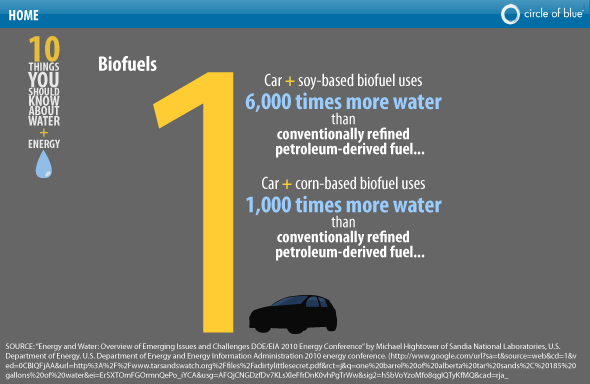
›Speaking yesterday at the Wilson Center, Circle of Blue Senior Editor and New York Times reporter Keith Schneider called his organization’s latest project, reporting on the intersection of finite water resources and growing demand for energy around the world, one of the most important stories of his career. First in the series is Choke Point: U.S.:For as long as the United States has been a nation the central idea guiding energy development is to generate as much as the energy sector is capable of producing. In every way imaginable, though, the 21st century is testing the soundness of that principle. A number of environmental, economic, and political impediments lie in the path to large increases in American energy production.
For more check out Circle of Blue’s full feature as well their multimedia section, with infographics illustrating water regulations and power generation type by state, North Dakota’s remarkable rise to “domestic oil royalty,” and video interviews with residents and experts from around the country (including the Wilson Center’s Jennifer Turner, on China).
None, though, is more significant than the nation’s steadily diminishing reserve of fresh water. The place where rising energy demand collides with declining water supplies is a national choke point that the United States has barely begun to address, and certainly isn’t close to resolving.
Beyond the United States, Circle of Blue and the Wilson Center’s China Environment Forum also hope to start-up a “Choke Point: China” but are still seeking funding.
Image Credit: Graphic courtesy of Ball State University graduate student, Mark Townsend, and data compiled by Circle of Blue’s Aubrey Ann Parker and Andrea Hart. -
Alex Evans on Resource Scarcity and Global Consumption
›“Why should we be concerned with scarcity issues?” asks New York University’s Alex Evans. Beyond general population growth, there is also an expanding global middle class that is shifting to more Western diets and consuming more energy, he explains. The net result is that demand for food, water, oil, and land is outpacing supply. These scarcity issues should be grouped together, argues Evans, because you can’t address one without affecting the others.
The “Pop Audio” series offers brief clips from ECSP’s conversations with experts around the world, sharing analysis and promoting dialogue on population-related issues. Also available on iTunes.