

Showing posts from category *Blog Columns.
-
Preparing for the Impact of a Changing Climate on U.S. Humanitarian and Disaster Response
›Climate-related disasters could significantly impact military and civilian humanitarian response systems, so “an ounce of prevention now is worth a pound of cure in the future,” said CNA analyst E.D. McGrady at the Wilson Center launch of An Ounce of Preparation: Preparing for the Impact of a Changing Climate on U.S. Humanitarian and Disaster Response. The report, jointly published by CNA and Oxfam America, examines how climate change could affect the risk of natural disasters and U.S. government’s response to humanitarian emergencies. [Video Below]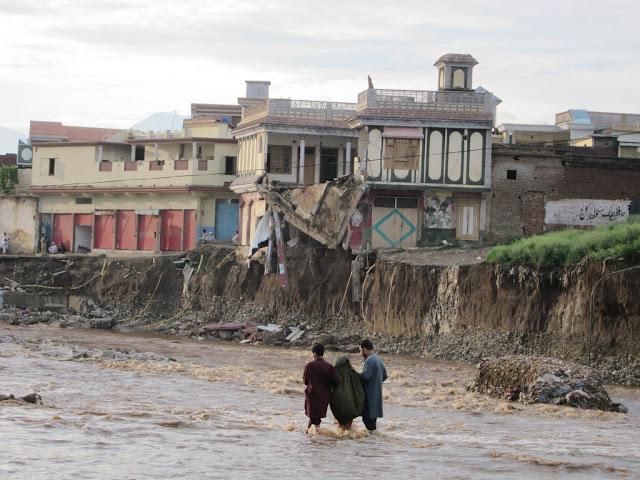
Connecting the Dots Between Climate Change, Disaster Relief, and Security
The frequency of – and costs associated with – natural disasters are rising in part due to climate change, said McGrady, particularly for complex emergencies with underlying social, economic, or political problems, an overwhelming percentage of which occur in the developing world. In addition to the prospect of more intense storms and changing weather patterns, “economic and social stresses from agricultural disruption and [human] migration” will place an additional burden on already marginalized communities, he said.
Paul O’Brien, vice president for policy and campaigns at Oxfam America said the humanitarian assistance community needs to galvanize the American public and help them “connect the dots” between climate change, disaster relief, and security.
As a “threat multiplier,” climate change will likely exacerbate existing threats to natural and human systems, such as water scarcity, food insecurity, and global health deterioration, said Vice Admiral Lee Gunn, USN (ret.), president of CNA’s Institute for Public Research. Major General Richard Engel, USAF (ret.), of the National Intelligence Council identified shifting disease patterns and infrastructural damage as other potential security threats that could be exacerbated by climate change.
“We must fight disease, fight hunger, and help people overcome the environments which they face,” said Gunn. “Desperation and hopelessness are…the breeding ground for fanaticism.”
U.S. Response: Civilian and Military Efforts
The United States plays a very significant role in global humanitarian assistance, “typically providing 40 to 50 percent of resources in a given year,” said Marc Cohen, senior researcher on humanitarian policy and climate change at Oxfam America.
The civilian sector provides the majority of U.S. humanitarian assistance, said Cohen, including the USAID Office of Foreign Disaster Assistance (OFDA) and the State Department’s Bureau of Population, Refugees, and Migration. These organizations provide leadership, funding, and food aid to developing countries in times of crisis, but also beforehand: “The internal rationale [of the Office of Foreign Disaster Assistance] is to reduce risk and increase the resilience of people to reduce the need for humanitarian assistance in the future,” said Edward Carr, climate change coordinator at USAID’s Bureau for Democracy, Conflict, and Humanitarian Assistance.
The U.S. military complements and strengthens civilian humanitarian assistance efforts by accessing areas that civilian teams cannot reach. The military can utilize its heavy lift capability, in-theater logistics, and command and control functions when transportation and communications infrastructures are impaired, said McGrady, and if the situation calls for it, they can also provide security. In addition, the military could share lessons learned from its considerable experience planning for complex, unanticipated contingencies with civilian agencies preparing for natural disasters.
“Forgotten Emergencies”
Already under enormous stress, humanitarian assistance and disaster response systems have persistent weaknesses, such as shortfalls in the amount and structure of funding, poor coordination, and lack of political gravitas, said Cohen.
Food-related aid is over-emphasized, said Cohen: “If we break down the shortfalls, we see that appeals for food aid get a better response than the type of response that would build assets and resilience…such as agricultural bolstering and public health measures.” Food aid often does not draw on local resources in developing countries, he said, which does little to improve long-term resilience.
“Assistance is not always based on need…but on short-term political considerations,” said Cohen, asserting that too much aid is supplied to areas such as Afghanistan and Iraq, while “forgotten emergencies,” such as the Niger food crisis, receive far too little. Furthermore, aid distribution needs to be carried out more carefully at the local scale as well: During complex emergencies in fragile states, any perception of unequal assistance has the potential to create “blowback” if the United States is identified with only one side of a conflict.
Engel added that many of the problems associated with humanitarian assistance will be further compounded by increasing urbanization, which concentrates people in areas that do not have adequate or resilient infrastructure for agriculture, water, or energy.
Preparing for Unknown Unknowns
A “whole of government approach” that utilizes the strengths of both the military and civilian humanitarian sectors is necessary to ensure that the United States is prepared for the future effects of climate change on complex emergencies in developing countries, said Engel.
In order to “cut long-term costs and avoid some of the worst outcomes,” the report recommends that the United States:
Cohen singled out “structural budget issues” that pit appropriations for protracted emergencies in places like Iraq, Afghanistan, and Darfur against unanticipated emergencies, like the 2010 earthquake in Haiti. Disaster-risk reduction investments are not a “budgetary trick” to repackage disaster appropriations but a practical way to make more efficient use of current resources, he said: “Studies show that the return on disaster-risk reduction is about seven to one – a pretty good cost-benefit ratio.”- Increase the efficiency of aid delivery by changing the budgetary process;
- Reduce the demand by increasing the resilience of marginal (or close-to-marginal) societies now;
- Be given the legal authority to purchase food aid from local producers in developing countries to bolster delivery efficiency, support economic development, and build agricultural resilience;
- Establish OFDA as the single lead federal agency for disaster preparedness and response, in practice as well as theory;
- Hold an OFDA-led biannual humanitarian planning exercise that is focused in addressing key drivers of climate-related emergencies; and,
- Develop a policy framework on military involvement in humanitarian response.
Edward Carr said that OFDA is already integrating disaster-risk reduction into its other strengths, such as early warning systems, conflict management and mitigation, democracy and governance, and food aid. However, to build truly effective resilience, these efforts must be tied to larger issues, such as economic development and general climate adaptation, he said.
“What worries me most are not actually the things I do know, but the things we cannot predict right now,” said Carr. “These are the biggest challenges we face.”
“Pakistan Floods: thousands of houses destroyed, roads are submerged,” courtesy of flickr user Oxfam International. -
Watch ‘Dialogue’ TV on Severe Weather and Climate Change: Is There a Connection?
›This week on Dialogue, host John Milewski is joined by Heidi Cullen and Edward Maibach for a discussion on whether recent severe weather outbreaks in the United States and around the world are directly tied to the latest data on climate change. [Video Below] Dialogue is an award-winning co-production of the Woodrow Wilson International Center for Scholars and MHz Networks that explores the world of ideas through conversations with renowned public figures, scholars, journalists, and authors. The show is also available throughout the United States on MHz Networks, via broadcast and cable affiliates, as well as via DirecTV and WorldTV (G19) satellite.
Heidi Cullen is a research scientist and correspondent for Climate Central where she also served as director of communications. Previously, she served as the Weather Channel’s first on air climate expert and is also a member of the National Oceanic and Atmospheric Administration Science Advisory Board. Edward Maibach joined the George Mason University faculty in 2007 to create the Center for Climate Change Communication. He is also a principal investigator of several climate change education grants funded by the National Science Foundation and the Robert Wood Johnson Foundation.
Find out where to watch Dialogue where you live via MHz Networks. You can send questions or comments on the program to dialogue@wilsoncenter.org.

Keith Schneider, Circle of Blue
Double Choke Point: Demand for Energy Tests Water Supply and Economic Stability in China and the U.S.
›
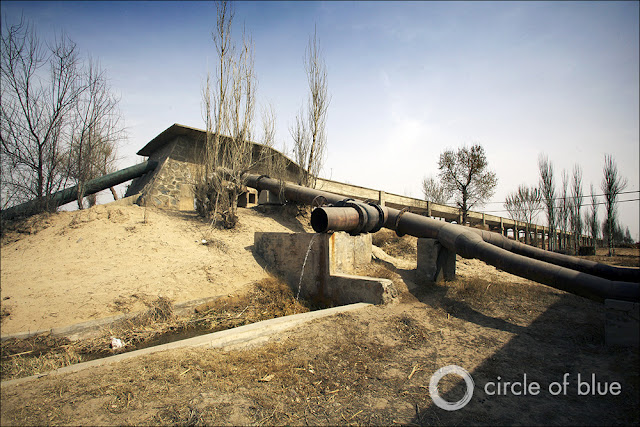
The coal mines of Inner Mongolia, China, and the oil and gas fields of the northern Great Plains in the United States are separated by 11,200 kilometers (7,000 miles) of ocean and 5,600 kilometers (3,500 miles) of land.
But, in form and function, the two fossil fuel development zones – the newest and largest in both nations – are illustrations of the escalating clash between energy demand and freshwater supplies that confront the stability of the world’s two biggest economies. How each nation responds will profoundly influence energy prices, food production, and economic security not only in their domestic markets, but also across the globe.
Both energy zones require enormous quantities of water – to mine, process, and use coal; to drill, fracture, and release oil and natural gas from deep layers of shale. Both zones also occur in some of the driest regions in China and the United States. And both zones reflect national priorities on fossil fuel production that are causing prodigious damage to the environment and putting enormous upward pressure on energy prices and inflation in China and the United States, say economists and scholars.
“To what degree is China taking into account the rising cost of energy as a factor in rising overall prices in their economy?” David Fridley said in an interview with Circle of Blue. Fridley is a staff scientist in the China Energy Group at Lawrence Berkeley National Laboratory in California. “What level of aggregate energy cost increases can China sustain before they tip over?”
“That’s where China’s next decade is heading – accommodating rising energy costs,” he added. “We’re already there in the United States. In 13 months, we’ll be fully in recession in this country; 9 percent of our GDP is energy costs. That’s higher than it’s been. When energy costs reach eight to nine percent of GDP, as they have in 2011, the economy is pushed into recession within a year.”
Continue reading on Circle of Blue.
Photo Credit: Used with permission, courtesy of J. Carl Ganter/Circle of Blue. In Ningxia Province, one of China’s largest coal producers, supplies of water to farmers have been cut 30 percent since 2008.
Top 10 Posts for June 2011
›
Chairman of the Joint Chief of Staff Admiral Mike Mullen joined his former staffers (see “In Search of a New Security Narrative“) on the New Security Beat top 10 list last month after speaking at the Wilson Center in the inaugural Lee Hamilton lecture. Richard Cincotta’s look at Tunisia’s demographics also remained popular, joined by several posts on climate, security, and development, including ECSP’s “Yemen Beyond the Headlines” event.
1. In Search of a New Security Narrative: The National Conversation at the Wilson Center
2. Tunisia’s Shot at Democracy: What Demographics and Recent History Tell Us
3. Connections Between Climate and Stability: Lessons From Asia and Africa
4. Admiral Mullen: “Security Means More Than Defense,” Inaugural Lee Hamilton Lecture at the Wilson Center
5. Climate Adaptation, Development, and Peacebuilding in Fragile States: Finding the Triple-Bottom Line
6. One in Three People Will Live in Sub-Saharan Africa in 2100, Says UN
7. India’s Maoists: South Asia’s “Other” Insurgency
8. Eye on Environmental Security: Where Does It Hurt? Climate Vulnerability Index, Momentum Magazine
9. Helping Hands: An Integrated Approach to Development
10. Yemen Beyond the Headlines: Losing the Battle to Balance Water Supply and Population Growth
1. In Search of a New Security Narrative: The National Conversation at the Wilson Center
2. Tunisia’s Shot at Democracy: What Demographics and Recent History Tell Us
3. Connections Between Climate and Stability: Lessons From Asia and Africa
4. Admiral Mullen: “Security Means More Than Defense,” Inaugural Lee Hamilton Lecture at the Wilson Center
5. Climate Adaptation, Development, and Peacebuilding in Fragile States: Finding the Triple-Bottom Line
6. One in Three People Will Live in Sub-Saharan Africa in 2100, Says UN
7. India’s Maoists: South Asia’s “Other” Insurgency
8. Eye on Environmental Security: Where Does It Hurt? Climate Vulnerability Index, Momentum Magazine
9. Helping Hands: An Integrated Approach to Development
10. Yemen Beyond the Headlines: Losing the Battle to Balance Water Supply and Population Growth
Quality and Quanitity: The State of the World’s Midwifery in 2011
›
Each year, 350,000 women die while pregnant or giving birth, as many as two million newborns die within the first 24 hours of life, and there are 2.6 million stillbirths. Sadly, the majority of these deaths could be prevented if poor and marginalized women in developing countries had access to adequate health facilities and qualified health professionals. In fact, according to the new UNFPA report, State of the World’s Midwifery 2011: Delivering Health, Saving Lives, just doubling the current number of midwives in the 58 countries highlighted in the report could avert 21 percent of maternal, fetal, and newborn deaths.
Launched last week, the report is the first of its kind, using new data from 58 low-income countries with high burdens of maternal and neonatal mortality to highlight the challenges and opportunities for developing an effective midwifery workforce.
“Developing quality midwifery services should be an essential component of all strategies aimed at improving maternal and newborn health,” write the authors of the report. Qualified midwives ensure a continuum of essential care throughout pregnancy and birth, and midwives can help facilitate referrals of mothers and newborns to hospitals or specialists when needed:
To help overcome these challenges, the report outlines a number of “bold steps” to be taken by governments, regulatory bodies, schools, professional associations, NGOs, and donor agencies in order to maximize the impact of investments, improve mutual accountability, and strengthen the midwifery workforce and services. Of course, the needs of each country are unique, and the report ends with individual country profiles that highlight country-specific maternal and neonatal health indicators.
While this report does much to highlight the critical importance of midwives in promoting the health and survival of mothers and newborns, real impact will only come when governments, communities, civil society, and development partners work together to implement these recommendations.
Sources: UNFPA.
Video Credit: UNFPA.
“Developing quality midwifery services should be an essential component of all strategies aimed at improving maternal and newborn health,” write the authors of the report. Qualified midwives ensure a continuum of essential care throughout pregnancy and birth, and midwives can help facilitate referrals of mothers and newborns to hospitals or specialists when needed:
Unless an additional 112,000 midwives are trained, deployed, and retained in supportive environments, 38 of 58 countries surveyed might not met their target to achieve 95 per cent coverage of births by skilled attendants by 2015, as required by Millennium Development Goal 5.There is a total shortage of 350,000 skilled midwives globally, with some countries, like Chad and Haiti, needing a tenfold increase to match demand, according to the report. But quantity isn’t the only issue; there has also been an insufficient focus on quality of care. Additionally, most countries do not have the capacity to accurately measure the number of practicing midwives, and national policies focusing on maternal and newborn health services often do not view midwifery services as a priority.
To help overcome these challenges, the report outlines a number of “bold steps” to be taken by governments, regulatory bodies, schools, professional associations, NGOs, and donor agencies in order to maximize the impact of investments, improve mutual accountability, and strengthen the midwifery workforce and services. Of course, the needs of each country are unique, and the report ends with individual country profiles that highlight country-specific maternal and neonatal health indicators.
While this report does much to highlight the critical importance of midwives in promoting the health and survival of mothers and newborns, real impact will only come when governments, communities, civil society, and development partners work together to implement these recommendations.
Sources: UNFPA.
Video Credit: UNFPA.
Nepal to East Africa: Population, Health, and Environment Programs Compared
›

 In “Linking Population, Health, and the Environment: An Overview of Integrated Programs and a Case Study in Nepal” from the Mount Sinai Journal of Medicine, Sigrid Hahn, Natasha Anandaraja, and Leona D’Agnes provide both a broad survey of the structure and content of programs using the PHE method and an in-depth case study of a successful initiative in Nepal. Hahn et al. praise the Nepalese program for simultaneously addressing deforestation from fuel-wood harvesting, indoor air pollution from wood fires, acute respiratory infections related to smoke inhalation, as well as family planning in Nepal’s densely populated forest corridors. “The population, health, and environment approach can be an effective method for achieving sustainable development and meeting both conservation and health objectives,” the authors conclude. In particular, one benefit of cross-sectoral natural resource and development programs is the inclusion of men and adolescent boys typically overlooked by strictly family planning programs.
Ecological Tourism and Development in Chi Phat, Cambodia
›
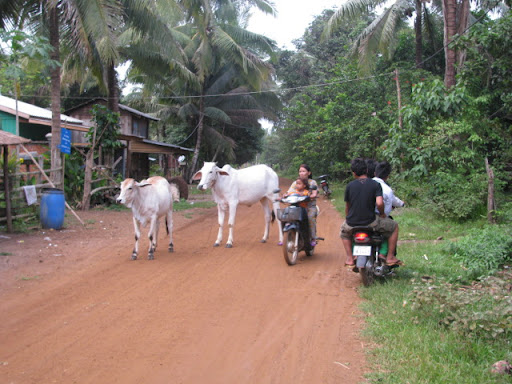
The project has been featured in The New York Times and since its inclusion in the Lonely Planet travel guide, has become a destination for backpackers looking to leave the beaten path. I recently visited the project after spending time in neighboring Vietnam and was struck by the contrast between the densely populated and urbanized Mekong Delta and the visibility of rural poverty in Cambodia.
“Cambodia’s contemporary poverty is largely a legacy of over twenty years of political conflict,” reads a 2006 World Bank Poverty Assessment. The Pol Pot regime’s agrarian collectivization forced millions into the countryside and as a result, even in today’s predominantly-urban world, Cambodia remains 78 percent rural. Today 93 percent of Cambodia’s poor live in rural areas, two thirds of rural people face food shortages, and maternal and reproductive health outcomes in the country lag far behind those in the cities. Chi Phat and the sparsely populated northeast have over ten or twenty times the rate of maternal deaths of Phnom Penh.
A Town Transformed
Before Wildlife Alliance began the Community-Based Ecotourism (CBET) project in Chi Phat, most villagers made a living by slash-and-burn farming, illegal logging, and poaching endangered wildlife. Wildlife Alliance Founder and CEO Suwanna Gauntlett described the ecological zone around the town as “a circle of death,” in an audio interview with New Security Beat last year.
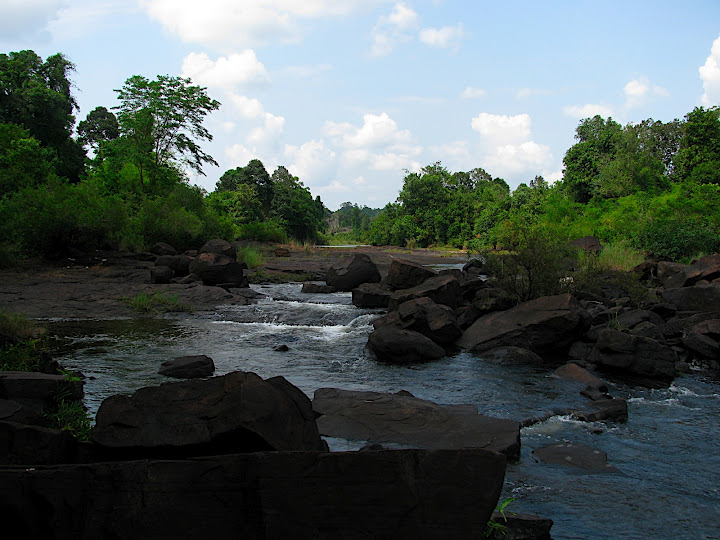
One villager, Moa Sarun, described to me how he went from poacher and slash-and-burn farmer, to tour guide, and finally, chief accountant:
Since I have started working with CBET, I realize that the wildlife and forest can attract a lot of tourists and bring a lot of income to villagers in Chi Phat commune. I feel very regretful for what I have done in the past as the poacher…I know clearly the aim of CBET is to alleviate the poverty of local people in Chi Phat, so I am very happy to see people in Chi Phat have jobs and better livelihoods since the project has established.It’s hard to imagine what the town would have looked like before Wildlife Alliance arrived. The visitor center, restaurant, and “pub” (really, a concrete patio with plastic chairs and a cooler filled with beer), together make up nearly half of the town’s establishments. For two dollars a night, I stayed in a homestay and lived as the locals do on a thin mattress under mosquito netting, with a bucket of cold water by the outhouse for a shower, and a car battery if I wanted to use the fan or light (but not both). These amenities place Chi Phat above average for rural Cambodia. According to 2008 World Bank data, only 18 percent of rural areas had access to improved sanitation and only 56 percent had access to an improved water source.
Poaching Persists
Real change has certainly hit Chi Phat, but illegal activities persist, as a Wall Street Journal review of the project noted. In one Wildlife Alliance survey, 95 percent of members participating in the project made less than 80 percent of their previous income and 12 percent of people made less than 50 percent. “That, to me, is a red flag,” Director of U.S. Operations Michael Zwirn acknowledged to me. Nevertheless, he said “it is well documented that it’s the most lucrative community-based ecotourism project in Cambodia. That doesn’t mean that everyone is making money, or that they’re making enough money, but the community is clearly benefiting.”
Harold de Martimprey, Wildlife Alliance’s community-based ecotourism project manager, told me in an email interview:
We monitor closely the impact of the CBET project on the diminution of poaching and deforestation. We estimate that since the beginning of the project, the illegal activities have decreased by almost 70 percent.
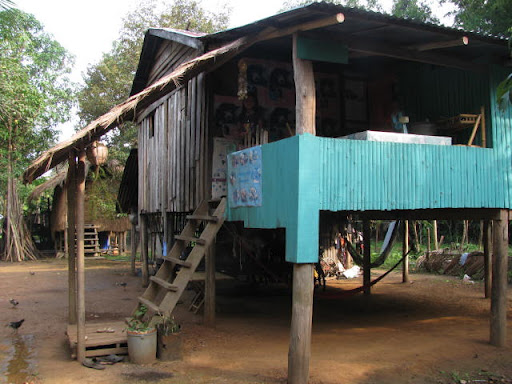
After four years, Chi Phat has already developed enough to operate financially on its own. Wildlife Alliance will stop funding the project later this year and transition it towards total self-sustainability. The plan is to then ramp up efforts at a neighboring project in Trapeang Ruong, due to open to the public next month.
A Land of Opportunity
So far Chi Phat lacks much of what do-gooder tourists are hoping to find when they come in search of ecotourism. There is little to no information about the work of Wildlife Alliance and how ecotourism benefits the town, or the health, education, and economic benefits the villagers have received. A little more obvious justification for ecotourism’s inflated prices might appease the average backpacker used to exploitatively lower prices elsewhere in the country. The guides, staff, and host families for the most part speak little English, which does not bode well for its tourism potential. “This is a work in progress,” said de Martimprey.
Most of my time in Chi Phat, I felt like the only foreigner to ever set foot in the town – refreshing after witnessing much of the rest of Southeast Asia’s crowded backpacker scene. As Chi Phat continues to grow, hopefully it will “bring in enough people to support the community without the adverse effects of tourism,” said Zwirn. “They don’t want it to turn into the Galapagos.” Thankfully, de Martimprey told me, “Chi Phat is far from reaching this limit and can be scaled up to much bigger operation,” without negatively impacting the environment.
Luckily, plans to build a highly destructive titanium mine near the town were recently nixed by Prime Minister Hun Sen in what was an unexpected victory over industrial interests. However, soon after, the town was again under threat – this time by a proposed banana plantation nearby.
“The Cardamom Mountains are still seen as a land of opportunity for economic land concessions for some not-so-green investors looking at buying land for different purposes, and often disregarding the interest of the local people,” said de Martimprey.
Eventually Zwirn hopes that as more tourists come to the Cardamoms, they will become “a constituency for conservation,” he said. “We need to build a worldwide awareness of the Cardamoms as a destination, and as a place worth saving.”
Sources: BBC, IFAD, Phnom Penh Post, New York Times, United Nations, Wall Street Journal, Wildlife Alliance, World Bank, World Wildlife Fund.
Photo Credit: Hannah Marqusee.
Watch ‘Dialogue’ TV on the Future of Women and the Arab Spring
›

Moushira Khattab is a human rights activist who formerly served as Minister of Family and Population for Egypt. She also served as Assistant Minister of Foreign Affairs, Vice Chair of the UN Committee on the Rights of the Child, and was Egypt’s ambassador to South Africa during the Mandela era. Lilia Labidi is an anthropologist and professor at the University of Tunis who currently serves as Minister of Women’s Affairs in the Republic of Tunisia. Previously she was a visiting professor at the American University in Cairo and a fellow at the Wilson Center. Haleh Esfandiari is author of the book, My Prison My Home: One Women’s Story of Captivity in Iran. Haleh serves as the director of the Wilson Center’s Middle East Program.
Dialogue is an award-winning co-production of the Woodrow Wilson International Center for Scholars and MHz Networks that explores the world of ideas through conversations with renowned public figures, scholars, journalists, and authors. The show is also available throughout the United States on MHz Networks, via broadcast and cable affiliates, as well as via DirecTV and WorldTV (G19) satellite.
Find out where to watch Dialogue where you live via MHz Networks. You can send questions or comments on the program to dialogue@wilsoncenter.org.



