Showing posts from category *Blog Columns.
-
Second Generation Biofuels and Revitalizing African Agriculture
›In “A New Hope for Africa,” published in last month’s issue of Nature, authors Lee R. Lynd and Jeremy Woods assert that the international development community should “cut with the beneficial edge of bioenergy’s double-edged sword” to enhance food security in Africa. According to Lynd and Woods, Africa’s severe food insecurity is a “legacy of three decades of neglect for agricultural development.” Left out of the Green Revolution in the 1960s, the region was flooded with cheap food imports from developed nations while local agricultural sectors remained underdeveloped. With thoughtful management, bioenergy production on marginal lands unfit for edible crops may yield several food security benefits, such as increased employment, improved agricultural infrastructure, energy democratization, land regeneration, and reduced conflict, write the authors. The technological advancements of second-generation biofuels may ease the zero-sum tension between food production and bioenergy in the future, writes Duncan Graham-Rowe in his article “Beyond Food Versus Fuel,” also appearing last month in Nature. Graham-Rowe notes that current first-generation biofuel technologies, such as corn and sugar cane, contribute to rising food prices, require intensive water and nitrogen inputs, and divert land from food production by way of profitability and physical space. There is some division between second-generation biofuel proponents: some advocate utilizing inedible parts of plants already produced, while others consider fast-growing, dedicated energy crops (possibly grown on polluted soil otherwise unfit for human use) a more viable solution – either has the potential to reduce demand for arable land, says Graham-Rowe. “Advanced generations of biofuels are on their way,” he writes, it is just a matter of time before their kinks are worked out “through technology, careful land management, and considered use of resources.”
 -
Emily Puckart, MHTF Blog
Maternal Health Challenges in Kenya: An Overview of the Meetings
›The original version of this article, by Emily Puckart, appeared on the Maternal Health Task Force blog.
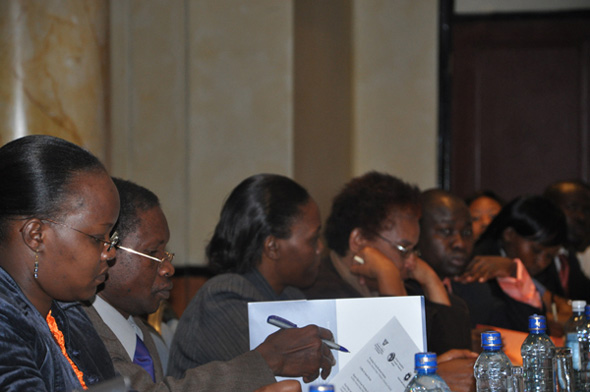
I attended the two day Nairobi meeting on “Maternal Health Challenges in Kenya: What New Research Evidence Shows” organized by the Woodrow Wilson International Center and the African Population and Health Research Center (APHRC). [Video Below]
First, here in Nairobi, participants heard three presentations highlighting challenges in maternal health in Kenya. The first presentation by Lawrence Ikamari focused on the unique challenges faced by women in rural Kenya. Presently Kenya is still primarily a rural country where childbearing starts early and women have high fertility rates. A majority of rural births take place outside of health institutions, and overall rural women have less access to skilled birth attendants, medications, and medical facilities that can help save their lives and the lives of their babies in case of emergency.
Catherine Kyobutungi highlighted the challenges of urban Kenyan women, many of whom deliver at home. When APHRC conducted research in this area, nearly 68 percent of surveyed women said it was not necessary to go to health facility. Poor road infrastructure and insecurity often prevented women from delivering in a facility. Women who went into labor at night often felt it is unsafe to leave their homes for a facility and risked their lives giving birth at home away from the support of skilled medical personnel and health facilities. As the urban population increases in the coming years, governments will need to expend more attention on the unique challenges women face in urban settings.
Finally, Margaret Meme explored a human rights based approach to maternal health and called on policymakers, advocates, and donors to respect women’s right to live through pregnancies. Further, she urged increased attention on the role of men in maternal health by increasing the education and awareness of men in the area of sexual and reproductive health as well as maternal health.
After these initial presentations, participants broke out into lively breakout groups to discuss these maternal health challenges in Kenya in detail. They reconvened in the afternoon in Nairobi to conduct a live video conference with a morning Washington, DC audience at the Woodrow Wilson Center. It was exciting to be involved in this format, watching as participants in Washington were able to ask questions live of the men and women involved in maternal health advocacy, research and programming directly on the ground in Kenya. It was clear the excitement existed on both sides of the Atlantic as participants in Nairobi were able to directly project their concerns and hopes for the future of maternal health in Kenya across the ocean through the use of video conferencing technology.
There was a lot of excitement and energy in the room in Nairobi, and I think I sensed the same excitement through the television screen in DC. I hope that this type of simultaneous dialogue, across many time zones, directly linking maternal health advocates around the globe, is an example of what will become commonplace in the future of the maternal health field.
Emily Puckart is a senior program assistant at the Maternal Health Task Force (MHTF).
Photo Credit: MHTF. -
Farahnaz Zahidi Moazzam on the Population Reference Bureau’s “Women’s Edition” Trip to Ethiopia
›The original version of this article, by Farahnaz Zahidi Moazzam, appeared on the Population Reference Bureau’s Behind the Numbers blog.My name is Farahnaz Zahidi Moazzam, and I’m a freelance journalist, writer, and editor from Pakistan. My passion is writing about human rights with a special focus on gender issues and reproductive health. Blogging is a personal joy to me, as I put my heart into my writing and blogging allows for a more personalized style. Digital journalism is a sign of evolution – one I happily accept. My pet peeve is marginalization on any grounds. I am a mother of a teenage daughter and live in Karachi.
As part of the Population Reference Bureau’s (PRB) group of journalists in Women’s Edition 2010-2012, I recently had the chance to travel to Ethiopia on a visit that was unforgettable. The visit inspired a series of seven brief travel-blogs, based on my seven days there. Women’s Edition is a wonderful opportunity to connect with other like-minded female journalists from developing countries around the world, and learn solutions to the problems from this interaction. The program has reaffirmed my belief that our commonalities are more than the differences.
Read Farahnaz Zahidi Moazzam’s posts from her trip to Ethiopia on her blog, Impassioned Ramblings, and view photos from the trip on PRB’s Facebook page.
Photo Credit: PRB. -
Water, Energy, and the U.S. Department of Defense
›Energy for the War Fighter is the U.S. Department of Defense’s first operational energy strategy, mandated by congress last year. Energy security for the department means having assured access to reliable supplies of energy and the ability to protect and deliver energy to meet operational (non-facilities-related) needs. The report is divided into three main parts, which address reducing current demand for energy in military operations; expanding and securing the supply of energy for military operations; and building consideration of energy security into future force decisions. The strategy is designed to both support current military operations and to focus future energy investments accordingly. Previous federal energy mandates exempted the military’s field operations, which account for three-quarters of the department’s energy consumption. The department as a whole makes up 80 percent of the federal government’s annual energy use.The Water Energy Nexus: Adding Water to the Energy Agenda, by Diana Glassman, Michele Wucker, Tanushree Isaacman, and Corinne Champilouis of the World Policy Institute, attempts to show the correlation between energy and water to motivate policy makers to consider the implications of their dual consumption. “Nations around the world are evaluating their energy options and developing policies that apply appropriate financial carrots and sticks to various technologies to encourage sustainable energy production, including cost, carbon, and security considerations,” write the authors. “Water needs to be a part of this debate, particularly how communities will manage the trade-offs between water and energy at the local, national, and cross-border levels.” The study provides the context needed to evaluate key tradeoffs between water and energy by providing “the most credible available data about water consumption per unit of energy produced across a wide spectrum of traditional energy technologies,” they write.
Sources: U.S. Department of Defense. -
UN Security Council Debates Climate Change
›Today the UN Security Council is debating climate change and its links to peace and international security. In this short video, ECSP Director Geoff Dabelko outlines his hopes for today’s session and its follow-on activities. He suggests it is time to move from problem identification to problem solving by developing practical steps to respond to climate-security links.
This Security Council debate was held at the instigation of the German government, chair of the Security Council this month. But it is not the first time this body has debated climate and security. In 2007, the United Kingdom used its prerogative as chair to introduce the topic in the security forum. Opinions from member states diverged on whether the Security Council was the appropriate venue for climate change.
Largely at the instigation of the Alliance of Small Island States, the UN General Assembly tackled climate and security links in 2009. The resulting resolution also spurred the UN Secretary-General to produce a summary report on the range of climate and security links.
Sources: Reuters, UN. -
Failed States Index 2011
›“The reasons for state weakness and failure are complex, but not unpredictable,” said J.J. Messner, one of the founders of the Fund for Peace’s Failed States Index, at the launch of the 2011 version of report in Washington last month. The Index is an analytical tool that could aid policymakers and governments seeking to prevent and mitigate state collapse by identifying patterns of underlying drivers of state instability.
The Index ranks 177 countries according to 12 primary social, economic, and political indicators based on analysis of “thousands of news and information sources and millions of documents” and distilled into a form that is meant to be “relevant as well as easily digestible and informative,” according to the creators. “By highlighting pertinent issues in weak and failing states,” they write, the Index “makes political risk assessment and early warning of conflict accessible to policymakers and the public at large.”
Common Threats: Demographic and Natural Resource Pressures
The Index reveals that half of the 10-most fragile states are acutely demographically challenged. The composite “Demographic Pressures” category takes into account population density, growth, and distribution; land and resource competition; water scarcity; food security; the impact of natural disasters; and public health prevention and control. Additional population indices are found in “Massive Movement of Refugees or Internally Displaced Persons (IDPs),” and health indicators, including infant mortality, water, and sanitation, are spread across several categories.
Not surprisingly, some of the most conflict-ridden countries show up at the top of the list. The Index highlights some of the lesser known issues that contribute to their misery: demographic and natural resource stresses in Afghanistan, Iraq, Nigeria, Pakistan, and Yemen (a list that would include Palestine, if inclusion in the Index were not contingent on UN membership); the DRC’s conflict minerals; and Somalia and Sudan’s myriad of environmental and migration problems, which play major roles in their continued instability.
Haiti, with its poor health and lack of infrastructure and disaster resilience, was deemed the Index’s “most-worsened” state of 2011. The January 2010 earthquake and its ensuing “chaos and humanitarian catastrophe” demonstrated that a single event can trigger the collapse of virtually every other sector of society, causing what Messner termed the “Humpty Dumpty effect” – while a state can deteriorate quickly, it is much harder to put it back together again.
The inclusion of natural resource governance within the social and economic indicators would render the Index a more complete analytical tool. In a 2009 report, the UN Environment Program (UNEP) found that “since 1990, at least eighteen violent conflicts have been fueled by the exploitation of natural resources,” and that effective natural resource management is a necessary component of conflict prevention and peacebuilding operations.
The Elephant in the Room: Predicting the Arab Spring
Why did the Index fail to predict the Arab Spring sweeping the Middle East and North Africa? Many critics assert that the inconsistent ranking of the states, ranging from Yemen (ranked 13th) to Bahrain (ranked 129th), demonstrates that the Index is a poor indicator of state instability. Particularly, critics argue that many of the countries experiencing revolutions were ranked artificially low.
“Of course, the Failed States Index did not predict the Arab Spring, and nor is it intended to predict such upheavals,” said Messner at the launch event. “But by digging down deeper into the specific indicator analysis, it was possible to observe the growing tensions in those countries.” The Index has consistently highlighted specific troubling indicators for the region, such as severe demographic pressures, migration, group grievance, human rights, state legitimacy, and political elitism.
Blake Hounshell, a correspondent with Foreign Policy (long-time collaborators with the Fund for Peace on the Index), wrote that the Index was never meant to be a “crystal ball” – even the best statistical data cannot truly encapsulate the complex realities that lead to inherently unpredictable events, such as revolutions. “It’s thousands of individual decisions, not rows of statistics, that add up to political upheaval,” Hounshell continued.
Demographer Richard Cincotta’s work on Tunisia’s revolution illuminates how the Index’s linear indicators can mask a complex reality. Whereas the Failed States Index simply measures “demographic pressure” as a linear function of how youthful a population is, Cincotta pointed out at a Wilson Center event that it was actually Tunisia’s relative demographic maturity that paved the way for its revolution and gives it a good chance of achieving a liberal democracy. Other countries in the region are much younger than Tunisia (Yemen being the youngest). The Arab Spring demonstrates that static indicators alone often do not have the capacity to predict complex social and political revolutions.
Sources: Foreign Policy, The Fund for Peace, UNEP.
Image Credit: Failed States Index 2011, Foreign Policy. -
Leona D’Agnes on Evaluating PHE Service Delivery in the Philippines
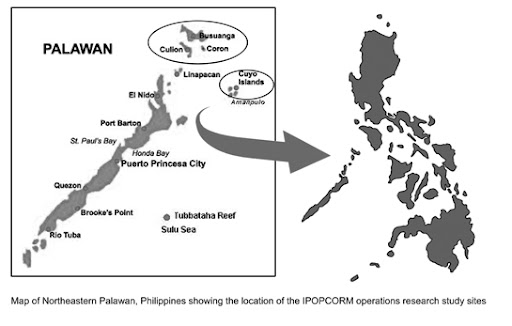
›“By reducing population growth, we are going to have a better chance of sustaining the gains of an environmental conservation project,” said Leona D’Agnes in this interview with ECSP. D’Agnes, a technical advisor to PATH Foundation Philippines, served as lead author on a research article published late last year in Environmental Conservation titled, “Integrated Management of Coastal Resources and Human Health Yields Added Value: A Comparative Study in Palawan (Philippines).” The study provided concrete statistical evidence that integrated development programming incorporating population, health, and the environment (PHE) can be more effective in lowering population growth rates and preserving critical coastal ecosystems than single-sector development interventions.
“What set this research apart from earlier work on integrated programming was the rigorous evaluation design that was applied,” said D’Agnes. “What this design aimed to do is to evaluate the integrated approach itself. Most of the previous evaluations that have been done on integrated programming were impact evaluations — they set out to evaluate the impact of the project.” This most recent research project, on the other hand, sought to evaluate the effectiveness of cross-sectoral interventions based on “whether or not synergies were produced,” said D’Agnes.Although it took her team six years to generate statistically significant findings in Palawan, D’Agnes reports that the synergies of PATH Foundation Philippines’ PHE intervention took the form of reduced income poverty, a decreased average number of children born to women of reproductive age, and the preservation of coastal resources, which helped bolster the region’s food security.
Going forward, D’Agnes said, an integrated approach to environmental conservation should also prove appealing because of its cost effectiveness. “This has huge implications for local governments in the Philippines, where they are struggling to meet the basic needs of their constituents in the face of very small internal revenue allotments that they get from the central government,” she said. “They can really pick up on this example to see that at the local level, if somehow they can do this integrated service delivery that was done in the Integrated Population and Coastal Resource Management (IPOPCORM) model, that they’ll be able to achieve the objectives of both their conservation and their health programs in a much more cost-effective way, and, in the process, generate some other [positive] outcomes that perhaps they didn’t anticipate.”
D’Agnes expects the study’s results will prompt a fresh look at cross-sectoral PHE programming. “I hope that this evidence from this study will help to change the thinking in the conservation community about integrated approaches to conservation and development,” she said.
The “Pop Audio” series is also available as podcasts on iTunes. -
Watch: Michael Renner on Creating Peacebuilding Opportunities From Disasters
›Michael Renner is a senior researcher at the Worldwatch Institute working on the intersection between environmental degradation, natural resource issues, and peace and conflict. Recently, Renner has focused on water use and its effects on the Himalayan region. In particular he’s working to find positive opportunities that can turn “what is a tremendous problem, into perhaps an opportunity for collaboration among different communities, among different regions, and perhaps…ultimately across the borders of the region,” he said during this interview with ECSP.