-
Weathering Change: New Film Links Climate Adaptation and Family Planning
›“Our planet is changing. Our population is growing. Each one of us is impacting the environment…but not equally. Each one of us will be affected…but not equally,” asserts the new documentary, Weathering Change, launched at the Wilson Center on September 22. The film, produced by Population Action International (PAI), explores the devastating impacts of climate change on the lives of women in developing countries through personal stories from Ethiopia, Nepal, and Peru. Family planning, argue the filmmakers, is part of the solution.
-
Aaron Wolf on Water Management, Agriculture, and Population Growth in the Middle East
› In terms of groundwater depletion, “Yemen and Gaza are probably the two places worst off in the Middle East,” Aaron Wolf told ECSP in a recent interview. Wolf, a water expert and geography professor at Oregon State University, said population growth across the broader Middle East region has led to intensified groundwater pumping in recent years. This trend has raised the prospects for water-related conflict down the road, as countries drain their groundwater stocks faster than the aquifers can recharge. Potentially complicating matters further, said Wolf, is that most aquifers in the Middle East cross international boundaries.
Despite the region’s history of water tensions, Wolf said the unprecedented level of demographic change currently being experienced across the Middle East is not necessarily a recipe for future confrontations over the resource, in part thanks to the existence of water-sharing agreements in the area. Nevertheless, mounting demand will likely force water-users across the region – especially within the agriculture sector – to change the ways they utilize the resource.
Accounting for 80 to 90 percent of total water usage in some Middle Eastern countries, agricultural operations have already been forced to adjust to the evolving water-access situation. While moving from flood irrigation to drip irrigation represents one policy option if sufficient funds are available, Wolf said doing away with local food production “is a path that a lot of countries are going to have to take” to ensure a relatively stable water supply for their populations’ drinking, cooking, and cleaning needs.
Wolf added that one frequently discussed but not entirely realistic option for addressing the region’s water-supply concerns involves desalination. To date, widespread deployment of the technology has been hampered by high costs and substantial energy requirements, although that hasn’t stopped a few countries in the region – among them the United Arab Emirates, Saudi Arabia, and Israel – from becoming partially reliant on converted fresh water.
Wolf maintained that desalination’s hefty price tag means the technology is useful only for urban population centers near the coast. Moving converted sea water further inland remains a non-starter, he said, because transporting it requires an enormous amount of energy (a cubic meter of water weighs a metric ton).
For the same reasons, Wolf asserted, using desalinated water for agriculture doesn’t seem to be in the cards any time soon. “Right now a cubic meter of desalinated water costs about 40 cents, and you can’t use that for agriculture unless it drops down to about 8 cents a cubic meter,” Wolf said. “So until you can irrigate with desalinated water, it really doesn’t go a long way towards mitigating the larger water crisis.”
The “Pop Audio” series is also available as podcasts on iTunes.
Sources: American University, International Food Policy Research Institute, World Bank. -
Women Leaders Urge Stronger Advocacy on Health and Public Policy
›The original version of this article appeared on the Pan American Health Organization website.
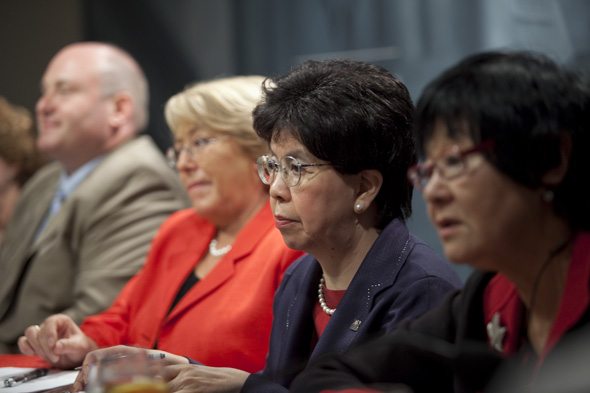
Women have made major strides toward greater equality in Latin America and the Caribbean, but stronger advocacy and leadership are needed to address problems they continue to face in health and other areas, said a group of top women health leaders at an event held at the Woodrow Wilson Center in Washington, D.C. on September 27.
The event was part of a series of activities surrounding the 51st Directing Council meeting of the Pan American Health Organization/World Health Organization (PAHO/WHO), which is being held this week.
Dr. Michelle Bachelet, Executive Director of UN Women, noted that Millennium Development Goal (MDG) five, reduce maternal mortality, “is the one MDG that has advanced the least in our region and around the world.” She said it is now widely accepted that investing in women is not only an issue of human rights, it is also “the intelligent thing to do economically, politically, and socially. So why doesn’t it happen?” She said making it happen is the major leadership challenge facing women in health and public policy today. “We have to empower women to make the strongest case possible that investing in women is the best thing governments can do, and we have to help ministers of health make this same case with their governments.”
WHO Director-General Dr. Margaret Chan said that high levels of maternal mortality reflect “a failure of governments.” “We know how to prevent women from dying while giving birth. It’s a lack of political commitment, policies, and investments in the right areas. We need to get these issues out into the public, and we need to work with men who are enlightened to accomplish this,” she said.
Rocío García Gaytán, President of the Inter-American Commission of Women, said maternal mortality continues to be a major problem in the hemisphere despite the fact that it is almost completely preventable. She said that contrary to common belief, most maternal deaths take place in hospitals and are the result of a lack of proper training of medical personnel. “This problem should not exist in the second decade of this millennium,” she said.
PAHO Director Dr. Mirta Roses urged women to develop a leadership style that will effectively advocate for women’s top concerns, particularly social, economic, and political progress.
“What is different when women lead?” Roses asked. “We need to support each other and identify what we should do that is different from male models. We must all work together – UN Women, the Council of Women World Leaders – to define feminine leadership and promote it.”
Canada’s Minister of International Cooperation, Beverly Oda, said progress on public policies for women “took many years” to develop in Canada. Today, gender reviews of legislation are now mandatory for legislation, and promotion of gender equality is an integral part of Canadian technical cooperation programs.
Vice-Minister of Health Dr. Silva Palma de Ruiz of Guatemala described a number of initiatives in her country that have been successful in improving women’s health and status. They include joint efforts involving the health ministry, the public prosecutor’s office, the national human rights ombudsman, and civil society organizations to reduce sexual violence by empowering women to report violence and by more aggressive prosecution of perpetrators. PAHO/WHO has supported these efforts with technical assistance in developing guides for care of victims of sexual violence. Other efforts include a new family planning law and education of men and women as well as healthcare workers about women’s rights to use contraception.
Minister of Health Ann Peters of Grenada said that women of the Caribbean “are very vocal” and have had considerable success advocating for women’s health. In her own country, this has helped produce a highly effective comprehensive mother-child health program that includes strong community health services with well-trained midwives and good referral systems, breastfeeding-friendly hospitals, and universal voluntary testing of pregnant women for HIV. Thanks to these programs, Grenada has “no mother-to-child transmission of HIV and virtually no maternal mortality.”
Minister of Health Marcella Liburd of Saint Kitts and Nevis noted the importance of addressing the social determinants of women’s health. For example, in her country as elsewhere, the majority of people living in poverty are women. “We need to consider other aspects of women’s well-being,” she said, “including financial, social, and mental health.”
Paraguay’s Minister of Health, Dr. Esperanza Martinez, said it was important to address women’s concerns in an integral way. She described a new platform for discussing policies that affect women involving different government ministries, not just health. “Women need to participate as policymakers and also to influence policies from the outside,” she said.
Dr. Carmen Barroso, Western Hemisphere Director for the International Planned Parenthood Federation, said, “Civil society is ready to partner with ministries of health to advocate for more resources, legislation, and promotion of women’s sexual and reproductive rights.”
The event was organized by the Council on Women World Leaders, PAHO/WHO, the Wilson Center’s Environmental Change and Security Program, Global Health Initiative, and Latin America Program.
Event ResourcesPhoto Credit: David Hawxhurst/Wilson Center. -
Digging Deeper: Water, Women, and Conflict
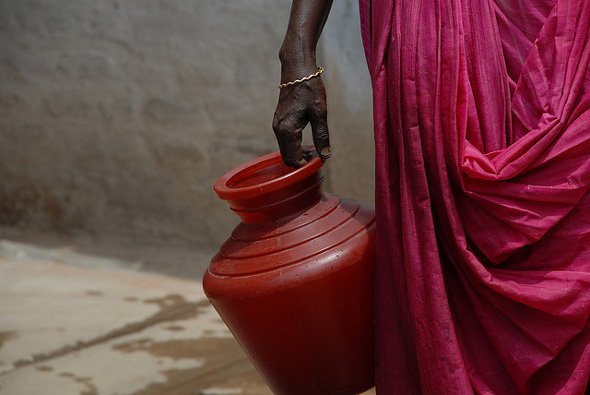
›It’s not just “carrying water from a water point, but it’s discharging responsibilities that a woman has for using and managing water which may make her vulnerable to violence and bring her into risky areas,” said Dennis Warner, senior technical advisor for water and sanitation at Catholic Relief Services (CRS), at the Wilson Center on August 29. [Video Below]
-
Gates and Winnefeld: Development a Fundamental Part of National Security
› “As we’ve learned in Iraq and Afghanistan, reconstruction, development, and governance are crucial to any long-term success – it is a lesson we forget at our peril,” said Former Secretary of Defense Robert Gates in a video address commemorating the U.S. Agency for International Development’s 50th anniversary this fall. Gates was joined by Admiral James Winnefeld, Jr., the vice chairman of the Joint Chiefs of Staff, in a post on USAID’s Impact blog to reinforce the importance of development and USAID in particular to U.S. national security.
USAID was created on November 3, 1961 as part of a total overhaul of U.S. foreign assistance by President Kennedy. From the start, President Kennedy understood that the agency would play a role not just in development abroad but in improving U.S. security as well.
The agency is marking its 50th anniversary in an environment where development and security are seen as perhaps more linked than ever.
Winnefeld described the work that USAID and the military do as going hand-in-hand, saying that “together, we play a critical role in America’s effort to stabilize countries and build responsive local governance.”
In country after country, Winnefeld said, “USAID’s development efforts are critical to our objective of creating peace and security around the world.” He added that “instability in any corner of today’s highly interconnected world can impact everyone. Development efforts prevent conflicts from occurring by helping countries become more stable and less prone to extremism.”
“For 50 years,” Gates said, “USAID has embodied our nation’s compassion, generosity, and commitment to advance our ideals and interests around the globe. It’s a commitment demonstrated every time this agency works hand-in-hand with communities worldwide to cure a child, build a road, or train a judge.”
“By improving global stability,” Winnefeld concluded, “USAID helps keep America safe.”
Sources: USAID.
Video Credit: USaidVideo. -
Broadening Development’s Impact: From Sustainability to Governance and Security
›John Drexhage and Deborah Murphy’s UN background paper, “Sustainable Development: From Brundtland to Rio 2012,” looks at how “sustainable development” has evolved since the 1987 Brundtland Report first brought the concept to the forefront of the international community’s attention. Drexage and Murphy write that climate change has become a “de facto proxy” for sustainable development and they offer various recommendations for how policymakers and institutions can better integrate social and economic issues into a sustainable development framework. Considering that “increasing consumption, combined with population growth, mean that humanity’s demands on the planet have more than doubled over the past 45 years,” the authors conclude that “the opportunity is ripe” to bring “real systemic change” to how the world thinks about – and acts on – sustainable development.The World Bank’s World Development Report 2011 makes an argument for “bringing security and development together to put down roots deep enough to break the cycles of fragility and conflict.” The report gives an overview of the “interconnections among security, governance, and development” and offers recommendations on how understanding and addressing them can end cycles of violence. Just as Drexhage and Murphy point to population changes as a challenge for sustainable development, the World Bank notes that growing urbanization has “increased the potential for crime, social tension, communal violence, and political instability” locally while a threefold increase in refugees and internally displaced persons over the past 30 years has put strains on regional relations around the world. Though the report acknowledges that there’s no quick fix to any of these problems, the conclusion underlining the report’s findings is that “strengthening legitimate institutions and governance to provide citizen security, justice, and jobs is crucial to break cycles of violence.” -
Perfect Storm? Population Pressures, Natural Resource Constraints, and Climate Change in Bangladesh
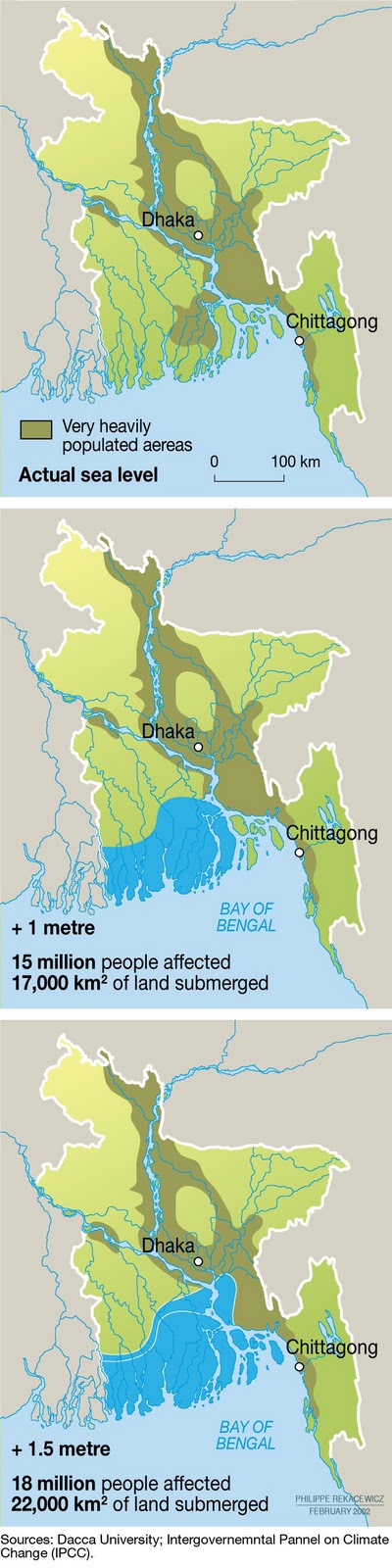
›Few nations are more at risk from climate change’s destructive effects than Bangladesh, a low-lying, lower-riparian, populous, impoverished, and natural disaster-prone nation. The UN Intergovernmental Panel on Climate Change estimates that by 2050, sea levels in Bangladesh will have risen by two to three feet, obliterating a fifth of the country’s landmass and displacing at least 20 million people. On September 19, the Wilson Center’s Asia Program, with assistance from ECSP and the Comparative Urban Studies Project, hosted a conference that examined Bangladesh’s imperiled environmental security.
Climate Change and PopulationThe first panel focused on manifestations, drivers, and risks. Ali Riaz addressed the threat of climate refugees. Environmental stress, he said, may produce two possible responses: fight (civil conflict or external aggression) or flight (migration). In Bangladesh, the latter is the more likely outcome. Coastal communities, overwhelmed by rising sea levels and flooding, could migrate to Bangladesh’s urban areas or into neighboring India. Both scenarios pose challenges for the state, which already struggles to provide services to its urban masses and has shaky relations with New Delhi.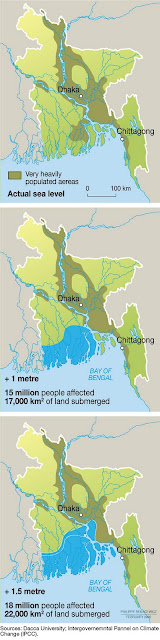
Mohamed Khalequzzaman examined Bangladesh’s geological vulnerability in the context of climate change. In a deltaic nation like Bangladesh, he explained, sedimentation levels must keep up with rates of sea level rise to prevent the nation from drowning. However, sediment levels now fall below 5 millimeters (mm) per year – short of the 6.5 mm Khalequzzaman calculates are necessary to keep pace with projected sea level rises. He lamented the nation’s tendency to construct large dams and embankments in the Bengal Delta, which “isolate coastal ecosystems from natural sedimentation,” he said, and result in lower land elevations relative to rising sea levels.
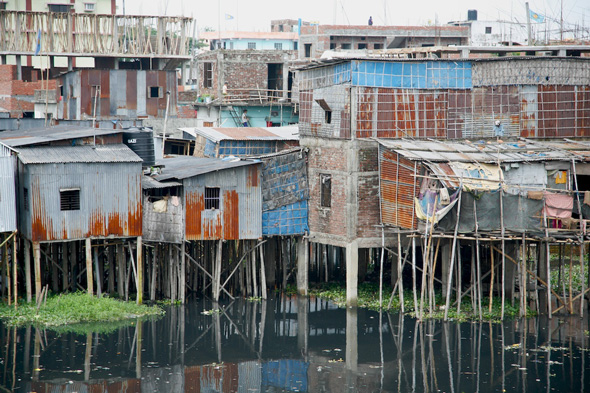
Adnan Morshed declared that Bangladesh’s geographic center – not its southern, flood-prone coastal regions – constitutes the nation’s chief climate change threat. Here, Dhaka’s urbanization is “destroying” Bangladesh’s environment, he said. Impelled by immense population growth (2,200 people enter Dhaka each day) and the need for land, people are occupying “vital wetlands” and rivers on the city’s eastern and western peripheries. “Manhattan-style” urban grid patterns now dominate wetlands and several rivers have become converted into land. Exacerbating this urbanization-driven environmental stress are highly polluting wetlands-based brickfields (necessary to satisfy Dhaka’s construction needs) and city vehicular gas emissions.
Adaptation Responses
The second panel considered possible responses to Bangladesh’s environmental security challenges. Roger-Mark De Souza trumpeted the imperative of more gender-inclusive policies. Environmental insecurity affects women and girls disproportionately, he said. When Bangladesh is stricken by floods, females must work harder to secure drinking water and to tend to the ill; they must often take off from school; and they face a heightened risk of sexual exploitation – due, in great part, to the lack of separate facilities for women in cyclone shelters. He reported that such conditions have often led to early forced marriages after cyclones.
Shamarukh Mohiuddin discussed possible U.S. responses. On the whole, American funding for global climate change adaptation programs has lagged and initiatives that are funded often focus more on short-term mitigation (such as emissions reductions) rather than adaptation. She recommended that Washington’s Bangladesh-based adaptation efforts be better coordinated with those of other donors.
Mohiuddin also suggested that to convey a greater sense of urgency, Bangladesh’s climate change threats should be more explicitly linked to national security – and particularly to how America’s strategic ally, India, would be affected by climate refugees fleeing Bangladesh.Philip J. DeCosse highlighted Bangladeshi government success stories in the famed Sundarbans – one of the world’s largest mangrove forests. Officials have banned commercial harvesting in some areas of the forests and shut down a highly polluting paper mill. He also praised civil society and the media for bringing attention to the Sundarban’s environmental vulnerability. As a result of efforts such as these, the Sundarbans are “coming back,” he said, with mangrove species growing anew. Thanks to a range of actors – from the forestry department to civil society – these forests are also now being “governed more than managed,” said DeCosse.
The Sundarbans – click to view larger map.
DeCosse’s fellow panelists identified additional hopeful signs. Morshed shared a photograph of a green, pristine park in Dhaka. De Souza underscored how family planning programs have worked in Bangladesh in the past, with fertility rates declining considerably in recent years, and several speakers spotlighted efforts by civil society and the media to bring greater attention to Bangladesh’s environmental security imperatives.
Nonetheless, major challenges remain, and panelists offered a panoply of recommendations. Khalequzzaman called for a major geological study of soil loss and siltation. De Souza implored Bangladesh to ensure that women’s roles and family planning considerations are featured in climate change negotiations and adaptation policies. Morshed advocated for imposing urban growth boundaries and enhancing public transport in cities. And several speakers spoke of the need to pursue more effective natural-resource-sharing arrangements with India. Ultimately, in the words of De Souza, it may not be possible to eliminate Bangladesh’s “perfect storm” – but much can be done to calm it.
Event ResourcesMichael Kugelman is a program associate with the Wilson Center’s Asia Program.
Sources: UN.
Photo/Image Credit: “Precarious Living, Dhaka,” courtesy of flickr user Michael Foley Photography; “Impact of Sea Level Rise in Bangladesh,” courtesy of UNEP; and the Sundarbans courtesy of Google Maps. -
Loren Landau: We Need to Move Beyond Traditional Views of Migration
›Addressing the role of subnational actors, from local governments to mining companies, is increasingly critical to understanding migration, said Loren Landau, director of the African Center for Migration and Society at the University of the Witwatersrand, in an interview with ECSP. These actors frequently exert more influence than national governments over human resources because they control the “space in which people live, the space in which they produce,” Landau said.
Migration is most frequently seen as an aberration or a temporary coping mechanism, but this conception is outdated. According to Landau, “especially as rural livelihoods become less viable, movement will be the norm.”
Local and global actors must recognize that “people are moving, and they are moving to a whole range of new places,” he said. These new places will need attention and resources, but we will need to move beyond traditional views of migration in order to respond to the challenge.
Showing posts from category *Blog Columns.