Showing posts from category *Blog Columns.
-
The Economist
Afghanistan’s Demography: A Bit Less Exceptional
›The original version of this article appeared in The Economist, and is based on ECSP Report 14, Issue 1.
This is a story from Afghanistan which is not about fighting, bombs, or the Taliban. It even contains a modicum of good news. It is about demography.
Afghanistan has long been seen as a demographic outlier. In 2005-10, according to the United Nations Population Division, its fertility rate was 6.6 – the second-highest in the world after Niger (the fertility rate is the number of children a woman can expect to have during her lifetime). The contrast with the rest of South Asia is extreme: fertility ranged from four (in Pakistan) to below three (in Bangladesh, India, and Sri Lanka). Afghanistan’s sky-high fertility seems consistent with a view of the country as trapped in an exceptional and dysfunctional mode of development, marked by war, religious extremism, tribal honor codes, and the subjugation of women.
But this fertility rate was always a bit of a guess. The last census was taken in 1979, the year of the Soviet invasion. A whole generation has grown up since then, amid pervasive violence and uncertainty. It has been extremely hard to know how fertility has been changing.
Hence the significance of the Afghanistan Mortality Survey. Based on interviews with 48,000 women and girls aged 12 to 49, it is the nearest thing the country has had to a national census for 30 years (there were smaller surveys in 2003 and 2007-08, but their coverage was not national).
Continue reading on The Economist.
Read more about the Afghanistan Mortality Survey here on the blog with Elizabeth Leahy Madsen’s original posts here and here.
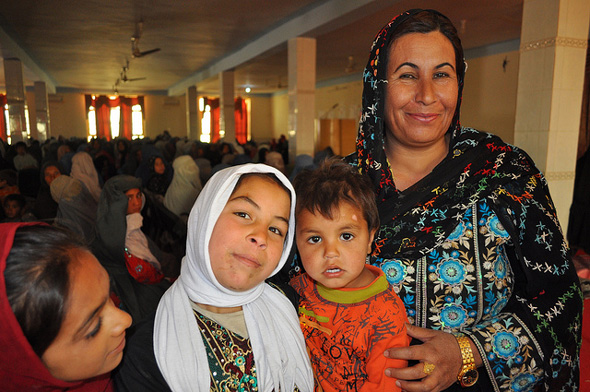
Photo Credit: “Celebrating International Women’s Day in Afghanistan,” courtesy of the U.K. Department for International Development. -
Alexandra Cousteau on the Global Water Crisis and Choosing Between the Environment and the Economy
›Above is a short discussion filmed after a full dialogue TV episode last week; for the full interview, please visit the Wilson Center.
“We have serious issues that we need to address, yet we’re largely unaware of them because water seems so abundant,” said Alexandra Cousteau in an interview at the Wilson Center. “That myth of abundance is finally reaching an age of limits.”
Cousteau spoke with John Milewski of the Wilson Center’s dialogue TV program, after an event on the recent global water security assessment by the U.S. intelligence community. She discussed the work of her organization, Blue Legacy, which seeks to raise awareness of the ‘global water crisis’ – from degrading quality to growing scarcity and the proliferation of water refugees.
Global Water Crisis
“Traditionally our understanding of the global water crisis has been very narrow,” said Cousteau. “We have talked about it mostly in terms of the very real water and sanitation crisis that is happening in the developing world.” Without minimizing the severity of the situation in developing countries or oversimplifying the tangled nature of their problems, she characterized these water and sanitation struggles as fundamentally “solvable.”
Cousteau argued that there are also substantial water problems in the United States. Pollution due to runoff and over-utilization of major riverways are threats that are much different from those in the past.
“In Nixon’s time, when he signed the Clean Water Act, it was because rivers like the Potomac were in such bad shape, and they could see it from their office windows,” she said. “But the threats to our water are different today…before, it was industrial effluent, and what we were putting in the water that we could see. The Hudson River would change color daily based on the paper mills and what color paper they were printing that day.”
Today, chemicals may impact water quality without changing the appearance of water: “You don’t see it, the water can be perfectly transparent.”
Blue Legacy Expeditions
Cousteau has taken two expeditions with Blue Legacy to highlight water issues around the world. The first in 2009 was global; Cousteau and her team traveled from India to Botswana and beyond. Throughout the voyage, she worked to make her travels accessible to the general public and was surprised at her success.
“It was an experiment, but it worked. And when we came back to the United States, we got a lot of feedback, and one of the things people said was, ‘Gosh, that was an incredible adventure, thanks for taking us along for the ride! Clearly, there is a global water crisis, now I understand that. I’m just so relieved it’s not happening in America.’ And I thought, ‘Oh my Lord, I guess we have an expedition to do in America!’”
Her 2010 North America expedition focused on issues ranging from the over-exploited Colorado River to the polluted Mississippi, and sought to make water problems personal “at a time when our demand on water is at a tipping point.”
The Environment and the Economy
Cousteau’s interview was particularly timely in light of global economic troubles which have led some to say the environment should take a backseat. Cousteau said this doesn’t have to be the case. She emphasized the interconnected nature of the environment and the economy, saying that policymakers don’t have to choose to focus on one or the other.
“We feel like we have to make a choice between the economy and the environment, and that’s a false dilemma. A healthier environment is a more prosperous economy. And when we fail to realize that we don’t have to sacrifice one to have the other, then I think we wind up sacrificing a lot of the quality of life and the opportunity that we take for granted.”
Video Credit: Dialogue/Wilson Center and Alexandra Cousteau. -
Population Projections: Breaking Down the Assumptions
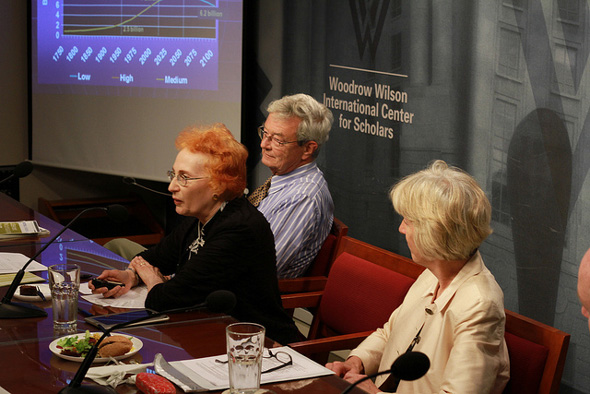
›“The seventh billion [person] was added in 12 years, and that could be the story for the eighth billion – and that gets people who think that growth has stopped,” said Carl Haub, senior demographer at the Population Reference Bureau. Haub was joined by Hania Zlotnik, former director of the UN Population Division, and Rachel Nugent of the University of Washington’s Department of Global Health on June 5 to speak about the assumptions behind the UN population projections. While each of the panelists noted the utility of projections, they also cautioned against seeing them as inevitable. [Video Below]
Meeting the Projections
As a former top official in the UN’s Population Division, Zlotnik spoke about how much is riding on the projections. “The experts tell me that to feed nine billion people, living better than the standards of living that we have today, one needs to increase agricultural production or all the production of food by about 70 percent and that is a challenge, but it might be feasible. But if the numbers go higher…I think it’s impossible,” she said.
The medium variant projection by the UN that gets the world to that nine billion figure is not a given – it builds in expected action on and improvement of many demographic indicators. Zlotnik pointed to the global unmet need for family planning, for example, which “is especially high in the high fertility countries,” and suggested that the current rate of increase in contraceptive use is insufficient.
She calculated the number of years it would take many of these countries to meet their unmet need at their current rate of uptake and found “the number of years for a lot of these poorer countries that have high fertility would be very long – 40 years, some of them, 80 years, 100 years – because the increased contraceptive prevalence has been so small.” At that rate, population growth in these countries will far surpass the UN medium variant.
The perception that population growth is no longer an issue contributes to the problem, Zlotnik said. People see that only 18 percent of the world population lives in countries with high population growth and assume “there’s no longer a population problem.” But she emphasized the power of exponential growth, arguing that even a small proportion growing at a rapid rate can have a large impact.
Questioning Assumptions
Haub pointed out several instances where assumptions in the methodology behind the projections create uncertainty.
For example, there is a lack of data in many low-income countries. “A date, let’s say 2000, 2005 – it’s the past, but it may be a projection. It may be based on a census in 1990,” he said. If it’s wrong, that error may not be corrected until another census, but it will still be relied on for country-level projections.
He also noted that certain assumptions about desired family size sometimes do not bear out on the ground. One of the key methods to slowing population growth is to provide women and couples with the means to choose how many children they wish to bear. But in many fast-growing countries, women wish to have large numbers of children. In Niger, for example, women say their ideal family size is over nine children. Such women are less likely to use contraception, no matter how accessible it is, as they value larger families.
“It has been – I guess conventional is a good word – to assume that birth rates are going to come down the way they did in the rich countries,” Haub noted. But there has been a “stall” for many developing countries, which he suggests is caused by fast initial uptake from urban women followed by much slower uptake by rural women. These dynamics, however, are relatively new and therefore are not always well incorporated into current projections.
The Economic Impact of Population Changes
While Haub and Zlotnik looked at the assumptions made before the projections are made and the importance and means to reach these projections, Nugent focused on the economic implications of lower fertility and the demographic transition.
She suggested that increased control over fertility can positively impact a country’s economy. Women are given the opportunity to “invest their time in acquiring skills and investing time in the labor market and that affects their earnings…[and] their ability to control resources and make decisions within the household” as they spend less time caring for children, she said.
The labor market changes as well, as fewer children are born into a given generation. This can reduce “demand on economic resources [and] demand on environmental resources,” and the increased investment in human capital allowed by smaller family sizes can lead to a healthier population.
Nugent concluded by pointing out key areas of intervention most likely to decrease both fertility and mortality and allow countries to reap the positive economic benefits of fertility decline. She suggested a focus on “complementary investments in education and health,” especially with regard to “poor and marginalized populations,” which can in fact impact the country as a whole. Finally, she recommended focusing on proven “evidence-based programs [and] service-delivery programs.”
Educating Policymakers
Each of the panelists cautioned against relying on population projections without taking action to make them come true.
“Maybe the best thing to do if you’re giving a presentation is to show the UN’s constant fertility variant first and scare people half to death and then say, ‘but if 117,000 things go right, [the medium variant projection] is what will happen,” said Haub, addressing the common tendency to view the UN projections as destiny.
Similarly, Nugent warned against viewing the demographic transition as inevitable. “There’s a certain sense…that [the demographic dividend] is kind of an automatic thing that happens, and that really has to be addressed,” she said, adding that “it’d be quite interesting to show some scenarios of what would need to be done…in order to get some benefits from that dividend.” (See also Elizabeth Leahy Madsen’s recent article on achieving the dividend.)
Zlotnik reiterated that the UN does not in fact know what the future will bring. “It’s not that we know what the world is going to do, but we hope that [the projections] will get the message out – if this doesn’t happen, you’re in trouble.”
Event ResourcesPhoto Credit: Sean Peoples/Wilson Center. -
Climate-Conflict Thresholds and Water as a Casualty of Conflict
›While numerous studies have examined the perils faced by businesses operating in conflict-affected or high-risk locations, Water as a Casualty of Conflict: Threats to Business and Society in High-Risk Areas, written by Kristina Donnelly, Mai-Lan Ha, Heather Cooley, and Jason Morrison, is the first such report to focus specifically on water. The report – a collaborative effort between the UN Global Compact and the Pacific Institute – aims to provide a framework for understanding the conflict-water-business nexus by first tracing the ways in which conflict and high-risk areas can adversely impact local and regional water systems and then illustrating the challenges such impacts can pose to businesses in conflict-affected or high-risk areas. Water as a Casualty of Conflict was published online this week and was introduced at a Rio+20 Corporate Sustainability Forum panel session.In an article titled “Climate Change and Violent Conflict,” appearing in the May 18th edition of Science, authors Jürgen Scheffran, Michael Brzoska, Jasmin Kominek, Michael Link, and Janpeter Schilling attempt to sort out some of the controversy surrounding the intersection of climate change and violent conflict. They urge greater interdisciplinary research to identify and provide solutions for possible “tipping points” where the impacts of climate change may prove too great for human adaptive capacity. Such research has been scarce due to difficulties in collecting sufficient data. Moreover, the authors note that many of the extant studies on climate change and conflict are flawed because of how they define violent conflict. The commonly-used Uppsala Conflict Data Program and Peace Research Institute Oslo (UCDP-PRIO) Armed Conflict dataset, for instance, excludes by definition many riots, protests, incidences of livestock theft, and other violent or potentially violent behaviors. This is problematic because, as the authors point out, “in recent decades, climate variability may have been more associated with low-level violence and internal civil war – which fall below the UCDP-PRIO definition cutoff – than with armed conflict or war between countries.” -
Royal Society Launches ‘People and the Planet’ Study
›“This is a time of rapid and multifaceted change in both population and the planet,” said Parfait Eloundou-Enyegue, a member of the U.K. Royal Society’s People and the Planet working group and contributing author to the report of the same name launched at the Wilson Center on June 4. “The question that the report is trying to address is whether we can actually envision a world in which we can sustainably and equitably meet the consumption needs of seven billion people, and the more to come.” [Video Below]The Royal Society is a self-governing fellowship of scientists that fosters research to address pressing social issues and better inform policy on a global scale. Eloundou-Enyegue, also an associate professor of development sociology at Cornell University, was joined by fellow working group member and African Institute for Development Policy Director and Founder Eliya Msiyaphazi Zulu to discuss their assessment of growing population and consumption pressures on global wellbeing.
Current Trends Are Unsustainable
“The current trends of global population growth and material consumption and the concomitant changes in the environment are unsustainable,” said Zulu.
On the population side, “you have changes that are affecting not just the size, the growth of the population, but also changes in family structure, in the population distribution, [and] population movement,” said Eloundou-Enyegue.
On the consumption side, “beyond the increase in consumption itself, there’s also a dramatic rise in aspiration,” he continued. “People are in greater contact and this tends to encourage…an increasing aspiration to mimic or to emulate the consumption standard of the more industrialized countries.”
Limits to Equitable Growth
When measuring consumption, which itself tends to be a misplaced barometer of wellbeing, according to Eloundou-Enyegue, there is a “disproportionate focus on GDP.”
Using GDP growth as a measure of consumption and wellbeing both “misses a lot of the economic production that’s not mediated through the market,” and “counts as positive things that are damaging to the planet,” he said.
The People and the Planet report marks a departure from the traditional consumption framework by asking “about the relevance of growth – is growth what we ought to be after?”
“The report tried to make a distinction between two types of consumption – the consumption of material resources and the consumption of goods and services – that are all relevant to wellbeing but have different implications for the environment,” Eloundou-Enyegue said. “So there is a need to think about how to shift or to favor consumption that is less damaging to the environment.”
Not an “Either-Or” Proposition
There is “a tendency to look at population and consumption when you’re addressing the impact of the environment in an either-or format, as if you had to choose either population as being the main culprit or consumption,” said Eloundou-Enyegue. “The reality is that they all have to be integrated and considered jointly.”
At the same time, there is “a tendency to shy away from population issues when you set development goals because they tend to be controversial,” he said. And yet, said Zulu, “there’s no question about it, the global population growth needs to be slowed down and ultimately stabilized for both people and the planet to flourish.”
The vast majority of future population growth is expected to come from Africa. Based on the United Nation’s medium variant projection, 70 percent of global population growth over the rest of the century will come from the continent.
That projection, however, belies a big assumption: “that the high fertility countries now will follow the same pattern in decline in fertility as the countries that have [already] achieved lower fertility had [in the past],” said Zulu, which “may actually not be the case.”
“You might actually find a situation where fertility might stabilize around three to four children in some of the…least developed countries,” he said, “and if that happens, it means that actually we stand a much, much bigger chance of getting to the high variant [of 15.8 billion by 2100] than we often tend to assume.”
In spite of that dire warning, however, Zulu said that “we should recognize that demography is not destiny, that through…appropriate socioeconomic and health policies and investment, we can actually slow down population growth.”
The report concludes that voluntary and non-coercive “reproductive health and family planning programs are urgently required,” said Zulu. “There is also a need for strong political leadership and financial commitment to make sure that these programs and services reach out to all women around the world who need them.”
Have We Missed the Boat Again?
Part of the urgency from the working group is because, so far, commitments to reproductive health appear to be falling short. It is the international community’s responsibility “to make sure that women have the contraceptives that they need in order to achieve their fertility aspirations,” said Zulu, but some of the most important agenda-setting events in global development over the past 20 years have sidelined population, reproductive health, and family planning.
The Millennium Development Goals, for instance, “tried to stay clear of population,” said Eloundou-Enyegue, even though “all the indicators that I see are either intrinsically demographic or have a strong demographic component.”
“If you think about stratification and the reproduction of inequality and poverty across generations and the role that differential fertility and reproduction plays, there’s no way you can sidestep population,” he continued. “If you’re talking about maternal mortality and child mortality…it doesn’t make sense to set population aside.”
Now, as the international community prepares for the upcoming Rio+20 summit, “there’s been a big struggle to get…consideration of population issues” on the agenda, said Zulu.
“Population is at the peripheral of all those discussions,” said Zulu. When in Nairobi for a preparatory conference earlier this year, Zulu said UNFPA Executive Director Babatunde Osotimehin “told me that he was quite alarmed that there was hardly any mention of population in all those discussions. And he asked me the question, ‘have we missed the boat again?’”
That concern reinforces the main argument of People and the Planet, said Zulu: there is an “urgent need to reduce material consumption of the richest, and increase consumption and healthcare for the poorest 1.3 billion people.”
“We’re talking about having the majority of people in the world being able to flourish, being able to lead decent lives.”
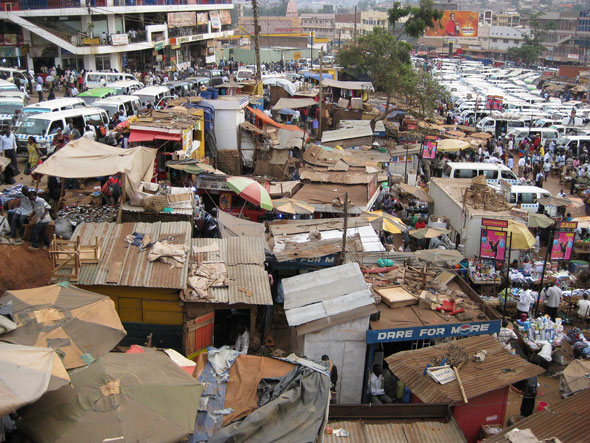
Event Resources:Photo Credit: “Market_Kampala, Uganda,” courtesy of the Hewlett Foundation. -
Sex and Sustainability on the Road to Rio+20
›When it comes to the public conversation about sustainable development, we can’t tell the story with only half the world’s population. Women’s voices are key – and women must have a seat at the table. Earlier this week I was honored to join Musimbi Kanyoro of the Global Fund for Women and Carmen Barroso of International Planned Parenthood Federation to brief bloggers and reporters about the linkages between sex and sustainability. The three of us are heading down to the landmark Rio+20 conference to track the inclusion of reproductive health and rights in the sustainable development agenda.
Some highlights from our call:- Musimbi noted that though the linkages between the environment – particularly climate change – and reproductive health issues can be contentious, we must remember that we are talking about real people with real needs – not abstract ideas.
- Carmen argued that women’s health and rights should be included in the upcoming Sustainable Development Goals, because health is intrinsic to sustainability, and reproductive rights are intrinsic to health.
- Musimbi remarked that climate change, urbanization, energy, and food security are all connected to population, our planet, and reproductive health. She highlighted the need for an open discussion about these linkages, especially for the 200 million women who want access to family planning.
- I pointed out that development projects that address population, health, and environmental issues are making a difference in remote communities around the world.
Follow me to Rio+20 here on the blog and the New Security Beat Twitter feed.
Image Credit: Adapted from UNSCD 2012 official logo. -
Africa on the Move: The Role of Political Will and Commitment in Improving Access to Family Planning
›Excerpted below is the adapted abstract, by lead authors Eliya Msiyaphazi Zulu and Violet Murunga. The full report is available for download from the Wilson Center’s Africa Program.
Despite commitments to the program of action for the 1994 International Conference on Population and Development and Millennium Development Goal 5 (focused on maternal and reproductive health), little progress has been made in improving access to family planning and slowing rapid population growth in Africa. Lack of political will has been highlighted among the key factors behind the lackluster performance in addressing these sensitive development issues. However, the situation is changing with some African governments embracing family planning as a key tool for improving child and maternal health, slowing population growth, preserving the environment, and enhancing broader efforts to alleviate poverty.
This study examines factors that have propelled the change in attitudes of some political leaders to champion family planning, assesses how such political will has manifested in different contexts, and explores how political will affects the policy and program environment. Mixed policy analysis methods were employed, including desk review of policy and program documents and stakeholder interviews conducted in Ethiopia, Malawi, and Rwanda – three countries that have made phenomenal progress in increasing contraceptive use in the recent past.
Lessons from this study will help galvanize efforts to improve access to reproductive health services in countries where little progress is being made. The results provide useful insights on the dawn of a new Africa where strategic political leadership is playing an increasingly valuable role in overcoming the continent’s longstanding development shackles. The study shows that political will is mainly changing due to increased availability of evidence showing that high population growth undermines efforts to alleviate poverty and hunger as well as investments in the quality human capital that least development countries desperately need in order to transform their economies.
The high sensitivity about childbearing and suspicions regarding the intentions of western development partners in promoting family planning in order to slow population growth are dissipating as more Africans are opting to have fewer children and demanding family planning. This study points to the need for global development partners to be much more cognizant of the drivers of Africa’s emerging success and focus their development assistance on enhancing, nurturing, and highlighting local leadership traits, capacities, and systems that are producing positive results, as well as support governments that have embraced family planning to ensure that no woman has an unwanted pregnancy due to lack of family planning.
Download the full report from the Wilson Center. -
Gidon Bromberg at TEDx on Peacebuilding Through Water in the Middle East
›“Cooperation over water is not a privilege, it’s a necessity,” said Gidon Bromberg, co-director of Friends of the Earth Middle East, in a TEDx talk at Yale. He sees the shortage of water in Jordan, Israel, and Palestine as an opportunity to bring these contentious communities together – even more so during this period of upheaval in the region.
Water woes have long contributed to regional tensions, said Bromberg. Water rights between Israel and Palestine were supposed to be settled during the Oslo accords in 1993, but negotiations were unsuccessful and water discussions were consequently left unfinished. The lack of formal negotiations caused each side to seize whatever resources they could Although Jordan was not part of the negotiations, it does share water resources with Israel and the West Bank and thus has been impacted by the lack of formal allocation processes. Both Jordan and Israel have diverted flow of the Jordan River into dams and irrigation projects. As a result, the Jordan River has lost 98 percent of its historic flow and the Dead Sea has lost one-third of its surface area.
Today, Israel has restricted Palestinian water use such that Palestinians have access to water only once a week in winter and once every three weeks in the summer, leading them to store water in containers on their roofs, Bromberg said. Though mismanagement is as much to blame as conflict, he notes, Palestinians chafe under the limitations.
Yet Friends of the Earth Middle East has used this difficult situation to educate the public, propose reforms, and build trust between Palestinian, Jordanian, and Israeli communities. Bromberg highlighted “fear of a small but vocal minority on both sides” as a key factor in preventing dialogue between the communities, but insists that water can bring people together. Neighboring communities have to work together, he said, “not because they’re best friends,” but to improve their own water situations.
Friends of the Earth provides that opportunity with their Good Water Neighbors project and hopes the trust built between communities extends beyond water issues as well. Since communities have strong motives to solve these problems, they work together more effectively than high-level politicians who may not be as apt to collaborate.
A positive update on the state of the Jordan River given in an interview with ECSP in October suggests that Bromberg may be on to something.
Sources: Amnesty International, Friends of the Earth.
Video Credit: TEDx.