-
Addressing Urban Environmental Health and Maternal Mortality in Developing Countries
› Although climate change is a global phenomenon, developing countries – especially urban centers – are the most vulnerable to the negative health impacts of climate change. In “Urban Governance of Climate Change and Health,” a working paper for the Norwegian Institute for Urban and Regional Research, author Siri Bjerkreim Hellevik reviews the existing literature on governments’ responses to climate change and health in developing urban centers. Overall, Hellevik concludes that there is a substantial need for more research specifically linking the two. She offers several recommendations for urban policymakers to consider, including developing an integrated and multi-level approach, and recognizing that human health and urban development are issues of global justice.
 -
Eliya Zulu on the Integration Imperative in African Development
›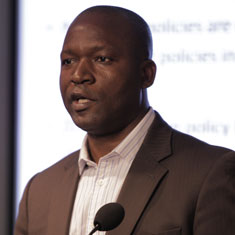
“[Family planning] has great value for women’s health, for children’s health, but it also has great value for the environment, and it can also help…to promote economic development,” says Eliya Zulu in this week’s podcast. Zulu talks about the research he has conducted as executive director of the African Institute for Development Policy and emphasizes the need to pay attention to population and climate issues both at higher levels of development policy discussion and grassroots action. “We need to make sure we integrate at all levels,” he says.
-
Maternal Health in India: Making Progress in a Key Arena
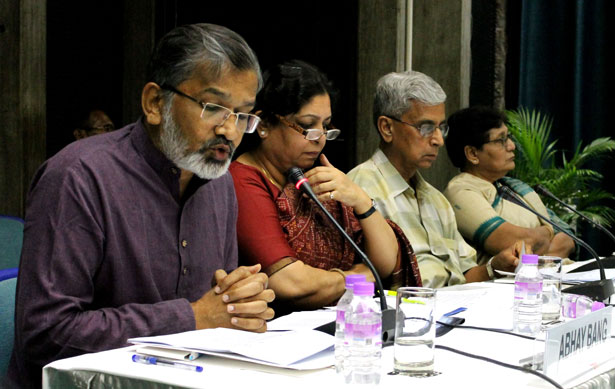
›Maternal mortality causes 56,000 deaths every year in India, accounting for 20 percent of maternal deaths around the world, said John Townsend, vice president and director of the Population Council’s reproductive health program. It is a key battleground for maternal health advocates. But maternal health is sometimes eclipsed by other major health and development issues on the sub-continent. For example, nearly five times as many people suffer from HIV/AIDS and more than 400 million people live on less than $1.25 a day. [Video Below]
-
Wilson Center Premieres ‘Healthy People, Healthy Environment’ and ‘Transcending Boundaries’ at Environmental Film Festival
›Environmental security and international development aren’t typical movie-going fare, but at the 2013 DC Environmental Film Festival, ECSP premiered two short documentaries with unique environmental stories: Healthy People, Healthy Environment: Integrated Development in Tanzania shows how improving health services and environmental conservation can empower coastal communities in Africa; and Transcending Boundaries: Perspectives from the Central Albertine Rift Transfrontier Protected Area Network explores the opportunities for “peace parks” along the shared borders of Uganda, Rwanda, and the Democratic Republic of Congo.
-
Cat Lazaroff, Resource Media
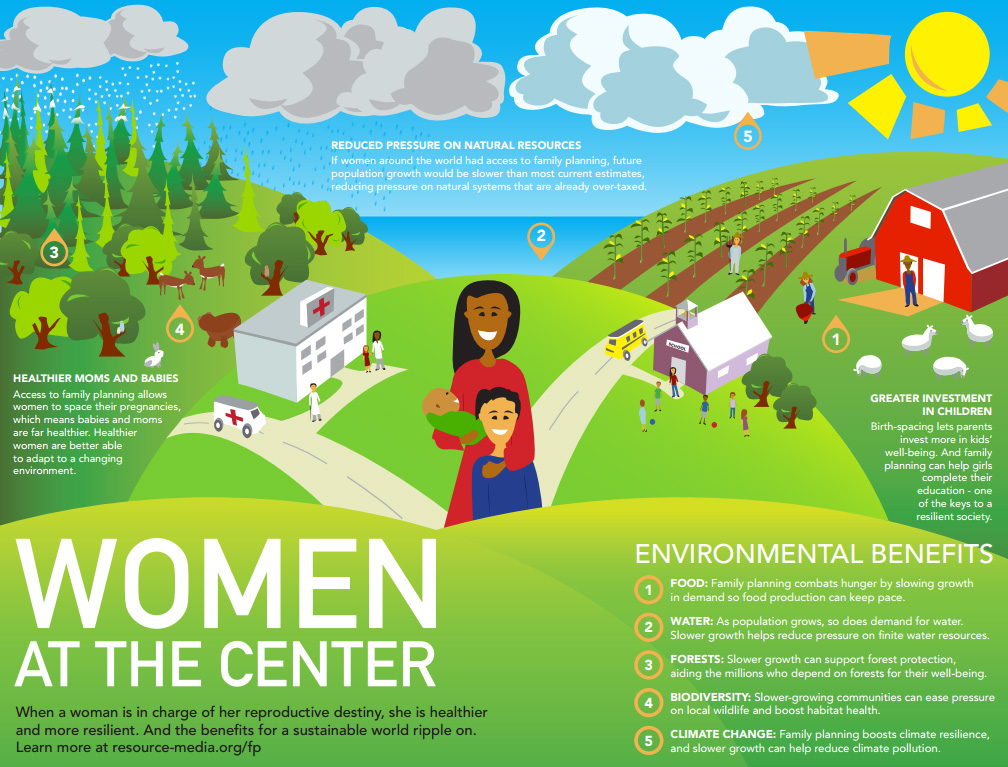
Infographic: Women, Reproductive Health at the Center of a Sustainable Future
›The original version of this article, by Cat Lazaroff, appeared on Resource Media.
What does family planning have to do with Earth Day? More than you might think. Family planning gives women and families the tools they need to decide whether and when to have children – and that, quite literally, can mean the world.
-
Steven Gale on Futures Analysis at USAID
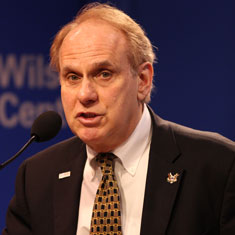
›There’s renewed interest in looking at future trends at USAID, said Steven Gale, a senior advisor at the agency. But “we’re always asking ourselves, ‘what is the development goal that [USAID] wants to achieve, and how is this megatrend going to increase or decrease the actual probability’” of that goal will be met?
In this week’s podcast, Gale describes the role of futures analysis at USAID, including the history of past efforts and similarities to other forward-looking projects, like the National Intelligence Council’s quadrennial Global Trends reports.
-
Linking Governance and Positive Maternal Health Outcomes in Africa
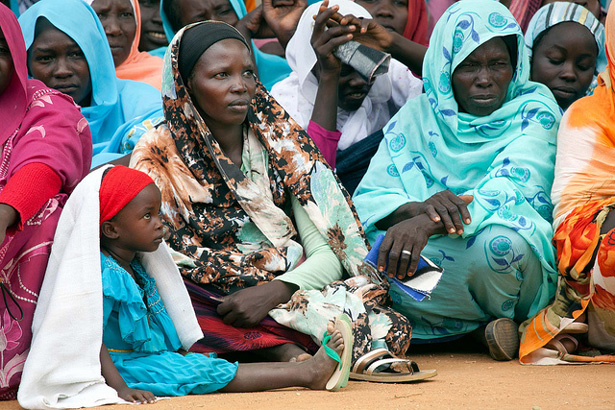
›Sub-Saharan Africa is perhaps the riskiest place for a woman to give birth. According to the United Nations Population Fund (UNFPA), African women comprise approximately 56 percent of the maternal deaths and 91 percent of HIV-related maternal deaths worldwide every year. In order to bring life into this world, women in Africa literally must put their own lives on the line.
-
Can Coffee Make Yunnan a Model for Chinese Agricultural Reform?
›Yunnan province is a microcosm of the intertwined natural resource challenges facing China. Dams, development, deforestation, drought, and climate change threaten China’s most biodiverse province – all while it increases its exports of agricultural products and electricity to China’s coastal provinces. These competing demands bring into question the sustainability of China’s development paradigm and the country’s environmental security.
Showing posts from category *Blog Columns.