-
The Changing Geopolitics of Critical Minerals and the Future of the Clean Energy Transition
›
At a recent Wilson Center event on the shifting geopolitics of critical minerals, Cory Combs, Associate Director at Beijing-based Trivium China, noted that “the nature of global resource competition is changing—and quite rapidly.”
-
Water and Conflict: Updates from the Russia-Ukraine War
›
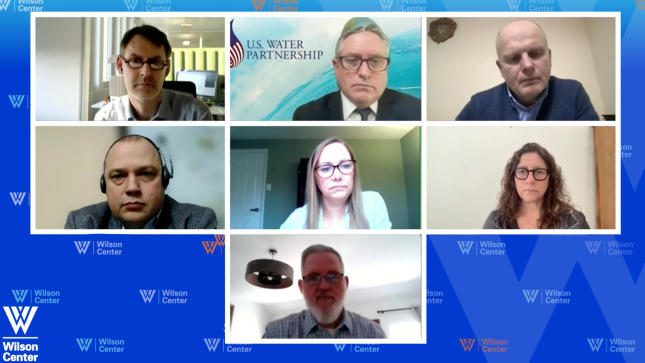
The first anniversary of Russia’s invasion of Ukraine is also a reminder of the long-term challenges faced by that embattled country, including one of the most important resources for human survival: water.
“For Ukrainians, water has been under fire for nearly a decade,” observed Erika Weinthal, Professor of Environmental Policy and Public Policy at Duke University, at a recent Water @ Wilson Series event: “Water and Conflict: Updates from the Russia-Ukraine War,” co-hosted by the U.S. Water Partnership.
-
States Show Leadership on Climate Action
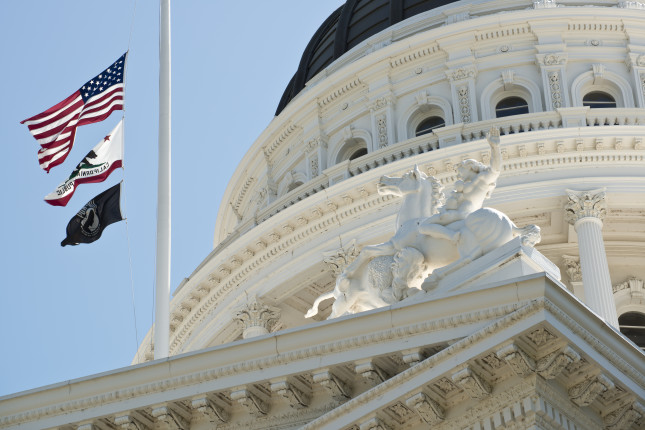
›In a time of increasing urgency and regulatory restraint in U.S. climate policy, state-level climate work has been critical. States such as California, Louisiana, and Washington have taken the absence of federal policy as an opening to innovate, and responded thoughtfully and creatively to the challenge.
-
New Security Broadcast | US Climate Envoy John Kerry on the Importance of Our Oceans
›It is fully within our power to guarantee a healthy ocean and protect it for the future, says Special Presidential Envoy for Climate John Kerry in today’s episode of the New Security Broadcast. Kerry spoke at a recent Wilson Center event hosted in partnership with the Embassy of Panama to spotlight the 8th Our Oceans Conference, scheduled to take place in March in Panama. In his remarks, Kerry emphasized the vital role the ocean plays in supporting global food security and economic prosperity as well as the imperative to take action to protect the ocean from climate change. -
Investigating Climate Migration: Global Realities and Resilience
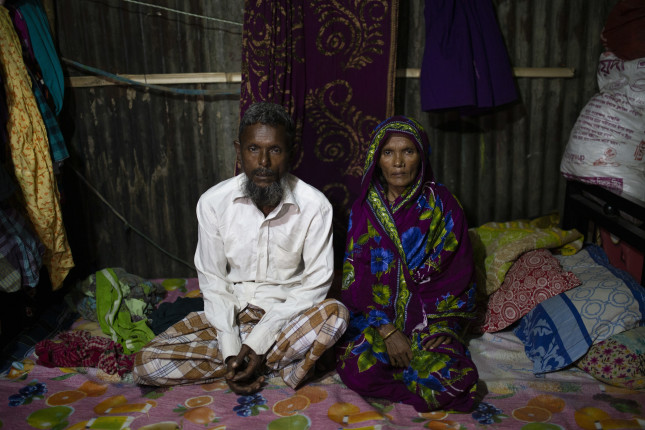
›Climate change has become part of our daily lexicon. Rarely does a week pass when a hurricane, drought, wildfire, or some other climate disruption is not front page news. These headlines often offer dire predictions of mass migration as well—a bracing vision of hordes of people moving to greener pastures, often found further inland and further north, where some political leaders leverage the narrative to push their own agendas.
-
Water @ Wilson Event | Water, Peace, & Security: New Tools for a New Climate
›Water sustains life on our planet. And access to clean and safe water is foundational to society. So why has it only been in recent years that water has risen to the top of discussions of climate and security? Richard W. Spinrad, the Under Secretary of Commerce for Oceans and Atmosphere and NOAA Administrator, says that one of the biggest reasons is the major impact that climate-related changes in precipitation like droughts and extreme rainfall are having across the globe: “We’re starting to see things like we’ve never seen before. The nature of storms is changing: We saw five feet of rain fall in Hurricane Harvey. Five feet.” -
Answering the Amazon’s Call: Can the Private Sector Mobilize for its Protection?
›Luiz Inácio Lula da Silva’s victory in Brazil’s presidential election on October 30, 2022—and his appearance at the COP27 summit on November 16—have put protecting the Amazon basin back on the agenda. Speaking at a Wilson Center event on November 4, Iván Duque Marquez, Former President of the Republic of Colombia and a Distinguished Fellow at the Center, highlighted why it was vital to counter the threat to this magnificent biome: “The Amazon is the most biodiverse area in the planet. The Amazon River discharges in one hour the same amount of fresh water that is consumed in a year by 7000 million people; and, at the same time, the Amazon in terms of size is twice the size of the EU and is larger than the United States without Alaska.”
-
Climate Change, Population, and the Shape of the Future
›As the world’s attention has turned in November 2022 to the UN COP 27 climate change conference, another important global milestone is also drawing attention. Today, November 15, 2022, the global population is predicted to reach 8 billion. By 2050, it will be 9.7 billion.
Showing posts from category From the Wilson Center.