Showing posts from category Friday Podcasts.
-
Jotham Musinguzi on Investing in Family Planning for Development in Uganda
› “What we are seeing is not adequate, but we think we are seeing very good positive movement, and we want to build on that,” said Jotham Musinguzi, director of the African regional office for Partners in Population and Development (PPD) in Kampala, Uganda. Musinguzi is a public health physician by training who previously advised the government of Uganda on population and reproductive health issues. “We think that [the government] is now on a firm foundation to continue investing properly in family planning,” he said.
Family Planning for Development
Uganda’s high population growth rate (the country has a total fertility rate of 6.4 children per woman, according to the UN) presents a number of challenges, said Musinguzi, exerting pressure on education and health systems, as well as on basic infrastructure, particularly for housing and transportation. Additionally, high levels of poverty and unemployment can become a source of instability.
Policymakers in Uganda are beginning to recognize the urgency of the issue, however, particularly in regards to young people, said Musinguzi. “They don’t have access to jobs, they don’t have the skills, and therefore the challenges of poverty eradication become even more important.”
Nonetheless, the country’s contraceptive prevalence rate is low, at 24 percent, with 41 percent of married women expressing an unmet need for family planning services, according to the 2006 Demographic and Health Survey (DHS) for Uganda. Low levels of investment and lack of government involvement remain the primary obstacles, according to Musinguzi, in addition to socio-cultural and religious barriers.
Uganda historically depended primarily on donor finance, rather than government funding, to support family planning and reproductive health services, Musinguzi said. However, over the past two years, the Ugandan government has increased investment due to concerted efforts by PPD, as well as USAID, the UN Population Fund, and civil society groups. “Our point was that if the government does not fund family planning, then they are going to find that achievement of the Millennium Development Goals…is going to be very challenging,” he said.
“I think the low investment in family planning in Uganda is a thing of the past, and we are now looking forward to really better investment in this field,” Musinguzi said. “I am sure we are going to witness quite a big change [in the 2011 DHS] in terms of access as a result of the proper social investment that the government is trying to do now.”
South-South Collaboration
“I have a keen and strong interest in South-South collaboration in the field of reproductive health, family planning, population, and development,” Musinguzi said. Countries in the South have experience linking programming on population and development, and may face similar challenges, he said. For instance, Bangladesh and Vietnam had successful family planning programs that helped blunt rapid population growth rates.
“Countries, like Uganda, and others which haven’t gotten there yet, could learn from these other countries,” said Musinguzi, by sharing best practices and lesson learned, and replicating applicable solutions.
PPD also has a regional project reaching out to policymakers to increase commitment and accountability for family planning and reproductive health services. For instance, parliamentarians may not realize that they can play a significant role, but they have a unique function in providing government and budget oversight, Musinguzi said. Furthermore, they can create legal and administrative frameworks that prioritize family planning programs.
“We continue to make the case for more investment in family planning and reproductive health, but also making sure we hold leaders accountable, to show more commitment, and make sure they improve on the welfare of the people that they represent,” Musinguzi concluded.
The “Pop Audio” series is also available as podcasts on iTunes.
Sources: MEASURE DHS, UN Population Division. -
Aaron Wolf on Water Management, Agriculture, and Population Growth in the Middle East
›In terms of groundwater depletion, “Yemen and Gaza are probably the two places worst off in the Middle East,” Aaron Wolf told ECSP in a recent interview. Wolf, a water expert and geography professor at Oregon State University, said population growth across the broader Middle East region has led to intensified groundwater pumping in recent years. This trend has raised the prospects for water-related conflict down the road, as countries drain their groundwater stocks faster than the aquifers can recharge. Potentially complicating matters further, said Wolf, is that most aquifers in the Middle East cross international boundaries.
Despite the region’s history of water tensions, Wolf said the unprecedented level of demographic change currently being experienced across the Middle East is not necessarily a recipe for future confrontations over the resource, in part thanks to the existence of water-sharing agreements in the area. Nevertheless, mounting demand will likely force water-users across the region – especially within the agriculture sector – to change the ways they utilize the resource.
Accounting for 80 to 90 percent of total water usage in some Middle Eastern countries, agricultural operations have already been forced to adjust to the evolving water-access situation. While moving from flood irrigation to drip irrigation represents one policy option if sufficient funds are available, Wolf said doing away with local food production “is a path that a lot of countries are going to have to take” to ensure a relatively stable water supply for their populations’ drinking, cooking, and cleaning needs.
Wolf added that one frequently discussed but not entirely realistic option for addressing the region’s water-supply concerns involves desalination. To date, widespread deployment of the technology has been hampered by high costs and substantial energy requirements, although that hasn’t stopped a few countries in the region – among them the United Arab Emirates, Saudi Arabia, and Israel – from becoming partially reliant on converted fresh water.
Wolf maintained that desalination’s hefty price tag means the technology is useful only for urban population centers near the coast. Moving converted sea water further inland remains a non-starter, he said, because transporting it requires an enormous amount of energy (a cubic meter of water weighs a metric ton).
For the same reasons, Wolf asserted, using desalinated water for agriculture doesn’t seem to be in the cards any time soon. “Right now a cubic meter of desalinated water costs about 40 cents, and you can’t use that for agriculture unless it drops down to about 8 cents a cubic meter,” Wolf said. “So until you can irrigate with desalinated water, it really doesn’t go a long way towards mitigating the larger water crisis.”
The “Pop Audio” series is also available as podcasts on iTunes.
Sources: American University, International Food Policy Research Institute, World Bank. -
Rich Thorsten on Water Sanitation, Population, and Urbanization in the Developing World
›“For the first time in human history, more than one half of the world’s population now lives in urban areas, and some of the largest and fastest growing population centers in the world – countries like India, China, parts of sub-Saharan Africa – are in areas where water resources are becoming more and more scarce,” said Water.org’s Rich Thorsten in a recent interview with ECSP.
Thorsten serves as director of international programs for Water.org, which partners with local communities, governments, and NGOs across Central America, South Asia, and Africa to bring improved water sanitation to at-need rural and urban populations. He emphasized that ensuring access to clean water has a number of positive spillover effects, ranging from improved prospects for economic development to greater social stability, since access to non-polluted water supplies removes one potential source of tension within and between communities.
Community Health
The greatest benefit of improved sanitation services, however, comes in the form of enhanced public health outcomes. “I would definitely say there is a strong correlation” between the two, Thorsten asserted. “Water and sanitation-related diseases are related to the deaths of at least 3.5 million people every year in the developing world – not to mention millions of hours and dollars that are lost to treating health problems and coping with health problems as a result of poor [water] access and hygiene practices.”
Thorsten said that community participation has been a key aspect of ensuring the sustainability of Water.org’s projects. To pave the way for continued gains in economic development and public health, he said they work alongside water users, engineers, and government officials in target communities to make those parties stakeholders in the infrastructure development process. Fostering a sense of community ownership of sanitation projects helps reduce the likelihood that infrastructure will fall into disrepair or disuse after the initial programming intervention has been conducted.
Given that improving water-sanitation access for the world’s poor is a key element of the UN Millennium Development Goals, Thorsten said he is pleased the subject seems to be attracting more attention within the policymaking and development communities. Despite the positive momentum, however, he acknowledged the fight to ensure clean-water access for the developing world will remain an uphill battle.
“When one considers that….about 2.6 billion people lack access to basic sanitation, that there’s more people in the world that have access to a cell phone than a pit latrine or a toilet, it’s still a very daunting task that will require a lot more investment, commitment, and attention in order to improve the situation for billions of people,” Thorsten said.
Sources: UN.
The “Pop Audio” series is also available as podcasts on iTunes. -
Karen Seto on the Environmental Impact of Expanding Cities [Part Two]
›“A lot of cities are trying to become green cities,” said Karen Seto in part two of an interview with ECSP about her recently published article, “A Meta-Analysis of Global Urban Land Expansion,” co-authored with Michail Fragkias, Burak Güneralp, and Michael K. Reilly. “I think one of the main policy implications of our study is that how a city urbanizes is critical, because one of the things we are finding is that urban land is growing faster than urban population, and in some cases it is growing much faster.”
Seto said that the cities with the best prospects for implementing green growth and expansion strategies “tend to focus on the low-hanging fruit,” such as planting trees or constructing buildings with green roofs. From the public’s perspective, these types of measures are relatively painless because they “don’t require changing people’s behavior.”
More challenging, said Seto, will be getting rapidly expanding cities to anchor future development around public-transit systems, especially given the changing lifestyle preferences of upwardly mobile urban populations across China and India, for whom private car ownership serves as an important status symbol.
Still, Seto said she is tentatively optimistic about city planners’ ability to grow cities in a sustainable fashion. “We’ve experienced this rapid growth of urban population and urban land areas, but we’re also seeing that over the next 20 years, according to the UN, we’re going to see even more people living in urban areas,” she said.
“We have this window of opportunity to really shape the way in which cities get developed, and I think that’s really one of the big messages of the study.”
Part one of Karen Seto’s interview is available here. The “Pop Audio” series is also available as podcasts on iTunes.
Sources: China Daily, USA Today. -
Karen Seto on the Environmental Impact of Expanding Cities [Part One]
›“When we think about the environmental impacts of rapid urbanization, we really need to unpack what we mean by ‘urbanization,’” said Karen Seto, an associate professor in Yale University’s School of Forestry and Environment Studies, in this interview with ECSP. “There is the demographic component, where more people are living in cities; there is economic urbanization, which is where livelihoods and economies are becoming more urban rather than rural; and then there is the land component – the conversion of land from agriculture and other ecosystems to become urban.”
Seto is the lead author of a new article, “A Meta-Analysis of Global Urban Land Expansion” (with Michail Fragkias, Burak Güneralp, and Michael K. Reilly), which uses satellite imagery to help document the physical expansion of urban areas in developed and developing nations between 1970 and 2000.
Over that period, the population of cities in the developing world boomed. In 1970, there were roughly the same number of city dwellers in developed nations as in developing nations. By the mid-1990s, however, urban residents of the developing world outnumbered their developed-world counterparts by a factor of two to one. Since then, the gap has continued to grow.
According to the report, urban growth sprawled to cover nearly 60,000 square kilometers of previously non-urban areas during the last three decades of the twentieth-century. One of their most interesting finds, said Seto, was that “urban expansion has been occurring in low-elevation coastal zones more than it has been elsewhere.”
“Essentially what that means is that cities are growing precisely in areas that are highly vulnerable to the impacts of climate change, like sea level rise and storm surges,” she said.
Demography and the Environment
Seto acknowledged that many of the today’s discussions surrounding urbanization focus on the negative impacts for the environment and human security – among them the “loss of agricultural land, conversion of forests, biodiversity loss, changes in hydrology, and climate effects.” Ultimately though, she said, urbanization and its attendant land-use changes shouldn’t be viewed through a black-or-white lens.
“Certainly we think about the oncoming demographic transition of something like three billion more people living in cities,” Seto said, but “that means there’s a lot of efficiency to be gained, whether it is in education, energy, sanitation, or health – urbanization allows for opportunities for really efficient use of resources.”
The real challenge to achieving environmentally sustainable urban development, said Seto, is thoughtful city planning: “How we configure ourselves has a big impact on the environment, so it is not the issue of just whether we are urbanizing – the form in which we urbanize [also] has a huge impact.”
Part two of Karen Seto’s interview is available here. The “Pop Audio” series is also available as podcasts on iTunes.
Sources: Population Reference Bureau, UNFPA. -
Sajeda Amin on Population Growth, Urbanization, and Gender Rights in Bangladesh
›“One of the reasons why population grows very rapidly in Bangladesh is women get married very early and have children very early,” the Population Council’s Sajeda Amin told ECSP in a recent interview. “So even though they are only having two children, they are having them at an average age of around 20. As demographers would say, women ‘replace’ themselves very rapidly.”
Largely through the promotion of contraceptive use, family planning programs implemented over the past 35 years by the Bangladeshi government and a variety of NGOs have helped lower the country’s total fertility rate to 2.7 from 6.5 in the mid-1970s. To build on this progress, the Population Council has joined a consortium of other organizations – including the Bangladesh Legal Aid and Services Trust, Marie Stopes International, and We Can End All Violence Against Women – to launch the Growing Up Safe and Healthy (SAFE) project in Amin’s native Dhaka and other Bangladeshi cities.
Currently nearing the completion of its first year, the four-year initiative has several aims, among them increasing access to reproductive healthcare services for adolescent girls and young women and bolstering social services to protect those populations from (and offer treatment for) gender-based violence. The project also looks to strengthen laws designed to reduce the prevalence of child marriage – a long-standing Bangladeshi institution that keeps population growth rates high while denying many young women the opportunity to pursue economic and educational advancement.
A Focus on Gender and Climate
Amin says the SAFE project boasts several qualities that collectively set the initiative apart from similar-minded programs in Bangladesh dealing with gender and poverty. These include a strong research component incorporating quantitative and qualitative analysis; the holistic nature of the program, which incorporates educational outreach, livelihood development, and legal empowerment; a commitment to working with both male and female populations; and an emphasis on interventions targeting young people, with the hope that such efforts will allow adolescents to make better-informed decisions about future relationships and reproductive health, thus reducing the likelihood of gender-based violence.
Finally, while many existing gender-based programs focus exclusively on rural communities, Amin points out that the SAFE project also stands apart because of its focus on the country’s rapidly expanding urban areas. To date, the initiative is focusing many of its early interventions in a Dhaka slum that has seen an influx of rural migrants in recent years due to climate-change impacts in the country’s low-lying coastal areas.
“A lot of the big problems in Bangladesh now are climate-driven in the sense of creating mass movements out of areas that are particularly vulnerable or have been hit by a major storm,” Amin said. “Usually these are people who, once they lose their homes and their livelihoods, will have no choice but to move to urban areas, and that’s a process that is kind of a big outstanding issue in Bangladesh now.”
By building programming around girls and young women in such communities, the SAFE project is looking to spark change from the bottom up, prioritizing the unmet health and social needs of some of Bangladesh’s most vulnerable populations.
The “Pop Audio” series is also available as podcasts on iTunes.
Sources: Global Post, Ministry of Health and Family Welfare (Bangladesh), Shaikh and Becker (1985). -
Leona D’Agnes on Evaluating PHE Service Delivery in the Philippines
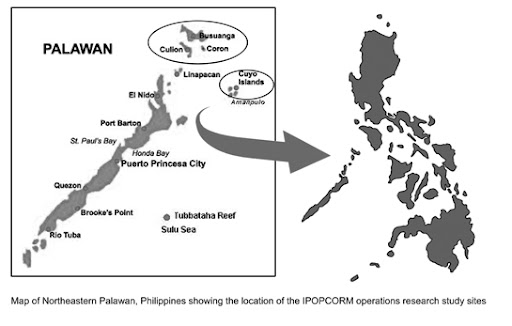
›“By reducing population growth, we are going to have a better chance of sustaining the gains of an environmental conservation project,” said Leona D’Agnes in this interview with ECSP. D’Agnes, a technical advisor to PATH Foundation Philippines, served as lead author on a research article published late last year in Environmental Conservation titled, “Integrated Management of Coastal Resources and Human Health Yields Added Value: A Comparative Study in Palawan (Philippines).” The study provided concrete statistical evidence that integrated development programming incorporating population, health, and the environment (PHE) can be more effective in lowering population growth rates and preserving critical coastal ecosystems than single-sector development interventions.
“What set this research apart from earlier work on integrated programming was the rigorous evaluation design that was applied,” said D’Agnes. “What this design aimed to do is to evaluate the integrated approach itself. Most of the previous evaluations that have been done on integrated programming were impact evaluations — they set out to evaluate the impact of the project.” This most recent research project, on the other hand, sought to evaluate the effectiveness of cross-sectoral interventions based on “whether or not synergies were produced,” said D’Agnes.Although it took her team six years to generate statistically significant findings in Palawan, D’Agnes reports that the synergies of PATH Foundation Philippines’ PHE intervention took the form of reduced income poverty, a decreased average number of children born to women of reproductive age, and the preservation of coastal resources, which helped bolster the region’s food security.
Going forward, D’Agnes said, an integrated approach to environmental conservation should also prove appealing because of its cost effectiveness. “This has huge implications for local governments in the Philippines, where they are struggling to meet the basic needs of their constituents in the face of very small internal revenue allotments that they get from the central government,” she said. “They can really pick up on this example to see that at the local level, if somehow they can do this integrated service delivery that was done in the Integrated Population and Coastal Resource Management (IPOPCORM) model, that they’ll be able to achieve the objectives of both their conservation and their health programs in a much more cost-effective way, and, in the process, generate some other [positive] outcomes that perhaps they didn’t anticipate.”
D’Agnes expects the study’s results will prompt a fresh look at cross-sectoral PHE programming. “I hope that this evidence from this study will help to change the thinking in the conservation community about integrated approaches to conservation and development,” she said.
The “Pop Audio” series is also available as podcasts on iTunes. -
Joan Castro on Integrated Population and Coastal Resource Management in the Southern Philippines
›In the southern Philippines, the innovative IPOPCORM program “worked in areas where there is high…marine biodiversity, high population, and high population momentum, which means…about 40 percent of the population are 15 years and below,” Joan Castro told ECSP in this interview. Castro, the executive vice president of PATH Foundation Philippines, Inc., recently spoke at the Wilson Center on the state of integrated development efforts in her country and elsewhere.
From 2000-2006, IPOPCORM (which stands for “integrated population and coastal resource management”) sought to integrate population, health, and environment (PHE) development efforts in Philippine communities. They had four primary objectives, said Castro: 1) improve the reproductive health of the community members; 2) improve management of the coastal resources; 3) increase knowledge of the linkages between population, health, and the environment; and 4) increase the capacity of community leaders to advocate for these links.
“The aspect of livelihoods was very essential,” said Castro, especially for empowering women in the communities. Through family planning services and micro-credit finance initiatives, women were able to better space their pregnancies and contribute to household incomes, she said. In addition, by establishing locally managed, marine protected areas, IPOPCORM increased the protection of high biodiversity zones and improved the likelihood that there will be enough fish to feed future generations.
The “Pop Audio” series is also available as podcasts on iTunes.