• woodrow wilson center
  • ecsp

New Security Beat

Subscribe:
  • rss
  • mail-to
  • Who We Are
  • Topics
    • Population
    • Environment
    • Security
    • Health
    • Development
  • Columns
    • China Environment Forum
    • Choke Point
    • Dot-Mom
    • Friday Podcasts
    • Navigating the Poles
    • Reading Radar
  • Multimedia
    • Water Stories (Podcast Series)
    • Backdraft (Podcast Series)
    • Tracking the Energy Titans (Interactive)
  • Films
    • Water, Conflict, and Peacebuilding (Animated Short)
    • Paving the Way (Ethiopia)
    • Broken Landscape (India)
    • Scaling the Mountain (Nepal)
    • Healthy People, Healthy Environment (Tanzania)
  • Publications
  • Events
  • Contact Us

NewSecurityBeat

The blog of the Wilson Center's Environmental Change and Security Program
Showing posts from category Friday Podcasts.
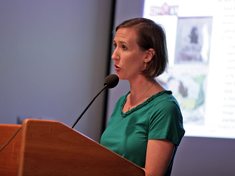
  • Susana Adamo: Migration Is Changing the Geography of Climate Change Vulnerability

    ›
    Friday Podcasts  //  June 13, 2014  //  By Moses Jackson
    Susana_adamo

    While it may seem obvious, it bears repeating that certain parts of the world are more susceptible than others to the adverse impacts of climate change. And since humans are distributed unevenly across the earth’s surface, certain people are more susceptible than others as well.

    MORE
  • Not Just Climate Change: Marcel Leroy on How Demography Contributes to Africa’s Scarcity Problems

    ›
    Friday Podcasts  //  June 6, 2014  //  By Donald Borenstein
    marcel_leroy

    The Sahel has endured multiple debilitating food crises over the last five years and climate change has often been fingered as the culprit. But it is important to equally consider the amplifying effects of demographic trends on resource scarcity, says the University of Peace’s Marcel Leroy in this week’s podcast.

    MORE
  • Melanie Nakagawa on Integrating Gender Into REDD+ at the Department of State and USAID

    ›
    Friday Podcasts  //  May 30, 2014  //  By Donald Borenstein
    Nakagawa_small

    A central tenet of John Kerry’s time as Secretary of State has been an emphasis on climate change. In a speech in Indonesia this year, he compared the threat of changing climate conditions to terrorism and weapons of mass destruction. Though the United States has been slow to enact major climate legislation, the Department of State has developed a “road map” for responding in its own way. The REDD+ program could play a major role in this response, says Melanie Nakagawa of the department’s policy planning staff in this week’s podcast.

    MORE
  • Steven Philip Kramer on ‘The Other Population Crisis’

    ›
    Friday Podcasts  //  May 23, 2014  //  By Moses Jackson
    kramer_post

    Ever since Thomas Malthus’ 18th-century treatise linked overpopulation with conflict and poverty, population growth has been a subject of concern and controversy. But does population decline warrant similar attention? According to Steven Philip Kramer, the subject of this week’s podcast and author of The Other Population Crisis: What Governments Can Do About Falling Birth Rates, it does.

    MORE
  • Lisa Meadowcroft on Integrating Water and Sanitation With Maternal Health Goals in Kenya

    ›
    Dot-Mom  //  Friday Podcasts  //  May 9, 2014  //  By Donald Borenstein
    Meadowcroft_small

    In sub-Saharan Africa, women collectively spend an estimated 40 billion hours a year gathering water, often walking miles to the nearest source, which may not be clean, and braving exhaustion, harassment, and worse along the way. Water availability and quality at health clinics is often not much better, creating a crisis for women, especially pregnant women, throughout the continent. A mutual solution lies in better coordination between efforts to improve water, sanitation, and hygiene (WASH) and maternal health, says the African Medical and Research Foundation’s Lisa Meadowcroft in this week’s podcast.

    MORE
  • Roger-Mark De Souza: Integrated Development Shows Health, Population Dynamics Crucial for Resilience

    ›
    Friday Podcasts  //  May 2, 2014  //  By Moses Jackson
    R-M-GMU

    Resilience means different things to different people. For many in the international development and humanitarian communities, building resilience means responding to growing climate risks through disaster mitigation and planning. But for people like Birhani Fakadi, a 39-year old mother of 11 in rural Ethiopia, it also means access to reproductive health and family planning services, says ECSP’s Roger-Mark De Souza in this week’s podcast.

    MORE
  • Alfred Omenya: Gender-Based Violence Must Be Made More Visible

    ›
    Friday Podcasts  //  April 18, 2014  //  By Moses Jackson
    omenya_small

    Reducing gender-based violence requires turning our attention to what we normally do not see, says Alfred Omenya of Eco-Build Africa. In this week’s podcast, Omenya, who collaborated on a four-year study investigating all types of violence in four cities around the world, explains how certain forms of gender-based violence are “invisible” in conventional research and policy.

    MORE
  • “The Himalayas Are Pushing Back”: Keith Schneider on Why India Needs to Forge Its Own Path to Development

    ›
    Choke Point  //  Friday Podcasts  //  April 11, 2014  //  By Donald Borenstein
    Keith_small

    India has the second largest – soon to be largest – population of any nation on the planet and boasts a rapidly developing economy, yet it consumes only a fraction of the energy of China or the United States. Much like China before it, the Indian government has proposed an ambitious system of hydroelectric projects in an attempt to catch up.

    MORE
Newer Posts   Older Posts
View full site

Join the Conversation

  • RSS
  • subscribe
  • facebook
  • G+
  • twitter
  • iTunes
  • podomatic
  • youtube
Tweets by NewSecurityBeat

Trending Stories

  • unfccclogo1
  • Pop at COP: Population and Family Planning at the UN Climate Negotiations

Featured Media

Backdraft Podcast

play Backdraft
Podcasts

More »

What You're Saying

  • Volunteers,At,The,Lagos,Food,Bank,Initiative,Outreach,To,Ikotun, Pan-African Response to COVID-19: New Forms of Environmental Peacebuilding Emerge
    Rashida Salifu: Great piece 👍🏾 Africa as a continent has suffered this unfortunate pandemic.But it has also...
  • A desert road near Kuqa An Unholy Trinity: Xinjiang’s Unhealthy Relationship With Coal, Water, and the Quest for Development
    Ismail: It is more historically accurate to refer to Xinjiang as East Turkistan.
  • shutterstock_1779654803 Leverage COVID-19 Data Collection Networks for Environmental Peacebuilding
    Carsten Pran: Thanks for reading! It will be interesting to see how society adapts to droves of new information in...

What We’re Reading

  • Rising rates of food instability in Latin America threaten women and Venezuelan migrants
  • Treetop sensors help Indonesia eavesdrop on forests to cut logging
  • 'Seat at the table': Women's land rights seen as key to climate fight
  • A Surprise in Africa: Air Pollution Falls as Economies Rise
  • Himalayan glacier disaster highlights climate change risks
More »
  • woodrow
  • ecsp
  • RSS Feed
  • YouTube
  • Twitter
  • Facebook
  • Home
  • Who We Are
  • Publications
  • Events
  • Wilson Center
  • Contact Us
  • Print Friendly Page

© Copyright 2007-2021. Environmental Change and Security Program.

Woodrow Wilson International Center for Scholars. All rights reserved.

Developed by Vico Rock Media

Environmental Change and Security Program

Woodrow Wilson International Center for Scholars

Ronald Reagan Building and International Trade Center

  • One Woodrow Wilson Plaza
  • 1300 Pennsylvania Ave., NW
  • Washington, DC 20004-3027

T 202-691-4000