-
Multiple Sclerosis and Pregnancy: Terrie Livingston on Overcoming the Misconceptions
› “For me, [multiple sclerosis (MS)] presented itself shortly after the birth of my second son. I had these symptoms; I had this profound fatigue that I didn’t have with my first child,” said Terrie Livingston at a recent Wilson Center event about the growing threat of non-communicable diseases (NCDs) on maternal health. Livingston is the Head of Patient Outcomes and Solutions at EMD Serono, a business of Merck KGaA, Darmstadt, Germany.
 -
ICPD25: Midwives are a Key Part of any Health Workforce Dream Team
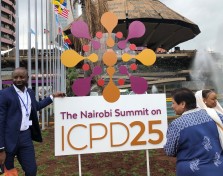
›“Midwifery is a fix, it is not an add-on,” said Franka Cadée, President of the International Confederation of Midwives (ICM) at the Nairobi Summit on ICPD25. The World Health Organization designated 2020 the Year of the Nurse and the Midwife in recognition of the invaluable contributions of these two professions. To meet the Sustainable Development Goals by 2030, midwives and nurses must be valued and utilized as essential members of the health workforce. Increased utilization of skilled midwives will also help countries achieve universal health coverage and improve access to sexual and reproductive health services, two key actions from the 1994 International Conference on Population and Development (ICPD). -
CODE BLUE: Addressing NCDs in Maternal Health Starts with Increasing Access and Reducing Disparity
›We’ve got a crisis impacting our mothers and a crisis impacting our babies, said Dr. Lisa Waddell, Senior Vice President of Maternal Child Health and NICU Innovation and Impact Deputy Medical Director at the March of Dimes, at a recent Wilson Center event launching the Maternal Health Initiative’s CODE BLUE series, developed in partnership with EMD Serono, a business of Merck KGaA, Darmstadt, Germany. She was referring to non-communicable diseases (NCDs), which impact maternal health in the United States and globally. NCDs kill 18 million women of reproductive age each year, accounting for two in every three deaths among women.
-
Safe from the Start: Addressing Gender-Based Violence in Times of Conflict and Crises
›“As a leader in providing global humanitarian aid, the United States must be a leader in protecting all aid recipients,” said Congresswoman Chrissy Houlahan (D-PA-6) at a recent event on Capitol Hill about gender-based violence in humanitarian settings. A violation against human rights, gender-based violence (GBV) is deeply rooted in gender inequality. It’s a global phenomenon that involves sexual, physical, and/or psychological violence, including child marriage, female genital mutilation, and other harmful practices.
-
CODE BLUE: The Importance of Integrating Care for Maternal Health and Non-Communicable Disease
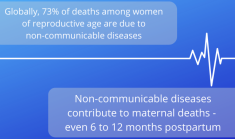
›“Non-communicable diseases have been the leading cause of death for women for at least the past 30 years but are often underreported and undertreated,” said Priya Kanayson, Policy and Advocacy Manager at NCD Alliance at a recent Wilson Center event on the impact of non-communicable diseases (NCDs) on maternal health. The event marked the official launch of the Maternal Health Initiative’s CODE BLUE series, developed in partnership with EMD Serono, a business of Merck KGaA, Darmstadt, Germany. Globally, in 2018, 73 percent of deaths among women were due to NCDs, amounting to 18 million women of reproductive age dying per year due to NCDs. The compounding effects of NCDs complicate women’s experiences in many unseen ways, and the rise and gravity of NCDs pose a growing and often overlooked challenge to maternal health worldwide.
-
ICPD25: Quality of Care and Universal Health Coverage Should Be Basic Human Rights
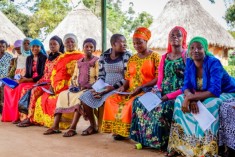
›The Nairobi Summit on ICPD25 was an opportunity for the global community to re-commit to the unfinished objectives of the 1994 International Conference on Population and Development’s (ICPD) Programme of Action and accelerate the progress to achieve the Sustainable Development Goals by 2030. -
ICPD25: I March for Gender Equality
› The Nairobi Summit on ICPD25 came a quarter century after the landmark International Conference on Population and Development (ICPD) was held in Cairo in 1994. Pledges made 25 years ago by 179 countries recognized that human rights, including reproductive rights, were fundamental to development and population concerns. A rigorous Programme of Action was created to reduce maternal deaths, ensure access to family planning, and protect women and girls from gender-based violence, including female genital mutilation and child marriage. -
Family Planning in Humanitarian Settings is Achievable and Effective
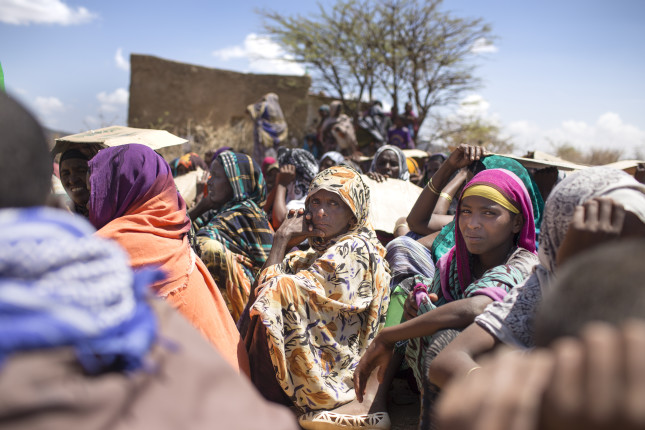
›“Family planning saves lives, even in times of crisis,” said Gwen K. Young, Managing Director at the Global Emergency Response Coalition at a Wilson Center event on October 8 on the importance of providing family planning and reproductive health services in humanitarian settings. Speakers from Save the Children, CARE, the International Rescue Committee, and FP2020 spoke to programmatic successes, innovative solutions, and local partnerships in fragile settings. Young highlighted that 1 in 70 people worldwide need humanitarian assistance and a quarter of these are women and girls of reproductive age. All told, more than 30 million women and girls in 42 countries.
Showing posts from category Dot-Mom.
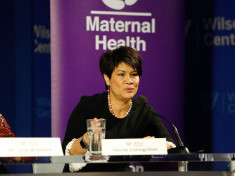 “For me, [multiple sclerosis (MS)] presented itself shortly after the birth of my second son. I had these symptoms; I had this profound fatigue that I didn’t have with my first child,” said Terrie Livingston at a
  “Midwifery is a fix, it is not an add-on,” said Franka Cadée, President of the International Confederation of Midwives (ICM) at the Nairobi Summit on ICPD25. The World Health Organization designated 2020 the
 The Nairobi Summit on ICPD25 was an opportunity for the global community to re-commit to the unfinished objectives of the 1994 International Conference on Population and Development’s (ICPD)
  The Nairobi Summit on