-
Brewing Biogas in the United States and China
›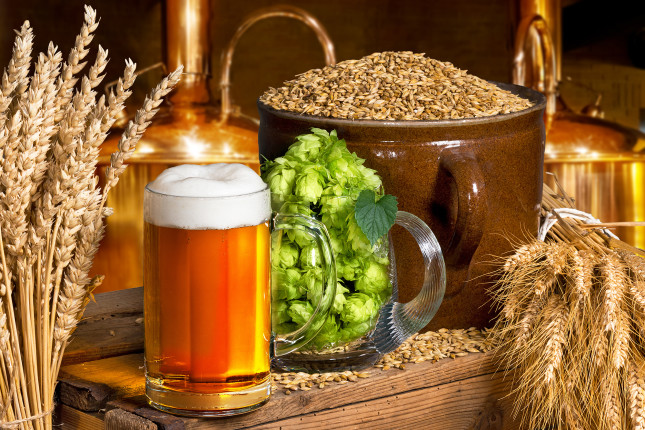
Marmite, a popular food spread developed from yeast at the Burton on Trent brewery in west-central England, is a by-product of brewing beer. The sticky brown food paste adopted the marketing slogan “love it or hate it,” hinting that its strong flavor is an acquired taste. For centuries, Burton on Trent brewed beer, but it has now gained another valuable brewing by-product in addition to Marmite—methane biogas. In 2008, the brewery built an anaerobic digester that converts the beer waste to methane, which is then burned to heat boilers to make beer.
-
Flying High: Q&A with Birding Beijing’s Terry Townshend
› On March 20, the lawsuit filed by the three organizations successfully blocked the construction of the Jiasajiang I Hydropower Station in Yunnan Province, meaning that at least for now, these long-legged endangered birds are safe. This environmental victory for China’s birds builds on the designation of some of China’s Migratory Bird Sanctuaries along the coast of the Yellow Sea-Bohai Gulf as UNESCO World Heritage sites in July 2019, with more planned in the next two to three years. However, these highpoints in avian protection do not negate the fact that nearly 40 percent of China’s endemic birds are listed as threatened and require greater protection.
 -
China Increasing Agricultural Production on a Sea of Plastic
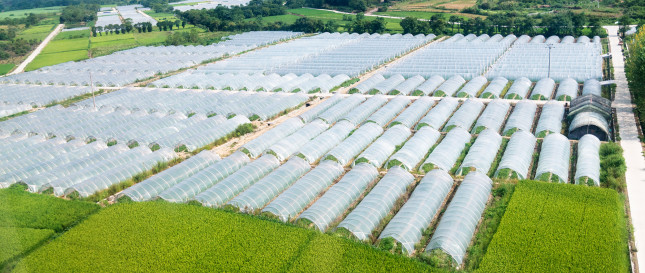
›I saw plastic greenhouses as far as the eye can see from the train as I traveled across Shandong Province to visit the Shandong Academy of Agricultural Sciences. Ninety percent of the world’s plastic greenhouses are in China, covering 3.3 million hectares, about the area of Maryland, with the majority in Shandong.
-
Can Singapore’s NEWater Spark a Wastewater Revolution in China?
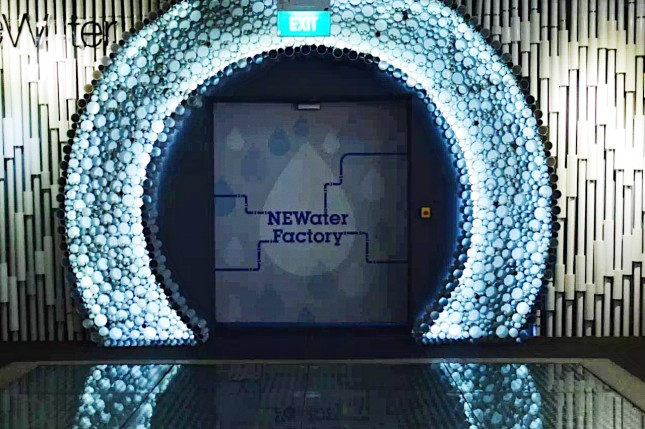
›China is one of the “thirstiest” countries in the world with a per capita water availability a quarter of the United States. With population, pollution, and water shortages growing unabatedly, reclaimed water (e.g., treating wastewater to drinking water standards) could be the answer to China’s water insecurity. In China, extensive research in the 1980s into water reclamation and urban investments supporting infrastructure in the 2000s sparked production capacity in the country to rise from 63 billion gallons a day to 236 billion gallons per day between 2009 to 2015. Today, however, reclaimed water is a mere drop in the bucket meeting less than 1 percent of total urban water use. China could look to the tiny Southeast Asian city-state of Singapore to learn how it tapped reclaimed water to turn its water-scarce tiny island into a high-tech hydrohub.
-
Delivering a Solution to the World’s Ocean Plastic Problem
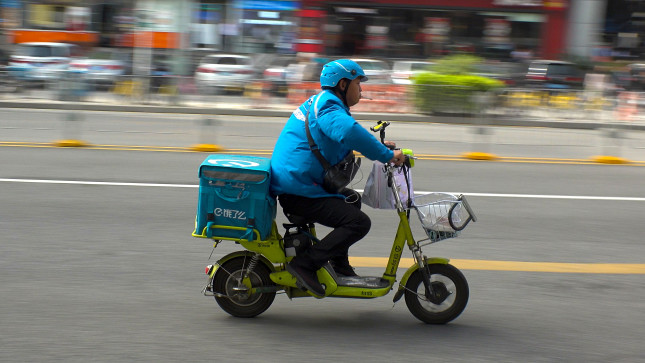
›In 2017, the Green Volunteer League of Chongqing, an environmental NGO, filed a suit against China’s three biggest food delivery companies—Meituan, Baidu, and Ele.me—for damaging the environment by generating excessive waste. Specifically, these three e-commerce platforms provided consumers with single-use chopsticks that consumed 6,700 trees every day as well as massive amounts of plastic containers, bags, and utensils. Today, over 400 million Chinese are regular users of food delivery. Since summer 2019, daily app use for Meituan was over 30 million orders, generating 100 million plastic containers every day—enough to carpet 360 football fields.
-
Pig Disease is Creating a Mountainous Solid Waste Problem
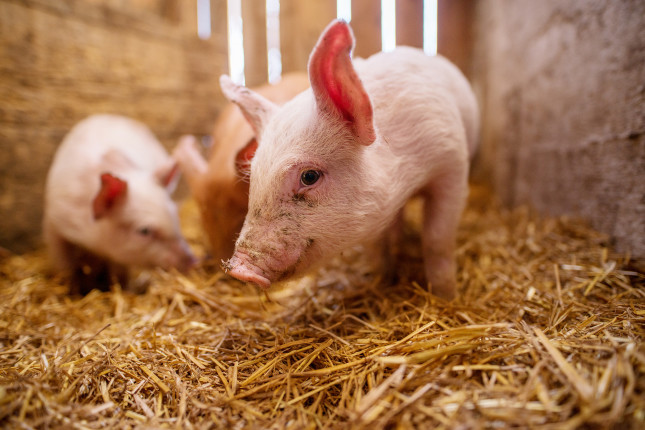
›On a rainy July afternoon in 2017, I was in Jinhua, China, a city just south of Shanghai, to visit a pig farm. This was not just any pig farm—the Mebolo farm grows pigs that become the prized Jinhua Hams, a Chinese delicacy for nearly 1500 years. Long before Italians produced prosciutto and the Spanish their Jamón serrano ham, Marco Polo discovered Jinhua ham in the 13th century and brought ham-making techniques back to Europe.
-
Black Coal to White Trash
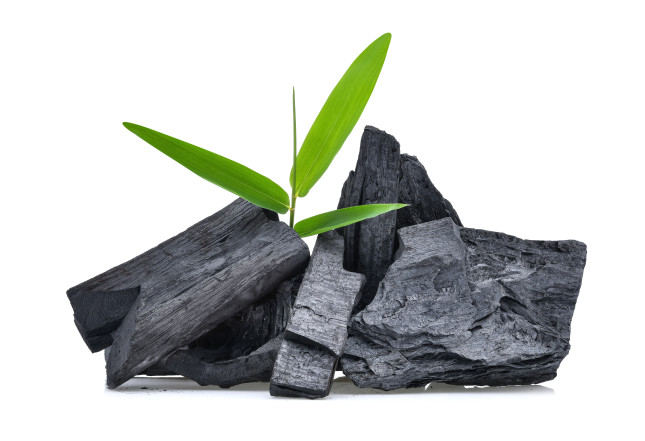
›Coal has long been China’s “black gold,” supplying over half of the nation’s electricity. Yet as coal’s energy share decreases due to domestic action to reduce air pollution and greenhouse gas emissions, a new coal industry is emerging. In China’s arid northwest, eight plants are pulverizing coal chunks and “cooking” coal powder into something more valuable than power—or maybe even gold. These coal conversion plants, soon numbering over 20, churn out chemicals to produce plastic.
-
Where Do the Plastic Miners Go When the “Mine” Disappears?
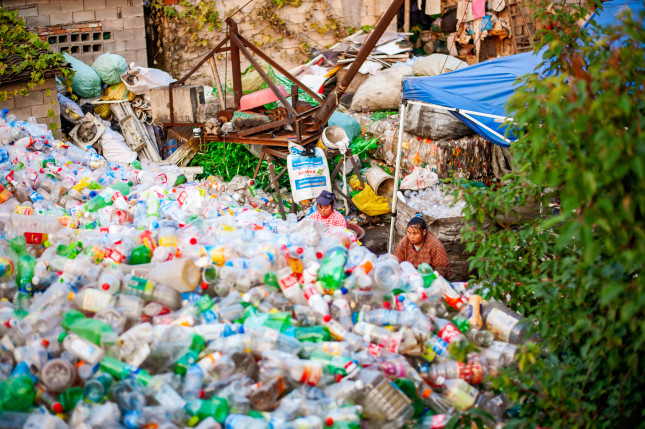
›Usually after dinner, Mr. Ma would take off his shirt, shut the door, and begin work making plastic pellets from scrap. But tonight, he sits in his darkened yard staring at two SUV-sized plastic processing machines and a bundle of colorful scrap plastic. No lights are on, no machines grind, and no familiar theme song of CCTV-1 plays in the background. Walking through other villages in Wen’an County, more men meander around their yards filled with the same idle processing machines and mini-mountains of scrap plastic. Most have never studied English, but they are fluent in the language of plastics, sprinkling words like ABS, PP, and PVC into their conversations. They are the owners of small plastic scrap recycling workshops that were once booming—but are now silent.
Showing posts from category China Environment Forum.
 On
On