-
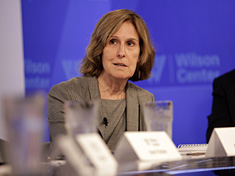
“No Precedent in Human History”: Ruth Greenspan Bell on Why Climate Change Demands More Than the UNFCCC
›
The stakes are high for the UN climate conference in Paris later this year, so high in fact, some scholars feel it’s foolish to be putting all our eggs in one basket.
-
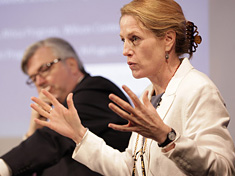
Adapting to Global Change: Climate Displacement, Mega-Disasters, and the Next Generation of Leaders
›
The world is more connected than ever before, but also more complex. Big, transnational trends like climate change, urbanization, and migration are changing the calculus of geopolitics, while local-level inequalities persist. “[Change] seems to be spinning around us so fast,” said John Hempelmann, president of the Henry M. Jackson Foundation, which honors the legacy of the late senator from Washington State. How can today’s and tomorrow’s leaders adjust to global trends? [Video Below]
-
Alice Thomas: Climate Change Effects and Responses Profoundly Undermine Human Rights
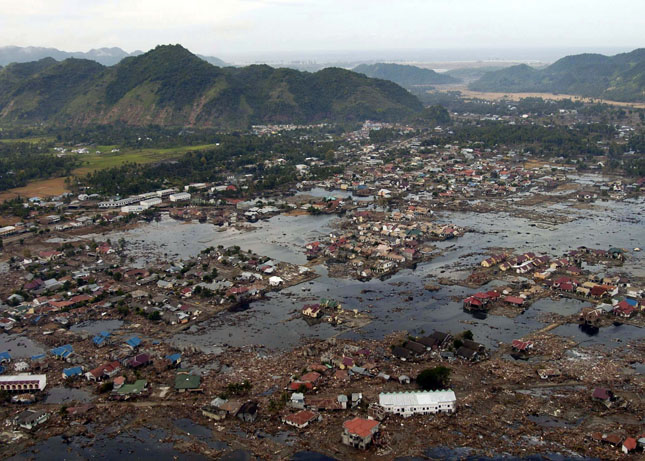
›After Typhoon Haiyan ripped across the Philippines in 2014 leveling nearly every building in sight, 4 million people – mostly poor and from coastal regions – were displaced. In response, the government set up “no build” zones in vulnerable areas and worked to move people to new land. But many of the newly relocated people discovered this land came with no access to water, electricity, or other services.
-
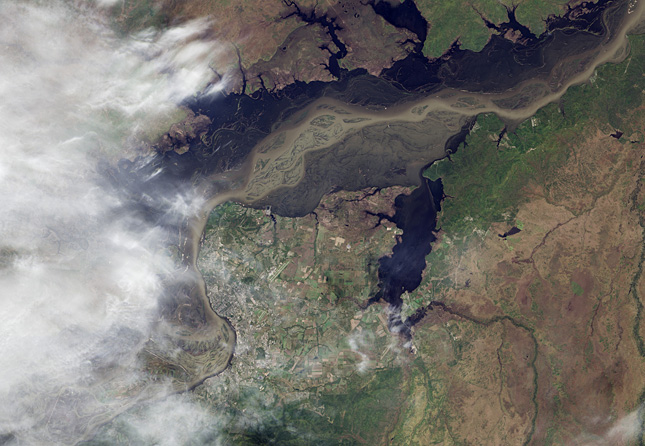
Adaptation, Resistance, or Subversion: How Will Water Politics Be Affected by Climate Change?
›One of the primary ways climate change is expected to affect international relations is through water. There are more than 270 bodies of water that cross over international boundaries, and various methodologies have identified several dozen that are particularly at risk for tension or conflict. So how is climate change affecting transboundary water politics? Are governments and institutions taking the threat seriously? A few years back, a group of researchers decided to focus on this question.
-
USAID’s Sylvia Cabus on the Sahel: “We Help Farmers…and Their Husbands”
›In the Sahel, one of the most food-stressed regions of the world, “women bear the brunt in terms of coping mechanisms that are employed at the community level,” says Sylvia Cabus, gender advisor for USAID’s Bureau for Food Security, in this week’s podcast.
-
Looking Beyond 2015: Promoting Years of Sustainability by Responding to Megatrends
›2015 is a major test for the international system. The Sustainable Development Goals are expected to be adopted in New York in September and expectations for the UN Climate Summit in Paris are higher than perhaps any other time. “It is a critical year,” said Alan Hecht, director for sustainable development for the U.S. Environmental Protection Agency, “but our challenge is years of sustainable development. How do we take actions today, how do we prepare for the future in such a way that we will achieve a more sustainable outcome?” [Video Below]
-
Roger-Mark De Souza Talks Global Population Dynamics on ‘Radio Times’
›From aging populations in East Asia, Europe, and the United States to youth in sub-Saharan Africa, changing demographics have implications for the entire global community, said Roger-Mark De Souza, director of population, environmental security, and resilience at the Wilson Center in an April 20 interview for WHYY’s Radio Times in Philadelphia.
-
Building Climate Resilience in Conflict-Affected States: A Neglected Agenda
›Climate change adaptation and mitigation efforts face many obstacles in fragile and conflict-affected societies. Instead of writing off these situations, however, International Alert’s Janani Vivekananda, Janpeter Schilling, and Dan Smith suggest approaching aid and development differently to proactively build resilience and simultaneously advance climate, development, and peacebuilding goals.
Showing posts from category adaptation.