-
VIDEO: Leona D’Agnes on Population, Health, and Environment
›April 15, 2009 // By Wilson Center StaffIntegrated population-health-environment (PHE) programs “are very cost-effective ways” to develop “community capacity—to strengthen their know-how, and bring…in some additional appropriate technologies” to promote livelihoods, says Leona D’Agnes in this short expert analysis from the Environmental Change and Security Program.
“It doesn’t require a lot of money, but it does require capacity building and being able to motivate communities and help them to understand that it is not just the government that’s responsible for their development. Their own food security and environmental security rests with their abilities to manage their assets, their natural resources, to plan their families, and make sure their children finish school.”
In this expert analysis, D’Agnes, currently a consultant to CDM International on PHE and forestry in Nepal, discusses the linkages between population, health, and environment involved in her work as a technical adviser for PATH Foundation Philippines and its IPOPCORM project.
To learn more about population, health, and environment issues, please visit our PHE page. -
Hardship in Haiti: Family Planning and Poverty
›April 14, 2009 // By Rachel WeisshaarThe New York Times’ Nicholas Kristof aptly describes the connections between poverty and lack of access to family planning in a recent op-ed, using a Haitian woman named Nahomie as an example. He rightly argues that we won’t be able to end poverty until women are able to choose how many children to have. He also notes that relative funding levels for family planning have decreased in recent decades, and that development professionals’ attention has shifted to other issues. Yet 201 million women around the world still have an unmet need for family planning.
One of the few off notes in Kristof’s article, I think, is his portrayal of family planning as a difficult, challenging intervention. Of course, it is more complicated than simply giving birth control pills to women and condoms to men. But community health workers with little formal education have been successfully trained to deliver family-planning services to remote communities in developing countries.
While I recognize he has space limitations, Kristof neglected to mention that in Haiti, poverty and lack of access to family planning are linked to severe environmental degradation and natural disasters. A 2006 U.S. Agency for International Development (USAID) report found that “the root causes of environmental disaster in Haiti are acute poverty, rapid population growth, and unplanned urbanization.” To meet their daily needs, the rapidly growing population resorts to unsustainable agricultural and energy practices that deforest and erode the countryside—or move to increasingly crowded cities.
At a Wilson Center presentation in August 2006, USAID’s Rochelle Rainey reported that 40 percent of Haitian women wished to use contraception but did not have access to it. Modern contraceptive methods are used by only 23 percent of the population, contributing to a total fertility rate of 4.9 children per woman. As Ronald Toussaint, a Haitian biodiversity specialist, said: “If we don’t address population issues, it is like the Creole phrase, ‘wash your hands and then rub them in the dirt.’”
Photo: Children in Haiti. Courtesy of Flickr user Billtacular. -
In Dealing with Climate Change, A Role for Global Governance
›April 14, 2009 // By Will Rogers“The idea of being a citizen of the world is still controversial,” said Strobe Talbott at a March 12, 2009, event examining the “great experiment” of global governance. Nevertheless, Talbott, president of The Brookings Institution, argued that global governance will be key to solving three of the greatest challenges the world faces: nuclear proliferation, climate change, and the financial crisis. This event was co-sponsored by the Wilson Center’s Environmental Change and Security Program and the Environmental Film Festival in the Nation’s Capital.
From Imperialism to Internationalism: The “Great Experiment” of Global Governance
“Bad news has often been the mother of good news” in the long history of global governance, Talbott said. Imperialism “brought fractious tribes and cultures together under a single authority—an attempt at global governance that ultimately failed.”
In the wake of World War I’s destruction came the League of Nations, a stab at global governance that lacked American support and “failed abysmally at preventing the Second World War,” Talbott noted. World War II spawned the United Nations, which was more successful due to the United States’ participation and influence.
From the ashes of the Cold War rose a more interconnected Europe, which Talbott affectionately referred to as the “Euro-mess”—a “system in which multiple countries make common cause in the face of common challenges,” he said. “Part of what we must hope for in the years ahead is the emergence of a more robust ‘globo-mess’—the creation and strengthening of regional and global organizations.”
Global Governance for Global Challenges
According to Talbott, the nuclear arms control treaties exemplify effective global governance in the pursuit of the ultimate common goal: the survival of the human race. “We need to build on past experiences and existing institutions to address challenges like climate change and financial regulation,” he said.
Talbott suggested that we use the existing nuclear nonproliferation regime to build an effective climate control system that ensures that “civilian nuclear power—which we are going to be seeing a lot more of—will be safe and confined to peaceful purposes.”
Similarly, a global financial regime could help bolster the effectiveness of a climate regime by stabilizing the world’s credit markets, enabling them to help “finance commercially viable technologies to end our dependence on fossil fuel,” Talbott said. “If we’re going to have efficient, equitable markets in which to trade in carbon allotments,” we will need a robust global economic regime, as well, he said.
With global governance, “progress has almost always been reactive. But in dealing with climate change, progress needs to be proactive,” as when the world has come together to prevent nuclear war, Talbott said. “If we fail to recognize our own obligations as citizens of the world,” he warned, “we risk, if not our own lives, then the lives of our children and their children.”Photo: Strobe Talbott. Courtesy of Dave Hawxhurst and the Woodrow Wilson Center.
-
From Assessment to Intervention: Redefining UNEP’s Role in Conflict Resolution
›April 9, 2009 // By Will Rogers“Can we get beyond the point where environment and conflict always has to be a story of tragedy with no happy ending?” asked Achim Steiner at the March 24, 2009, launch of From Conflict to Peacebuilding: The Role of Natural Resources and the Environment, a new report from the UN Environment Programme (UNEP).
“I think we actually can provide a critical set of building blocks that would allow us to be not just lamenters on the sidelines,” but active problem-solvers, said Steiner, UNEP’s executive director. UNEP would like to put “green advisers, so to speak, with blue helmets” to examine peacebuilding “from an environmental, natural resource restoration point of view” and “minimize the potential for conflicts to escalate again,” said Steiner, who recently met with Alain Le Roy, UN undersecretary-general for peacekeeping operations, to discuss plans for embedding environmental advisers with UN peacekeeping troops.
Steiner was joined by Daniel Reifsnyder, deputy assistant secretary for environment at the U.S. State Department, and Andrew Morton, manager of UNEP’s Disasters and Conflicts Programme, to discuss the report’s findings.
Natural Resources and the Conflict Continuum
According to From Conflict to Peacebuilding:- Forty percent of intrastate conflicts within the past 60 years have been strongly linked to natural resources.
- Such conflicts are twice as likely to relapse within the first five years of peace.
- Less than a quarter of peace agreements for these conflicts address natural-resource issues.
Environmental factors can contribute to conflict and subvert peace in three main ways:
- The inequitable distribution of resource wealth, competition for scarce or valuable resources, and environmental degradation can contribute to the outbreak of conflict.
- Natural resources can used as “a financing vehicle for conflict—sustaining conflict well beyond the point where conflict has its origin, to actually having become part of an at-war economy, a conflict economy,” Steiner said.
- Unresolved environmental issues can subvert peace negotiations, especially when warring parties have a stake in lucrative resources. If we do not understand “how environment and natural resources can undermine very volatile peace agreements,” Steiner warned, we can “find ourselves back where we started off from.”
Lessons Learned and the Way Forward
Natural-resource conflicts have direct impacts—like deforestation and desertification—and indirect impacts—like the disruption of livelihoods—that are devastating to communities, Morton said. They also weaken a government’s capacity to manage its industry and infrastructure, like waste management and water purification, creating new environmental problems—and thus possible future conflict.
But the environment also offers opportunities, Morton emphasized. In Rwanda, for instance, “we have gorilla tourism going on within a few kilometers of what, essentially, was a war zone.”
UNEP recommends that peacekeepers:- Assess the natural-resource and environmental issues underlying conflicts.
- Monitor and address natural-resource use in conflict areas.
- Incorporate resource-sharing agreements into peace deals.
- When cooperation is not possible, use punitive measures to end resource exploitation.
U.S.-UNEP Cooperation on Environment, PeacebuildingAccording to Reifsnyder, the U.S. government frequently supports UNEP initiatives, such as the $1.8 million in U.S. funding for a UNEP reforestation and energy-efficiency program in an internally displaced persons camp in Darfur. This project grew out of the post-conflict environmental assessment that UNEP recently conducted in Sudan.
Reifsnyder praised UNEP’s focus: “UNEP is uniquely positioned to play a real catalytic role within the UN system, bringing together various parts of the UN system to try to focus on the importance of natural resources and the importance of the environment in peacebuilding initiatives,” he said.
Photos: From top to bottom, Achim Steiner, Andrew Morton, and Daniel Reifsnyder. Courtesy of Dave Hawxhurst and the Woodrow Wilson Center. -
Former USAID Population Directors Argue for Major Boost in Family Planning Funding
›April 7, 2009 // By Gib Clarke“We know how to do family planning, we know what it costs, and we know that it works,” said Joseph Speidel of the University of California, San Francisco, at the launch event for Making the Case for U.S. International Family Planning Assistance sponsored by the Wilson Center’s Environmental Change and Security Program on March 17, 2009. The key missing element, he said, is political will.
Speidel and his co-authors—all former directors of the U.S. Agency for International Development’s (USAID) Office of Population and Reproductive Health—argued that Congress should more than double spending on international family planning in the coming years for health, economic, and environmental reasons.
The Big Ask
Making the Case recommends that the USAID population budget be increased from $457 million in FY2008 to $1.2 billion in FY2010, growing further to $1.5 billion in FY2014. According to the speakers, this increase is necessary to:- Meet the “enormous pent-up and growing unmet need for family planning”;
- Stabilize population growth rates, especially in Africa; and
- Achieve the Millennium Development Goal of universal access to reproductive health services.
Duff Gillespie of the Johns Hopkins Bloomberg School of Public Health showed that U.S. funding for family planning has been stagnant in real dollars since the late 1960s, despite the fact that there are 200 million women with an unmet need for family planning. Without champions within USAID and the Obama administration, he said, the dollar amounts appropriated for family planning are unlikely to increase.
Speidel explained that growing populations, combined with stable or increasing rates of consumption, contribute to climate change. The current rate of population growth is unsustainable, given Earth’s finite natural resources. Changes in behavior and technology—such as eating less meat or using clean energy—could improve environmental outcomes.
Absolute numbers still matter, however: Although population growth rates have declined, the global population continues to grow. Addressing the nearly one-half of all pregnancies that are unplanned would bring great health and environmental benefits, said Speidel.According to Steven Sinding of the Guttmacher Institute, although most economists and demographers agree that economic growth leads to lower fertility, whether lower fertility reduces poverty is still a matter of much debate. But the “demographic dividend” generated by slowing population growth is a reality, he argued, and countries can benefit from it if their institutions are prepared to take advantage of it. For example, a USAID study found that one dollar invested in family planning in Zambia saved four dollars in other development areas.
A Broader Base of SupportRuth Levine of the Center for Global Development urged the authors to avoid “preaching to the choir.” One way to engage other constituencies interested in demographic issues is to broaden the scope of “population” to include not only family planning, but also migration, urbanization, and other key demographic issues.
In addition, convincing World Bank economists, especially the Bank’s next president, of the connections between declining fertility and poverty reduction should be a priority, said Levine, because developing countries put a lot of stock in the Bank’s advice.
By Gib Clarke
Edited by Rachel Weisshaar
Photos: From top to bottom, Joseph Speidel, Duff Gillespie, Steven Sinding, and Ruth Levine. Courtesy of Dave Hawxhurst and the Wilson Center. -
PODCAST – Forests for the Future: Family Planning in Nepal’s Terai Arc Landscape
›April 3, 2009 // By Wilson Center Staff“The Terai Arc Landscape has a very high population growth rate; people are very much dependent on the natural resources,” says Sabita Thapa in this podcast from the Environmental Change and Security Program.“We are especially working through the population, health, and environment project to address the issues of forest conversion, forest encroachment, and fuel extraction,” explains Thapa
. In this podcast, Thapa, now an environmental advisor with the United Nations Development Programme in the Solomon Islands, and Dhan Rai, senior project manager with World Wildlife Fund-Nepal, discuss WWF’s PHE program in Nepal’s Terai region.
To learn more about PHE in Nepal, read FOCUS Issue 18, “Forests for the Future: Family Planning in Nepal’s Terai Region.”
And for additional resources, please visit our PHE webpage.
Photo: Sabita Thapa. Courtesy of Meaghan Parker. -
Weekly Reading
›The BBC has produced an excellent multimedia package (including articles, videos, and a narrated slideshow) on the controversial Gibe III dam in Ethiopia, which could threaten the livelihoods of nearly 500,000 people.
According to New Directions for Integrating Environment and Development in East Africa, the following activities are successfully promoting sustainable, integrated development in the region: “community-based management of natural resources for local livelihoods; natural resource-based businesses that benefit communities and the environment, including markets for environmental services; integrating population issues into development activities; connecting initiatives within landscapes; promoting integrated approaches in the formal policy process; and policy research and networks for advocacy.”
Flamingoes, giraffes, buffaloes, and other wildlife are at risk from forest fires in Kenya, according to the BBC. Police believe some of the fires were set deliberately by people opposed to relocated away from protected areas.
The Center for American Progress (CAP) has released two new reports on Afghanistan. Swords and Ploughshares: Sustainable Security in Afghanistan Requires Sweeping U.S. Policy Overhaul describes a three-day simulation conducted by CAP and argues that sweeping U.S. foreign-assistance reform is essential to stabilizing Afghanistan. Sustainable Security in Afghanistan: Crafting an Effective and Responsible Strategy for the Forgotten Front sets forth short-, medium-, and long-term policy goals for Afghanistan.
The UN Population Division has raised its low population projection for 2050, reports Ben Block on Worldchanging. The revision in the estimate was largely due to a rise in births in Europe and the United States. -
In Uganda, First Trip for Journalists Bolsters International Reporting
›March 24, 2009 // By Will RogersU.S. journalists “are by and large dying for the opportunity to go overseas and learn about a whole range of issues, from refugees to human rights,” but often lack the support of their editors—the “gatekeepers”—to do so, said Louise Lief, deputy director of the International Reporting Project (IRP), at a February 26, 2009, event, “Reporting From Uganda: U.S. Media Cover Health, Environment, and Security.” Leif was joined by Paul Hendrie, department editor at Congressional Quarterly (CQ); David Rocks, senior editor at BusinessWeek; and Ben de La Cruz, a staff video journalist at The Washington Post, to discuss the recent IRP Gatekeeper trip to Uganda.
President Museveni’s Surprising Views
“One of the advantages of these trips is when you go with a critical mass of 12 very senior editors…you can often get in to see the head of state,” said Leif, describing the group’s sit-down interview with President Yoweri Museveni of Uganda. One “big surprise for me was President Museveni’s views on population,” which he did not consider a challenge, said Lief, despite the country’s high total fertility rate of 6.7 children per woman.
She was heartened that the country’s poor infrastructure, including bad roads and unreliable electricity, did not deter Ugandan children from obtaining an education. “All along the road in brightly colored clothing there were thousands and thousands of children,” she said. “Some of them were walking for kilometers, but they were going to school.”
Organic Farmers Fight DDT in Uganda
“These things that we deal with in Washington every day have a real impact in the real world,” said CQ’s Paul Hendrie. He wrote a story on the Ugandan debate over using the pesticide DDT to combat the country’s significant malaria problem. “As one expert put it to me, ‘Farmers love DDT because it kills everything,’ and that’s why it was so popular”—and why it was banned in the United States.
“Uganda has developed an industry, a fledgling industry, of certified organic farmers. They’re the leading organic exporter in Africa and thirteenth in the world,” explained Hendrie. Farmers are concerned “that if traces of DDT are found in these products, they’ll be shut out of markets, especially in Europe, their biggest market.”
“It’s kind of ironic then that in Uganda now, today, the fight against the use of DDT is not being so much led by environmentalists as by farmers, and specifically organic farmers,” Hendrie noted.
Investigating Uganda’s Economy“In a developing country, what is it that moves people, that makes the economy grow?” BusinessWeek’s David Rocks wondered before visiting Uganda.
“One of the companies that struck me was Kiwi Shoe Polish,” he said. Many people keep their shoes “for 10 or 15 years, so you have to keep them shined and polished and in good shape in order to use them.” But Chinese companies have begun counterfeiting the polish, causing Kiwi’s sales to plummet 50 percent in the last year. “It’s the poorest of the poor who are getting ripped off,” he said.
“I think that there is a lot of room for interesting economic and business stories to be done from Africa,” said Rocks, who is a senior editor at the magazine. “I hope to get my people to do more and more of that.”
Seeds of Peace in the IDP Camps
“The focus of my reporting was basically on security issues in the north, in the Gulu region, where there’s been a 20-year civil war,” said Ben de la Cruz, who filmed several videos for The Washington Post documenting the dangers of life in Uganda’s internally displaced persons (IDP) camps. In the online multimedia presentation “Seeds of Peace,” IDPs tell their wrenching stories, and peace mediator (and former Wilson Center Scholar) Betty Bigombe provides historical and political context on Uganda’s civil war.
“Despite the two years of relative peace, lots of people are still living in the camps and are afraid to leave,” de la Cruz explained. “There’s a huge fear factor because of Joseph Kony’s rebels—even though they had a ceasefire, they’re always afraid he’s going to come back.”Photos: From top to bottom: Louis Lief, Paul Hendrie, David Rocks, and Ben de la Cruz. Courtesy of Dave Hawxhurst and the Woodrow Wilson Center.
Showing posts from category environment.

 “The idea of being a citizen of the world is still controversial,” said Strobe Talbott at a March 12, 2009, event examining the “great experiment” of global governance. Nevertheless, Talbott, president of The Brookings Institution, argued that global governance will be key to solving three of the greatest challenges the world faces: nuclear proliferation, climate change, and the financial crisis. This event was co-sponsored by the Wilson Center’s Environmental Change and Security Program and the
 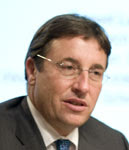 “Can we get beyond the point where environment and conflict always has to be a story of tragedy with no happy ending?” asked Achim Steiner at the March 24, 2009,
 According to Reifsnyder, the U.S. government frequently supports UNEP initiatives, such as the $1.8 million in U.S. funding for a UNEP reforestation and energy-efficiency program in an internally displaced persons camp in Darfur. This project grew out of the
 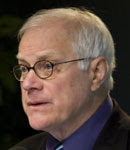 Duff Gillespie of the Johns Hopkins Bloomberg School of Public Health showed that U.S. funding for family planning has been stagnant in real dollars since the late 1960s, despite the fact that there are 200 million women with an unmet need for family planning. Without champions within USAID and the Obama administration, he said, the dollar amounts appropriated for family planning are unlikely to increase.
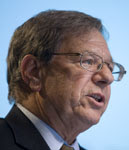 According to Steven Sinding of the Guttmacher Institute, although most economists and demographers agree that economic growth leads to lower fertility,
 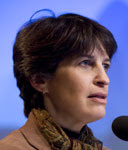 Ruth Levine of the Center for Global Development urged the authors to avoid “preaching to the choir.” One way to engage other constituencies interested in demographic issues is to broaden the scope of “population” to include not only family planning, but also
  .
.  U.S. journalists “are by and large dying for the opportunity to go overseas and learn about a whole range of issues, from refugees to human rights,” but often lack the support of their editors—the “gatekeepers”—to do so, said Louise Lief, deputy director of the International Reporting Project (IRP), at a February 26, 2009, event, “
 “In a developing country, what is it that moves people, that makes the economy grow?” BusinessWeek’s David Rocks wondered before visiting Uganda.