-
Great Power Resource Competition in a Changing Climate: New America’s Natural Security Index
›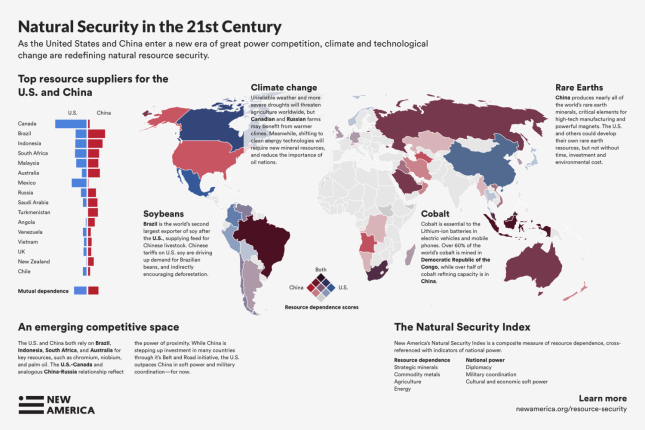
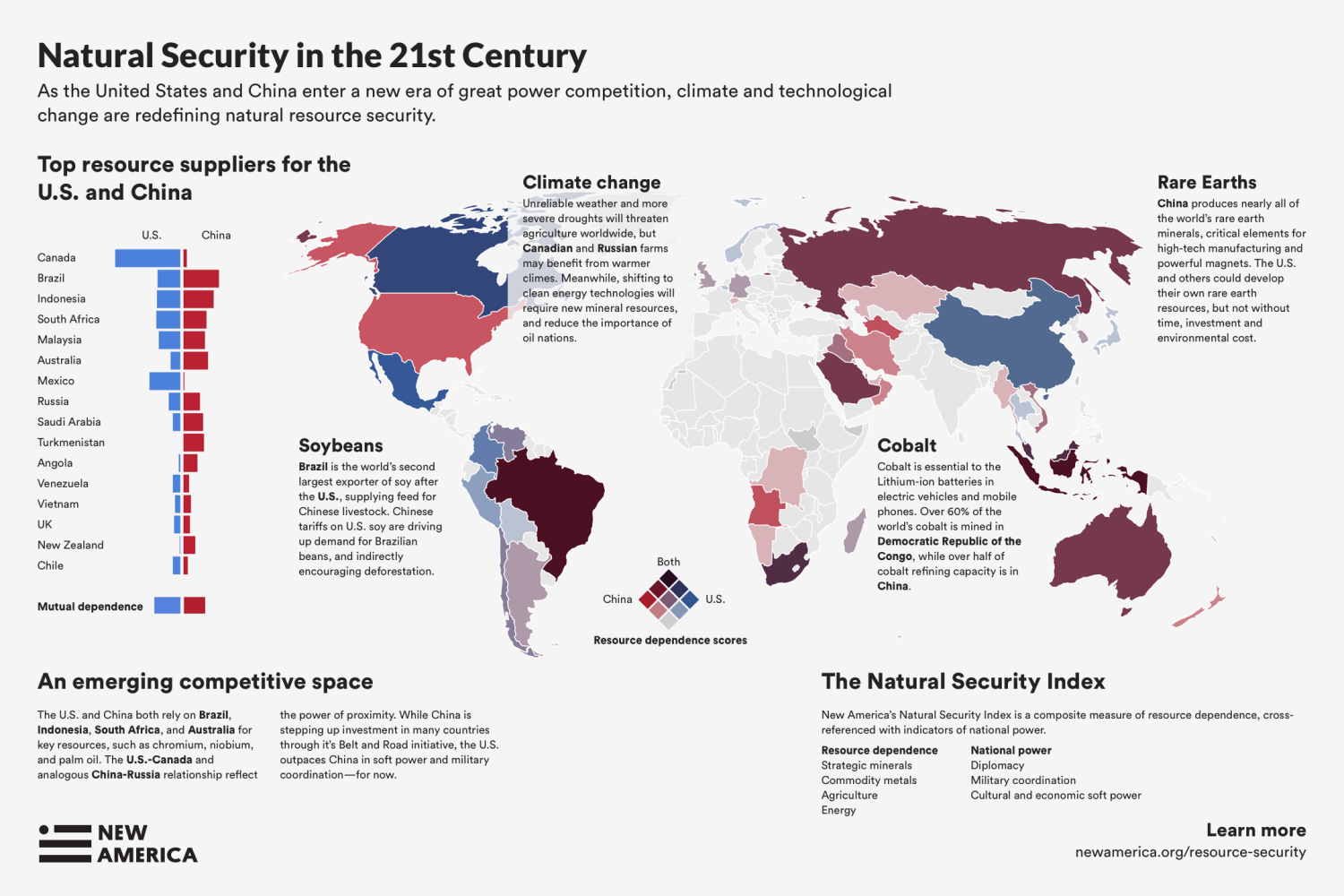
Late last year, Reuters reported that the U.S. Defense Department plans to fund mining and processing operations for rare earth elements—a class of minerals for which China dominates the global market, producing over 80 percent of the world’s supply. In the past, China has restricted exports of rare earths, and recently threatened to do so again. Even with a phase one trade deal hammered out between the United States and China, natural resources are likely to remain a point of geopolitical tension.
-
China’s Risky Gamble on Coal Conversion
›China Environment Forum // Choke Point // January 9, 2020 // By Richard Liu, Zhou Yang & Xinzhou Qian
At the September 2019 United Nations General Assembly (UNGA) Climate Summit, the U.S. delegation, under the shadow of intended withdrawal from Paris, did not volunteer a speaker. Attention instead focused on China. As the world’s largest carbon emitter, China was poised to assert leadership on the climate crisis. However, perhaps lacking the sibling rivalry pressure that brought the U.S. and China together in 2014 on a joint climate agreement, State Councilor and Foreign Minister Wang Yi offered no new commitments: no carbon tax, no increased investment in renewables, and no announcement to set a more ambitious coal consumption cap.
-
To Help Save the Planet, Stop Environmental Crime
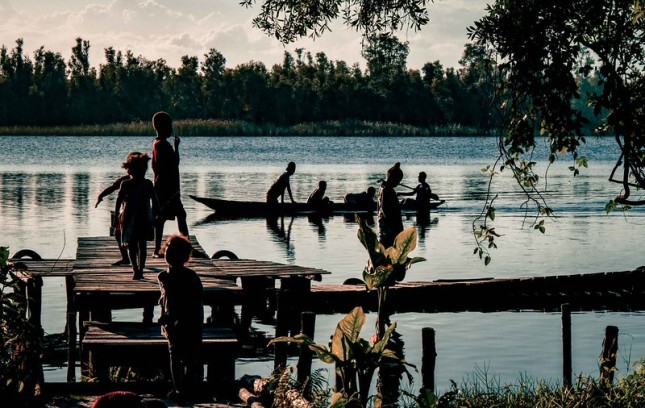
›Since the dawn of the Industrial Revolution, humans have so vastly altered Earth’s systems that we’re now in the midst of what many are calling the Anthropocene Epoch. Human activity has become the dominant influence on climate and the environment, inflicting changes that may persist for millennia.We are razing the planet’s last intact wild lands, degrading, deforesting, carving up, and destroying huge swathes of habitat. We’re overfishing and poisoning our rivers and oceans. We continue to pump greenhouse gases into the atmosphere, raising CO2 levels and hastening climatic changes that are already affecting all life on Earth.
-
ICPD25: Midwives are a Key Part of any Health Workforce Dream Team
›“Midwifery is a fix, it is not an add-on,” said Franka Cadée, President of the International Confederation of Midwives (ICM) at the Nairobi Summit on ICPD25. The World Health Organization designated 2020 the Year of the Nurse and the Midwife in recognition of the invaluable contributions of these two professions. To meet the Sustainable Development Goals by 2030, midwives and nurses must be valued and utilized as essential members of the health workforce. Increased utilization of skilled midwives will also help countries achieve universal health coverage and improve access to sexual and reproductive health services, two key actions from the 1994 International Conference on Population and Development (ICPD). -
All the Population Future We Cannot See
›In the quarter century the Wilson Center’s Environmental Change and Security Program has been pondering the issues for which it’s named, the world’s demographic future has been wobbling. A key concern of analysts: How many people will farmers need to feed in 2050? Mainstream projections have teetered between 8.9 billion and 9.8 billion, amounting to an increase of between 13 and 21 percent over today’s 7.7 billion. This significant variation in projections is rarely acknowledged by prognosticators. Many simply round up today’s latest guess and state confidently that there will be 10 billion people in 2050—though just a few years ago, the number most confidently stated was 9 billion. -
Protecting the Protectors: Environmental Defenders and the Future of Environmental Peacebuilding
›Early scholarship on environmental peacemaking recognized the important role that local civil-society can play in promoting regional cooperation while, at the same time, pressuring governments to protect the environment. For example, in the late 1980s/early 1990s, nongovernmental organizations (NGOs), such as the Union for Defense of the Aral Sea and Amu Darya in Uzbekistan and the Dashowuz Ecological Club in Turkmenistan, were at the forefront of the fight to restore the Aral Sea and protect the region’s biodiversity. -
CODE BLUE: Addressing NCDs in Maternal Health Starts with Increasing Access and Reducing Disparity
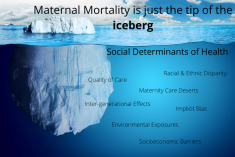
›We’ve got a crisis impacting our mothers and a crisis impacting our babies, said Dr. Lisa Waddell, Senior Vice President of Maternal Child Health and NICU Innovation and Impact Deputy Medical Director at the March of Dimes, at a recent Wilson Center event launching the Maternal Health Initiative’s CODE BLUE series, developed in partnership with EMD Serono, a business of Merck KGaA, Darmstadt, Germany. She was referring to non-communicable diseases (NCDs), which impact maternal health in the United States and globally. NCDs kill 18 million women of reproductive age each year, accounting for two in every three deaths among women.
-
By, for, and of the People: How Citizen Science Enhances Water Security
›In the Peruvian Andes, where cropland is irrigated and water availability is variable at best, knowledge of highland hydrology is crucial to survival. However, until recently, the locals did not have adequate information to be able to use their water efficiently. So the community worked with a nonprofit to develop a non-specialist/non-researcher run data-gathering project to monitor the water in the region to optimize its use: in short, they developed a citizen science project.
Showing posts from category development.

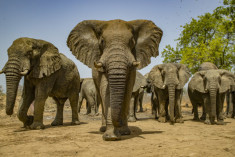 Since the dawn of the Industrial Revolution, humans have so vastly altered Earth’s systems that we’re now in the midst of what many are calling the
 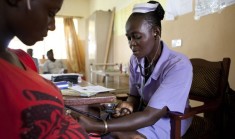 “Midwifery is a fix, it is not an add-on,” said Franka Cadée, President of the International Confederation of Midwives (ICM) at the Nairobi Summit on ICPD25. The World Health Organization designated 2020 the
 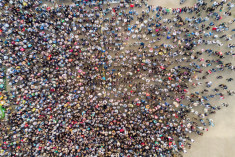 In the quarter century the Wilson Center’s Environmental Change and Security Program has been pondering the issues for which it’s named, the world’s demographic future has been wobbling. A key concern of analysts: How many people will farmers need to feed in 2050? Mainstream projections have teetered between 8.9 billion and 9.8 billion, amounting to an increase of between 13 and 21 percent over today’s 7.7 billion. This significant variation in projections is rarely acknowledged by prognosticators. Many simply round up today’s latest guess and state confidently that there will be 10 billion people in 2050—though just a few years ago, the number most confidently stated was 9 billion.
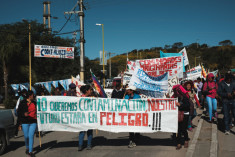 Early scholarship on