

-
Weekly Reading
›“A warming planet will spread disease, shrink water resources, and deplete crops, creating conditions that produce more famine and more conflict,” said President Barack Obama in Accra, Ghana, on his first trip to sub-Saharan Africa. “All of us–particularly the developed world–have a responsibility to slow these trends–through mitigation, and by changing the way that we use energy. But we can also work with Africans to turn this crisis into opportunity,” he went on to say.
The United Kingdom’s Department for International Development (DFID) released “Eliminating World Poverty: Building Our Common Future,” a white paper setting its goals for poverty alleviation and sustainable development, including improving climate change adaptation and reproductive health services in developing countries.
In Foreign Policy, Richard Cincotta compares Iran’s youth bulge and democratic reform movement with the experience of China 20 years ago, concluding that the conservative government’s ruthless response will impede the development of durable liberal democracy.
The Natural Resources Defense Council reports that global warming is exacerbating the spread of mosquito-borne dengue fever in the Americas. Harvard’s Dr. Paul Epstein recently discussed similar incidences of climate change-related disease proliferation at the Wilson Center.
In “Well Oiled: Oil and Human Rights in Equatorial Guinea,” Human Rights Watch “details how the dictatorship under President Teodoro Obiang Nguema Mbasogo has used an oil boom to entrench and enrich itself further at the expense of the country’s people.” -
Strength in Numbers: Can “Girl Power” Save Us From the Financial Crisis?
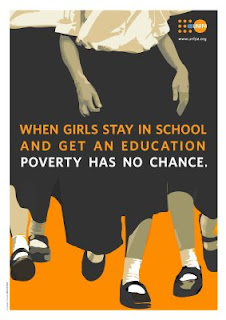
›July 15, 2009 // By Meaghan ParkerTo promote the 20th World Population Day on July 11, the United Nations Population Fund (UNFPA) tied this year’s theme—“Fight Poverty: Educate Girls”—to combating the ongoing financial crisis. It’s a no-brainer that, as UNFPA points out, “women and children in developing countries will bear the brunt of the impact.” -
Post-Conflict Recovery in Biodiversity Hotspots
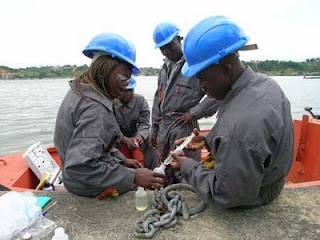
›The prevalence of armed conflict in areas of high biodiversity is alarming, though not entirely surprising. According to “Warfare in Biodiversity Hotspots” (abstract online), which was published earlier this year in Conservation Biology, 80 percent of the major armed conflicts between 1950 and 2000 took place in biodiversity hotspots. While natural resources are rarely the principal causes of conflict, their allocation and ownership are frequently among its drivers. -
VIDEO: Dan Smith on Climate Change, Development, and Peacebuilding
›July 1, 2009 // By Wilson Center StaffClimate change will have serious impacts on fragile states. To effectively address the potential for instability, the climate community must communicate and collaborate with the development and peacebuilding communities.
In an interview recorded in Washington, Dan Smith of International Alert makes the case for extending this dialogue: “This is not just an environmental issue, not just a development issue, it’s not just a peace and conflict issue, if we don’t understand the connectivity and the interactions between all of these categories, we’re going to get it wrong.”
Smith enumerates the shortcoming of failing to account for the special circumstances of states in conflict or emerging from conflict by “Adaptation and peacebulding are very, very closely related. A society which can adapt against the threat of climate change is a society that can you imagine can handle conflict and peace issues quite well and quite constructively…and vice versa,” he tells ECSP Director Geoff Dabelko.
With the Copenhagen negotiations set for December, the climate community is negotiating over significant funds for adaption in the realm of development. Yet the climate and development communities have too few overlaps in terms of people and understandings.
At a Woodrow Wilson Center event, Smith and colleague Shruti Mehrotra provided an update on the climate-conflict arguments and called for better trilateral dialogue among these three communities, drawing on the November 2007 co-authored report A Climate of Conflict. -
Climate and Migration: Threat or Opportunity?
›June 26, 2009 // By Lauren Herzer Risi“The breakdown of ecosystem-dependent livelihoods is likely to remain the premier driver of long-term migration during the next two to three decades,” says In Search of Shelter: Mapping the Effects of Climate Change on Human Migration and Displacement, a report launched at the recent international climate negotiations in Bonn.
According to the report, climate change will threaten livelihoods (and could consequently drive migration) through its impact on agriculture, glacial melt, sea-level rise, and the severity and frequency of natural disasters. While the report recognizes that migration is a complex issue involving a “combination of environmental, economic, social and/or political factors,” it stresses the impact of environmental change on “livelihoods which are dependent on ecosystem services, such as agriculture, herding, and fishing.”
Key to the report’s findings is the disproportionate effect that climate change will continue to have on developing countries, which are ill-equipped to adapt to climate change, and where many people’s livelihoods depend directly on ecosystem services. The report calls for the reduction of carbon emissions to mitigate climate change; the promotion of technologies that will enable adaptation; and the active participation of women and other marginalized groups in adaptation planning.
In a recent invitation-only meeting hosted by the Wilson Center’s Environmental Change and Security Program, Jon Barnett of the University of Melbourne suggested that migration that is partially due to climate might be an opportunity, as “you could use migration to facilitate adaptation.” In Search of Shelter also recognizes this potential opportunity, and suggests that development strategies be formulated accordingly. Better infrastructure, health care, and education in likely receiving cities—many of which are in the developing world and are already overwhelmed by burgeoning slum populations—would significantly reduce the pressure of migration on both migrants and receiving populations.
In Search of Shelter is a unique contribution to the field, examining climate change’s impact on migration in a careful, evidence-based manner. Yet it strikes a common chord with general reports on development by stressing the important role that access to health care, education, and infrastructure play in supporting healthy, secure populations. It may be up for debate how large of a role climate change will play in prompting migration, but it is clear that we need to integrate this issue into broader development, health, and governance strategies.
Image: Cover of In search of shelter: mapping the effects of climate change on human migration and displacement. © 2008 by CARE International. Used by permission. -
Managing Environmental Conflict in Latin America: Resolution Rests on Inclusion, Communication, Development
›June 23, 2009 // By Brian KleinPublic policies governing natural-resource extraction in Latin America “are often seen as arbitrary” and illegitimate by communities, said Mara Hernández, director of the Centro de Colaboración Cívica, A.C. – México, at the Wilson Center on June 3, 2009. Pablo Lumerman, director of Argentina’s Fundación Cambio Democrático, and Carlos Salazar, director of Socios Perú: Centro de Colaboración Cívica, joined Hernández to share methods of resolving environmental disputes. The event was co-sponsored by the Wilson Center’s Environmental Change and Security Program and Latin American Program and held in conjunction with Partners for Democratic Change.
The Balance of Power
Fashioning effective and equitable natural-resource policies requires the participation of all the relevant stakeholders, especially community members who are directly affected, Hernández contended. Consensus building must supplant unilateral decision-making by individual authorities, such as local or national governments.
For example, Fundación Cambio Democrático has successfully constructed a “Platform of Dialogue for Responsible Mining Development,” with the Argentinian government as an early and essential partner. The effort is an outgrowth of the organization’s Extractive Industries Program, which examines conflict over mining in Argentina.
Similarly, Salazar and Socios Perú have tried to ensure that the Peruvian government and companies operating in Peru build relationships with local communities from the moment they are interested in communities’ land, not just once a concession is secured.
When a conflict broke out in the Upper Sea of Cortez in 2005 between fishers and environmentalists over protection of the vaquita marina, a rare porpoise, Centro de Colaboración Cívica convened representatives from the community, NGOs, and corporations. The diverse stakeholders formed an organization called Alto Golfo Sustentable (“Sustainable Upper Gulf”), which successfully lobbied the Mexican government for better protection of the vaquita, improved monitoring of illegal fishing, and sounder management of marine resources.
Transparency and Communication“Lack of clear and on-time information to the communities” has been a primary driver of conflict around extractive industries, said Salazar. Stakeholders will often disseminate their own information, Lumerman cautioned, with each accusing the other of bias.
A neutral, third-party information provider can mitigate disagreement. For example, in order “to develop a system of information of public access…for all the stakeholders,” Fundación Cambio Democrático is creating a mining conflict map of Argentina, said Lumerman.
Cultural Sensitivity and Sustainable Development
Natural-resource extraction should be closely linked to the sustainable development of communities. Salazar emphasized that projects with a clear plan for “development, fighting against poverty, improving their way of life” are more likely to be met with approval. Lumerman cited the Cerro Vanguardia mining project as an example of a successful partnership that included local development into its long-term plan.
Top Photo: Heavy metal mine at La Oroya, Peru, one of the world’s most polluted places. Courtesy Flickr user Matthew Burpee.
Photos of Mara Hernández, Pablo Lumerman, and Carlos Salazar courtesy Dave Hawxhurst and the Woodrow Wilson Center. -
The Scoop on Development Reform
›The development reform picture became more complicated after a recent speech by Senate Foreign Relations Committee Chairman Senator John Kerry (D-MA) and congressional testimony by Deputy Secretary of State for Management and Resources Jack Lew.
Revamping State and USAID
At a Brookings Institution speech (transcript) on May 21 entitled “Diplomacy and Development in the 21st Century,” Kerry laid out the Senate Foreign Relations Committee’s plan for strengthening the civilian agencies that deal with these issues.
In the short term, Kerry favors the recruitment of more diplomatic and development professionals and a stronger emphasis on their training and education. He also expressed his desire to “untie the hands of our aid workers” by streamlining outdated regulations and rebalancing the relationship between Washington and the field.
“Over the long term, we need to take a close, hard look at exactly what we want our diplomatic and development institutions to achieve,” said Kerry. “We need to make sure that we give those people the resources they need to get where we have decided they must go.”
To meet these goals, he and Senator Richard Lugar (R-IN) will introduce two pieces of legislation: a Foreign Affairs Authorization Act and a foreign aid reform bill, which will serve as precursors to a more comprehensive overhaul of the 1961 Foreign Assistance Act next year, said Kerry.
A Power Grab by State?
On May 13, Lew testified on the FY2010 international affairs budget request (webcast; testimony), outlining five “smart power” funding objectives:
1. Build civilian capacities in State and USAID;
2. Promote long-term development and human security;
3. Enhance strategic multilateral and bilateral partnerships (e.g., with Israel, Egypt, Pakistan, and Afghanistan);
4. Strengthen global security capabilities (e.g., nuclear non-proliferation); and
5. Maintain the resources to respond to urgent humanitarian needs.According to Lew, State’s approach to development will be both “top-down”—strengthening “the ability of governments to support just and capable institutions that meet the basic needs of their populations”—and “bottom-up”—partnering with civic groups to build human capacity to innovate, cooperate, and solve problems.
Lew indicated that State should coordinate multiple agencies’ efforts to address challenging, cross-sectoral problems. He said, “We must be able to look at a country, a function or an objective and be able to identify everything that the U.S. government is doing in that area—not just State.” For instance, he wants the State Department to lead “a whole-of-government process to design and implement a new food strategy.”
Lew’s testimony seems to indicate that State wants to oversee all of development policy, with no apparent role for the National Security Council (NSC). But it is not at all clear that State has the human and financial resources to coordinate all the other agencies involved in development. If State were granted this authority, the organizational implications would be immense.
At the NSC, development issues fall under the purview of Deputy National Security Adviser for International Economic Affairs Michael Froman, but he has many other issues on his agenda, including the G20 and the G8. I would be surprised if the NSC does not see this kind of overall coordination as part of its mandate. But there have been no public reactions to State’s grab for power.
At the same time, both Kerry and Congressman Howard Berman (D-CA), chairman of the House Foreign Affairs Committee, see development reform as a major part of their portfolios. The State Department has strongly opposed Berman’s bill mandating that the administration produce a government-wide “National Development Strategy,” on the grounds that the responsibility for drafting such a document should be given to the State Department, and not (as it is now written) to the President. The future of Berman’s legislation is not clear, but Kerry also has indicated his desire for an overall strategy paper.
USAID Still Seeking Chief
Finally, USAID still lacks a director. The latest rumors in the blogosphere revolve around Dr. Paul Farmer, the renowned physician who founded Partners in Health, a major NGO focusing on global health. Farmer would be the first USAID administrator in recent years with extensive on-the-ground development experience, but I understand he has no experience with Washington bureaucracy (outside, perhaps, of the health arena). Furthermore, he is known more as a charismatic leader than as a manager.
Farmer would be an unconventional choice for running USAID, though there are conflicting opinions on whether he even wants the job. But if he does want it, he should ensure he had a deputy secretary rank, as well as authority over the Millennium Challenge Corporation, the President’s Emergency Plan for AIDS Relief, and other independent development programs. He also would need the funds and staff to completely revamp USAID to meet the challenges of the 21st century.
John W. Sewell is a senior scholar at the Woodrow Wilson Center and the former president of the Overseas Development Council. ECSP published Sewell’s review of Trade, Aid and Security: An Agenda for Peace and Development in ECSP Report 13. -
Hans Rosling Animates DHS Data, Moves Debate
›June 1, 2009 // By Brian Klein“Statistics should be the intellectual sidewalks of a society, and people should be able to build businesses and operate on the side of them,” said Gapminder Foundation Director Hans Rosling at a discussion hosted by the Wilson Center’s Environmental Change and Security Program on May 26, 2009. In his spirited and often humorous remarks, Rosling praised the 25-year-old Demographic and Health Surveys (DHS) program, which is funded by the U.S. Agency for International Development (USAID) and implemented by Macro International, Inc., as “public-private partnership at its best.” The DHS program works with countries’ health ministries to collect data on family planning, child and maternal health, disease prevalence, and other health indicators, and makes the data freely available for public use.
The Beauty Behind the Data
Rosling uses Gapminder’s signature “moving bubble” Trendalyzer software—which Google purchased and made available as “Motion Chart”—to graphically demonstrate global health, economic, and environmental trends. Gapminder uses data from several sources, including DHS surveys, to generate its illuminating displays.
“Sweden, during the last hundred years, didn’t achieve [the] Millennium Development Goal rate” for yearly reductions in child mortality, Rosling explained. “We are putting goals for Tanzania, Bangladesh that [were] never…achieved by any country in West Europe or North America.” The remarkable thing, said Rosling, is that many low-income countries are achieving or even surpassing these demanding targets.
Free Access, Unified Formatting Are Top Priorities
Rosling stressed that access to data must be free, and admonished the World Bank, the Organisation for Economic Co-operation and Development (OECD), and others who charge for their statistics. “They say, ‘No, we can’t give the data to the people because they will make wrong comparisons, and they will make wrong conclusions,’” Rosling continued, “and I say ‘Yes, we call it freedom.’”
Rosling cautioned against “database-hugging disorder,” or statisticians’ tendency to guard their data because of concerns about budgets or misinterpretation. A better approach, he insisted, is to embrace innovations like the Creative Commons license, which encourages sharing information by offering a range of easy-to-understand legal protections and freedoms for creative works, data, and information.
In addition, “we don’t have a unified format for data,” Rosling said, and “that’s why the transaction costs are so enormously high, and that’s why those who put data together in unified format charge for it.” He cited YouTube as an excellent medium for broadening public distribution of data. To the audience’s delight, a live Google search for “sex, money, and health” returned a YouTube clip of one of his own presentations as its top hit.
Improving Lives With Data
“The worst environmental problem today is that two million children die of diarrhea [each year], and that billions of people drink their neighbors’ lukewarm feces,” said Rosling, and yet “water and sanitation data is very, very weak.” Collecting information from remote areas—often the most impoverished—is difficult. Measuring access to potable water is complicated because it requires community-based calculations, which do not fit into DHS’ household-centric methodology.
Rosling called upon young adults to work to “eradicate unnecessary disease and poverty in the world.” He also advocated improved post-graduate training in statistics, particularly in low-income countries.
Better statistical data will foment more effective solutions to development challenges—provided there are ambassadors like Rosling willing and able to unveil the beauty behind the numbers.
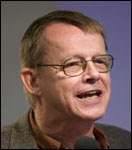
Photo: Hans Rosling. Courtesy of Dave Hawxhurst and the Wilson Center.
Showing posts from category development.

 To promote the 20th World Population Day on July 11, the United Nations Population Fund (UNFPA) tied this year’s theme—
 The prevalence of armed conflict in areas of high biodiversity is alarming, though not entirely surprising. According to “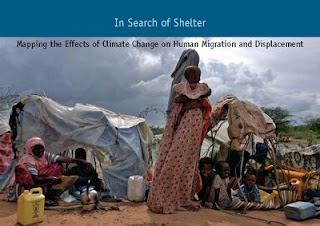
 Public policies governing natural-resource extraction in Latin America “are often seen as arbitrary” and illegitimate by communities, said Mara Hernández, director of the
 “Lack of clear and on-time information to the communities” has been a primary driver of conflict around extractive industries, said Salazar. Stakeholders will often disseminate their own information, Lumerman cautioned, with each accusing the other of bias.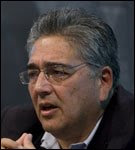
 “Statistics should be the intellectual sidewalks of a society, and people should be able to build businesses and operate on the side of them,” said


