• woodrow wilson center
  • ecsp

New Security Beat

Subscribe:
  • rss
  • mail-to
  • Who We Are
  • Topics
    • Population
    • Environment
    • Security
    • Health
    • Development
  • Columns
    • China Environment Forum
    • Choke Point
    • Dot-Mom
    • Friday Podcasts
    • Navigating the Poles
    • Reading Radar
  • Multimedia
    • Water Stories (Podcast Series)
    • Backdraft (Podcast Series)
    • Tracking the Energy Titans (Interactive)
  • Films
    • Water, Conflict, and Peacebuilding (Animated Short)
    • Paving the Way (Ethiopia)
    • Broken Landscape (India)
    • Scaling the Mountain (Nepal)
    • Healthy People, Healthy Environment (Tanzania)
  • Publications
  • Events
  • Contact Us

NewSecurityBeat

The blog of the Wilson Center's Environmental Change and Security Program
Showing posts from category Philippines.
  • Alice Thomas: For Refugees, Environmental Recovery Critical for Return to Normalcy

    ›
    Friday Podcasts  //  July 11, 2014  //  By Moses Jackson
    thomas_small

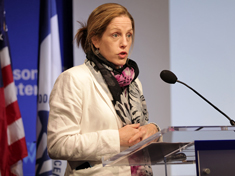
    There are now well over 16 million refugees worldwide and 65 million people internally displaced by conflict and disasters, according to recent estimates. As more and more people are uprooted from their homes, mounting environmental pressures threaten to reinforce cycles of poverty and displacement if left unaddressed, says Alice Thomas in this week’s podcast.

    MORE
  • National Security and the Accelerating Risks of Climate Change (Report Launch)

    ›

    From the Wilson Center  //  June 16, 2014  //  By Benjamin Dills
    CNA_MAB

    Climate change poses a serious threat to U.S. national security and is becoming a “catalyst for conflict” in vulnerable countries, according to a panel of retired military leaders speaking at the Wilson Center on May 15. [Video Below]

    MORE
  • To Build Resilience Through Development, Learn From Population, Health, and Environment Programs

    ›
    May 19, 2014  //  By Laurie Mazur
    Scaling-Mountain_girl

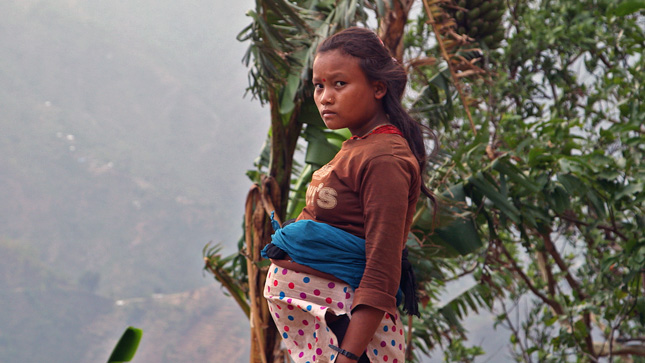
    In an era defined by climate change and other disruptions, “resilience” – the capacity to survive and thrive in times of crisis and change – is increasingly essential.

    MORE
  • Make It Count: Evaluating Population, Health, and Environment Development Programs

    ›
    From the Wilson Center  //  May 8, 2014  //  By Benjamin Dills
    Mohan_PHE_eval

    Evaluation is the lifeblood of any development effort – it’s how implementers know if they’re making a difference, determine what to do more or less of, and enables funders to evaluate cost-effectiveness. But it’s also an inexact science, no more so than when it comes to complex interventions that cut across sectors. [Video Below]

    MORE
  • Surf and Turf: The Environmental Impacts of China’s Growing Appetite for Pork and Seafood

    ›
    China Environment Forum  //  May 7, 2014  //  By Susan Chan Shifflett
    China_butcher

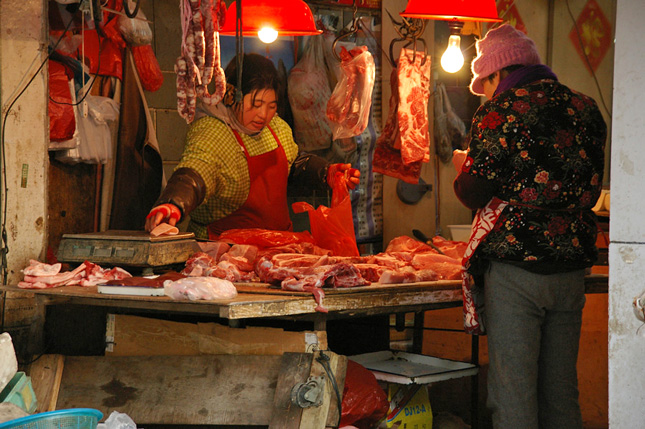
    Half the world’s pigs – 476 million – reside in China. Increasingly prosperous consumers are eating fewer grains and demanding a more protein-rich diet, ballooning the pork industry to 15 times its 1960s-era size. In the last 30 years, Chinese demand for meat has quadrupled and China is now the largest consumer of seafood in the world.

    MORE
  • Double Dividends: Population Dynamics and Climate Adaptation

    ›
    From the Wilson Center  //  April 10, 2014  //  By Paris Achenbach
    port-au-prince

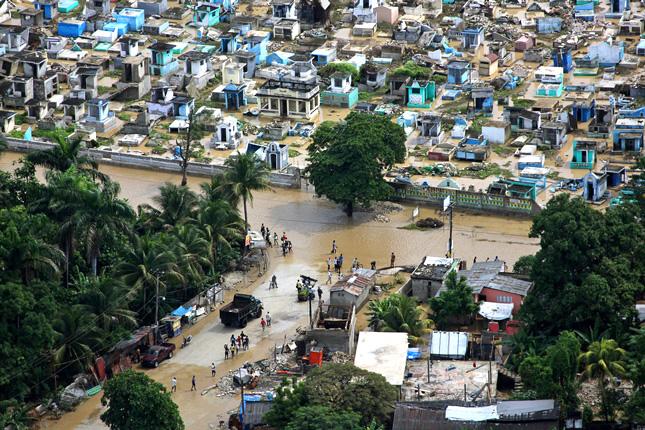
    If current projections hold, Africa’s population will more than double in 40 years, putting more people at risk of food, water, health, and economic insecurity as the climate changes, as well as negating progress made in reducing carbon emissions per person. But what if it didn’t? [Video Below]

    MORE
  • John Pielemeier: Population, Health, and Environment Programs Need to Prove It Before Becoming Mainstream

    ›
    Friday Podcasts  //  April 4, 2014  //  By Paris Achenbach
    pielemeier_small

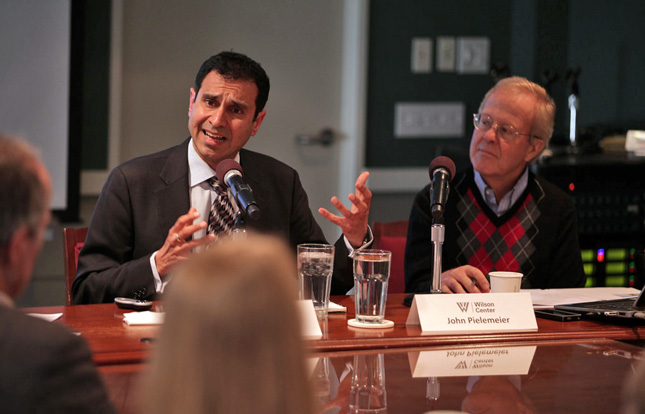
    A new model of integrated development, combining population, health and environment (PHE) interventions, is efficient, effective, and relatively inexpensive. But more rigorous program evaluations are necessary to prove its value, argues John Pielemeier in this week’s podcast.

    MORE
  • Kathleen Mogelgaard: Four Steps to Better Link Climate Adaptation and Reproductive Health Strategies

    ›
    Friday Podcasts  //  March 28, 2014  //  By Paris Achenbach
    mogelgaard_small

    Climate change vulnerability is closely tied to population dynamics, says Kathleen Mogelgaard in this week’s podcast. “We know that population size, composition and spatial distribution around the world is constantly changing, and that these changes do have implications for climate change exposure, sensitivity, and adaptive capacity – the three elements of vulnerability.”

    MORE
Newer Posts   Older Posts
View full site

Join the Conversation

  • RSS
  • subscribe
  • facebook
  • G+
  • twitter
  • iTunes
  • podomatic
  • youtube
Tweets by NewSecurityBeat

Trending Stories

  • unfccclogo1
  • Pop at COP: Population and Family Planning at the UN Climate Negotiations

Featured Media

Backdraft Podcast

play Backdraft
Podcasts

More »

What You're Saying

  • Volunteers,At,The,Lagos,Food,Bank,Initiative,Outreach,To,Ikotun, Pan-African Response to COVID-19: New Forms of Environmental Peacebuilding Emerge
    Rashida Salifu: Great piece 👍🏾 Africa as a continent has suffered this unfortunate pandemic.But it has also...
  • A desert road near Kuqa An Unholy Trinity: Xinjiang’s Unhealthy Relationship With Coal, Water, and the Quest for Development
    Ismail: It is more historically accurate to refer to Xinjiang as East Turkistan.
  • shutterstock_1779654803 Leverage COVID-19 Data Collection Networks for Environmental Peacebuilding
    Carsten Pran: Thanks for reading! It will be interesting to see how society adapts to droves of new information in...

What We’re Reading

  • Rising rates of food instability in Latin America threaten women and Venezuelan migrants
  • Treetop sensors help Indonesia eavesdrop on forests to cut logging
  • 'Seat at the table': Women's land rights seen as key to climate fight
  • A Surprise in Africa: Air Pollution Falls as Economies Rise
  • Himalayan glacier disaster highlights climate change risks
More »
  • woodrow
  • ecsp
  • RSS Feed
  • YouTube
  • Twitter
  • Facebook
  • Home
  • Who We Are
  • Publications
  • Events
  • Wilson Center
  • Contact Us
  • Print Friendly Page

© Copyright 2007-2021. Environmental Change and Security Program.

Woodrow Wilson International Center for Scholars. All rights reserved.

Developed by Vico Rock Media

Environmental Change and Security Program

Woodrow Wilson International Center for Scholars

Ronald Reagan Building and International Trade Center

  • One Woodrow Wilson Plaza
  • 1300 Pennsylvania Ave., NW
  • Washington, DC 20004-3027

T 202-691-4000