Showing posts from category agriculture.
-
Robert Draper, National Geographic
People and Wildlife Compete in East Africa’s Albertine Rift
›The original version of this article, by Robert Draper, appeared on National Geographic.
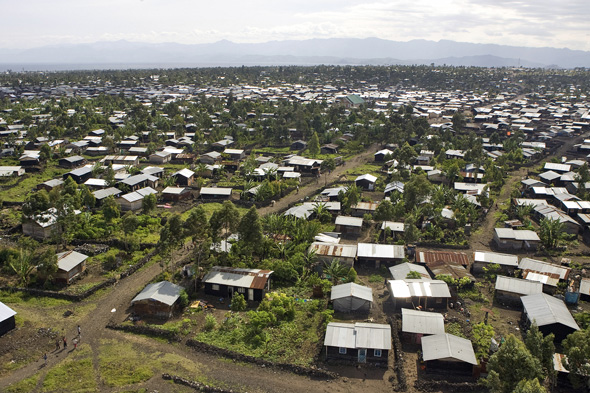
The mwami remembers when he was a king of sorts. His judgment was sovereign, his power unassailable. Since 1954 he, like his father and grandfather before him, has been the head of the Bashali chiefdom in the Masisi District, an undulating pastoral region in eastern Democratic Republic of the Congo (DRC). Though his name is Sylvestre Bashali Mokoto, the other chiefs address him as simply doyen – seniormost. For much of his adult life, the mwami received newcomers to his district. They brought him livestock or other gifts. He in turn parceled out land as he saw fit.
Today the chief sits on a dirty couch in a squalid hovel in Goma, a Congolese city several hours south of Masisi. His domain is now the epicenter of a humanitarian crisis that has lasted for more than a decade yet has largely eluded the world’s attention. Eastern Congo has been overtaken by thousands of Tutsi and Hutu and Hunde fighting over what they claim is their lawful property, by militias aiming to acquire land by force, by cattlemen searching for less cluttered pastures, by hordes of refugees from all over this fertile and dangerously overpopulated region of East Africa seeking somewhere, anywhere, to eke out a living. Some years ago a member of a rebel army seized the mwami’s 200-acre estate, forcing him, humiliated and fearing for his safety, to retreat to this shack in Goma.
The city is a hornet’s nest. As recently as two decades ago Goma’s population was perhaps 50,000. Now it is at least 20 times that number. Armed males in uniform stalk its raggedy, unlit streets with no one to answer to. Streaming out of the outlying forests and into the city market is a 24/7 procession of people ferrying immense sacks of charcoal on bicycles or wooden, scooter-like chukudus. North of the city limits seethes Nyiragongo volcano, which last erupted in 2002, when its lava roared through town and wiped out Goma’s commercial district. At the city’s southern edge lies the silver cauldron of Lake Kivu – so choked with carbon dioxide and methane that some scientists predict a gas eruption in the lake could one day kill everyone in and around Goma.
The mwami, like so many far less privileged people, has run out of options. His stare is one of regal aloofness. Yet despite his cuff links and trimmed gray beard, he is not a chief here in Goma. He is only Sylvestre Mokoto, a man swept into the hornet’s nest, with no land left for him to parcel out. As his guest, a journalist from the West, I have brought no gifts, only demeaning questions. “Yes, of course my power has been affected greatly,” the mwami snaps at me. “When others back up their claims with guns, there is nothing I can do.”
Continue reading on National Geographic.
Photo Credit: “Aerial View of Goma,” courtesy of UN Photo/Marie Frechon. -
Water and Poverty in a World of 9 Billion, Vulnerable Agriculture in the Niger Basin
›In a two–part Water International special report on water, food, and poverty, examining 10 of the world’s major river basins, a team of researchers say that instead of worrying about having enough water to sustain the world’s growing demand, policymakers should be concerned with understanding how to manage what they already have.Introducing the special report, Simon Cook, Myles Fisher, Tassilo Tiemann, and Alain Vidal note in “Water, Food and Poverty: Global- and Basin-Scale Analysis” that the vast majority of population growth over the next few decades is expected to happen in developing countries, “where the disjunct between poverty, water and food is particularly acute.” Gaining a better understanding of water – how much we have, who uses it, and how best to use it – is essential to improving development results in the face of this demographic explosion. Water is linked with poverty and development through issues like scarcity, access, and water-related hazards (like drought, flood, and disease). But the authors conclude that water productivity – the ease or difficulty in getting water from its source to agriculture – “is by far the most important water-related constraint to improved food, income and environmental security.”In “Water, Agriculture and Poverty in the Niger River Basin,” Andrew Ogilvie et al., paint a bleak picture of life in one of West Africa’s most important basins, writing that “[m]uch of the population in the basin suffers from extreme, chronic poverty and remains vulnerable to droughts and malnutrition.” Many of the Niger basin’s 94 million residents rely on subsistence agriculture, and most of that agriculture relies on rainwater rather than groundwater irrigation systems. Over time, the authors write, “there is little doubt that climate change will increase the strain on already-vulnerable agriculture.” Population growth will exacerbate this strain; the basin’s population is expected to increase as much as fourfold by 2050. In spite of this bleak picture, the authors conclude that “[i]mprovements in rainfed agriculture can have an important impact on poverty reduction and food security due to the large population dependent on it.” -
Health and Harmony: Population, Health, and Environment in Indonesia
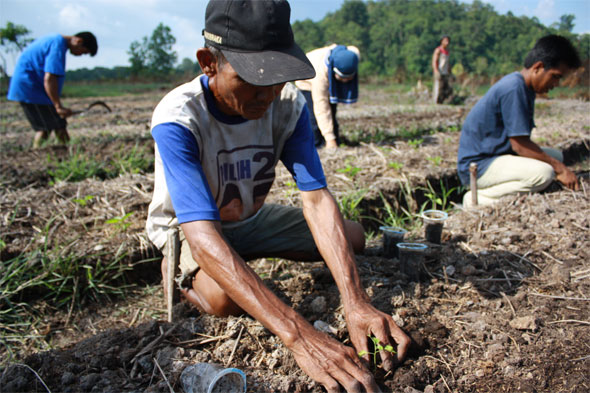
›Borneo’s Gunung Palung National Park is a microcosm of both the island’s ecological wealth and vulnerability. More than half of the park is undisturbed forest; the remainder, however, “is being torn down day after day” at an alarming rate, said Health in Harmony’s Nichol Simpson at an event on integrated approaches to population, health, and environment (PHE) programs in Indonesia. Alene Gelbard of the Public Health Institute’s Company-Community Partnerships for Health Indonesia (CCPHI) program joined Simpson on September 29 at the Wilson Center. Both speakers emphasized that no matter what issue a group works on, engaging local communities is essential for success.
The Destructive Cycle: Poor Health, Poor Environment
For Simpson, “the intersection between human and environmental health” is at the heart of Health in Harmony’s work. Health in Harmony opened Clinic ASRI in 2007, aiming to provide improved healthcare to villagers throughout Gunung Palung National Park while ending their dependence on illegal logging as a means of financial survival.
The area’s inhabitants were all too easily trapped in what Simpson called “the destructive cycle.” When faced by an unexpected medical emergency, families would go into debt to pay their medical bills. Health in Harmony found that of 232 local households surveyed, 13 percent had recently experienced a major medical emergency, at an average cost of $360. Most households in the area only hold around $260 in emergency savings, so to make up the difference, about a third turned to illegal logging to pay down their debt.
By deforesting the park, illegal logging worsens the health of nearby communities. For example, Simpson said that Clinic ASRI has seen a rise in cases of malaria and tuberculosis in the surrounding communities, in part because deforestation has increased the level of mosquito activity. The link between human and environmental health is clear, said Simpson: the people ASRI serves are “living it every day. They know the cause of this. And…they want it to stop.”
Protecting Natural Resources By Improving Health
The Health in Harmony clinic located in Sukadana, a small village sandwiched between Borneo’s coast and Gunung Palung Park, helps break the destructive cycle by treating patients regardless of their ability to pay. If patients do not have cash, they can barter for their care. In one case, a girl named Yani came to ASRI after her family incurred $500 over two months of visiting hospitals and traditional healers, none of whom could treat her condition. ASRI diagnosed and treated Yani for scabies. In exchange, her mother signed a pledge to protect Gunung Palung from logging and made the clinic a floor mat to cover the $1.50 bill.
By providing affordable, high-quality healthcare that is contingent upon pledging to protect the environment, Clinic ASRI improves human and environmental health in one fell swoop, said Simpson. “Because the infant mortality rate has decreased and you’re not overcompensating,” said Simpson, families can choose to have fewer children, using free birth control provided by ASRI.
“When you have fewer and healthier children, you’re investing in your education,” said Simpson. “When you’re investing in your education, you’re investing in your country and your community. This is the virtuous cycle. I didn’t invent it, but we are proving it in Sukadana.”
The communities around the clinic have embraced ASRI’s work, partnering with them to expand their services to address additional community needs, like training farmers in more productive organic methods and providing mated pairs of goats for widows, who pay ASRI back with kid goats and manure for fertilizer.
All but one of the 23 villages that ASRI services have been consistently free of illegal logging, according to monitors who visit them on a regular basis. “We’re proving the theory that we can protect natural resources by improving health,” Simpson said.
“Health Is Key to Sustainable Development”
Gelbard took a step back to talk about CCPHI’s experience establishing multi-sector partnerships among NGOs and corporations by building trust and enabling dialogue between the communities.
With corporate responsibility becoming more popular, “everyone’s talking about partnerships these days, and everybody’s partnering with everyone,” said Gelbard. “I don’t care what they call it – I care what they’re doing” and what results they achieve, she said. A successful partnership involves “all partners doing something more than just giving money.”
Gelbard said the 2004 tsunami reinforced the notion of corporate responsibility for a lot of companies operating in Indonesia. They saw that unless they branched out beyond their own walls and “did things to help strengthen communities,” efforts at corporate responsibility simply “would not benefit them in the long-run,” she said.
Through CCPHI, companies and NGOs have partnered on a wide range of efforts, including improving access to and funding for reproductive health services, improving sanitation by increasing access to water, and combating human trafficking by empowering girls and women.
Achieving the Millennium Development Goals will require increasing access to health care in a manner that reflects the needs of communities, she said. At its core, CCPHI’s work and the partnerships it facilitates are “based on the knowledge that health is key to sustainable development,” said Gelbard.
Event Resources
Sources: Alam Sehat Lestari, American Journal of Tropical Medicine and Hygiene, Company-Community Partnerships for Health Indonesia, ExxonMobil, The Guardian, Health in Harmony, National Geographic, PBS News Hour, Public Health Institute, Republic of Indonesia Ministry of Forestry, United Nations, World Wildlife Fund
Photo Credit: Used with permission courtesy of ASRI and Nikki See, Under-told Stories. -
PHE Is One Great Idea That Won’t Be On the Rio Agenda, Says Roger-Mark De Souza
›October 17, 2011 // By Sean Peoples“I am now serving as an example to other women in the community because I am not having any more children. I have received training in sustainable agricultural practices, I’m generating income, and I’m educating others,” said Berhane Ferkade, an Ethiopian farmer, to Population Action International’s Roger-Mark De Souza earlier this year. The 39-year-old mother of 11 become one of the community’s model farmers after working with LEM Ethiopia – a local population, health, and environment (PHE) development organization.
-
Jon Foley: How to Feed Nine Billion and Keep the Planet Too
›October 12, 2011 // By Geoffrey D. DabelkoJon Foley of the University of Minnesota’s Institute on the Environment is a food security rock star, plain and simple. And he deserves that lofty status in part because he explains our complex 21st century agriculture challenges in such a clear and accessible fashion. See him present (like in the TEDx video above), and you are left wishing all scientists would drop in on the “how to make your work understandable” class that Foley must have aced.
Foley brought that clarity of presentation, mixed with self-deprecating humor, to this past week’s inaugural South by Southwest (SXSW) Eco conference in Austin, Texas. Foley said we must meet three big challenges in the realm of agriculture:- Feeding the population today: One in seven of the world’s seven billion people do not know where their next meal is coming from.
- Feeding the future population: The planet is expected to reach more than nine billion people in just 39 years (and may still continue to grow beyond nine billion, rather than leveling off as expected until recently).
- Farming the planet sustainably: We are a long way from achieving sustainable agriculture, given overuse of fertilizers, soil erosion and degradation, deforestation (leading to loss of biodiversity), and energy-intensive practices (producing excessive carbon emissions).
But Foley and his colleagues retain their scientific union cards while suggesting specific ways the world might meet the three food security goals listed above. In what must be considered the academic equivalent of a walk-off grand slam, they will be featured as next week’s cover story in Nature and a more accessible derivative in the November issue of Scientific American.
“Today, humans are farming more of the planet than ever, with higher resource intensity and staggering environmental impacts, while diverting an increasing fraction of crops to animals, biofuels and other nonfood uses,” Foley et al. write in Nature. “Meanwhile, almost a billion people are chronically hungry. This must not continue: the requirements of current and future generations demand that we transform agriculture to meet the twin challenges of food security and environmental sustainability.”
Their four-step plan in brief:- Slow agricultural expansion to stop deforestation and the huge ecological cost that stems from expanding into new lands, often to grow animal feed rather than food for direct human consumption.
- Grow more food on the acres currently under cultivation. The attention, resources, and innovation applied to the best-producing farms need to also be turned on the least productive farms, where rates as low as 20 percent of potential yields are the norm.
- Improve the resource efficiency of agriculture, through better water use, for example. Places like India, where the energy to pump groundwater is effectively free, are very inefficient in the use of water per calorie grown.
- Close “diet gaps,” where only 60 percent of what is grown is actually for human consumption (the rest for animals and fuel), and reduce food waste, whether it is spoilage on the way to market or the excesses of a food industry that leaves so much uneaten.
Sources: Nature.
Video Credit: “TEDxTC – Jonathan Foley – The Other Inconvenient Truth,” courtesy of Youtube user TEDxTalks. -
Strengthening the Voices of Women Champions for Family Planning and Reproductive Health
›“The health, security, and well-being of families depend importantly on the health of women,” said Carol Peasley, president and CEO of the Centre for Development and Population Activities (CEDPA). “When women have the ability to voluntarily space and limit the number of children they have, maternal and newborn child deaths decrease, as do abortions and abortion-related injuries,” she continued.
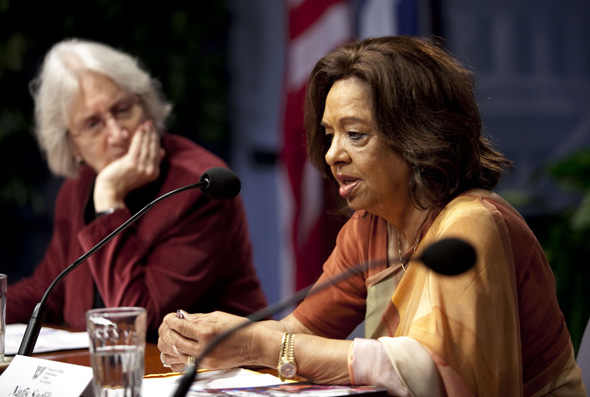
Peasley was joined by three panelists on September 28 at the Wilson Center: Dr. Nafis Sadik, special advisor to the UN Secretary General; Tigist Kassa Milko, health communications program coordinator for Panos Ethiopia; and Rosemary Ardayfio, a reporter for the Ghanaian paper, The Daily Graphic.
Ardayfio and Milko both recently participated in a CEDPA-led workshop, which is designed to create effective women champions for family planning and reproductive health.
“The voices of women champions may in fact be the best way to influence policymakers and just average citizens around the world,” said Peasley.
Women’s Rights Essential for Development of All
According to Sadik, women have gained some autonomy over their reproductive health:- Maternal mortality around the world is down by 40 percent compared to 1990 levels;
- Family planning reaches over 65 percent of women who need and want it;
- Many developing countries will achieve parity in girls’ and boys’ education by 2015; and
- Women are increasingly prominent in national and international leadership.
- Women’s literacy rates are still much lower than men’s;
- Pregnancy and childbirth still pose major health risks for women;
- Maternal mortality is the single biggest differential between developed and developing countries;
- We are far from reaching the Millennium Development Goal of reducing maternal mortality by 75 percent; and
- The current unmet demand for family planning (215 million women) is projected to rise by 40 percent by 2050 as the reproductive age population grows.
Local Champions for Local Needs
Although Tigist Kassa Milko and Rosemary Ardayfio come from two African countries hundreds of miles apart, their struggles are eerily similar.
In Ethiopia, the more than 1.5 million women who live in pastoral or nomadic areas shoulder many responsibilities, including walking long distances to fetch food and water for their families. The well-being of these women and their families is further strained by the challenges of climate change and limited health service provision.
To help overcome these obstacles, a number of micro-credit associations now offer female pastoralists alternative livelihood options. Panos Ethiopia also provides “reproductive health, family planning, gender-based violence forums” and “trainings on life skills and saving” to those who come for loans, said Milko.
But “when it’s a choice between walking to get water and walking to get contraceptives, water will win,” said Milko, so it is essential to focus on integrating ways to improve livelihoods, health, and ecosystems – also known as population, health, and environment (PHE) programs.
In Ghana, women also grapple with competing issues of development, poverty, healthcare, and cultural barriers. According to Ardayfio, 35 out of every 100 Ghanaian women want to space or limit births but are not using modern family planning methods. As a journalist, she acknowledged that there are many myths about reproductive health that need to be dispelled. The newspaper she writes for, The Daily Graphic, publishes three articles on women’s health each week.
“The stories of women dying from pregnancy-related causes should continue to be told in a compelling manner until our government makes good on the many international commitments it has signed to,” said Ardayfio. “Our decision-makers should be told again and again that it’s time to scale up family planning.”
Event Resources:
Sources: CEDPA, Guttmacher Institute, Population Reference Bureau, UNESCO, UNICEF, USAID.
Photo Credit: Dave Hawxhurst/Wilson Center. -
Aaron Wolf on Water Management, Agriculture, and Population Growth in the Middle East
›In terms of groundwater depletion, “Yemen and Gaza are probably the two places worst off in the Middle East,” Aaron Wolf told ECSP in a recent interview. Wolf, a water expert and geography professor at Oregon State University, said population growth across the broader Middle East region has led to intensified groundwater pumping in recent years. This trend has raised the prospects for water-related conflict down the road, as countries drain their groundwater stocks faster than the aquifers can recharge. Potentially complicating matters further, said Wolf, is that most aquifers in the Middle East cross international boundaries.
Despite the region’s history of water tensions, Wolf said the unprecedented level of demographic change currently being experienced across the Middle East is not necessarily a recipe for future confrontations over the resource, in part thanks to the existence of water-sharing agreements in the area. Nevertheless, mounting demand will likely force water-users across the region – especially within the agriculture sector – to change the ways they utilize the resource.
Accounting for 80 to 90 percent of total water usage in some Middle Eastern countries, agricultural operations have already been forced to adjust to the evolving water-access situation. While moving from flood irrigation to drip irrigation represents one policy option if sufficient funds are available, Wolf said doing away with local food production “is a path that a lot of countries are going to have to take” to ensure a relatively stable water supply for their populations’ drinking, cooking, and cleaning needs.
Wolf added that one frequently discussed but not entirely realistic option for addressing the region’s water-supply concerns involves desalination. To date, widespread deployment of the technology has been hampered by high costs and substantial energy requirements, although that hasn’t stopped a few countries in the region – among them the United Arab Emirates, Saudi Arabia, and Israel – from becoming partially reliant on converted fresh water.
Wolf maintained that desalination’s hefty price tag means the technology is useful only for urban population centers near the coast. Moving converted sea water further inland remains a non-starter, he said, because transporting it requires an enormous amount of energy (a cubic meter of water weighs a metric ton).
For the same reasons, Wolf asserted, using desalinated water for agriculture doesn’t seem to be in the cards any time soon. “Right now a cubic meter of desalinated water costs about 40 cents, and you can’t use that for agriculture unless it drops down to about 8 cents a cubic meter,” Wolf said. “So until you can irrigate with desalinated water, it really doesn’t go a long way towards mitigating the larger water crisis.”
The “Pop Audio” series is also available as podcasts on iTunes.
Sources: American University, International Food Policy Research Institute, World Bank. -
Carl Haub, Yale Environment 360
What If Experts Are Wrong On World Population Growth?
›September 22, 2011 // By Wilson Center StaffThe original version of this article, by Carl Haub, appeared on Yale Environment 360.
In a mere half-century, the number of people on the planet has soared from 3 billion to 7 billion, placing us squarely in the midst of the most rapid expansion of world population in our 50,000-year history – and placing ever-growing pressure on the Earth and its resources.
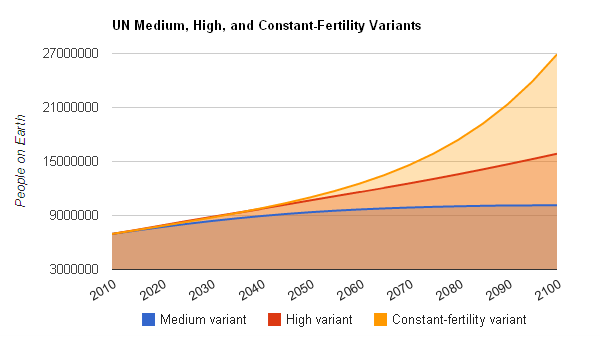
But that is the past. What of the future? Leading demographers, including those at the United Nations and the U.S. Census Bureau, are projecting that world population will peak at 9.5 billion to 10 billion later this century and then gradually decline as poorer countries develop. But what if those projections are too optimistic? What if population continues to soar, as it has in recent decades, and the world becomes home to 12 billion or even 16 billion people by 2100, as a high-end UN estimate has projected? Such an outcome would clearly have enormous social and environmental implications, including placing enormous stress on the world’s food and water resources, spurring further loss of wild lands and biodiversity, and hastening the degradation of the natural systems that support life on Earth.
It is customary in the popular media and in many journal articles to cite a projected population figure as if it were a given, a figure so certain that it could virtually be used for long-range planning purposes. But we must carefully examine the assumptions behind such projections. And forecasts that population is going to level off or decline this century have been based on the assumption that the developing world will necessarily follow the path of the industrialized world. That is far from a sure bet.
Continue reading on Yale Environment 360.
Image Credit: Data from UN Population Division, chart arranged by Schuyler Null.