-
IFPRI Launches First ‘Global Food Policy Report’
›June 27, 2012 // By Carolyn Lamere“The Global Food Policy Report is the first publication that represents the major, major food policy developments in the past year and the outlook for 2012,” said Director of the International Food Policy Research Institute (IFPRI) Shenggen Fan in a video to promote the launch of the institute’s most comprehensive policy publication yet. The report is focused on regional developments, new research, debates, and legislation regarding food security both within individual states and at the international level.
A Guidebook for Policy
The 2008 global food crisis launched food security back onto the global agenda. A rapid rise in food prices contributed to instability around the world, and policymakers began to realize that access to food is an important security issue (high food prices have been linked to riots, for example).
“For 2012, food prices will remain very high and volatile, and some of the long-term trends like climate change, population growth, and demographic shifts towards more urbanized and higher income [populations] will continue to put pressure on global food security,” predicted Fan.
But the report notes that much of the fluctuation in global food prices is due to a lack of knowledge, not necessarily scarcity. The authors point to issues of preparedness and regulation as exacerbating factors and suggest that more detailed information, like that provided in the report, can help provide better solutions to policymakers.
Fan said that, by design, the report is “nontechnical, so the nontechnical person such as politicians, policymakers, practitioners, or anybody else who is interested in food security can use it as a comprehensive handbook.”
Making Connections Between Disciplines
The report draws on the expertise of dozens of authors who discuss topics ranging from biofuels to climate change. Rajul Pandya-Lorch, head of IFPRI’s 2020 Vision Initiative, spoke about the utility of collaboration among different disciplines in an interview with IFPRI: “I think for me 2011 was the time when we began to realize that we cannot think of agriculture simply for agriculture; we need to think of agriculture as a way in which we can impact on other development outcomes, especially nutrition and health,” she said.
Kathy Spahn, president and CEO of Helen Keller International, a speaker at the launch event, agreed. “The development community is beginning to realize that achieving food security is about more than just growing more food. It is also about growing more nutritious foods and making sure these foods are available and accessible to the families in need,” she wrote for Helen Keller International.
Fan emphasized that although agriculture has become more prominently featured in discussions of development, it is important to continue to link it to other outcomes. “We must find new ways to exploit the links between agriculture and other sectors, including health, nutrition, water, and energy,” he wrote in the overview of the report.
Past Developments and Future Outlook
Several key developments are highlighted that shaped food security in 2011. Food prices were particularly volatile – rising for the first half of the year then dropping – which caused a renewed global emphasis on food from policymakers.
New players ranging from emerging economies to the private sector “are increasingly reshaping the structure and nature of the global food landscape,” write the authors. The G-20 is “claiming a growing role” to help manage economic issues, and states like China, Brazil, and India are becoming more vocal regarding global food policy. Partnerships between governments and private companies have also become more common.
These and other developments described in the report will have an impact into 2012 and beyond. The report points out that “food emergencies” caused by natural disasters like the 2011 drought in the Horn of Africa will likely occur in 2012 as well, but also emphasizes that these cannot overshadow more long-term drivers of food insecurity, like land degradation.
The report describes four “high-priority areas of action” for this year. First, the G-20 should try to reduce price volatility (although some have argued volatility is less a problem than consistently high prices). Second, policymakers should work to improve agricultural production specifically through strategies like soil nutrient management which provide high yields but are more sustainable than high use of fertilizers. States should also ensure that the infrastructure necessary to make these strategies successful is in place. The next target is based on the Rio+20 conference, namely that participants should “integrate economic, social, and environmental sustainability efforts” to improve outcomes like nutrition and health. There were in fact several seminars on cross-discipline partnerships at the conference, and the importance of integration was mentioned in the outcome text that emerged.
Finally, the report calls for further collaboration across disciplines, in emulation of the internal IFPRI effort for the report which included a wide variety of expertise. The authors emphasized that though progress has been made, the challenge of achieving global food security will remain a concern for the near future, and cooperation across communities will be critical.
“The idea and the impact of the report is to make people aware of the problems that we are facing and the concerns…clearly the problem is not resolved and it’s something that we need to take very seriously,” said contributor Maximo Torero in an interview with IFPRI. “There’s a lot of work to be done to try to do this.”
Sources: Bill & Melinda Gates Foundation, CNN, Hellen Keller International, International Food Policy Research Institute, UN Conference on Sustainable Development.
Video Credit: IFPRI. -
Full Extent of Africa’s Groundwater Resources Visualized for the First Time
›“In Africa, groundwater is the major source of drinking water and its use for irrigation is forecast to increase substantially to combat growing food insecurity,” yet, a lack of quantitative data has meant that “groundwater storage is consequently omitted from assessments of freshwater availability,” according Alan Macdonald, Helen Bonsor, and Brighid Dochartaigh of the British Geological Survey, and Richard Taylor of University College London, writing in Environmental Research Letters.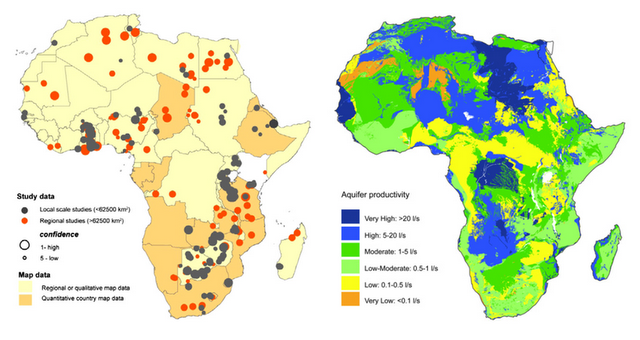
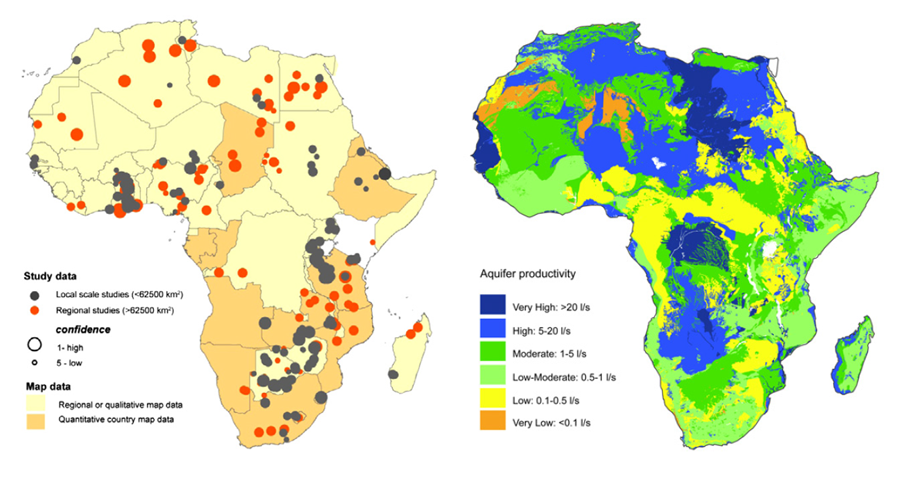
The authors hope to remedy this with new research presented in “Quantitative Maps of Groundwater Resources in Africa.” They used estimates compiled from geologic data and 283 aquifer summaries from 152 different publications to quantitatively visualize, for the first time, the full extent of Africa’s groundwater resources.
Tapping a Hidden Resource
The study estimates the scale of the continent’s groundwater resources at around 0.66 million km3. This volume, the authors explain, is “more than 100 times the annual renewable freshwater resources, and 20 times the freshwater stored in African lakes.”
Tapping into this massive resource is not always straightforward, however. The largest aquifers, and those most able to support high yielding bores, are concentrated in the arid regions of North Africa. The depth of these aquifers and their distance from major populations creates substantial economic challenges for extraction.
The geographic distribution of aquifers across sub-Saharan Africa is also quite variable, and local geology can determine not just the availability and accessibility of water but also its quality. For instance, geologic specificities can result in elevated levels of arsenic and other undesirable chemicals. Furthermore, “contamination…is common in urban areas from widespread and dispersed faecal effluent from on-site sanitation and leaking sewers.”
Tempering Expectations
Throughout Africa, “groundwater provides an important buffer to climate variability and change,” say the authors. But these buffers are not a singular solution to the threat of future water scarcity.
As the analysis shows, most aquifers, especially south of the Sahara, are unlikely to sustain boreholes of a higher capacity than that required by community-level hand pumps (one liter per second of flow at minimum). Yet, commercial irrigations schemes and urban towns typically demand boreholes greater than five liters per second, according to the study.
So, groundwater extraction may help communities and some small-scale farmers maintain access to water, particularly because many aquifers are found to possess the storage capacity required “to sustain abstraction through inter-annual variations in recharge,” however, “strategies for increasing irrigation or supplying water to rapidly urbanizing cities that are predicted on the widespread drilling of high yielding boreholes are likely to be unsuccessful.” Especially, the authors assert, where drilling precedes detailed local scale mapping of the available resources.
Sources: Environmental Research Letters.
Image Credit: Figures 1 and 3, courtesy of Environmental Research Letters. -
Poor Land Tenure: A Key Component to Why Nations Fail
›The murder of five land rights campaigners during the last two months – one in Colombia, three in Brazil, and one in Cambodia – have not captured many headlines, but they are a reminder of the central role land tenure plays not just in rural economic development but also in sparking broadly distributed economic gains throughout a society.
-
The Global Water Security Assessment and U.S. National Security Implications
›
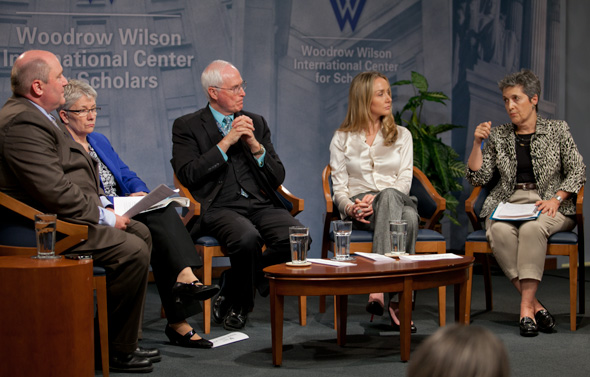
“Water security is about much more than access to H2O,” said Jane Harman, director, president, and CEO of the Wilson Center at the May 9 meeting, “Global Water Security: The Intelligence Community Assessment.” The event – part of the Wilson Center’s National Conversation Series – brought together a number of experts to discuss a recently released intelligence community assessment of global water security. [Video Below]
-
Taming Hunger in Ethiopia: The Role of Population Dynamics
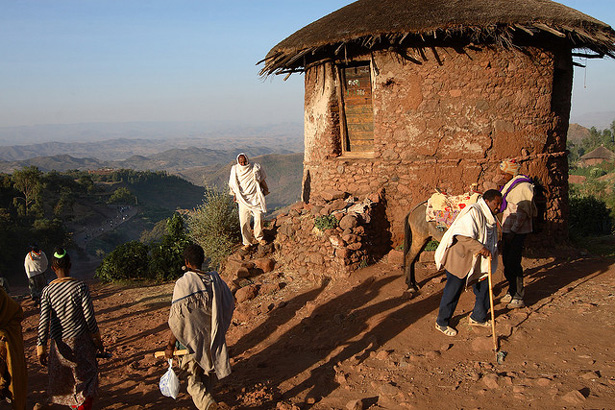
›May 4, 2012 // By Laurie MazurEthiopia has been deemed a population-climate “hotspot” – a place where rapid growth and a changing climate pose grave threats to food security and human well-being.
-
Women’s Rights and Voices Belong at Rio+20
›This summer, world leaders will gather in Rio de Janeiro for the 20th anniversary of the first UN Earth Summit to hammer out a new set of agreements on what sustainable development means and, more importantly, how both rich and developing nations can get there before it’s too late. However, for the scores of women who will be attending (and just importantly for those who aren’t), there are glaring omissions: reproductive health, gender equality, and girls education are nowhere to be found on the Rio+20 agenda.
Women offer many of the most promising levers for the transformation to sustainable development. My experience with the Global Fund for Women tells me that women are full of creative and strategic solutions to the problems facing their communities around the world. Their voices must be included in critical decisions affecting our world. And the fact is, sustainable development isn’t sustainable if it doesn’t include empowering women to plan their families, educate themselves, and their children, and have a voice in government at all levels. Rio+20 must have human rights – and women’s rights – at its core. Earth summit planners haven’t yet done that, but women can make it happen.
Women are 51 percent of the world’s population, yet own only one percent of its assets, are two-thirds of the world’s workers but earn a mere 10 percent of wages. Rio+20 must not become another forum in which women’s issues are not heard. Instead, the summit must demonstrate that women’s voices are integral to all development. Environmental sustainability simply can’t happen without women’s inclusion.
For example, in West Africa, women make up 70 percent of workers in agriculture. In Burkina Faso, deforestation, water scarcity, and soil erosion show us that climate change is already impacting women farmers. Women tend to “sacrifice themselves” in order to care for their families – feeding themselves last. And women are most likely to suffer and die in environmental disasters – particularly in the Asian countries most at risk from climate change.
So how do we support women while supporting the environment that sustains us all?
Simply meeting women’s needs for family planning is one inexpensive and powerful development strategy with a host of environmental benefits. Over 200 million women around the world want the ability to choose the spacing and number of children but don’t have access to, or accurate information about, basic contraceptives like condoms, pills, and IUDs. One-hundred and seventy-nine nations already agree that meeting this need is a top priority, and the Millennium Development Goals (MDGs) reflect a goal of universal access to family planning as well.
Satisfying this demand would dramatically reduce maternal and child mortality and enhance human rights. What’s more, two recent studies show that a reduction of 8 to 15 percent of essential carbon emissions can be obtained by meeting women’s needs for family planning. This reduction would be equivalent to stopping all deforestation or increasing the world’s use of wind power fortyfold.
The Earth Summit presents a major opportunity to ensure that women’s needs and rights are given top priority in plans for sustainable development. In a time of multiple, interlinked human and environmental crises and a very tight funding environment, investing in women is a clear winner.
A greater understanding of the impact of environmental degradation, pollution, and climate change on women, coupled with solid public policy that respects and protects women’s reproductive rights, is essential to the “Sustainable Development Goals” that many believe will emerge from Rio+20 to replace the MDGs, which expire in 2015.
As the summit approaches, it’s time to reflect on why women’s full participation and inclusion is so important and call for world leaders to harness the power of women as we launch the era of sustainable development.
Musimbi Kanyoro is president and CEO of the Global Fund for Women, which advances women’s human rights by investing in women-led organizations worldwide.
Sources: Food and Agriculture Organization, Guttmacher Institute, Moreland et al. (2010), O’Neill et al. (2010), Princeton Environmental Institute, UN, UNEP, World Bank, World Health Organization.
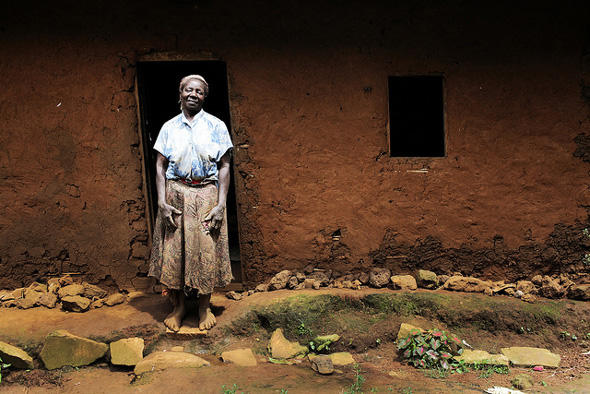
Photo Credit: “Reokadia Nakaweesa Nalongo,” courtesy of Jason Taylor/Friends of Earth International. -
Yemen: Revisiting Demography After the Arab Spring
›April 17, 2012 // By Elizabeth Leahy MadsenAlong with other countries where the Arab Spring caught hold, Yemen has been gripped by major upheaval over the past year. Although President Ali Abdullah Saleh finally ceded power in February after his administration’s violent reprisals failed to deter protesters, the country remains at a crossroads. As its political future continues to evolve, the new government must also address a range of deep-seated economic and social challenges. In addition to claiming more than 2,000 lives, the crisis has undermined Yemenis’ livelihoods and even their access to food. A recent World Food Program survey found that more than one-fifth of Yemen’s population is living in conditions of “severe food insecurity” – double the rate measured three years ago – and another fifth is facing moderate difficulty in feeding themselves and their families.
-
Invest in Women’s Health to Improve Sub-Saharan African Food Security, Says PRB
›“Future food needs depend on our investments in women and girls, and particularly their reproductive health,” says the Population Reference Bureau’s Jason Bremner in a short video on population growth and food security (above). Understanding why, where, and how quickly populations are growing, and responding to that growth with integrated programming that addresses needs across development sectors, are crucial steps towards a food secure future, he says.
Reducing Food Insecurity by Meeting Unmet Needs
In sub-Saharan Africa, where nearly one-fourth of the population lives with some degree of food insecurity, persistently high fertility rates help drive population growth, according to the policy brief that accompanies Bremner’s video.
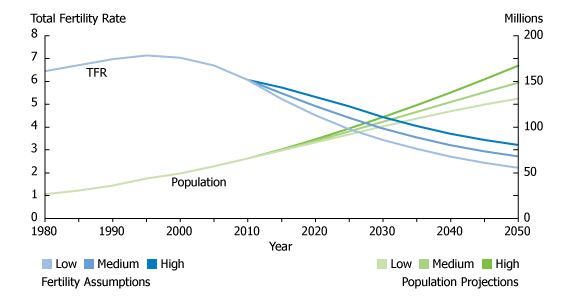
On average, women in the region have 5.1 children, more than twice the global average total fertility rate (TFR) of 2.5. The United Nation’s medium-variant projections (which Bremner notes are often used to predict future food need) show the region more than doubling in size by 2050, but that projection rests on the assumption that the average TFR will drop to three by mid-century.
As many as two-thirds of sub-Saharan African women want to space or limit their births, but do not use modern contraception. While the reasons for not using modern contraception are many, ranging from cultural to logistical, the lack of funding for family planning and reproductive health services remains a serious impediment to improving contraceptive prevalence and, in turn, lowering fertility rates.
“Current levels of funding for family planning and reproductive health from donors and African governments fail to meet current needs, much less the future needs,” writes Bremner.
Almost 40 percent of the region’s population is younger than 15 years old and has “yet to enter their reproductive years,” writes Bremner. “Consequently, the reproductive choices of today’s young people will greatly influence future population size and food needs in the region.”Fertility Assumptions and Population Projections in the Democratic Republic of Congo
Family Planning Is One Piece of an Integrated Puzzle
Increasing funding for family planning services would be a boon to the region, but Bremner cautions that viewing sub-Saharan Africa’s rapid population growth solely from a health perspective and in isolation from other development needs would be inherently limiting.
“Slowing population growth through voluntary family planning programs demands stronger support from a variety of development sectors, including finance, agriculture, water, and the environment,” Bremner writes. A multi-sector approach that addresses population, health, livelihood, and environment challenges could mitigate future food insecurity more effectively than single-track programming that addresses sub-Saharan Africa’s various development needs in isolation from one another.
Improving women’s role in agriculture, for example, could help minimize food insecurity on a regional scale, Bremner writes. Women make up, on average, half the agricultural labor force in sub-Saharan Africa, and yet it is more difficult for them to own arable land, obtain loans, and afford basic essentials like fertilizer that can help boost agricultural productivity. Furthermore, women’s traditional household responsibilities, like fetching water, often cut into the amount of time they are able to give to farming. With those limitations lifted, women could offer enormous capacity for meeting future food needs.
Given the complex and interconnected nature of the development challenges facing sub-Saharan Africa, integrated cross-sector programming, with an emphasis on meeting family planning needs, is essential to reducing total fertility rates while improving food security over the long-term, according to Bremner.
“Investments in women’s agriculture, education, and health are critical to improving food security in sub-Saharan Africa,” he writes.
“Improving access to family planning is a critical piece of fulfilling future food needs,” he adds, “and food security and nutrition advocates must add their voices to support investments in women and girls and voluntary family planning as essential complements to agriculture and food policy solutions.”
Sources: Population Reference Bureau.
Video Credit: Population Reference Bureau.
Showing posts from category agriculture.