-
Environmental Security Weekly Watch: January 12-16, 2026
›
A window into what we’re reading at the Stimson Center’s Environmental Security Program
Illegal and Unregulated Mining Runs Rampant in Venezuela (Inside Climate News)
Located across the Venezuelan states of Amazonas, Bolívar and Delta Amacuro, the Orinoco Mining Arc is a center of mining illegal and unregulated mining activity. Mining has exploded in this area during the Maduro regime, as operations use high-pressure pumps and toxic mercury to strip vast stretches of Amazon rainforest, and choke rivers with sediment and pollutants. Recent activities even carved open-pit mines into the summit of Yapacana National Park’s sacred tepuy mountain. The environmental impacts on populations are also devastating: up to 90 percent of women in mining areas show toxic mercury levels that are linked to neurological damage.
-
Environmental Security Weekly Watch: December 15-19, 2025
›
A window into what we’re reading at the Stimson Center’s Environmental Security Program
Climate Breakdown Threatens Global Food Security (The Guardian)
Global agricultural systems now face mounting pressure as climate impacts intensify and crop yields plateau. Production of the world’s most abundant crop, maize, is projected to decline by 6% under low-warming scenarios, and as much as 24% in extreme warming scenarios. Extreme weather wiped out over 1 million hectares of Zambia’s maize in 2024 alone, accounting for half of the country’s total production. An Amazon drought devastated more than 18,000 hectares of crops in Peru, leaving 500,000 children facing both food and water shortages.
-
Environmental Security Weekly Watch: December 8-12, 2025
›A window into what we’re reading at the Stimson Center’s Environmental Security Program
Race for Copper Damages Protected Region in Colombia (Mongabay)
As Colombia looks to meet the growing demand for strategic minerals, activists working in the department of Choco allege that the country’s only industrial copper mine is harming both the environment and a local community. The El Roble copper mine has operated since 1990 at the base of a valley crossed by the Atrato River, but its acquisition by Canadian multinational Atico Mining in 2013 has meant that daily production has doubled from 400 to 1,000 metric tons over the past 12 years. El Roble also lacks the environmental license required by Colombia’s Mining Code, and continues to operate under a less stringent 1987 environmental management plan, which activists say omits required environmental impact studies.
-
Environmental Security Weekly Watch: December 1-5, 2025
›A window into what we’re reading at the Stimson Center’s Environmental Security Program
Deforestation and Flooding Turns Fallen Timber into Projectiles in Indonesia (The New York Times)
When Cyclone Senyar struck in late November, its death toll numbered 800 people across Indonesia, Malaysia, and Thailand. The Indonesian island of Sumatra saw a particular sort of damage as the storm unleashed sixteen inches of rain in parts of the island, wiped out four villages, and triggered flash floods and landslides. Decades of razing and converting natural forests into palm oil plantations, pulpwood farms, and gold mines drastically increased the region’s vulnerability to floods and landslides to the point that timber was transformed into projectiles that destroyed residences and infrastructure.
-
Water Conflicts Surge Globally: Peter Gleick on Rising Threats
›December 4, 2025 // By Madelyn MacMurrayEvents over this past year have made water’s role in global conflicts increasingly salient. India threatened to restrict water flows to Pakistan in response to cross-border terrorism. Cyberattacks targeted water facilities across the United States and United Kingdom. And water infrastructure became a deliberate casualty in conflict zones from Ukraine to Gaza.
-
Environmental Security Weekly Watch: November 17-21, 2025
›November 21, 2025 // By Madelyn MacMurrayA window into what we’re reading at the Stimson Center’s Environmental Security Program
As COP30 Concludes, Experts Call for Reform (Reuters)
Interviews with experts attending COP30 highlight a growing movement for reform to the UN climate negotiations. In particular, there is alignment on a key critique of the current COP structure which calls for a full consensus of nearly 200 countries to make decisions. Since this requirement historically has allowed more ambitious efforts to be blocked during negotiations, suggestions for reform have included the following: a shift to a majority-vote model, holding COP every other year, convening smaller action-focused gatherings, and downsizing COP to exclude big business contingents.
-
Environmental Security Weekly Watch: November 10-14, 2025
›A window into what we’re reading at the Stimson Center’s Environmental Security Program
Rising Food Insecurity is Driving Instability (Foreign Affairs)
Since 2020, the number of people facing acute hunger and chronic food insecurity has increased 130% above existing levels. And supply is not the issue. At present, the world produces enough food to feed nearly 10 billion people, yet there are 720 million people who are food insecure and a further 319 million face acute hunger. Today’s hunger is driven instead by barriers to access.
-
Closing the Climate Finance Gap in Fragile States
›November 11, 2025 // By Madelyn MacMurrayA massive flood in Somalia killed hundreds of people, and displaced tens of thousands more. Yet the survivors faced a vexing prospect when they tried to return home: Al-Shabab had moved in.
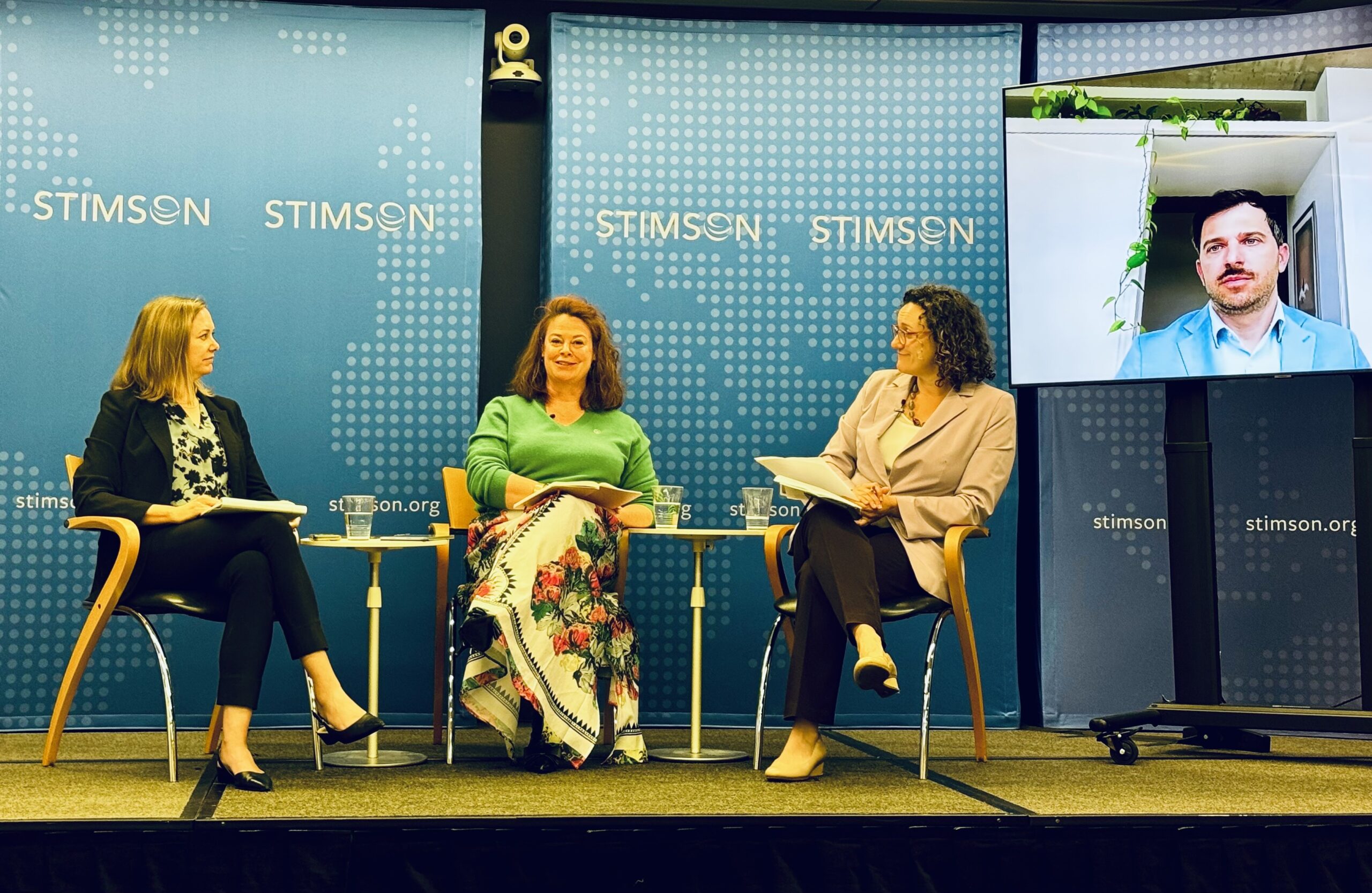
Stephanie Speck, Head of Special Initiatives at the Green Climate Fund, observed at a recent Stimson Center event that Shabab’s new levies meant that residents could not to move back to farm their land.
Showing posts by Madelyn MacMurray.