-
Challenging Patriarchy: The Changing Definition of Women’s Empowerment
›
As more organizations in the international development community commit themselves to supporting women’s empowerment, it has grown increasingly difficult to evaluate what that really entails. [Video Below]
-
Dark Forests: Interview With Bopha Phorn on Investigating Land Deals, Logging, Gender Issues in Cambodia
›
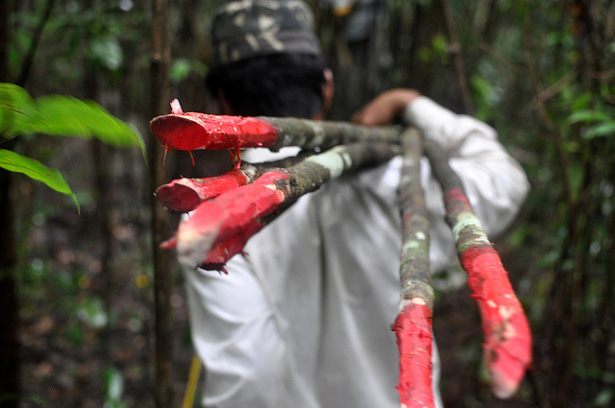
Cambodia is a young democracy in transition. It has the highest rate of urbanization in Southeast Asia, but the lowest percentage of current urban dwellers and widespread poverty. The Mekong River, on which millions of rural Cambodians rely, is being dammed at a rapid pace, both upstream, beyond the country’s borders, and within. Aided by weak land laws, both foreign and domestic industrial forces have staked claim to large swaths of the country for logging and rubber plantations, displacing thousands.
-
Roger-Mark De Souza on Illuminating the Connections Between Population Dynamics, Resilience, Conflict
›“When you look at the resiliency literature, there’s very often discussion around population and population dynamics, but no one ever knows what to do with it,” says ECSP Director Roger-Mark De Souza in this week’s podcast.
-
Gorillas and Family Planning: At the Crossroads of Community Development and Conservation in Uganda
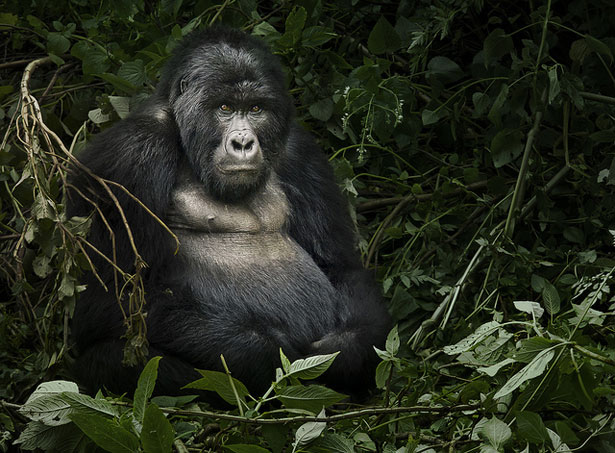
›“Gorillas are very good at family planning; if we were like them, we’d be much better off,” said wildlife veterinarian Dr. Gladys Kalema-Zikusoka at the Wilson Center on September 26. The Conservation Through Public Health (CTPH) CEO and founder is celebrating 10 years of population, health, and environment (PHE) work in Uganda and the Democratic Republic of Congo, bringing health and livelihood interventions to people while protecting mountain gorillas around Virunga and Bwindi Impenetrable National Parks. [Video Below]
-
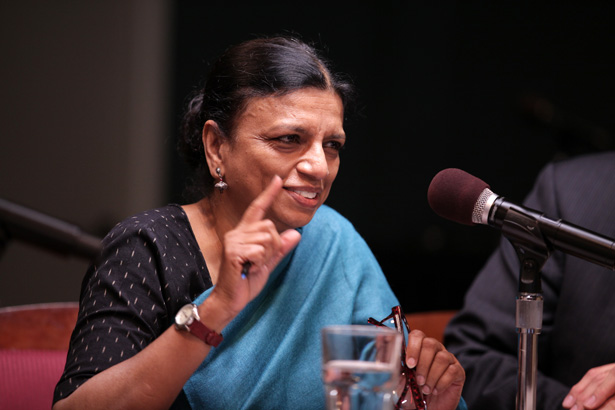
How Effective Are International Efforts to Empower Women? Alaka Basu on Challenging the Patriarchy
›
“Everyone uses the word ‘empowerment.’ It’s now such an overused word,” says UN Foundation Senior Fellow Alaka Basu in this week’s podcast. “You are empowered if you have a choice of 10 different shampoos in the grocery store; you are empowered if you have 100 kinds of cereals to buy; you are empowered by virtually anyone wanting to sell you something.”
-
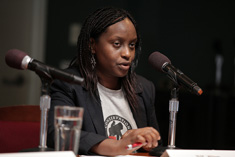
Gladys Kalema-Zikusoka on Gorilla Conservation and Community Health in Uganda and DRC
›Dr. Gladys Kalema-Zikusoka never expected to be so deeply involved in family planning when she started Conservation Through Public Health (CTPH) 10 years ago. CTPH began with a simple mission: to help preserve endangered mountain gorillas in Virunga National Park in the Democratic Republic of the Congo, and Bwindi Impenetrable National Park in Uganda. But, as Kalema-Zikusoka explains in this week’s podcast, they quickly found that to help the gorillas, they had to help the people living around them.
-
Africa’s Demography, Environment, Security Challenges Entwined, Says Roger-Mark De Souza at Africa Center for Strategic Studies
›Sub-Saharan Africa is not only the fastest growing region of the world demographically but is also one of the most vulnerable to climate changes, according to many measures, and already facing natural resource scarcity in many areas. These factors combine with existing development challenges to create security threats that African governments and the United States should be concerned with, says ECSP Director Roger-Mark De Souza in a presentation for the Africa Center for Strategic Studies’ introductory course on demography and the environment at the National Defense University.
-
BALANCED Project Final Survey Results in Tanzania and Philippines
›The BALANCED Project just completed a five year run of supporting population, health, and environment (PHE) projects in South Asia and East Africa, and recent survey results indicate that the project has helped to increase access to family planning and cultivate more environmental awareness in several ecologically vulnerable areas.
The BALANCED initiative in Tanzania’s Saadani National Park, “the only terrestrial park in the country with a contiguous marine area,” released the results of a 2012 progress survey on its efforts to create community champions for sustainable natural resource management and family planning awareness. Compared to the last survey in 2009, they found increased family planning awareness, higher contraceptive distribution and usage, and improved discussion and acceptance of contraceptive use from male partners. BALANCED-trained community-based distributors provided contraception to “31 percent of all pill users and 21 percent of all condom users.” Survey results also show a greater community awareness of the impact of individual and collective actions on the surrounding biosphere. The report calls for the continued training of community-based distributors and PHE “champions,” along with outreach to the private sector in order to ensure training and distribution can continue without the permanent presence of the BALANCED Project.
Showing posts by Donald Borenstein.