-
Is China’s Sustainable Aviation Fuel Ready to Take Off?
January 22, 2026 By Xiang Xiang
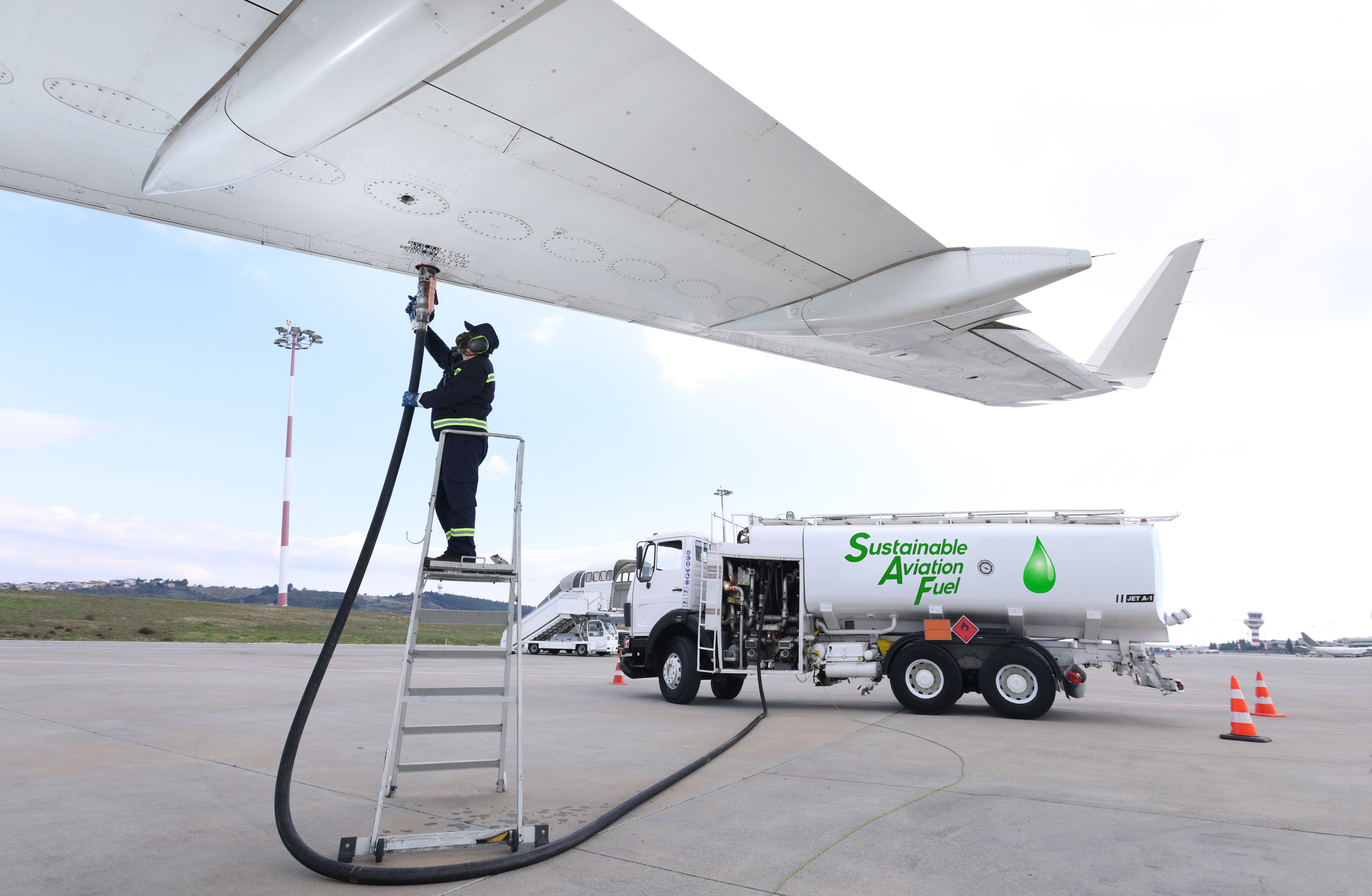
Aviation is one of the fastest-growing sources of greenhouse gas emissions globally, contributing around 2.5% of total global CO₂ emissions. In China, aviation contributes about 12% of the nation’s transport-related emissions, making it a critical sector to address as the country aims for carbon neutrality by 2060. Despite ambitious global targets, international sustainable aviation fuel (SAF) production is falling behind schedule. A recent report highlights that worldwide production could fall 30% to 45% short of the global aviation sector’s 2030 goals due to high production costs, economic uncertainty, and slow adoption rates.
However, given its recent successes in renewable energy and electric vehicles (EV), China is poised, in the near future, to mark a pivotal “take-off” moment for its ambitions in another emerging clean energy frontier: Sustainable Aviation Fuel (SAF). China has already demonstrated leadership in maritime decarbonization as an early adopter of sustainable shipping fuels. Now, signs indicate the country’s aviation sector is beginning to follow suit. The Civil Aviation Administration of China (CAAC) recently established its first technical center dedicated to SAF in Chengdu and successfully completed twelve pilot flights powered by SAF. While domestic SAF demand remains minimal and mandatory targets have yet to be set, these initial steps suggest that China is positioned to significantly reshape the global SAF landscape.
China’s current glut in solar and wind power could help accelerate SAF development. In November 2025 China’s National Energy Administration announced that provinces should use renewable energy to build up new industrial bases for sustainable aviation fuel, green hydrogen and other green fuels during the next five-year plan (2026-2030).
To explore the dynamics shaping China’s SAF industry, I spoke with Dr. Feng An the founder and executive director of the Innovation Center for Energy and Sustainability (iCES), to explore the barriers and potential breakthroughs in China’s SAF landscape.
China is now leading the EVs and batteries. Why has it not followed a similar trajectory for SAF?
Feng An (FA): SAF development in China is still at an early stage. Unlike China’s EVs which boomed with clear and aggressive targets supported by subsidies, production quotas, and infrastructure development, SAF lacks similar incentives and a well-defined policy target. There is an unofficial goal of producing 50,000 tons per year, but that number is minuscule compared to the country’s aviation fuel demand. Moreover, SAF has largely been driven by Europe, specifically the International Civil Aviation Organization’s regulation, which Chinese policymakers perceive as a tool that could be weaponized to curb its economic growth. China will not commit to a target unless it knows it can achieve it, and for now, the leadership does not feel confident in its ability to meet SAF production demands. Additionally, China does not want to pledge to net-zero aviation commitments prematurely, as it prioritizes the continued expansion of its aviation sector. The government remains hesitant to impose stringent sustainability targets that could slow this growth.
What role have Europe and the U.S. played in global SAF development, and how have they interacted with China?
FA: Europe has always led climate regulation, shaping international aviation policies that influence SAF development. China has been cautious about certain regulations and their potential impact on its economic growth. However, although China has not yet pledged to SAF targets, it remains deeply embedded in the global SAF supply chain, primarily through its production of waste cooking oil. The first generation of SAF relies heavily on this feedstock, and China has been a key supplier to Europe and the United States, significantly influencing market dynamics. Large-scale exports from China contributed to lower biodiesel prices, even leading to European anti-dumping measures. As domestic demand for SAF grows, China is beginning to prioritize its own production, which could reshape the global SAF landscape. However, given the currently limited domestic demand for SAF and the vast supply required to replace traditional aviation fuel, the first-generation feedstock, waste cooking oil, can only account for a small proportion of the total need. As a result, China’s SAF development is still in its formative phase.
If waste cooking oil can only meet a small fraction of Chinese domestic and global SAF demand and is considered “the first generation,” what are the medium- and long-term alternatives?
FA: In the medium term, biomass-based fuels like Alcohol-to-Jet (A2J) fuel could play a significant role. The United States is advocating for corn ethanol-based jet fuel, but this approach has sparked debate, particularly between the US and Europe, where regulators are concerned about its impact on land use, food security, and overall sustainability. China may explore a diverse range of biomass sources beyond corn, including agricultural residues, forestry waste, and other non-food biomass feedstocks. For the long term, there is broad consensus that green hydrogen and e-fuels will shape the future of SAF.
What factors could drive China to accelerate SAF development?
FA: China has the potential to replicate its EV success in SAF, but it requires the right policy direction. When China commits to an industry, it scales rapidly and drives down costs. One driver for acceleration will be external pressure. While SAF adoption has been slow, starting in 2030, Chinese airlines flying to Europe will face penalties under the EU’s emissions trading system if they do not use SAF. Cathay Pacific has already introduced voluntary SAF targets to mitigate this risk, but to my knowledge it is the only one. If China sets national blending mandates, requiring airlines to incorporate a percentage of SAF into their fuel supply, it will create a strong market signal. This would incentivize the whole industry, especially state-owned enterprises, to invest in SAF production, leading to a rapid scale-up. Potentially, this could position China as a global leader in the SAF industry, much like it did with EVs.
Could the Greater Bay Area become an innovative hub for such sustainable aviation fuels?
FA: The Guangdong, Hong Kong, and Macao Greater Bay Area (GBA) stands out due to its significant refining capacity, commercial activity, and foundation of green technology development over the past decade. Hong Kong, in particular, is eager to establish itself as a leader in sustainable development, while China Southern Airlines, headquartered in Guangzhou, has the potential to drive SAF adoption in the region. Beyond the GBA, Shanghai and the Yangtze River Delta can also be strong players. Shanghai has already launched initiatives for green fuel exchanges and possesses the necessary infrastructure for large-scale SAF production. Additionally, other cities along the eastern coast also have strong industrial bases and advantages that position them as potential SAF production hubs.
Xiang Xiang was a research intern at the Wilson Center in spring 2025. Her research focuses on energy policy, particularly on energy transition and energy security in developing countries, with a special emphasis on China. She earned a Master of Public Policy at Georgetown University.
Sources: Dialogue Earth, European Energy Innovation, International Civil Aviation Organization, New York Times, Our World in Data, Reuters, Sohu, World Economic Forum, World Energy
Photo Credits: Licensed by Adobe Stock.
 A Publication of the Stimson Center.