The International Reporting Project (IRP) gives “editors – the ‘gatekeepers’ – a chance to get out of the newsrooms and to see for themselves the importance of international affairs,” said John Schidlovsky, director of IRP, at a Wilson Center event about the independent journalism organization’s recent two-week trip to Liberia with 11 U.S. news editors. [Video Below]
Schidlovsky stressed the importance of providing international opportunities for journalists in the face of news industry budget cuts. IRP fills the gap by sending gatekeepers, who help determine what news items will be selected for publication or broadcast, to countries that are often underrepresented and neglected in mainstream media.
Three of the gatekeepers, Sunni Khalid, managing news editor at WYPR Baltimore; Ed Robbins, a video journalist; and Teresa Wiltza, senior editor for The Root, shared their observations from their Liberia trip, as well as their insights into the challenges of international reporting.
Economic Challenges and Opportunities
Liberia is slowly beginning to rebuild its economy after a 14-year civil war with more than 200,000 casualties, but there are still “tremendous challenges,” said Khalid. “How do people survive? What kind of jobs do they have? How do they feed their families?”
Despite these problems, “Liberia has a lot of good points going for it,” said Khalid. Investment in the country’s raw materials is growing; most recently, the country signed a $7 billion deal with China and a European consortium to continue iron-ore mining.
Initially expecting to “write an obituary for Liberia,” Khalid said he “came out of this trip fairly optimistic about Liberia’s future.” With its “small population, great location, and mineral wealth,” as well as “competent political leadership,” Liberia can take advantage of its potential, he said.
“Capturing the Flavor” of Liberia
Robbins hopes to paint a multidimensional picture of Liberia and “capture the flavor of the country beyond Monrovia,” with his series of short films, which will be available on the websites of both Time and the International Reporting Project,
Robbins previewed one of these films, a profile of the chair of the Liberian Women’s Initiative, Etweda “Sugars” Cooper, who he says “embodies a certain power of a lot of Liberian women in her dedication and also her love for the country.”
At the local level, “the problems of recovery and development are all there in miniature,” said Robbins. But with dedicated leadership from people like Cooper, communities are slowly beginning to rebuild the schools, roads, hospitals, and other infrastructure that was destroyed in the civil wars.
“When you read books and articles, it tends to be really focused on the war and the devastation,” said Robbins. But there is also a sense of optimism among Liberians: “you can see hope in these people, a sense there is something there,” he said.
Empowering Women and Ending Rape
Wiltz pointed out that, “there is a prevailing sense of hope,” particularly among the older generation of women. After years of violence, these female “peace warriors” led the movement that ended Liberia’s civil war. But seven year later, “for women there, the biggest issue is that of economic empowerment,” said Wiltz. “They’re feeling empowered, but they’re broke.”
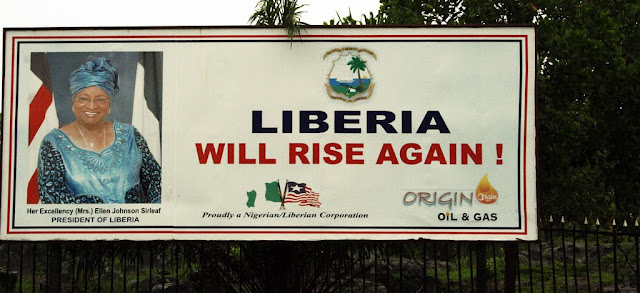
Sexual violence has become “part of the national psyche,” Wiltz said. During the civil war in Liberia, it has been estimated that more than 60 percent of the female population was raped. Today, “everyone seems sensitized to the issue, and yet it’s still a huge problem,” she said. Sexual violence is still common despite the prevention efforts of radio campaigns, NGOs, and Liberian President Ellen Johnson-Sirleaf.
“You’re in a country where families were destroyed by war,” Wiltz said. In the process of rebuilding Liberia, the new challenge is to engage and empower a new generation of young women and girls. “Underneath the surface there is all this pain and this legacy of extreme cruelty, but they very much want to overcome this.”
Much of the gatekeepers’ coverage is available online: Sunni Khalid produced a week-long series of radio pieces for WYPR, an NPR affiliate; Ed Robbins produced a series of short films for Time; and Teresa Wiltz published several articles on The Root.
Sources: CIA World Factbook, U.S. State Department, World Bank, World Health Organization, WYPR.

 A Publication of the Stimson Center.


