-
Video—Integrating Population, Health, and Environment (PHE) to Conserve Ethiopian Wetlands
›February 1, 2010 // By Julia GriffinIn our latest video interview about PHE programs in Ethiopia, Zuna–a village elder from the Mettu Woreda region of Ethiopia—describes how an integrated intervention by the Ethio-Wetlands and Natural Resources Association (EWNRA) has benefited her community.
EWNRA aims to raise awareness within Ethiopian communities and governmental organizations of the importance of sustainable wetlands management. The organization also imparts local-level training on resource conservation and wise-use labor techniques.
Zuna recounts how EWNRA provided welcome training in sanitation and housekeeping practices that increased both safety and sustainability within her community. The more efficient, cleaner-burning wood stoves introduced in Mettu Woreda, for example, have improved local air quality while decreasing the frequency of skin burns and amount of harvested fuel required for cooking and other activities.
“We are benefiting from all this and I think the benefits from this intervention are good,” she says through an interpreter. “I want them to keep doing this and hopefully we will improve our activities working with them.” -
Gates: More Money for Global Health Is Good for the Environment
›January 28, 2010 // By Gib Clarke Bill Gates gave the PHE community a much-needed upgrade in his foundation’s 2nd Annual Letter, released this week. Unfortunately it still has a few bugs.
“In the long run, not spending on health is a bad deal for the environment because improvements in health, including voluntary family planning, lead people to have smaller families, which in turn reduces the strain on the environment,” concludes Gates.
This statement could dramatically raise awareness of and funding for population-environment programs. Any time Bill Gates talks, the world listens, as evidenced by the barrage of coverage from Reuters, AFP, and top IT newswires. For the public, it offers a rare glimpse into development strategy, so Gates’ thoughts (and financial commitments) could be seen as representative of the foundation community’s approach to global health problems.
Although it may seem obvious that fewer people place less strain on the environment, this connection has been largely absent from the environmental agenda, including the efforts to combat climate change. Some environmental leaders and organizations have dismissed population as an unimportant distraction from the real business at hand. Others have noted that population growth’s impact on climate change is far greater in the rich world than in poor countries, whose per capita emissions are a fraction of developed countries’.
Gates’ comment may cause those in the first camp to re-evaluate the importance of family planning, and it is likely to energize the converted. But it will have less impact on those focused on consumption. But if it encourages the environmental community to put population and family planning issues back on the table, it will have gone a long way.
However, Gates could have gone further, by explaining that family planning is a relatively inexpensive way to mitigate climate change, compared to complex and emerging technological solutions. He also could have pointed out that climate change is expected to increase the prevalence of vector-borne diseases such as malaria, or that sick or malnourished individuals may be forced to mismanage natural resources.
Because Gates didn’t make these explicit connections, many in the media missed his point. The wire headlines pit health against environment, when Gates was in fact pointing out how interdependent they are. This distortion is symptomatic of the media’s tendency to highlight the horserace. But maybe they would pay closer attention if the Gates Foundation put its money where its mouth is—and funded programs that integrate family planning and the environment.
Perhaps several years from now, we will look back and say that this letter marks the start of the Gates Foundation’s integrated approach to development. But we may need to wait for Letter 3.0 for a complete install.
Photo: Courtesy Flickr User World Economic Forum -
Oli Brown on Climate Security and Environmental Peacebuilding
›January 28, 2010 // By Sajid Anwar“Climate change seems to be eclipsing all other environment and security issues, but those issues haven’t gone away,” says Oli Brown, program manager at the International Institute for Sustainable Development (IISD). “There are still problems with illegal timber, still problems with mining, there are still problems with diamonds, there are still problems over land, water, and so on. Climate change encompasses a lot of those issues and makes some of them more difficult and more pressing.”
IISD is working with the United Nations Environment Programme on ensuring that these issues are addressed in UN peacekeeping missions. “What we do with UNEP is to coordinate a group of experts that help to advise the UN family on ways that it should do conflict prevention, post conflict reconstruction, peacekeeping, peace negotiations and peacebuilding more effectively,” says Brown. -
Land Grab: Sacrificing the Environment for Food Security
›January 27, 2010 // By Wilson Center StaffAccording to the United Nations, 74 million acres of farmland in the developing world were acquired by foreign governments and investors over the first half of 2009 – an amount equal to half of Europe’s farmland. -
Peace Through Parks on Israel’s Borders – Dream or Reality?
›In areas fraught with conflict, is it possible to advance conflict resolution through environmental discourse? A recent conference hosted by Tel Aviv University’s Porter School of Environmental Studies explored this question through an examination of existing peace parks, as well as possible future preserves.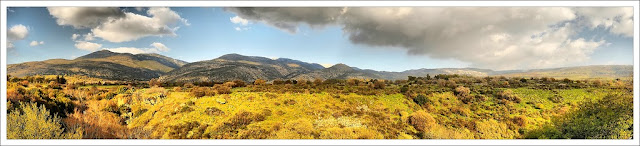
The wide-ranging discussion sought to apply theories of conflict resolution and environmental peacemaking to local conflict in the Middle East. Touching on conservation, conflict resolution, local history, geography, ecology, and diplomacy, the participants underscored the importance of restoration efforts, local environmental maintenance, and the pursuit of peace through environmental cooperation.
For more, watch these presentations on YouTube (in English; with Timestamps):
Event Part One:
0:15:50
“Conservation to Conflict Resolution: Understanding the Theory and Practice of Peace Parks”
Dr. Saleem Ali, Rubenstein School of Environment and Natural Resources, University of Vermont
1:36:28
“Peace Parks on Israel’s Borders: Lessons from South Sinai”
Dr. Dan Rabinowitz, Department of Sociology and Anthropology, Tel Aviv University
1:55:49
“The Jordan River Peace Park: Post-conflict environmental peacebuilding between Israel and Jordan”
Gidon Bromberg, Israeli Director, Friends of the Earth Middle East
Event Part Two:
0:01:12
“The Golan Heights – A critical habitat with global significance”
Dr. Tamar Ron, Ecologist, biodiversity conservation consultant
2:11:01
Session Response:
Valerie Brachya, Director, Environmental Policy Center Jerusalem Institute for Israel Studies
Photo: Golan Heights Panorama, Courtesy Flickr User Vad_Levin. -
Watch: Harriet Birungi: Challenges Facing HIV-Positive Adolescents in Kenya
›“Services are not necessarily very adolescent-friendly, so when you get children who are HIV-positive they are likely to face discrimination,” says Harriet Birungi, an associate in the Reproductive Health Program with the Population Council in Kenya, in this interview with ECSP’s Gib Clarke following the Global Health Initiative’s Integrating HIV/AIDS and Maternal Health Services panel.
According to Birungi, medical service censoring and targeted exclusion from schools are among the top challenges facing Kenyan adolescents living with HIV/AIDS. She hopes better support systems and intervention strategies, especially for pregnant individuals, will help medical personnel more quickly identify HIV-positive young adults needing critical medical services. -
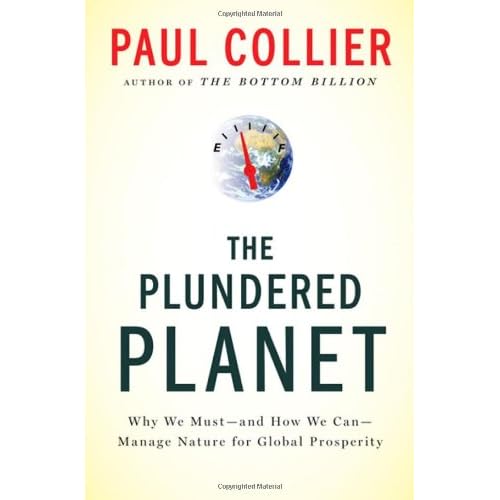
Collier and Birdsall: Plunder or Peace
›January 22, 2010 // By Julien KatchinoffIn a preview of his new book The Plundered Planet: Why We Must – and How We Can – Manage Nature for Global Prosperity, Paul Collier dispelled the common perception that Africa’s indentified resource reserves are the world’s largest. In actuality, it is estimated that up to four-fifths of the value of subsoil assets in the African continent are yet to be discovered. “That is the big story,” Collier remarked. “Here are assets which could finance transformation….but historically haven’t.” Instead, these resources have been plundered.
In a recent event hosted by the U.S. Institute of Peace, Paul Collier, professor of economics and director of the Center for the Study of African Economies at Oxford University, and Nancy Birdsall, president of the Center for Global Development, discussed how resource-rich environments in developing countries have been traditionally misused. The two also proposed strategies to disrupt these processes and transform resource “curses” into deeply needed support for peace and stable development.
Conflict and instability in countries whose economies are heavily invested in natural resource have often hindered local development and security. Many of these countries—including Cambodia, Angola, Indonesia, and DRC—have suffered from one of two forms of plunder:
Types of Natural Resources Plunder:
1. Where the few steal from the many:
Natural assets are, by definition, without natural owners, and therefore lie as easily taken common goods. “This process of expropriation opens up a whole array of dysfunctional variants, many of which are violent,” Collier noted.
2. Where the present steals from the future:
Intertemporal mismanagement is a possibility, as unlike man-made assets, natural assets belong to all generations.
Operating from a worldview of weak sustainability, where profits from natural assets are reinvested for the benefit of future generations, Collier suggested that natural resource rights are more akin to “rights of stewardship” than traditional property rights. “We may well transform that value into something that is more productive, but if we pull up natural assets from the ground, we should leave to the future something that is equivalently valuable.”
Collier argued that the successful harnessing of natural resources for stable and sustainable development depends on the application of a tenuous decision chain:
Natural Resources Decision Chain:
1. Discovery Process:
Failure in this phase stems from poor property rights, and the time consistency problem—uncertainty that conditions and regulations that make expensive upfront investments profitable today will remain in place in the future.
2. Appropriate Taxation:
Currently, as a result of poor negotiations or limited information regarding the status of resources, governments are unable to craft tax regimes which effectively capture resource rent.
3. Avoiding the Delta:
Sustainable management any discovered subsoil assets must avoid a local “Nigerian Delta” catastrophe. Clearly designating the government as the sole responsible agent for resource rents may limit such failures.
4. Saving the money:
To avoid plunder of the future by the present, Collier suggested that, though politically difficult, a proportion of revenue streams must be delineated from general accounts.
5. Building the capacity to invest in the country:
Collier deemed the inability of resource-rich countries to attract diversified investment as the “killer link.” Governments must use returns from subsoil assets to fund “investment in investment”—directing public capital toward transportation and utility infrastructure, education, health, and other short-term projects. Once in place, such projects encourage future public and private investments, thereby multiplying long-term returns.
As with many complex systems, Collier warned that the chain is only as strong as its weakest link. If one link fails, “the chain won’t pull the country from poverty to prosperity.” On the other hand, if each link holds, the value is tremendous. ”[Y]ou really can pull the country from poverty to prosperity over the course of a generation. There are no fixes in economics that are faster than that.”
Ultimately, Collier and Birdsall emphasized that success depends upon the development of an informed and competent “critical mass” of people. Even the strongest decision chain will fail if it is not underwritten by a majority of the population. Birdsall reiterated the need for public participation in the process, possibly through direct income distribution or responsible interventions by non-vested third parties.
Photo: Courtesy of Oxford University Press. -
VIDEO—How the World’s Poor Live on $2 a Day
›January 22, 2010 // By Dan Asin“Most people think that if you’re living on $1 a day or $2 a day, it’s impossible to save,” Jonathan Morduch tells ECSP Director Geoff Dabelko in a discussion of his book, Portfolios of the Poor: How the World’s Poor Live on $2 a Day. The Woodrow Wilson Center hosted Morduch and his co-author, Daryl Collins, for presenations at the Center and on Capital Hill last September. “[I]n fact, because of being poor—not despite it—households were spending a lot of time building up for the future.”
“What was really critical about what this new work was showing was that poor households were strategizing, they were making decisions,” says Morduch. “They were, essentially, juggling, active in ways that had been hidden from sight with the bigger surveys.” Now revealed, this knowledge creates opportunities for policymakers to help poor households in new ways, such as reducing regulatory costs for financial institutions seeking to service poor communities.
Morduch says microfinance and microcredit schemes are doing well, but that they are not enough to serve poor communities’ entire financial needs. “The next steps involve embracing what’s already going on and making products, devising products, that are even more flexible or even more appropriate,” he says. Households have a diverse range of needs, from food and water to financing health care and education, and Morduch says these diverse needs merit diverse solutions.
 A Publication of the Stimson Center.
 Bill Gates gave the
  According to the United Nations, 74 million acres of farmland in the developing world were acquired by foreign governments and investors over the first half of 2009 – an amount equal to half of Europe’s farmland.