-
USAID Head Calls for Integrating Health Services in New Global Health Initiative
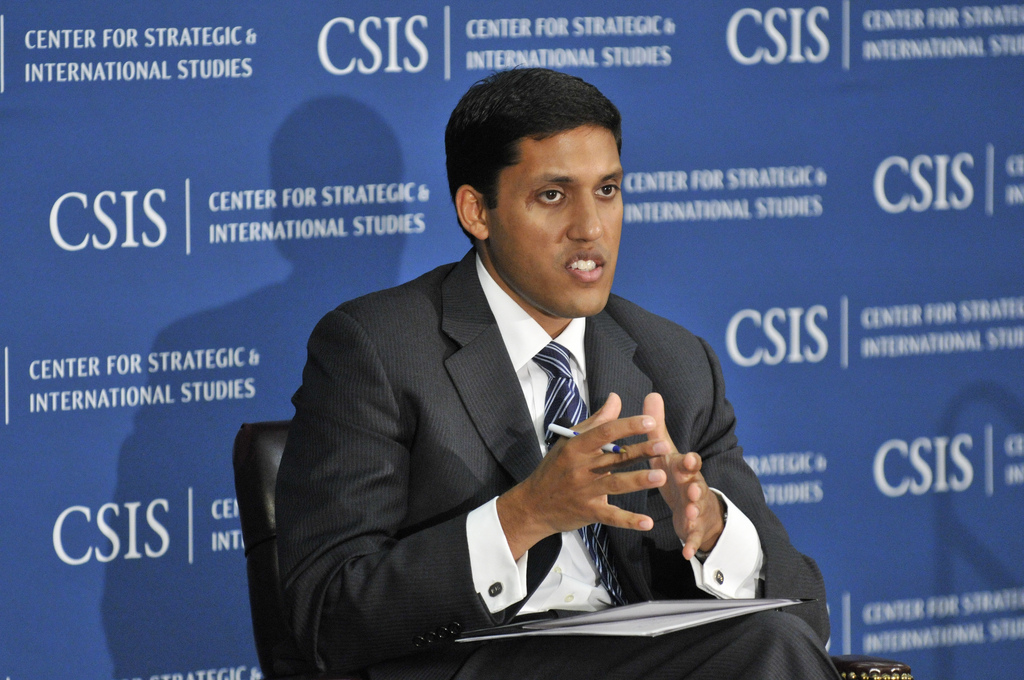
›July 2, 2010 // By Russell Sticklor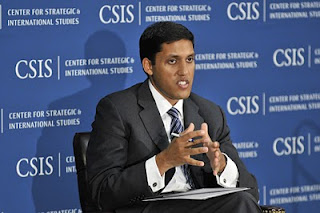 This Tuesday, Dr. Rajiv Shah, administrator for U.S. Agency for International Development gave a major speech at the Center for Strategic & International Studies on USAID’s Global Health Initiative. With $63 billion earmarked for GHI over the next six years, there are high expectations for the program.
Shah laid out some details of GHI’s main priorities, which include improving family planning services, enhancing nutrition initiatives, and building stronger and broader-based healthcare systems across the developing world, with special attention paid to the health needs of mothers and their young children. He offered a number of examples of the benefits of integrating family planning with other health services for women and children, including maternal health and nutrition.
Shah did not, however, mention integrating family planning with environmental programs, the benefits of which USAID-funded programs have amply demonstrated. He also did not delve into the emerging nexus of family planning, population growth, and climate change, a subject of much discussion at last month’s Women Deliver conference in Washington, D.C.
On the other hand, Shah did say that GHI’s emphasis on improving nutrition for the world’s poor will complement another major Obama administration outreach effort, the Feed the Future initiative—repeating a point he made at the recent launch of the food security effort.
Shah also highlighted the need for establishing benchmarks for measuring success that revolve around people, not diseases. He suggested one way of achieving this would be to ensure that clinics—particularly in rural areas—broaden their mandate to offer a variety of health-prevention services, rather than providing resources that treat primarily one type of illness.
For a full transcript of Shah’s speech, click here.
More analysis of Shah’s speech and USAID’s Global Health Initiative to come in the weeks ahead.
Photo Credit: “Statesman Forum: Dr. Rajiv Shah, USAID Administrator,” courtesy of flickr user CSIS: Center for Strategic & International Studies. -
Top 10 Posts for June 2010
›Women Deliver and conflict minerals top the Beat this month:
1. Dot Mom: Women Deliver in Climate Change Debate
2. Copper in Afghanistan: Chinese Investments in Aynak
3. Rare Earth: A New Roadblock for Sustainable Energy?
4. Guest Contributor Caitlyn L Antrim, Rule of Law Committee for the Oceans: Trillions of Dollars of Minerals? Misuing Geology and Economics to the Detriment of Policy
5. Guest Contributor Michael Kugelman, Wilson Center: Look Beyond Islamabad To Solve Pakistan’s “Other” Threats
6. Afghanistan’s Mineral Wealth: Gold Mine, Curse, or Illusion?
7. Backdraft: The Conflict Potential of Climate Mitigation
8. VIDEO: Peter Gleick on Peak Water
9. The Plundered Planet: A Discussion With Paul Collier
10. Eye on Environmental Security: Natural Resource Frontiers at Sea -
Is the Third Pole the Next Site for Water Crisis?
›July 1, 2010 // By Tara InnesThe Hindu-Kush Himalaya area may host future water crises as glaciers melt, population rapidly increases, and competition over scarce water resources intensifies, says a recent report from the Humanitarian Futures Programme at King’s College.
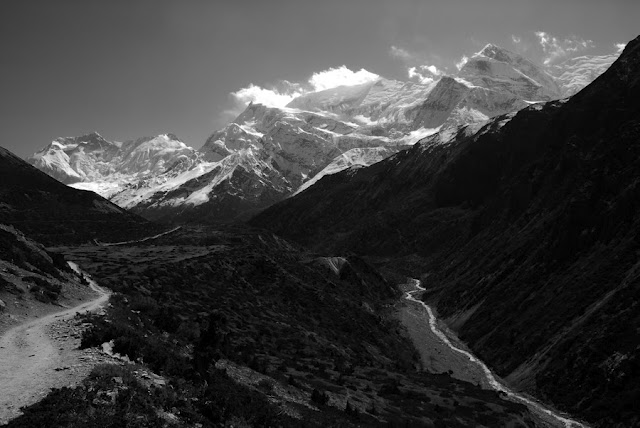
Himalayan glaciers – often called the “third pole” because they house the greatest volume of frozen water outside the polar regions – provide the headwaters for 10 major river systems in Asia. Despite clear evidence that the HKH glaciers are receding, recent controversy over the 2007 IPCC report has sidetracked the discussion from the degree of glacial melt and its impacts on the surrounding environment.
Glacial melt sends more water into the rivers in the rainy season, and less water in the dry season. This variability will increase both floods and droughts, which in turn can damage agriculture and create food shortages. Melting glaciers can also create “glacial lakes” that are prone to sudden bursting, causing disastrous flooding downstream (ppt).
According to The Waters of the Third Pole: Sources of Threat, Sources of Survival, climate change is already having significant impacts in the Himalayan region, intensifying natural disasters and the variability of the summer monsoon rains, and increasing the number of displaced people and government attempts to secure water supplies from its neighbors.
Rivers of People: Environmental Migrants
One of the major consequences, the report argues, could be “growing numbers of environmental migrants,” which the authors define as “people moving away from drying or degraded farmland or fisheries, and the millions displaced by ever-larger dams and river-diversion projects”—and including the Chinese government’s forced “‘re-location of people from ecologically fragile regions.”
Today, about 30 million (15 percent) of the world’s migrants are from the Himalayan region, the report says, warning that “in the next decade, should river flows reduce significantly, migration out of irrigated areas could be massive.” But the authors acknowledge that reliable estimates are rare – a problem pointed out in The New Security Beat.
However, it is clear that the region’s population is growing and urbanizing rapidly: By 2025, one-half of all Asians will live in cities, whereas one generation ago, the figure was one in 10. This incredible shift, says the report, places “some of the greatest pressures on water through increased demand and pollution.”
Water War or Water Peace?
The Waters of the Third Pole warns that growing scarcity could “raise the risk of conflict in a region already fraught with cross-border tensions.” While interstate tensions over water have been minimal to date, they could potentially increase in areas where significant percentages of river flow originate outside of a country’s borders – in 2005 Bangladesh relied on trans-boundary water supplies for 91 percent of its river flow, Pakistan for 76 percent, and India for 34 percent. Intra-state conflict is also expected to increase. The report notes, “In China alone, it has been reported that domestic uprisings have continued to increase in protest about water management or water-quality issues.”
However, the water-conflict link remains shaky within the scholarly community. As Dabelko recently told Diane Rehm about the region, “There are prospects for tensions, but quite frankly, water is difficult to [obtain] through war. It’s hard to pick it up and take it home.”
The report points out some areas in which water may actually pose an opportunity for regional cooperation rather than conflict, such as developing knowledge-sharing networks like the International Center for Integrated Mountain Development. The presence of such networks may help establish channels of communication and aid in diffusing other cross-border tensions. But the authors caution that “environmental cooperation generally lags far behind economic cooperation in the HKH region.”
The report concludes that policymakers must move the region higher on the humanitarian agenda; construct a framework for action that includes non-intrusive international support; and more thoroughly address knowledge and communication gaps.
Photo Credit: “Annapurna ways, Nepal,” courtesy of flickr user rakustow. -
U.S. Navy Task Force on Implications of Climate Change
›What about climate change will impact us? That’s the question the Navy’s Task Force Climate Change is trying to answer. Rear Admiral David Titley explains the task force’s objectives in this interview by the American Geophysical Union (AGU) at their recent “Climate Change and National Security” event on the Hill.
The task force is part of the military’s recent efforts to try to better understand what climate change will mean for the armed forces, from rising sea levels and ocean acidification to changing precipitation patterns. In the interview, Admiral Titley points out that for the Navy in particular, it is important to understand and anticipate what changes may occur since so many affect the maritime environment.
The Navy’s biggest near-term concern is the Arctic, where Admiral Titley says they expect to face significant periods of almost completely open ocean during the next two to three decades. “That has huge implications,” says Titley, “since as we all know the Arctic is in fact an ocean and we are the United States Navy. So that will be an ocean that we will be called upon to be present in that right now we’re not.”
Longer term, the admiral points to resource scarcity and access issues and sea level rise (potentially 1-2 meters) as the most important contributing factors to instability, particularly in places like Asia, where even small changes can have huge impacts on the stability of certain countries. The sum of these parts plus population growth, an intersection we examine here at The New Security Beat, is something that deserves more attention, according to Titley. “The combination of climate, water, demographics, natural resources – the interplay of all those – I think needs to be looked at,” he says.
Check out the AGU site for more information, including an interview with Jeffrey Mazo – whose book Climate Conflict we recently reviewed – discussing climate change winners and losers and the developing world (hint: the developing world are the losers).
Sources: American Geophysical Union, New York Times.
Video Credit: “What does Climate Change mean for the US Navy?” courtesy of YouTube user AGUvideos. -
U.S.-Mexico Cooperation on Renewable Energy: Building a Green Agenda
›Could joint green-energy development help improve relations between the United States and Mexico? Speakers at this spring’s launch of “Environment, Development and Growth: U.S.-Mexico Cooperation in Renewable Energies,” a report released by the Woodrow Wilson Center’s Mexico Institute, agreed that cooperating on renewable energy is a positive step. However, the panelists asserted that cooperation could be maximized by better harnessing Mexico’s renewable resources and by leveraging the economic complementarities that exist among the border states.
Mexico’s Green Energy Potential
Mexico has large untapped areas of geothermal, wind, and solar potential, according to Duncan Wood, author of the Wilson Center report and chair of the Department of International Relations at the Instituto Tecnologico Autonomo de Mexico (ITAM). Already, the country is the world’s third-largest producer of geothermal energy, and has large geothermal deposits in Baja California near major U.S. markets, such as San Diego and Los Angeles.
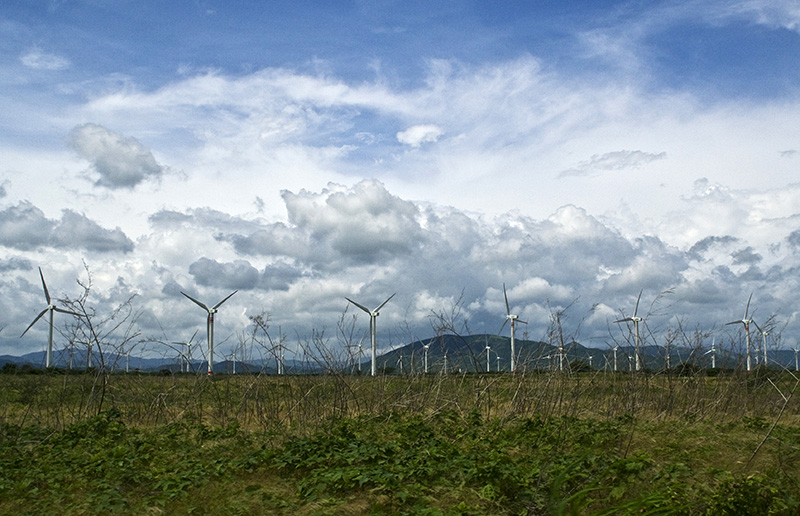
Mexico also offers great promise in wind power, with an estimated potential output of 1,800 to 2,400 megawatts for Baja California and 5,000 megawatts for southern Oaxaca state. Though Oaxaca is far from the U.S. border, it will soon be able to export electricity to U.S. markets, once Mexico’s mainland electrical grid is connected to the United States.
Wood also pointed out that Mexico is rich in solar energy, which could be marketed to the United States—particularly from the Baja California peninsula, which is the only part of the Mexican grid currently connected the United States. In biomass, he added, little investment has been made so far.
Opening New Avenues for Collaboration
With Mexico’s oil fields experiencing long-term and, in some cases, precipitous declines, the country is plotting a “future as a green nation,” shifting its policy focus toward alternative energy development, said Wood. In addition, Mexico’s renewable sector does have not the blanket prohibitions on private ventures that exist in the hydrocarbons sector, and regulatory adjustments over the past few administrations have enabled a more robust private stake in electricity generation and transmission.
A U.S.-Mexico taskforce on renewables was recently formed—an announcement timed to coincide with President Felipe Calderon’s April 2010 state visit to Washington—and there has been high-level engagement on the issue by both administrations. Collaboration between Mexico and U.S. government agencies through the Mexico Renewable Energy Program has enabled richer development of Mexico’s renewable resources while promoting the electrification and economic development of parts of rural Mexico.Joe Dukert, an independent energy analyst affiliated with the Center for Strategic & International Studies, pointed out that U.S.-Mexico collaboration on renewables is a little-acknowledged area of bilateral cooperation, and stressed the economic complementarities that exist between the two countries on the issue. He noted, for example, that Mexico was well-positioned to furnish power to help California meet its Renewables Portfolio Standard (RPS) by 2020.
“Mexico can help them reach these [renewable energy] targets,” Dukert said. Yet at the same time, he said that Mexico needs to do more to enhance its profile as a renewable-energy supplier, and specifically suggested that energy attaches be assigned to the embassy and consulates.
Johanna Mendelson Forman, a senior associate with the Americas Program at the Center for Strategic & International Studies, emphasized the linkages connecting climate change, energy, and economic development. Forman warned that Mexico’s inadequate energy stocks are a problem for the United States, adding that “energy poverty is a real issue in Mexico.” Energy development and climate change—which are perceived as less polemical than other issues—are good entry points for a broader U.S.-Mexico dialogue, she remarked.
Robert Donnelly is a program associate with the Mexico Institute at the Woodrow Wilson Center.
Photo Credit: “Wind Mill Farm (Mexico),” courtesy of flickr user Cedric’s pics. Speaker photos by David Hawxhurst/Wilson Center. -
‘Interview:’ Educate Girls, Boys, To Meet the Population Challenge, Say Pakistan’s Leading Demographers
›June 25, 2010 // By Russell SticklorPakistan is at a major demographic crossroads. With a youth-heavy population of some 180 million and an annual population growth rate around 2 percent, the country’s population is projected to swell to roughly 335 million by mid-century. Such explosive growth raises major questions about Pakistan’s future, from looming food and water scarcity, to yawning inequalities in the nation’s educational and economic systems. Some warn that these problems threaten to drive a new generation of disaffected Pakistani youth toward political and religious radicalization.
Recently, I asked a number of leading Pakistani demographers visiting the Wilson Center how their country could best achieve more sustainable population growth rates and effectively harness the economic potential of Pakistani youth.
Educate Girls
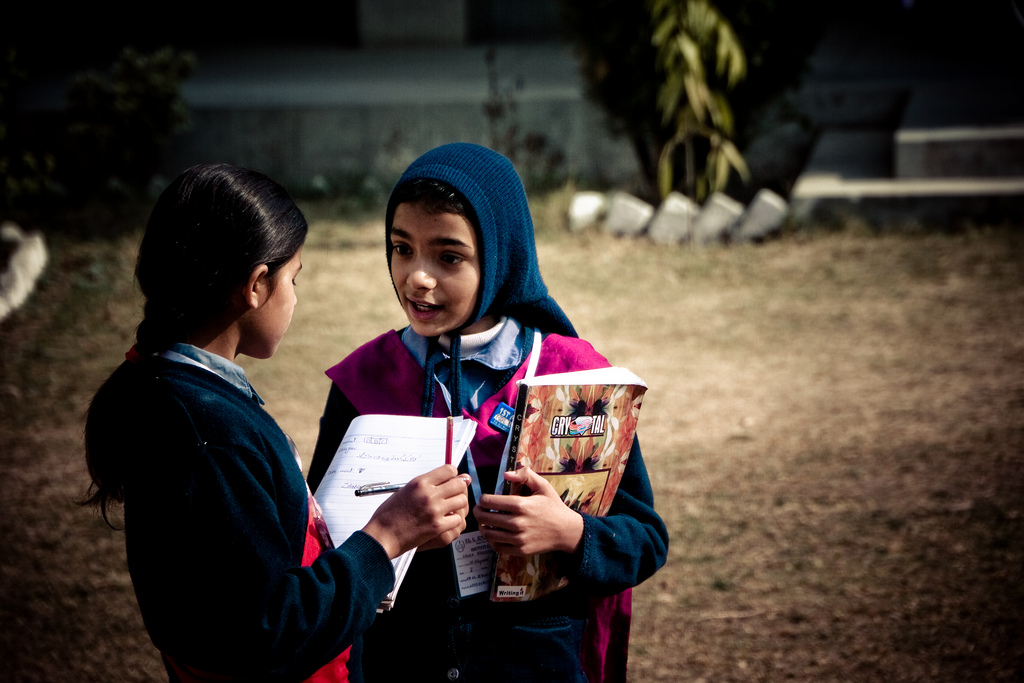
Zeba Sathar, Pakistan country director for the Population Council in Islamabad, told me empowering girls through education represents one of the most important means of reducing the total fertility rate, which currently stands at four. “When children are educated—particularly when girls are educated—they take care of their fertility and their family size themselves,” Sathar said.
Yet securing educational opportunity for Pakistani girls has often been an uphill battle, largely due to entrenched social norms. Yasmeen Sabeeh Qazi, Karachi-based senior country adviser for the David and Lucile Packard Foundation’s Population Program in Pakistan, pointed out that a traditional preference for male children in Pakistani society has meant girls do not often receive the same level of family resources as males. This phenomenon has historically fed gender inequality, she said.
“Since boys are preferred, girls are not given the same kind of attention and nutrition, especially in the poorer and less-educated families,” Qazi told me. “But as the education level goes up, you see that this divide starts narrowing.” For Qazi, one of the keys to heightening educational access for girls is to increase both the quantity and quality of schools in rural districts, where two-thirds of Pakistanis live.
Decentralize Family Planning Services
Others I spoke with emphasized improving access to reproductive health and family planning services in rural and urban areas. The federal government’s relatively recent move to delegate operational authority for family planning services to the provincial or district level has encouraged many, such as Dr. Tufail Muhammad with the Pakistan Pediatric Association’s Child Rights & Abuse Committee in Peshawar.
Muhammad said the ongoing decentralization—which he described as “a major paradigm shift”—is meant to increase ownership of population planning policies at the local level, and therefore lead to more effective implementation because “the responsibility will be directly with the provincial government.” Once capacity is established at the local level to design and implement those policies, Muhammad added, “supervisors, administrators, and policymakers will be very close to [family planning] services.”
Manage the “Youth Bulge”
Yet despite the fact that both the public and private sectors are taking steps to address Pakistan’s growth issues, the population crunch will intensify before it potentially eases. Even assuming that greater educational opportunity for girls and increased local control over family planning services help drop Pakistan’s total fertility rate, the sheer size of the current youth bulge—two-thirds of the country’s population is under age 30—means population issues will inform every aspect of Pakistani society for decades to come.
In discussing the current state of Pakistan’s education system, some speakers also asserted that the influence of madrassas, or religious schools, over the student-aged population has often been overstated. Shahid Javed Burki, Pakistan’s former finance member and recent senior scholar at the Wilson Center, said during the panel discussion that inaccurate enrollment estimates created “the impression that the system is now dominated” by those institutions. He noted that more recent figures place madrassa enrollment at just five percent of the total student population.
With a majority of Pakistani students enrolled in regular public schools, he insisted that “public policy in Pakistan has to focus on public education” in order to prevent those students from slipping through the cracks. The problem, he added, was that “the education that they are receiving is pretty bad. It really does not prepare them to be active participants in the workforce and contribute to the economic development of the country.”
Still, most of the experts sounded optimistic about Pakistan’s potential to mitigate some of the adverse effects associated with the near-doubling of the country’s population during the next 40 years. By starting to more openly address an issue that the government and the powerful Pakistani media have long preferred to ignore, they seemed to agree the country is taking a big step in dealing head-on with its looming demographic challenges.
“I don’t look at the Pakistani population as a burden, but rather as an asset,” remarked Burki. “But it has to be managed.”
Photo Credit: “School Girls Talk in Islamabad,” courtesy of flickr user Documentally. -
Interview With Wilson Center Scholar Jill Shankleman: Could Transparency Initiatives Mitigate the Resource Curse in Afghanistan?
›June 25, 2010 // By Schuyler NullIn the wake of The New York Times article detailing a potential mineral bonanza in Afghanistan, Senators Ben Cardin and Dick Lugar earlier this week published an op-ed in support of a bill that would create “an international standard for transparency in law” by requiring oil, gas, and mining industries to report amounts paid for drilling/mining rights in their SEC filings. A similar program, albeit a voluntary one, already exists – the Extractive Industries Transparency Initiative (EITI). The senators, however, raised questions about the ability of EITI to ensure transparency and accountability of payments for future mining rights to Afghanistan’s government. Joining EITI was a “good first step,” they say, “but too many countries and companies remain outside this system.”
-
Backdraft: The Conflict Potential of Climate Mitigation and Adaptation
›The European Union’s biofuel goal for 2020 “is a good example of setting a target…without really thinking through [the] secondary, third, or fourth order consequences,” said Alexander Carius, co-founder and managing director of Adelphi Research and Adelphi Consult. While the 2007-2008 global food crisis demonstrated that the growth of crops for fuels has “tremendous effects” in the developing world, analysis of these threats are underdeveloped and are not incorporated into climate change policies, he said. [Video Below]
 A Publication of the Stimson Center.