-
The Future of Sub-Saharan Africa’s Tentative Fertility Decline
›August 25, 2010 // By Richard Cincotta
In her recent post on The New Security Beat, Jennifer Sciubba argues that the medium-fertility variant projection published in the UN Population Division’s biennial projections — the source of most future data published in the Population Reference Bureau’s 2010 World Population Data Sheet — forecasts an unrealistically low total fertility rate (TFR) for sub-Saharan Africa in 2050, at a rate of 2.5 lifetime childbirths per woman.
-
Derek S. Reveron, The New Atlanticist
When National Security Overlaps With Human Security
›August 24, 2010 // By Wilson Center StaffThe original version of this article appeared on the Atlantic Council’s New Atlanticist blog. By Derek S. Reveron.
For the second time this year, naval forces have been involved in major operations that have little to do with combat at sea. Instead, Sailors and Marines operating from dozens of warships have responded to natural disasters.
Earlier this year in Haiti, traditional warships delivered food, water, and medical supplies. On amphibious ships, the large flight decks designed to move Marines ashore via helicopters proved to be temporary airports for search and rescue teams; medical facilities designed to treat wounded infantry became floating clinics for sick and injured civilians. The use of naval ships as airports, hospitals, or as refugee camps must be temporary, but in a crisis, temporary relief is what is necessary.
Similar uses of militaries are occurring in response to flooding in Pakistan and wildfires in Russia today. NATO is planning and executing responses to alleviate human suffering created by natural disasters, which are certainly non-traditional.
But militaries around the world are being called to serve their people and others in distress. Increasingly, militaries are including humanitarian assistance and disaster relief as a core concept in how they train, equip, and organize. Militaries have reluctantly embraced these new roles because their governments expect them to provide responses to humanitarian crises, support new partners, and reduce underlying conditions that give rise to instability.
At the same time that military aircrews rescue stranded people or military engineers erect temporary housing, critics worry that development is being militarized. But, they miss the larger point that military equipment like helicopters, medical facilities, and logistic hubs are necessary for providing humanitarian assistance during a crisis. Additionally, NGOs increasingly partner with militaries in North America and Europe because militaries have the capacity to reach populations in need where NGOs can deliver their services.
Given the real stress on militaries created by operations in Iraq and Afghanistan, these non-traditional operations are not needed to prove relevance for militaries in a difficult fiscal period. Instead, the inclusion of humanitarian assistance in military doctrine are driven by countries’ national strategies that increasingly link human security and national security. As I wrote in Exporting Security: International Engagement, Security Cooperation, and the Changing Face of the U.S. Military, militaries are being directed to be involved in humanitarian operations.
Far from preparation for major war, humanitarian activities rely on a unique blend of charitable political culture, latent civil-military capacity, and ambitious military officers who see the strategic landscape characterized by challenges to human security, weak states, and transnational actors. Further, changes are informed by international partners that conceive of their militaries as forces for good and not simply combat forces. The United States has been slow to catch up to European governments that see the decline of coercive power and the importance of soft power today.
This change is not only about the state of relations among governments today, but also the priority of human security. Security concerns over the last twenty years have been shifting away from state-focused traditional challenges to human-centered security issues such as disease, poverty, and crime. This is reflected in the diversity of ways by which NATO countries protect their national security. While there are remnants of Cold War conflicts on the Korean Peninsula and in the Persian Gulf region, these are largely the exception. Instead, sub-national and transnational challenges increasingly occupy national security professionals.
Within the United States, the government has embarked on a program to illustrate that its military superpower capabilities can be used for good. The same capability that can accurately drop a bomb on an adversary’s barracks has been used to deliver food aid in the mountains of Afghanistan. The same capability used to disembark Marines from Navy ships to a foreign shore have been used to host NGOs providing fisheries conservation in West Africa. And the same capability to track an enemy’s submarines can detect changes in the migration of fish stocks in response to climate change. To be sure, swords haven’t been beaten into plowshares, but military capabilities once used for confrontation are now used for cooperation.
Derek S. Reveron, an Atlantic Council contributing editor, is a Professor of National Security Affairs and the EMC Informationist Chair at the U.S. Naval War College in Newport, Rhode Island.The views expressedare his own and do not reflect those of the Navy or the U.S. government.
Photo Credit: “100304-F-2616H-060” courtesy of flickr user Kenny Holston 21. -
The Feed for Fresh News on Population
›August 24, 2010 // By Wilson Center StaffRT @NewSecurityBeat: New: Royal Society Calls for Submissions: “People and the Planet” Study – http://ht.ly/2oOju #Population @royalsociety
RT @NewSecurityBeat: New: #Land, #Education, and #Fertility in Rural #Kenya – http://ht.ly/2nvJL #Demography #Population #Youth #ECSP #fb
Spoke on need for integration in climate, food, water, & health on #USAID @PressClubDC panel. @NewSecurityBeat coverage http://ow.ly/2n0K4
Great to see Colin Kahl this morning. Here’s a @NewSecurityBeat podcast w/ him on environment, demography, & conflict http://ow.ly/2n0qG
My take on @Revkin on @dotearth asking how much is enough? Look to Durning & Pirages to help redefine the good life http://ow.ly/2mG2T
Follow Geoff Dabelko and The New Security Beat on Twitter for more population, health, environment, and security updates. -
“All Consuming:” U of M’s ‘Momentum’ on Population, Health, Environment, and More
›August 23, 2010 // By Schuyler NullMinnesota’s Institute on the Environment is only in its third year of operation but has already established itself as an emerging forum for population, health, and, environment issues, due in no small part to its excellent thrice-a-year publication, Momentum. The journal is not only chock-full of high production values and impressively nuanced stories on today’s global problems, but is also, amazingly, available for free.
Momentum has so far covered issues ranging from food security, gender equity, demographic change, geoengineering, climate change, life without oil, and sustainable development.
Highlights from the latest issue include: “Girl Empower,” by Emily Sohn; “Bomb Squad,” with Paul Ehrlich, Bjørn Lomborg, and Hans Rosling; and “Population Hero,” on the fiscal realities of stabilizing growth rates.
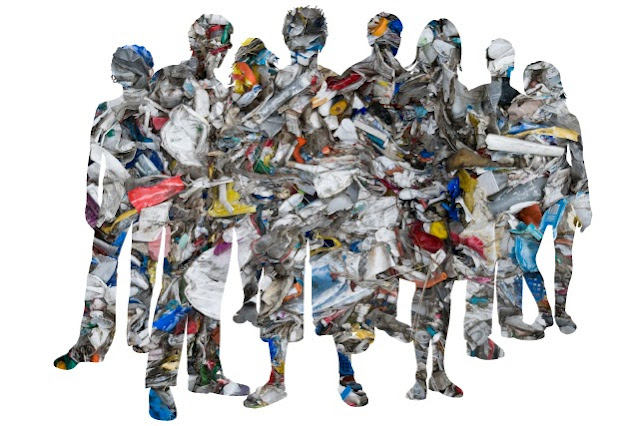
The lead story featured below, “All Consuming,” by David Biello, focuses on the debate over whether consumption or population growth poses a bigger threat to global sustainability.Two German Shepherds kept as pets in Europe or the U.S. use more resources in a year than the average person living in Bangladesh. The world’s richest 500 million people produce half of global carbon dioxide emissions, while the poorest 3 billion emit just 7 percent. Industrial tree-cutting is now responsible for the majority of the 13 million hectares of forest lost to fire or the blade each year — surpassing the smaller-scale footprints of subsistence farmers who leave behind long, narrow swaths of cleared land, so-called “fish bones.”
Continue reading on Momentum.
In fact, urban population growth and agricultural exports drive deforestation more than overall population growth, according to new research from geographer Ruth DeFries of Columbia University and her colleagues. In other words, the increasing urbanization of the developing world — as well as an ongoing increase in consumption in the developed world for products that have an impact on forests, whether furniture, shoe leather, or chicken fed on soy meal — is driving deforestation, rather than containing it as populations leave rural areas to concentrate in booming megalopolises.
So are the world’s environmental ills really a result of the burgeoning number of humans on the planet — growing by more than 150 people a minute and predicted by the United Nations to reach at least 9 billion people by 2050? Or are they more due to the fact that, while human population doubled in the past 50 years, we increased our use of resources fourfold?
Photo Credit: “All Consuming” courtesy of Momentum. -
Climate Change Adaptation and Mitigation in the Agricultural Sector
›“Climate Change and China’s Agricultural Sector: An Overview of Impacts, Adaptation and Mitigation” from the International Centre for Trade and Sustainable Development (ICTSD) explores mitigation and adaptation strategies to avoid the worst effects of climate change in China’s farming sector. The authors, Jinxia Wang, Jikun Huang and Scott Rozelle, point out that, although often overlooked in favor of the industrial sector, a disproportionate amount (greater than 15 percent) of China’s greenhouse gas emissions come from agriculture. Challenges include over-fertilization, high methane levels, water pollution, and water scarcity. Wang, Huan, and Rozelle predict that trade “can and should be used to help China mitigate the impacts of climate change” and programs promoting better calibration of fertilizer dosages and “conservation tilling” practices will help farmers reduce emissions.Also from ICTSD comes another study on climate adaptation and mitigation, this time focusing on the developing world. Globally, agriculture accounts for only 4 percent of GDP but according to the IPCC it also accounts for more than 25 percent of greenhouse gas emissions, making climate adaptation and mitigation in the sector particularly important. “Agricultural Technologies for Climate Change Mitigation and Adaptation in Developing Countries: Policy Options for Innovation and Technology Diffusion” by Travis Lybbert and Daniel Sumner examines some of the more promising innovations that may help those countries most vulnerable to climate change to cope with and minimize risk. The authors suggest that most policies that target economic development and poverty reduction will also naturally lead to improvements in agriculture, accordingly most of their recommendations center around improving market efficiency, communication of technologies and best practices, and investment in research and development. -
Historic Floods Plague Pakistan
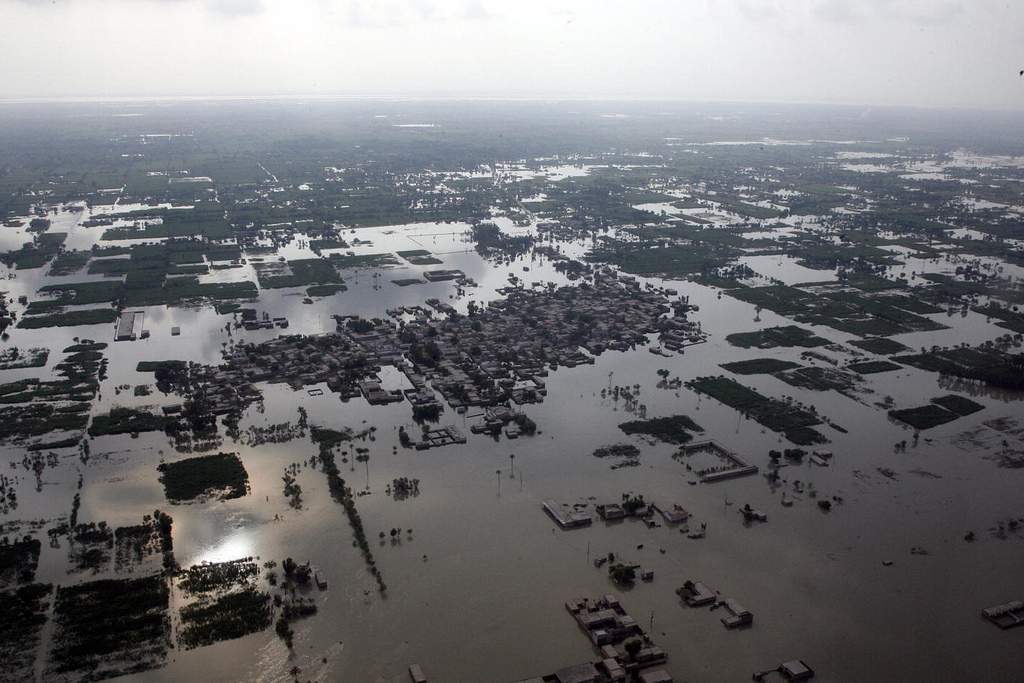
›August 19, 2010 // By Shawna Cuan“Staggered by the scale of destruction from this summer’s catastrophic floods, Pakistani officials have begun to acknowledge that the country’s security could be gravely affected,” reports the Washington Post. The Pakistani government – already cash-strapped between fighting “the war on terror” and trying to prevent an economic collapse – now faces recovering from the worst flooding in over 80 years.
-
Fire in the Hole: A Look Inside India’s Hidden Resource War
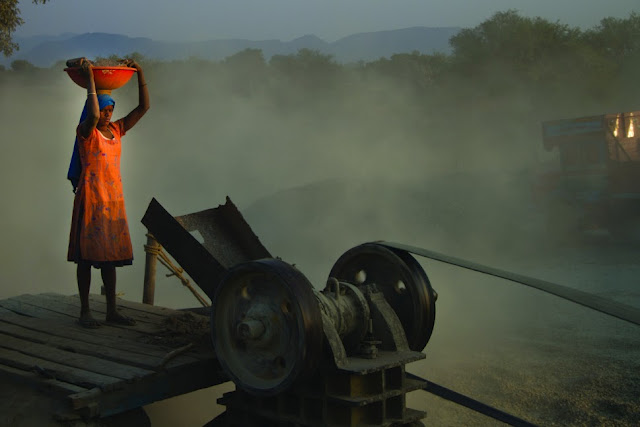
›August 18, 2010 // By Schuyler NullThis month’s Foreign Policy has two features on India’s ongoing internal conflict with Maoist and tribal rebels – perhaps the least known insurgency and resource conflict in the world.
-
Floods, Fire, Landslides, and Drought: The Guardian’s “Weather Crisis 2010”
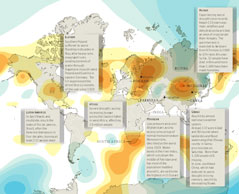
›From the Guardian’s DataBlog comes an excellent overview of some of the extreme weather affecting the globe this summer, from the devastating floods in Pakistan which have inflicted “huge losses” to crops and exacerbated an already tenuous security situation, to the wildfires in Russia which have smothered the capital in dangerous smog and crippled domestic wheat supplies.
“Global temperatures in the first half of the year were the hottest since records began more than a century ago,” writes author and graphic artist Mark McCormick.
The orange areas of the map represent high pressure systems and the blue, low pressure systems, which as explained by Peter Stott of the Met Office, are important indicators of the rare climatic conditions that caused this summer’s abnormal conditions across Eurasia.
The flooding in Pakistan has garnered the most international attention, having now affected more people than the 2004 tsunami, 2010 Haiti earthquake, and 2005 Kashmir earthquake combined. Other highlighted areas of the map include flooding in Poland and Germany, drought in England, mudslides in Latin and South America, record-breaking drought and hunger in West Africa, and flooding and landslides in China, which recently pushed the world’s largest hydroelectric dam to its limit and have now been blamed for more than 1,000 deaths.
Although it does a good job highlighting the frequency and severity of extreme weather events this summer, it’s important to note that the map only covers events in July and August. That leaves out the “1000-year” floods in Tennessee this May as well as the heavy snowfall seen in the Northeast United States and the winter of “white death” in Mongolia earlier this year, which also severely disrupted local and national infrastructure as well as a great many people’s livelihoods.
Sources: Agence France-Presse, BBC, Guardian, National Oceanic and Atmospheric Administration, New York Times, Telegraph, UN Dispatch.
Image Credit: “Weather Crisis 2010” by Mark McCormick, courtesy of Scribd user smfrogers and The Guardian.
 A Publication of the Stimson Center.