-
Pakistan After the Floods: A Continuing Disaster
›September 29, 2010 // By Hannah Marqusee
A month after Pakistan’s worst flood in 80 years, millions remain without access to food, clean water, or health care.
-
Syria: Beyond the Euphrates
›September 28, 2010 // By Russell SticklorThe Middle East is home to some of the fastest growing, most resource-scarce, and conflict-affected countries in the world. New Security Beat’s “Middle East at the Crossroads” series takes a look at the most challenging population, health, environment, and security issues facing the region.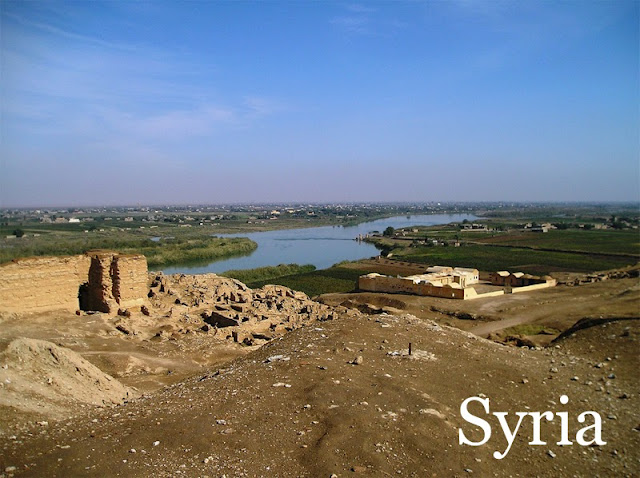
Across the Middle East, sustained population growth has strained government institutions, natural resources, and the social fabric of entire societies. In Syria, these problems have been particularly acute.
With a total fertility rate of 3.3 children per woman and a population growth rate of 2.45 percent, the country is slated to swell from 22.5 million people to 28.6 million by 2025, and upward to 36.9 million by mid-century, according to the Population Reference Bureau.
“We have a population problem, no question,” acknowledged Syrian economist and former World Bank official Nabil Sukkar in a recent interview with Reuters. “Unless we cope with it, it could be a burden to our development.”
One of the biggest population problems threatening to derail Syria’s continued development is the scarcity of clean fresh water, which has troubling implications for both the security of the country and the region, since Syria shares key transboundary waterways, like the Euphrates River, with neighbors Iraq and Turkey.
As Syria grows more crowded, can Damascus find a way to encourage more efficient management and sustainable use of the country’s water? Or is greater conflict over the resource at home and in the neighborhood inevitable?
From Water Rich to Water Scarce
Historically, Syria has enjoyed plentiful groundwater resources and water from a number of rivers. Even today, Syria typically receives more annual precipitation per capita than seven other Arab nations, placing Syria 13th on a list of 20 released by the UN Development Programme’s 2009 Arab Human Development Report.
However, rapid demographic change, coupled with a series of severe droughts since 2006, has made life considerably more difficult for many Syrians. According to the UN, erratic rainfall in recent years has reduced Syria’s surface water supplies, inducing crop failures and livestock losses, and nudging millions — especially those involved in subsistence farming — into “extreme poverty.” In particular, wheat production has been hit hard, weakening the country’s food security and pushing farmers to migrate to urban centers.
Heading Underground
To cope with the drought, large- and small-scale farmers alike have increased their reliance on groundwater. But in a country where 90 percent of all water withdrawals are used for agriculture, Syria’s efforts are placing a huge strain on its aquifer health. And despite appearances, it’s not just the drought: Syria’s groundwater depletion problems have spanned decades, mirroring its population growth.
According to Syria’s National Agricultural Policy Center (NAPC), the number of wells tapping aquifers nationwide is thought to have swelled from just over 135,000 in 1999 to more than 213,000 in 2007. The rampant pumping — much of it illegal — has caused groundwater levels to plummet in many parts of the country, and raised significant concerns about the water quality in remaining aquifer stocks.
And demand continues to rise: NAPC reports that the amount of land irrigated by groundwater soared from roughly 650,000 hectares in 1985 to 1.4 million hectares in 2005, a trend that has only accelerated in the face of recent rainfall shortages.
Drawing down aquifers is worrisome as long as withdrawals outpace natural recharge. Some, known as “fossil aquifers,” lack natural inputs or outlets and will never refill — once drained, these aquifers are gone for good.
Avoiding the Hard Choices
For decades, Damascus did little to acknowledge or address the country’s growing problem of aquifer overuse. Government officials shied away from implementing robust policies that would have metered, taxed, or even simply monitored groundwater usage. In lieu of encouraging water-use conservation in the agricultural sector, Syria’s water managers instead focused on manipulating supply, by constructing dams or proposing plans to shuttle water between river basins. In doing so, they largely avoided imposing water austerity measures that almost certainly would have proven politically unpopular.
Belatedly, some efforts to mitigate Syria’s water issues are now underway. The country’s 2005 water-use code called for the licensing of all the country’s wells, threatening fines or prison terms for those caught illegally pumping groundwater. In 2008, Damascus took its campaign one step further, eliminating diesel subsidies that once facilitated groundwater removal.
But while these efforts have had some positive effect on groundwater-use trends nationwide, they could undermine stability in the short term. Illegal wells facilitate crop growth in many areas and help employ thousands in the agricultural sector, so shutting them down could heighten regional unemployment, and further weaken the country’s food security.
There Goes the Neighborhood?
With the future of Syria’s groundwater uncertain, there has been speculation that these internal water tensions might increase competition with neighboring countries for transboundary surface waters. The two countries most inextricably linked to Syria’s water crunch are Iraq and Turkey, who share the Euphrates with Syria.
Syria pulls roughly 85 percent of its water from the Euphrates, making the river a vital strategic resource. Yet water availability has historically been subject to the whims of Turkey, which controls the Euphrates’ headwaters.
Meanwhile, Iraq, which lies downstream of Syria, is also heavily dependant on the river. Understandably, as all three countries have seen their populations grow in recent decades, so too have tensions over controlling and sharing the Euphrates’ flow.
Despite Turkey’s long-standing resistance to international water-sharing pacts and penchant for large-scale hydroelectric projects, a new round of water diplomacy may help ease future tensions over the river. A recently created joint institute — backed by Iraq, Syria, and Turkey — is designed to provide a forum for the three countries to share data and policy ideas. Academics and water experts from the three countries will collaborate on efficient management, share best practices, and create a comprehensive map of the region’s water supplies.
The institute may be only a small step, but its emphasis on transparency is undoubtedly a move in the right direction. For Syria — sandwiched between two much larger countries — better communication with its neighbors is not only smart, but necessary to avoid conflict. But that won’t solve the country’s serious water scarcity problem. Leaders in Damascus should also continue to encourage conservation and more efficient use of water to stretch supplies to meet the needs of their growing population.
Sources: BBC, Global Arab Network, IRIN, Mideastnews.com, National Agricultural Policy Centre (Syria), Population Reference Bureau, Reuters, Syria Ministry of Agriculture, Syria Today
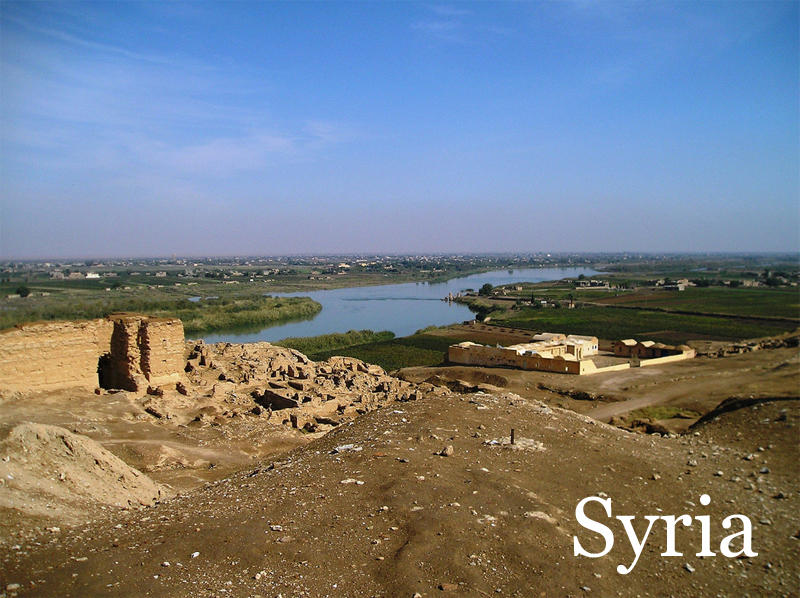
Photo Credit: “Euphrates and the Dig House Dura Europos,” courtesy of flickr user Verity Cridland. -
Apply Today: Deadline Approaching for Wilson Center Fellowship Applications
›September 27, 2010 // By Wilson Center StaffThe Woodrow Wilson Center awards approximately 20-25 residential fellowships annually to individuals with outstanding project proposals in a broad range of the social sciences and humanities on national and/or international issues. Topics and scholarship should relate to key public policy challenges or provide the historical and/or cultural framework to illuminate policy issues of contemporary importance.
Fellowship applications must be postmarked or submitted online by October 1. Applicants are notified of the results of the selection process in March of the following year.
For more information, please see the full application announcement here. -
Weather as a Weapon: The Troubling History of Geoengineering So Far
›September 27, 2010 // By Wilson Center StaffExcerpted from the original version of this article on Slate, by James Fleming.
Is there a technological fix for global warming? Where would we put a “planetary thermostat,” and who would control the settings? The long and tragicomic history of fixing the sky — of rainmakers, rain fakers, weather warriors, and climate engineers — indicates that such ideas are far-fetched. Dosing the stratosphere with sulfuric acid to turn the blue sky milky-white does not sound like a good idea. Neither does dumping an iron slurry into the oceans to fill them with algae and turn them soupy-green. A global forest of artificial trees? Storing massive amounts of carbon dioxide under our feet forever? A flotilla of ships pumping seawater into the clouds? Unlikely, unlikely, unlikely.
Global climate engineering is untested and untestable, and dangerous beyond belief. The famous mathematician and computer pioneer John von Neumann warned against it in 1955. Responding to U.S. fantasies about weaponizing the weather and Soviet proposals to modify the Arctic and rehydrate Siberia, he expressed concern over “rather fantastic effects” on a scale difficult to imagine and impossible to predict. Tinkering with the Earth’s heat budget or the atmosphere’s general circulation, he claimed, “will merge each nation’s affairs with those of every other more thoroughly than the threat of a nuclear or any other war may already have done.” In his opinion, attempts at weather and climate control could disrupt natural and social relations and produce forms of warfare as yet unimagined. It could alter the entire globe and shatter the existing political order.
Continue reading on Slate.
James Fleming is an environmental historian and Professor of Science, Technology, and Society at Colby College. ECSP and the Wilson Center will be hosting the launch of his new book, Fixing the Sky: The Checkered History of Weather and Climate Control, on October 6, 2010.
Photo Credit: Adapted from “Lever du jour,” courtesy of flickr user Solea20. -
Latin America’s Future: Emerging Trends in Economic Growth and Environmental Protection
›Economic development and environmental sustainability in Latin America and the Caribbean are intrinsically connected, as evidenced by a seminar this summer organized by the Woodrow Wilson Center’s Brazil Institute (on behalf of the Latin American Program), and co-sponsored by the U.S. Agency for International Development (USAID). The seminar — the culmination of six workshops and a regional meeting in Panama — presented the new Wilson Center report Emerging Trends in Environment and Economic Growth in Latin America and the Caribbean (also available in Portuguese and Spanish), which identifies key trends likely to shape the economy and natural environment in Latin America and the Caribbean over the next 10 years.
Janet Ballantyne, acting deputy assistant administrator of USAID’s Latin America and the Caribbean Bureau, stated that Latin America is “not our backyard, it’s our front yard.” It’s time that we “open the front door,” she claimed, and address the issues facing Latin America — issues that have long-term consequences for not only the region, but the United States and the world as well.
A Broad Range of Challenges
Christine Pendzich, principal author of the report and technical adviser on climate change and clean energy to USAID, covered the five interrelated economic and environmental trends that the report discusses: climate change, clean energy, indigenous and minority issues, challenges facing small economies, and urban issues. To capitalize on the Latin American demographic transition that will soon result in a large number of working age adults, Pendzich argued that the region needs to increase skilled job creation, educate workers to fill those positions, and maintain economic stability. She also declared that recent climate change trends are a “game changer,” which can fundamentally alter development paths.
While closer economic ties with China have contributed to Latin America’s above-average recovery from the global economic downturn, Pendzich argued that this economic relationship could add to the social and environmental problems facing the region. She added that insufficient innovation could lead to the continuation of the region’s dependence on commodity exports, while also noting that the inadequate economic integration and educational opportunities for indigenous and minority groups “drags everyone down.”
In terms of the regional economic trends, Eric Olson, co-author of the report and senior associate of the Mexico Institute, highlighted six challenges and opportunities for Latin America and the Caribbean. Olson claimed that the recovery of the global economy will hurt net importers of fossil fuels, especially in Central America and the Caribbean; have a negative impact on the environment; increase natural resource exploitation that may exacerbate inequality and social conflict; increase demand for primary products that will decrease the incentive to diversify Latin American economies; provide opportunities to promote environmentally friendly growth; and allow for increased utilization of existing trade benefits and intra- and sub-regional trade opportunities.
Recognizing the Need for an Integrated Response
Three of the 77 participants involved in the formation of the report explored in greater depth what Geoffrey Dabelko with the Environmental Change and Security Program described as the “integration and interconnectivity” of the five trends discussed in the report. Blair Ruble, chair of the Comparative Urban Studies Project, noted that with 78 percent of the Latin American population living in urban areas, “cities and urban life create a context in which there are opportunities for solutions to problems,” opportunities that can be used to further innovation, encourage social equality, and promote good governance.
Meanwhile, working with rural indigenous communities and minority groups can also provide valuable opportunities for change, specifically in the area of climate change, according to Judith Morrison, senior adviser at the Inter-American Development Bank’s Gender and Diversity Unit. Morrison argued that indigenous populations are the ones most affected by climate change, but also the most able to improve environmental stewardship as a result of their unique knowledge of the local geography.
Maria Carmen Lemos, associate professor at the University of Michigan, highlighted that vulnerability to climate change depends on two sets of factors: geographical location and socioeconomic factors. As a result, Lemos asserted that climate-change adaption measures must focus on poverty reduction as well as the vulnerability of specific geographic locations.
Julie L. Kunen, senior adviser to the Bureau of Policy, Planning, and Learning at USAID, applauded the report for its cross-trend analysis and called the development community to work together to address these trends in the Latin American and Caribbean region. The next step, Kunen claimed, must be to develop an ambitious strategy and “convene everyone who cares about the issues and rally them around the agenda.”
Elizabeth Pierson is an intern with the Brazil Institute at the Woodrow Wilson Center.
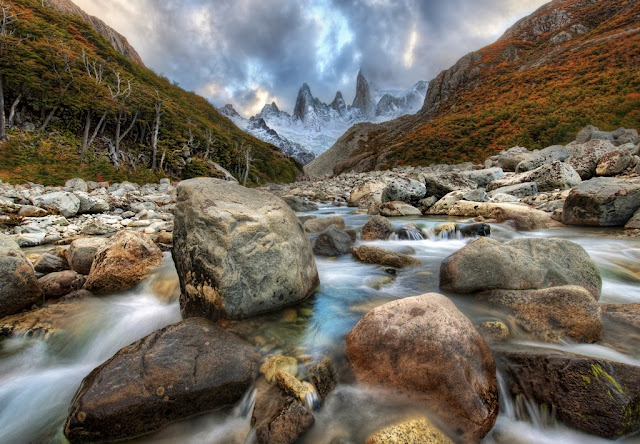
Photo Credit: “The River Runs Through the Andes,” courtesy of flickr user Stuck in Customs. -
The Effects of Climate Change on Water in South Africa and Tibet
›From Hydrology and Earth System Sciences Discussions, “Uncertainty in Water Resources Availability in the Okavango River Basin as a Result of Climate Change,” by D.A. Hughes, D.G. Kingston, and M.C. Todd, explores the effects of a two degrees Celsius global warming scenario on the Okavango River Basin, a “major natural resource for human water supply” shared by Angola, Botswana, and Namibia. The authors conclude that “there is a relatively high probability of large changes to the extent and duration of inundation within the delta wetland system during the 21st century,” and recommend multi-annual to decadal ecological assessments of assumed low rainfall and river flow to guide integrated river basin water management plans.“Climate Change and Environmental Degradation in Tibet: Implications for Environmental Security in South Asia,” by P.K. Gautam in Strategic Analysis, argues for Tibet’s designation as a regional – if not global – common, for the sake of South Asian security. Tibet faces significant risk of ecological degradation due to climate change. Further degradation of its water supply would significantly affect India, China, and Southeast Asia. According to Gautam, establishing Tibetan autonomy would ensure greater ecological preservation, contrary to the rapid development model pursued by China. -
Women, Water and Conflict as Development Priorities Plus Some Geoengineering Context
›September 24, 2010 // By Geoffrey D. DabelkoHere are some useful links to environment, population, and security work that recently crossed my desk.
• NYU’s Richard Gowan dissects UK development minister Andrew Mitchell’s encouraging speech identifying conflict-affected states as special DFID priorities. Gowan pulls out highlights from the speech and parses NGO reaction to it on Global Dashboard.
• Council on Foreign Relations’ Isobel Coleman provides five practical suggestions for tapping into women as the “new global growth engine,” on Forbes.
• The Aspen Institute announced its Global Leaders Council for Reproductive Health this week. Their goal: meeting unmet demand for family planning services by 2015 on the MDG schedule. That is over 200,000,000 women who want services but do not have access.
• I’m heartened to see the U.S. Senate pass the Senator Paul Simon Water for the World Act. Hoping the House will follow suit. Last time Congress passed legislation on water, sanitation, and health priorities, the 2005 Senator Paul Simon Water for the Poor Act enjoyed overwhelming bipartisan support.
• Colby historian Jim Fleming, writing in Slate, puts the increasing fascination with geoengineering as a climate response “option” in some sobering historical context. “Weather as a Weapon: The Troubling History of Geoengineering” is the short read. Tune in to hear Jim present the book length version, Fixing the Sky, at the Wilson Center, October 6th at 10:30 am EST.
Follow Geoff Dabelko (@geoffdabelko) and The New Security Beat (@NewSecurityBeat) on Twitter for more population, health, environment, and security updates. -
Circle of Blue Launches ‘Choke Point: U.S.’ Series Examining Intersection of Water and Energy Resources
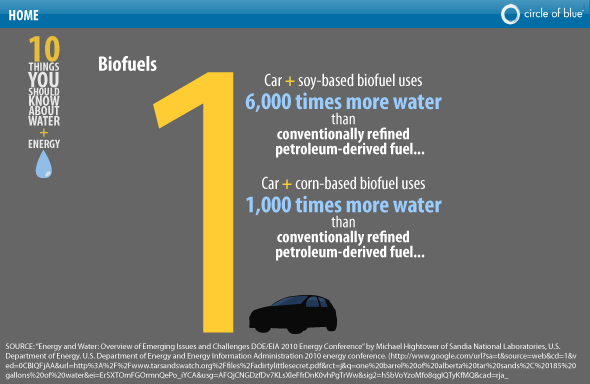
›Speaking yesterday at the Wilson Center, Circle of Blue Senior Editor and New York Times reporter Keith Schneider called his organization’s latest project, reporting on the intersection of finite water resources and growing demand for energy around the world, one of the most important stories of his career. First in the series is Choke Point: U.S.:For as long as the United States has been a nation the central idea guiding energy development is to generate as much as the energy sector is capable of producing. In every way imaginable, though, the 21st century is testing the soundness of that principle. A number of environmental, economic, and political impediments lie in the path to large increases in American energy production.
For more check out Circle of Blue’s full feature as well their multimedia section, with infographics illustrating water regulations and power generation type by state, North Dakota’s remarkable rise to “domestic oil royalty,” and video interviews with residents and experts from around the country (including the Wilson Center’s Jennifer Turner, on China).
None, though, is more significant than the nation’s steadily diminishing reserve of fresh water. The place where rising energy demand collides with declining water supplies is a national choke point that the United States has barely begun to address, and certainly isn’t close to resolving.
Beyond the United States, Circle of Blue and the Wilson Center’s China Environment Forum also hope to start-up a “Choke Point: China” but are still seeking funding.
Image Credit: Graphic courtesy of Ball State University graduate student, Mark Townsend, and data compiled by Circle of Blue’s Aubrey Ann Parker and Andrea Hart.
 A Publication of the Stimson Center.