-
Africa’s Urban Youth Cohort, and Women’s Health in Forest Communities
› As recently discussed by the National Intelligence Council, sub-Saharan Africa is home to both the most rapidly growing populations in the world and its fastest expanding cities. Save the Children’s recent report, Voices From Urban Africa: The Impact of Urban Growth on Children, explores the challenges faced by the continent’s youngest age cohort, revealing what forces are driving children and families to migrate to urban areas and the poverty many are experiencing upon getting there. In response to the report’s findings, the authors recommend training and deploying more health care workers, facilitating public-private dialogue to identify long-term water and sanitation solutions, improving access to jobs and skills training, expanding access to early childhood care, and strengthening the education system to ensure widespread attendance. Compiled from 1,050 interviews, the report is unique for its first-hand accounts of the daily lives of children, their families, and community members.
 -
National Research Council Produces Climate and Security Analysis at Request of U.S. Intelligence Community
›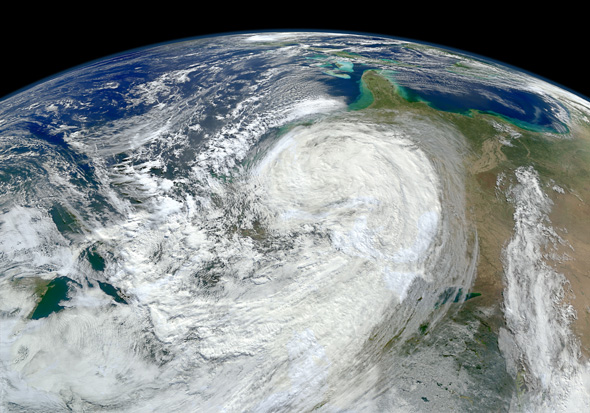
The CIA may have shut down its dedicated climate change center earlier this year, but a recently released report sponsored by the intelligence community reaffirms the deep connection between climate change and national security. New threats to U.S. national security – like increased food and water insecurity and more natural disasters requiring humanitarian assistance – have emerged as climate change creates unprecedented changes in the global environment.
-
The Challenges of the 21st-Century City (Policy Brief)
›The Wilson Center Policy Briefs are a series of short analyses of critical global issues facing the next administration that will run until inauguration day.
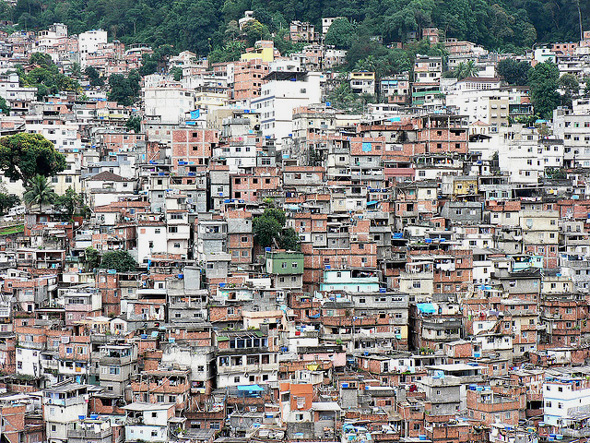
We live in a world that is different from that inhabited by our ancestors in many profound ways. Among the most important changes is that, for the first time, almost half of the world’s people live in cities. According to the United Nations, in 2008 the global urban population surpassed half of the world’s population of 6.7 billion compared with 13 percent a century ago and 3 percent a century before that. This trend will require profound changes in the way the U.S. government addresses everything from development policy to international security.
-
Beyond Carbon Credits: TIST Combines Reforestation, Health, and Livelihood Efforts
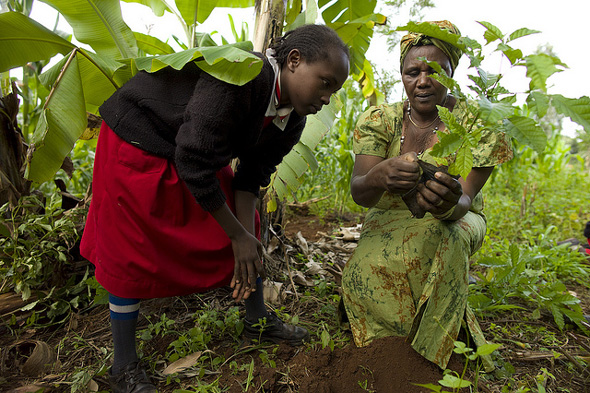
›Carbon offsets have fallen in and out of favor since they were established with the Kyoto Protocol in 1997. Critics say they allow wealthy organizations to placate consumers and claim their products are “green” without making any real, lasting changes. But, if the scheme works properly, some action is supposed to be taken somewhere, so what is it like at one of these credit-producing organizations?
-
Managing the Planet: The World at Seven Billion
›Population growth “is highly concentrated in what are today the poorest and least well-governed areas of the world,” said George Mason University professor Jack Goldstone at the Wilson Center on December 5.
Goldstone was joined by Suzanne Ehlers, president and CEO of Population Action International (PAI), and Matthew Erdman, population-health-environment technical advisor at USAID, to discuss the implications of seven billion people and counting for the environment as part of the joint Wilson Center-George Mason University Managing the Planet series. [Video Below]
-
‘The Christian Science Monitor’ Explores the Global Water Crisis: Should We Charge More for Water?
›“There is as much of that water on the planet today as when the first amphibian flopped ashore; as much as when the ancient Greeks divined the future in the babble of brooks,” writes William Wheeler in The Christian Science Monitor. “So why do experts in science, economics, and development warn that a ‘global water crisis’ threatens the stability of nations and the health of billions?”
-
The Land Matrix Visualizes Ebbs and Flows of Global “Land Grabs”
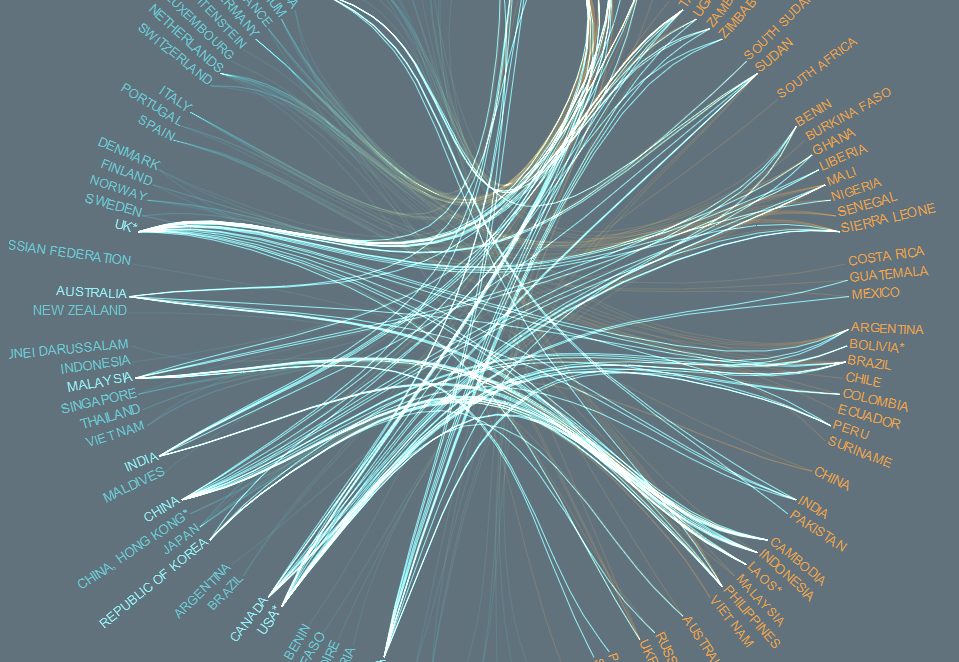
›Over the past few years, large-scale acquisition of land by foreign or domestic firms, be they public or private, have been making headlines. But although these “land grabs” have received a great deal of attention, their details remain largely unknown. Which countries are the primary investors? Which are the main targets? What is the land used for?
-
CCAPS Looks to Map Climate-Related Aid in Africa
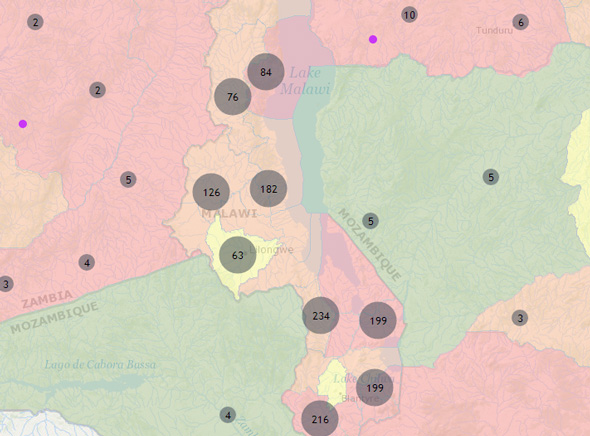
›Adapting to the effects of climate change is increasingly becoming an important component of many international development efforts. But how that integration occurs and what it looks like is an open question. To help answer that, the Climate Change and African Political Stability Program (CCAPS) at the University of Texas at Austin recently released a new database that for the first time tracks all the climate-related aid in one country – Malawi.
Showing posts from category Africa.