-
Can Citizen Science Help Small Communities Combat Big Fishing Fleets?
›This Earth Day weekend, the U.S. Department of State is hosting more than 2,000 coders in more than 40 cities to encourage creative thinking about technological solutions to ocean issues. The third annual Fishackathon could produce new tools for local communities to track long-distance fishing, a growing problem in some places, as China, in particular, scales up its efforts.
-
A More Extreme Sea-Level Rise Scenario, and the Global Environmental Burden of Disease
› Though governments have agreed to try to limit global warming to no more than two degrees Celsius above pre-industrial levels, a paper by James Hansen et al. in Atmospheric Chemistry and Physics finds that goal may not prevent major changes on an irreversible and unadaptable scale. Studying the last interglacial period, about 120,000 years ago, when the temperature was less than one degree Celsius warmer than today, Hansen et al. estimate sea level was six to nine meters higher than today.
 -
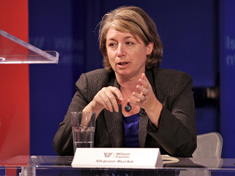
Sharon Burke on How the U.S. Military Is Planning for Climate Change
›Climate change is impacting the U.S. military in two major ways, explains Sharon Burke in this week’s podcast. -
Protection and Prosperity: A New Environmental Research and Education Agenda for a Changing World
›March 30, 2016 // By Roger-Mark De Souza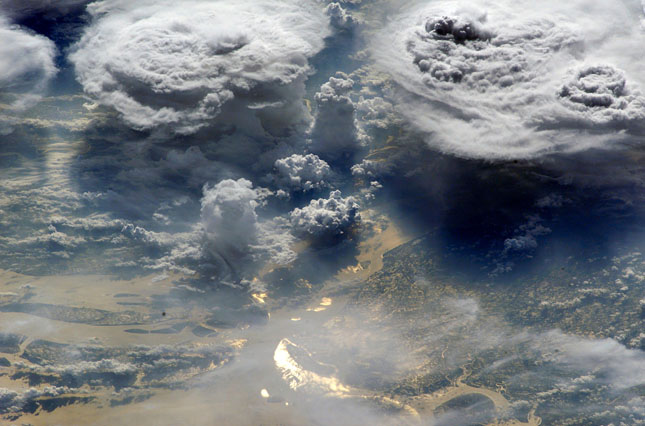
Some, especially in the scientific community, get frustrated at the seeming lack of scientific literacy among the general public and policymakers. This is a two-part problem, however. The general public must understand the implications of science and data, yes, but it is also important for the scientific community to effectively convey their work and educate the next generation.
-
1.3 Meters of Sea-Level Rise By 2100, and the Effects of Belo Monte’s Forced Displacement
›A study published by the Proceedings of the National Academy of Sciences projects future sea-level rise with a new model, providing crucial information for coastal planning and further impetus to cut carbon emissions. Sifting through data on thermal expansion and retreating glaciers, the two leading causes of sea-level rise in the past century, the authors confirm that sea level is rising at an unprecedented rate. -
The Environment and Energy Stories to Watch in 2016
›The climate agreement reached in Paris last December, seen by many as a critical step toward lowering greenhouse gas emissions, was big news – perhaps too big. Pointing to the thousands of articles about COP-21, National Geographic Senior Editor Marla Cone asked at a recent Wilson Center panel, “Is this a wise use of resources, when newsrooms are so stretched thin, to have everybody pretty much chasing the same stories?”
-
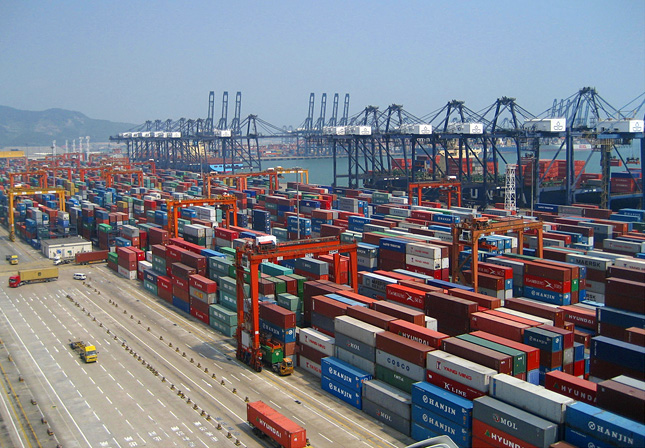
Cleaning up China’s Ports: Shenzhen Explores Fuel Switching and Onshore Power
›China’s “strictest air protection law” yet took effect on January 1, 2016, promising to bring big changes to its smog-filled cities. But some municipal governments have been ahead of the curve, working to clean up the air through experimentation and innovation. Shenzhen, China’s first special economic zone and which recently passed its neighbor Hong Kong to lead China’s most competitive cities, is one of these.
-
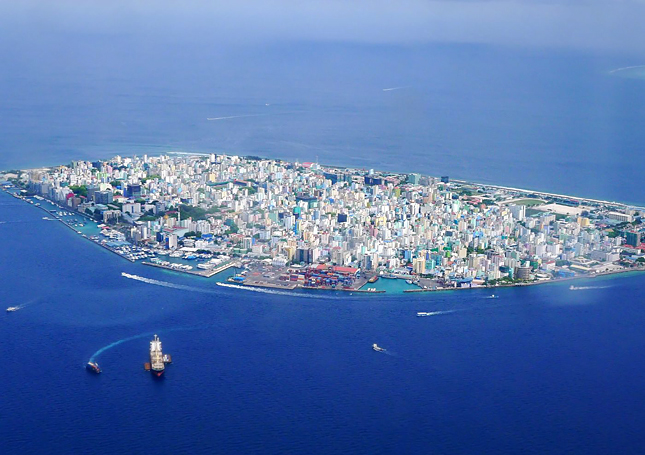
Islands in Paris: New Climate Deal Gives Some Recognition to Humanity’s Truth Bearers
›December 16, 2015 // By Roger-Mark De SouzaThe new climate deal coming out of Paris commits governments to hold the rise in average global temperatures to “well below” two degrees Celsius compared to preindustrial levels. An important dimension of this agreement calls for subsequent work on limiting the increase to 1.5 degrees. This is an important win for islands and other low-lying countries, and for humanity.
Showing posts from category oceans.
 Climate change is impacting the U.S. military in two major ways, explains Sharon Burke in this week’s podcast.