-
Building Sustainable Cities in a Warmer, More Crowded World
›January 3, 2013 // By Laurie Mazur
The future is urban – but is it sustainable?
For decades – centuries, really – warnings have been issued: The burgeoning human population will outgrow the planet’s capacity to sustain us. The formula seems simple. More people equals fewer resources and greater environmental damage.
-
World Bank Issues Dire Warning About “Four Degree World”
›December 10, 2012 // By Carolyn Lamere
Without decisive action, global temperatures could rise by at least four degrees Celsius (seven degrees Fahrenheit) by the end of the century. A new World Bank report says that such a world would be “so different from the current one” that it would be difficult to even anticipate the challenges we would face.
-
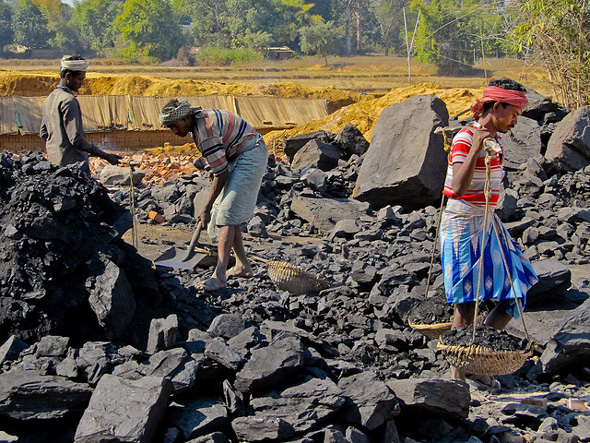
India’s Environmental Security Challenge: Water, Coal, Natural Gas, and Climate Change Fuel Friction
›November 23, 2012 // By Michael KugelmanThe original version of this article appeared in NATO Review.
Few regions are more environmentally insecure than South Asia.
The region faces rising sea levels and regularly experiences coastal flooding – of particular concern in a region with heavily populated and arable-land-rich coastal areas. Additionally, it is highly vulnerable to glacial melt. The Western Himalayas, which provide water supplies to much of South Asia, have experienced some of the most rapid melt in the world.
-
Liang Jialin and Jiang Han, ChinaDialogue
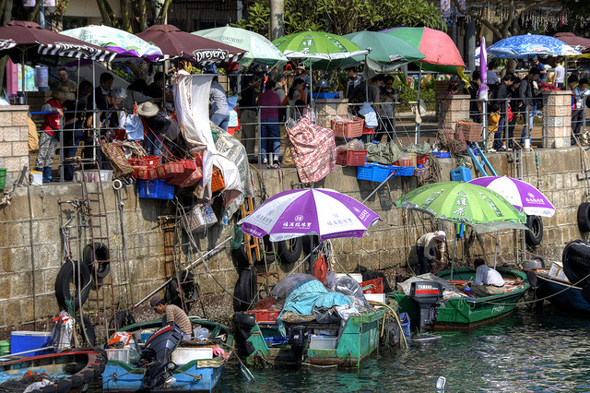
Overfishing Pushes 80 Percent of Chinese Fishermen Towards Bankruptcy
›November 9, 2012 // By Wilson Center StaffThe original version of this article, by Liang Jialin and Jiang Han, appeared in English on ChinaDialogue and in Chinese on Economic Information Daily.
In mid-September, the fishing season got under way as usual in Ningbo, on China’s east coast, after the three-month season when fishing is forbidden. Over 2,000 steel-hulled boats headed out to sea. But, on board, there was little cause for optimism.
-
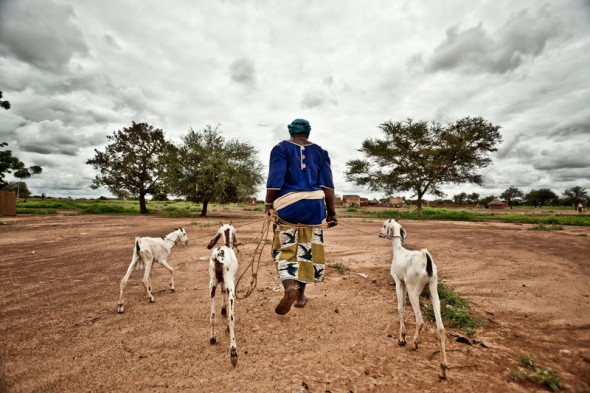
Clean Cookstoves and PHE Champions on Tanzania’s Northern Coast
›As our ferry slowly made its way across the Pangani River along the northern coast of Tanzania, I sat next to a woman whose child held her hand tightly. The boy and I exchanged smiles, but we mainly admired the view. The late morning sun was behind us as the royal blue river met the cloudless sky.
-
Michael D. Lemonick, Climate Central
Surprise Geoengineering Test Goes Forward Off Coast of Canada
›November 2, 2012 // By Wilson Center StaffThe original version of this article, by Michael D. Lemonick, appeared on Climate Central.
Harvard’s David Keith calls it the “goofy Goldfinger scenario” – a rogue nation, or even an individual, would conduct an unsupervised geoengineering experiment – and he confidently predicted in a story I wrote last month that it would never happen.
-
Who Are the Most Vulnerable to Ocean Acidification and Warming?
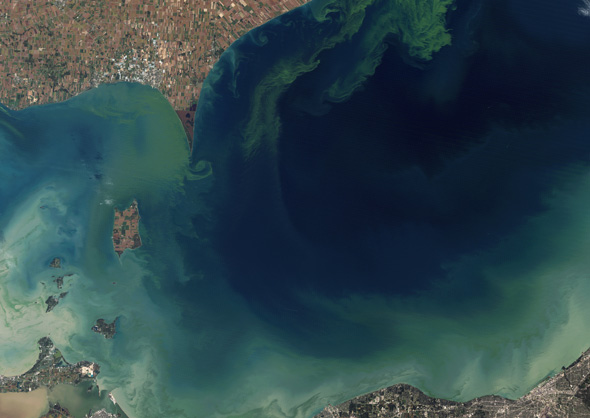
›In 2011, a record 34 billion cubic tons of carbon dioxide were emitted from man-made sources. Half the emitted CO2 stays in the atmosphere, about a quarter is absorbed on land (as trees grow, for example), and the remainder is absorbed by the ocean. Unsurprisingly, this incredible amount of carbon dioxide significantly changes the ocean environment. Over time, increased absorption of carbon dioxide in the oceans has led to ocean acidification, and overall warming has also led to warming of ocean waters – both changes impact marine ecosystems and the people who rely on them.
-
Gwen Hopkins, Aspen Institute Global Health and Development
Aspen Ideas Festival Takes on “The Population Challenge”
›The original version of this article, by Gwen Hopkins, appeared on the Aspen Ideas Festival blog.
The pictures flash quickly: lush sea vegetation replaced by empty grey-blue seabed as carbon bubbles out of undersea vents. Reservoirs depleted too quickly, never to refill. Forests and mountains leveled for coal, deep sea oil rigs ablaze, the arctic ice cap visibly retreating. Dennis Dimick is answering the question posed to him with a litany of evidence collected by National Geographic: Does population matter?
Yes, he says – a lot.
Kicking off the Our Planet: The World at Seven Billion track, on a panel called “The Population Challenge,” Washington Post staff writer Joel Achenbach moderated a conversation between Dimick and Helene Gayle, president and CEO of CARE USA, following Dimick’s presentation about how the earth’s human population has made its presence known.
Dimick explains that this new geologic era has been dubbed Anthropocene, the age of man, as we “transform the planet to perpetuate our lifestyle.” That’s a lifestyle powered first and foremost by what he calls “the new sun” – coal, oil, and gas, or in Dimick’s words, “ancient plant goo.” These transformations are deep and widespread – and according to Dimick, growing worrisome in their magnitude. While there is searing inequity – “few have a lot, and a lot have few” – those that lead the consumption have, for example, caught 90 percent of the big fish in the sea already, and burn in one year a quantity of fuel that took a million years to coalesce underground. “If everyone in the world lived like Americans do, we’d need four planets.”
Continue reading on the Aspen Ideas Festival blog.
Photo Credit: Aspen Institute.
Showing posts from category oceans.