Showing posts from category natural resources.
-
Choke Point China: Escalating Confrontation Between Water Scarcity and Energy Demand Has Global Implications
›The original version of this article, by J. Carl Ganter, appeared on The Huffington Post. Visit Circle of Blue for the latest articles in the Choke Point: China series.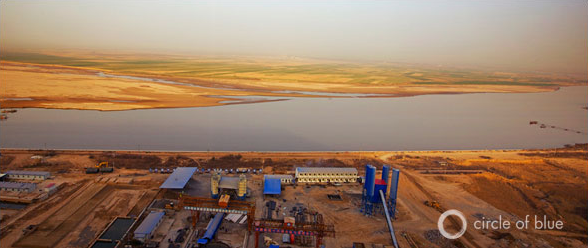
Water scarcity, rapid economic growth, and soaring energy demand are forming a tightening noose that could choke off China’s modernization.
Writes my colleague Keith Schneider in the first installment of the new report, Choke Point: China, from Circle of Blue:Underlying China’s new standing in the world, like a tectonic fault line, is an increasingly fierce competition between energy and water that threatens to upend China’s progress. Simply put, say Chinese authorities and government reports, China’s demand for energy, particularly for coal, is outpacing its freshwater supply.
The 12-part Choke Point: China series presents powerful evidence of the fierce contest between growth, water, and fuel that is virtually certain to grow more dire over the next decade. The project is produced in partnership with the Woodrow Wilson International Center for Scholars’ China Environment Forum.
Tight supplies of fresh water are nothing new in a nation where 80 percent of the rainfall and snowmelt occurs in the south, while just 20 percent of the moisture occurs in the mostly desert regions of the north and west. What’s new is that China’s surging economic growth is prompting the expanding industrial sector, which consumes 70 percent of the nation’s energy, to call on the government to tap new energy supplies, particularly the enormous reserves of coal in the dry north.
The problem, scholars and government officials told us, is that there is not enough water to mine, process, and consume those reserves and still develop the modern cities and manufacturing centers that China envisions for the region. “Water shortage is the most important challenge to China right now, the biggest problem for future growth,” said Wang Yahua, deputy director of the Center for China Study at Tsinghua University in Beijing. “It’s a puzzle that the country has to solve.”
The consequences of diminishing water reserves and rising energy demand have been a special focus of our attention for more than a year. In 2010, in our “Choke Point: U.S.” series, Circle of Blue found that rising energy demand and diminishing freshwater reserves are two trends moving in opposing directions across America. Moreover, the speed and force of the confrontation is occurring in the places where growth is highest and water resources are under the most stress – California, the Southwest, the Rocky Mountain West, and the Southeast.
Stripped to its essence, China’s globally significant choke point is caused by three converging trends:- Production and consumption of coal – the largest industrial consumer of water – has tripled since 2000. Government analysts project that China’s energy companies will need to increase coal production by 30 percent by 2020.
- Fresh water needed for mining, processing, and consuming coal accounts for the largest share of China’s industrial water use, a fifth of all the water consumed nationally. Though national conservation policies have helped to limit increases, water consumption nevertheless has climbed to record highs.
- China’s total water resource, according to the National Bureau of Statistics, has dropped 13 percent since the start of the century. In other words China’s water supply is 350 billion cubic meters (93 trillion gallons) less than it was at the start of the century. That’s as much water lost to China each year as flows through the mouth of the Mississippi River in nine months. Chinese climatologists and hydrologists attribute much of the drop to climate change, which is disrupting patterns of rain and snowfall.
We found a powerful narrative in China in two parts, and never before told: First is how effectively the national and provincial governments enacted and enforced a range of water conservation and efficiency measures that enabled China to progress as far as it has.
Second is that despite the extensive efforts to conserve water, and to develop water-sipping alternatives like wind and solar energy, China still faces an enormous projected shortfall of water this decade to its energy-rich northern and western provinces. How government and industry leaders respond to this critical and unyielding choke point forms the central story line of the next era of China’s unfolding development.
J. Carl Ganter is director and co-founder of Circle of Blue, a leading source of news, science, and data about water issues globally. Choke Point: China is produced in partnership with the Wilson Center’s China Environment Forum.
Image Credit: Two tunnels beneath the Yellow River to be completed by mid-decade that will transport more than 35 million cubic meters (9 billion gallons) of water a day from southern China to thirsty cities in the north. Courtesy of Aaron Jaffe and Circle of Blue. -
Watch: Geoff Dabelko and John Sewell on Integrating Environment, Development, and Security and the QDDR
›“We all must check our stereotypes of the other communities at the door…we’re not talking about hugging trees and hugging pandas,” said Geoff Dabelko, director of the Wilson Center’s Environmental Change and Security Program, in a panel discussion on Foreign Policy Challenges in the 112th Congress as part of the Wilson Center on the Hill series. Dabelko argued for a more multi-dimensional and integrated approach to addressing environmental issues.
“To tackle these problems, these connections between, say, natural resources, development, and security, it really does require that we have an integrated approach to our analysis [and] an integrated approach to our responses,” Dabelko said.
In dealing with climate change, for example, “a more diversified view would be one where we spend more time trying to understand adaptation,” said Dabelko. “How are we going to deal with the expected impacts of these problems?” he asked.
Dabelko called on policymakers to seek “triple bottom lines,” pointing out that “if you’re worried about climate change, or you’re worried about development, or you’re worried about fragile states, some of the same governance interventions and strong institutions in these fragile or weak states are going be the ones that will get you benefits in these multiple sectors.”
The Political Space
Fortunately, the current political environment is one in which “there is political space for integration,” said Dabelko, as demonstrated by, for example, the Quadrennial Diplomacy and Development Review (QDDR), which Wilson Center Senior Scholar John Sewell addressed in his remarks.
“All of you who are directly or indirectly engaged in Congress are going to be faced with a very important opportunity in the next 12 to 24 months,” Sewell said, “to focus both diplomacy and development on the major challenges that are going to face all of us in the first half of the century.”
Calling the QDDR a “major rethink of both American diplomacy and American development,” Sewell applauded its conceptual alignment, but cautioned that the review leaves many questions unanswered about its implementation.
“The QDDR sets no criteria,” said Sewell. “Are we going to continue to put large sums of money into countries that aren’t developing? Are we going to follow the choice of issues – food, environment, and so on and so forth? It’s a question that is not answered in any of these documents.”
Sewell also pointed to potential clashes over budgeting, USAID/State leadership, and the lack of coordination with other large development agencies, like the World Bank and International Monetary Fund.
For more on Sewell’s analysis of the QDDR, see his recent blog post “Reading the QDDR: Is the Glass Half Full or Half Empty?” -
A Dialogue on Managing the Planet
›“Collectively, the impact of humanity on the way the planet works is enormous and headed in disturbing directions,” said George Mason University professor Thomas Lovejoy in January at the first in a monthly series, “Managing the Planet,” led jointly by George Mason University and the Woodrow Wilson Center. The series will focus on how to take “environmental management to the scale of the entire planet,” as climate change, increasing energy consumption, and population growth place increasing stress on natural resources. We need to “chart a better course for the human future,” said Lovejoy.
Joining Lovejoy at the kickoff meeting were Dennis Dimick, executive environment editor at National Geographic, and Professor Molly Jahn of the University of Wisconsin-Madison. [Video Below]
Signs From Earth
“The entire human enterprise is based on the assumption of a stable climate,” said Lovejoy. The “most dramatic part of the story” in recent decades has been the melting of ice in the Arctic and in the mountain ranges of tropical zones. At current rates, tropical glaciers will completely disappear within the next 15 years. Though scientists predicted it would last until at least 2015, Bolivia’s Chacaltaya glacier – once renowned as the world’s highest elevation ski area – was reduced to a “few lumps of ice” in 2009, according to the BBC.
Glacial melt has raised water temperatures, altered species migrations, and threatened water supplies, coastal ecosystems, and the communities that depend on them, said Lovejoy. Higher ocean temperatures also cause the “fundamental partnership” between coral reefs and algae to break down, and “the Technicolor world essentially goes black and white,” he said.
Ocean acidification, fresh water shortages, melting glaciers, pollution, forest fires, and a “vast whipsaw” of temperature and weather extremes are just some of the effects human consumption has had on the planet, said Dimick. “It’s a sign from the Earth. It is telling us, ‘not all is well.’”
Finding Balance
As the world’s population nears seven billion this year, “we have one planet, yet we live like we live on four,” said Dimick. National Geographic’s new series “Population 7 Billion” seeks to answer the questions, he said, of “how do we find balance? How do we find ways to lower the intensity of our demands on an Earth that is telling us it is strained?”
Finding solutions to these challenges will require us to “look forward and confront the future,” said Dimick. “We need to rethink our whole global energy system,” he said, and “rethink our basic premise about what we need, as opposed to what we want.”
The global emissions limit of 450 parts per million (ppm) of carbon – the level needed to achieve the two-degree warming limit agreed upon at Cancun and Copenhagen – “is probably too high,” said Lovejoy. Most scientists agree that 350 ppm is a safer level; however, the world is already at “390 and climbing,” he noted, and global temperatures are projected to rise two degrees Celsius by 2035. If we want global warming to stop at two degrees, carbon emissions will need to stop growing by 2016, he said.
Figuring Out “Plan B”
“We have a problem that is presenting itself in a whole host of ways, with urgency that cannot be denied or dismissed,” said Jahn. “The way we do agriculture is a very significant contributor” to that problem, she said. Today, in the United States, “we waste 40 percent of the food we grow,” she said.
“Plan A…was about maximizing productivity at all costs,” said Jahn. “It looks like we may need another plan.” But figuring out “Plan B” will require steps by both policy and science communities. “We still have enormous gaps in our understanding towards even the basic science platform upon which these very important decisions about ways forward lie,” she said.
Managing the planet must begin with managing data so that we can “transition between data, information, and knowledge, and march this information out to…those making decisions that matter,” said Jahn. The information management structure that developed in the medical sciences and led to the creation of the National Library of Medicine is a useful model for managing the planet, she argued. “Personalized medicine” for the planet would allow people to use data to make better decisions about who should be doing what and where.
Using and expanding the knowledge base is a crucial step towards bringing together the science and policy communities on an international scale in search of solutions to managing the planet. “If we work together, we can change the world,” said Dimick.
Sources: 350 Science, BBC, Earth System Research Laboratory, United Nations Environment Program, United Nations Framework Convention on Climate Change.
Photo Credit: “Sun Over Earth (NASA, International Space Station, 07/21/03),” courtesy of flickr user NASA’s Marshall Space Flight Center. -
‘Blood in the Mobile’ Documents the Conflict Minerals of Eastern Congo
›With Blood in the Mobile, Danish director Frank Poulsen dives into the eastern Democratic Republic of Congo (DRC) to document a vicious cycle of conflict that has claimed millions of lives, produced rampant humanitarian abuses, and is driven in part (though not entirely, it should be noted) by the area’s rich mineral resources – all under the noses of the world’s largest peacekeeping operation.
The minerals extracted in the eastern DRC – tin, tantalum, tungsten, and gold, mainly from North and South Kivu provinces – are used in cell phones around the world. The trailer shows Poulsen gaining access to an enormous tin mine in the area – the biggest illegal mine in the Congo, he says – capturing powerful footage of the squalid and dangerous conditions that thousands of often-teenage workers labor under for days at a time.
“Four years ago this place was nothing but jungle,” narrates Poulsen. “Today, 15,000-20,000 people are working here [and] different armed groups are fighting to gain control over the mine.”
Though Poulsen is pictured making dramatic phone calls to Nokia (the largest cell phone manufacturer in the world), the issue of conflict minerals from the DRC and places like it is in fact more than just a blip on the radar screens of most leading technology companies. The NGO the Enough Project in particular has been championing the cause and bringing it to tech companies’ doorsteps for quite some time. Their efforts have helped produce an action plan for certifying conflict-free supply chains (complete with company rankings) and also helped lead to passage of the United States’ first law addressing conflict minerals this fall.
However, Poulsen’s message of the developed world taking responsibility for sourcing is commendable. Efforts like this that have led to the adoption of corporate responsibility initiatives like the Cardin-Lugar amendment, a similar measure in the works for the European Union, the Extractive Industries Transparency Initiative, and the Kimberley Process for diamonds.
Blood in the Mobile premiered this fall at the International Documentary Film Festival and the producers are “in dialogue with different U.S. distributors,” according to their Facebook page, where those interested are advised to stay tuned.
Sources: BloodintheMobile.org, Enough Project, EurActiv.
Video Credit: Blood in the Mobile Official Trailer. -
Albert Lotana Lokasola, PHE Champion
Improving Health and Preserving Ecosystems in the Democratic Republic of Congo
›This PHE Champion profile was produced by the BALANCED Project.
In the remote forests of the Democratic Republic of Congo (DRC), Albert Lotana Lokasola is helping improve livelihoods by bringing much-needed health services to the communities living in and around the Kokolopori Bonobo Reserve. Officially recognized by the DRC government in May 2009, the reserve is a high biodiversity wilderness area covering an area about the size of Rhode Island (4,785 square kilometers).
Located 300 miles southwest of Kisangani, the reserve contains bonobos, a rare and highly endangered great ape species that is as closely related to humans as chimpanzees. In addition, the reserve is highly valued for its biodiversity, including several other flagship species such as leopards, elephants, Congo peafowl, Tshuapa red colobus, and Salonga monkeys.
Lokasola founded a nationally recognized organization called Vie Sauvage, or “Wild Life” in English. He serves as the president of the organization and works with international organizations to foster conservation and rural development in an integrated, holistic approach. As a native of Kokolopori, he believes that “the forest, men, and wildlife live together and should be protected together.”
In partnership with local residents and supported by the Bonobo Conservation Initiative, Lokasola and Vie Sauvage established the first medical clinic in the area in 2006. They garnered support for a doctor, nurses, and supplies from the Indigo Foundation in Australia and the Kokolopori-Falls Church Sister City Partnership.
Before the clinic was founded, community members had to walk or bicycle more than 50 miles to get to the nearest hospital in the territorial capital of Djolu. Now the Kokolopori clinic serves the 8,000 people who live in 30 villages along a 40-mile road in the reserve. One of the clinic’s goals is to help improve women’s health by training and equipping midwives and by providing access to other health services. Malaria and poor nutrition contribute to high maternal and child mortality, and women in Kokolopori do not yet have access to reproductive health services such as family planning.
Vie Sauvage articulates integrated health and conservation messages through their community education projects. They are also working with the community to prevent malnutrition by planting fruit trees in agroforestry fields to produce supplemental food supplies. At the same time, these trees will create corridors for wildlife movement and protect the genetic flow. They also create a sound micro-climate for people, sequester carbon dioxide, and filter the air. Through these efforts, Vie Sauvage and the people of Kokolopori are demonstrating the critical links between human well-being and conservation.
Vie Sauvage has garnered resources and participation from diverse partners (like the Kokolopori-Falls Church Sister City Partnership and the Indigo Foundation, mentioned above) which work together to support the clinic and fund medical staff salaries, training, supplies and equipment, and infrastructure improvements.
According to Lokasola, Vie Sauvage and partners are currently exploring potential partnership opportunities to integrate family planning and reproductive health into existing activities. His hope is that by providing these much-needed services, the community will be healthier and critical ecosystems will be sustainably preserved.
This PHE Champion profile was produced by the BALANCED Project. A PDF version can be downloaded from the PHE Toolkit. PHE Champion profiles highlight people working on the ground to improve health and conservation in areas where biodiversity is critically endangered.
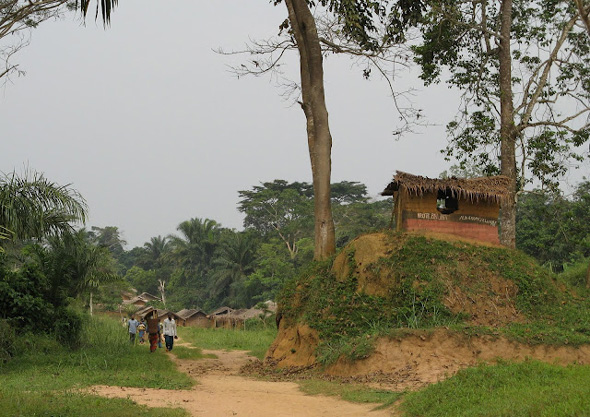
Photo Credit: Building along the road in Kokolopuri village serves as a messsage drum for sending messages from one village to the next, courtesy of Ingrid Schulze and the BALANCED Project. -
Shannon O’Lear, University of Kansas
Book Preview: ‘Environmental Politics: Scale and Power’
›February 1, 2011 // By Shannon O’LearThe cover of my book, Environmental Politics: Scale and Power, shows two cows casually rummaging through piles of garbage on the streets of a city somewhere in India. It’s a colorful, but disturbing, image. Why not show cows in their “natural” setting, say, in a Kansas pasture? Who let them into the street? Why are they eating garbage? The image is symbolic of what the book aims to achieve: to get us out of our comfort zones in thinking about environmental issues and challenge us to reconsider how we think about issues like climate change, energy, food security, garbage, toxins, and resource conflicts.
The book draws from my experience teaching environmental policy, environmental geopolitics, international conflict, and human geography. It starts by asking some fundamental questions: What exactly is “the environment” anyway? Is there any part of the world that is completely untouched by human actions? How do different forms of power selectively shape our understanding of particular environmental issues (while obscuring other issues from our view)?
The book draws on the idea of the “Anthropocene” – a new geologic era characterized by irreversible, human-induced changes to the planet. Because these changes (which in large part have already occurred) are irreversible, Anthropocene-subscribers argue we should focus our efforts on mitigation, adaptation, and coming to terms with the realities of the environment as it is, rather than something that must be returned to some previous or “normal” state.
Our understanding of environmental issues is shaped by various types of power – economic, political, ideological, and military – and therefore tends to be limited in terms of spatial scale. Why do we tend to think of climate change as a global phenomenon instead of something we might experience (and contend with) locally? Is food security something we should be mindful of when we make individual choices about food? We tend not to discuss what happens to our garbage, but everyone knows about recycling, right?
Environmental Politics: Scale and Power offers non-geographers an appreciation of how and why geographers think spatially to solve problems. Commonly accepted views of environmental issues tend to get trapped at particular spatial scales, creating a few dominant narratives. When we combine a spatial perspective with an inquiry into the dynamics of power that have influenced our understanding of environmental issues, we can more clearly appreciate the complexity of human-environment relations and come to terms with adapting to and living in the Anthropocene era.
Today’s environmental challenges can sometimes appear distant and immense, but this book aims to show how decisions we make in our day-to-day lives – from buying bottled water and microwave popcorn to diamond jewelry – have already had an effect on a grand scale.
Shannon O’Lear is a professor of geography at the University of Kansas and the author of Environmental Politics: Scale and Power. She has recently completed a research project examining why we do not see widespread or sustained environmental resource-related conflict in Azerbaijan, as literature on resource conflict would suggest.
Image Credit: Environmental Politics: Scale and Power, courtesy of Justin Riley and Cambridge University Press. -
A Lens Into Liberia: Experiences from IRP Gatekeepers
›The International Reporting Project (IRP) gives “editors – the ‘gatekeepers’ – a chance to get out of the newsrooms and to see for themselves the importance of international affairs,” said John Schidlovsky, director of IRP, at a Wilson Center event about the independent journalism organization’s recent two-week trip to Liberia with 11 U.S. news editors. [Video Below]
Schidlovsky stressed the importance of providing international opportunities for journalists in the face of news industry budget cuts. IRP fills the gap by sending gatekeepers, who help determine what news items will be selected for publication or broadcast, to countries that are often underrepresented and neglected in mainstream media.
Three of the gatekeepers, Sunni Khalid, managing news editor at WYPR Baltimore; Ed Robbins, a video journalist; and Teresa Wiltza, senior editor for The Root, shared their observations from their Liberia trip, as well as their insights into the challenges of international reporting.
Economic Challenges and Opportunities
Liberia is slowly beginning to rebuild its economy after a 14-year civil war with more than 200,000 casualties, but there are still “tremendous challenges,” said Khalid. “How do people survive? What kind of jobs do they have? How do they feed their families?”
According to World Bank figures, 84 percent of Liberians earn less than $1 a day, and more than 94 percent earn less than $2 a day. The government’s annual budget is only $369 million, the official unemployment rate is 85 percent, and corruption and lack of infrastructure remain major concerns.
Despite these problems, “Liberia has a lot of good points going for it,” said Khalid. Investment in the country’s raw materials is growing; most recently, the country signed a $7 billion deal with China and a European consortium to continue iron-ore mining.
Initially expecting to “write an obituary for Liberia,” Khalid said he “came out of this trip fairly optimistic about Liberia’s future.” With its “small population, great location, and mineral wealth,” as well as “competent political leadership,” Liberia can take advantage of its potential, he said.
“Capturing the Flavor” of Liberia
Robbins hopes to paint a multidimensional picture of Liberia and “capture the flavor of the country beyond Monrovia,” with his series of short films, which will be available on the websites of both Time and the International Reporting Project,
Robbins previewed one of these films, a profile of the chair of the Liberian Women’s Initiative, Etweda “Sugars” Cooper, who he says “embodies a certain power of a lot of Liberian women in her dedication and also her love for the country.”
At the local level, “the problems of recovery and development are all there in miniature,” said Robbins. But with dedicated leadership from people like Cooper, communities are slowly beginning to rebuild the schools, roads, hospitals, and other infrastructure that was destroyed in the civil wars.
“When you read books and articles, it tends to be really focused on the war and the devastation,” said Robbins. But there is also a sense of optimism among Liberians: “you can see hope in these people, a sense there is something there,” he said.
Empowering Women and Ending Rape
Wiltz pointed out that, “there is a prevailing sense of hope,” particularly among the older generation of women. After years of violence, these female “peace warriors” led the movement that ended Liberia’s civil war. But seven year later, “for women there, the biggest issue is that of economic empowerment,” said Wiltz. “They’re feeling empowered, but they’re broke.”
Sexual violence has become “part of the national psyche,” Wiltz said. During the civil war in Liberia, it has been estimated that more than 60 percent of the female population was raped. Today, “everyone seems sensitized to the issue, and yet it’s still a huge problem,” she said. Sexual violence is still common despite the prevention efforts of radio campaigns, NGOs, and Liberian President Ellen Johnson-Sirleaf.
“You’re in a country where families were destroyed by war,” Wiltz said. In the process of rebuilding Liberia, the new challenge is to engage and empower a new generation of young women and girls. “Underneath the surface there is all this pain and this legacy of extreme cruelty, but they very much want to overcome this.”
Much of the gatekeepers’ coverage is available online: Sunni Khalid produced a week-long series of radio pieces for WYPR, an NPR affiliate; Ed Robbins produced a series of short films for Time; and Teresa Wiltz published several articles on The Root.
Sources: CIA World Factbook, U.S. State Department, World Bank, World Health Organization, WYPR.
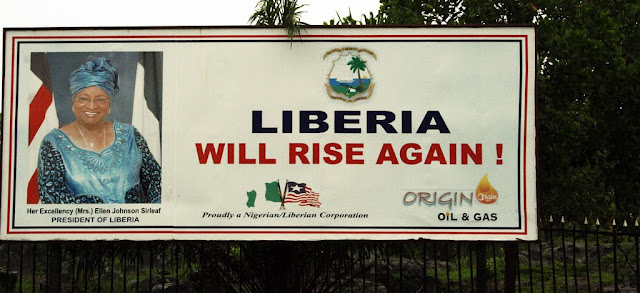
Photo Credit: “Liberia Will Rise Again,” courtesy of flickr user Jason Judy. -
Watch: Joan Castro on Resource Management and Family Planning in the Philippines
›January 27, 2011 // By Wilson Center Staff“Sixty-percent of Filipinos live in the coastal areas,” said Joan Castro, executive vice president of PATH Foundation Philippines, Inc., in an interview with ECSP, and dwindling fish stocks are an issue across the archipelago. “With increasing population, the food that goes on the table for a lot of families in these coastal communities was an issue, so food security was the theme of the IPOPCORM project.”
IPOPCORM (standing for “integrated population and coastal resource management”) was started in 2000 and ran for six years. It sought to address population, health, and the environment (PHE) issues together in rural, coastal areas of the Philippines.
“When we started IPOPCORM, there was really nothing about integrating population, health, and environment,” Castro said. IPOPCORM provided some of the first evidenced-based results showing there is value added to implementing coastal resource management and family planning in tandem rather than separately.
The PATH Foundation worked with local governments and NGOs to establish a community-based family planning system while also strengthening local resource management. The results showed a decrease in unmet need for family planning and also improved income among youth in the remote areas they worked in.
Today, Castro also serves as the PHE technical assistance lead of the Building Actors and Leaders for Advancing Community Excellence in Development (BALANCED) project – a USAID initiative transferring PHE know-how to regions of East Africa and Asia.