Showing posts from category population.
-
A Lens Into Liberia: Experiences from IRP Gatekeepers
›The International Reporting Project (IRP) gives “editors – the ‘gatekeepers’ – a chance to get out of the newsrooms and to see for themselves the importance of international affairs,” said John Schidlovsky, director of IRP, at a Wilson Center event about the independent journalism organization’s recent two-week trip to Liberia with 11 U.S. news editors. [Video Below]
Schidlovsky stressed the importance of providing international opportunities for journalists in the face of news industry budget cuts. IRP fills the gap by sending gatekeepers, who help determine what news items will be selected for publication or broadcast, to countries that are often underrepresented and neglected in mainstream media.
Three of the gatekeepers, Sunni Khalid, managing news editor at WYPR Baltimore; Ed Robbins, a video journalist; and Teresa Wiltza, senior editor for The Root, shared their observations from their Liberia trip, as well as their insights into the challenges of international reporting.
Economic Challenges and Opportunities
Liberia is slowly beginning to rebuild its economy after a 14-year civil war with more than 200,000 casualties, but there are still “tremendous challenges,” said Khalid. “How do people survive? What kind of jobs do they have? How do they feed their families?”
According to World Bank figures, 84 percent of Liberians earn less than $1 a day, and more than 94 percent earn less than $2 a day. The government’s annual budget is only $369 million, the official unemployment rate is 85 percent, and corruption and lack of infrastructure remain major concerns.
Despite these problems, “Liberia has a lot of good points going for it,” said Khalid. Investment in the country’s raw materials is growing; most recently, the country signed a $7 billion deal with China and a European consortium to continue iron-ore mining.
Initially expecting to “write an obituary for Liberia,” Khalid said he “came out of this trip fairly optimistic about Liberia’s future.” With its “small population, great location, and mineral wealth,” as well as “competent political leadership,” Liberia can take advantage of its potential, he said.
“Capturing the Flavor” of Liberia
Robbins hopes to paint a multidimensional picture of Liberia and “capture the flavor of the country beyond Monrovia,” with his series of short films, which will be available on the websites of both Time and the International Reporting Project,
Robbins previewed one of these films, a profile of the chair of the Liberian Women’s Initiative, Etweda “Sugars” Cooper, who he says “embodies a certain power of a lot of Liberian women in her dedication and also her love for the country.”
At the local level, “the problems of recovery and development are all there in miniature,” said Robbins. But with dedicated leadership from people like Cooper, communities are slowly beginning to rebuild the schools, roads, hospitals, and other infrastructure that was destroyed in the civil wars.
“When you read books and articles, it tends to be really focused on the war and the devastation,” said Robbins. But there is also a sense of optimism among Liberians: “you can see hope in these people, a sense there is something there,” he said.
Empowering Women and Ending Rape
Wiltz pointed out that, “there is a prevailing sense of hope,” particularly among the older generation of women. After years of violence, these female “peace warriors” led the movement that ended Liberia’s civil war. But seven year later, “for women there, the biggest issue is that of economic empowerment,” said Wiltz. “They’re feeling empowered, but they’re broke.”
Sexual violence has become “part of the national psyche,” Wiltz said. During the civil war in Liberia, it has been estimated that more than 60 percent of the female population was raped. Today, “everyone seems sensitized to the issue, and yet it’s still a huge problem,” she said. Sexual violence is still common despite the prevention efforts of radio campaigns, NGOs, and Liberian President Ellen Johnson-Sirleaf.
“You’re in a country where families were destroyed by war,” Wiltz said. In the process of rebuilding Liberia, the new challenge is to engage and empower a new generation of young women and girls. “Underneath the surface there is all this pain and this legacy of extreme cruelty, but they very much want to overcome this.”
Much of the gatekeepers’ coverage is available online: Sunni Khalid produced a week-long series of radio pieces for WYPR, an NPR affiliate; Ed Robbins produced a series of short films for Time; and Teresa Wiltz published several articles on The Root.
Sources: CIA World Factbook, U.S. State Department, World Bank, World Health Organization, WYPR.
Photo Credit: “Liberia Will Rise Again,” courtesy of flickr user Jason Judy. -
The Age of Revolution? Demography Experts Comment on Tunisia’s Shot at Democracy
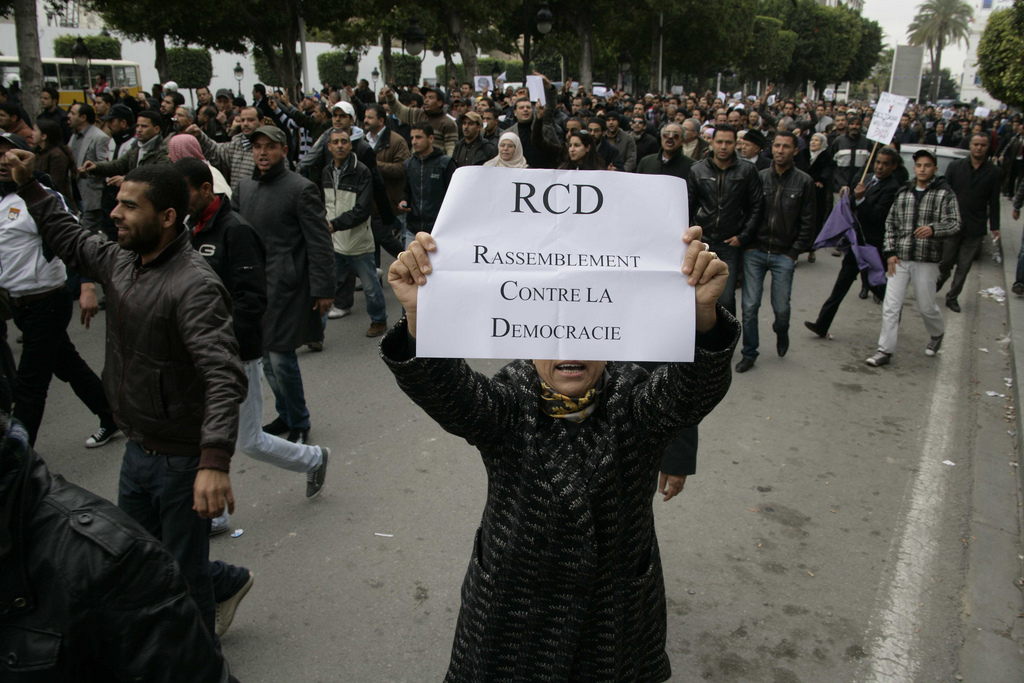
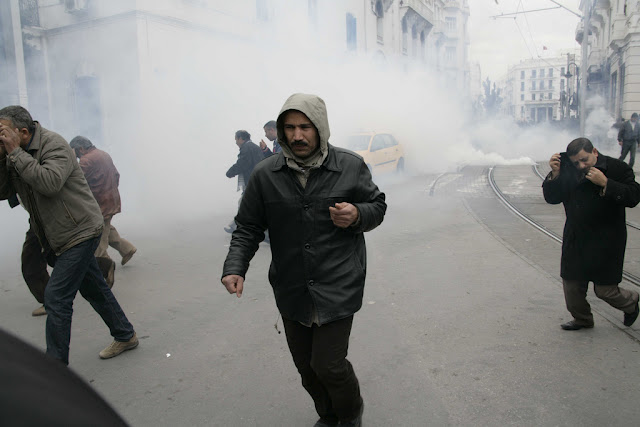
›January 28, 2011 // By Schuyler NullAs unrest continues across several Middle Eastern countries, analysts are scrambling to explain the “arc of revolution.” Richard Cincotta’s recent post on the “Jasmine Revolution” predicts a relatively high chance of Tunisia attaining liberal democracy, based on demographic factors and long-term trends, and it’s drawn some well-thought out and provocative feedback from fellow demographers Elizabeth Leahy Madsen, Jack Goldstone, and Jennifer Sciubba.
Elizabeth Leahy Madsen is a senior research associate at Population Action International and author of The Shape of Things to Come: Why Age Structure Matters to a Safer, More Equitable World:I have two questions. First, have you shifted to a new definition of age structures (intermediate, etc.) based on median population age? In the past, you and other demographic security researchers have measured age structure as the relative proportion of different age groups within the population, either the total population, total adult population, or working-age population. Why did you select median population age for this analysis? A quick review of the figures available on the UN Population Division’s website shows that the relative size of the 15-24 age group within Tunisia’s total population has been vacillating within the range of 19-21 percent since 1975. In 2005, that “youth bulge” was 21 percent, the highest since 1980, but there has been a rapid decline to 19 percent by 2010.
Jack A. Goldstone is the director of the Global Policy Center at George Mason University and author of a number of books on social movements, revolutions, and international politics:
As you say, no matter how age structure is measured, Tunisia is much further through the demographic transition than other countries in the Arab world. I would like to see this highlighted more in media coverage of the revolution, particularly in accounts of similar attempts to provoke uprisings that have taken place in Algeria, Egypt, and Yemen in recent weeks. From a demographic perspective, those attempts are less likely to achieve success (except possibly in Algeria, based on your map).
My second question is for further elaboration on the steps that lead from a dissipating youth bulge to a greater likelihood of attaining democracy (leaving aside the also-difficult question of sustainability). If I understand your description of the mechanisms at work, in an authoritarian regime with a youth bulge, the government is able to keep its hold on power because the presence of a youth bulge either creates volatility or the threat of volatility in the eyes of the commercial elites whose support is critical to the regime. Does this support exist even in situations where volatility is rare, in which case the large youthful population is manipulated or whitewashed by the regime as a threat to stability? Then, as the age structure matures and becomes less youthful, the regime can no longer invoke youth (directly or indirectly) as a danger, and therefore support for the regime from the elites erodes?
You don’t specifically mention economic conditions in Tunisia, apart from Ben Ali’s resource hoarding, but issues such as unemployment rates have been frequently highlighted in media accounts of the revolution. In addition to the unpredictable triggers such as the self-immolation in Tunisia’s case, do deeper-seated structural problems such as high unemployment and/or rampant corruption have to be extant to provoke revolution in an authoritarian context? Or is the dissolution of a youthful age structure combined with an unpredictable trigger sufficient?Richard’s insights into Tunisia’s prospects for democracy are terrific and I agree with him. However, in regard to the causes of the rebellion, I have to disagree with him in one respect – Tunisia in 2010 is very much a youth bulge country, at least as far as political theory would see it. As Henrik Urdal has shown, youth bulge should not be measured as the size of the youth cohort (15-24) against the entire population, but as the fraction of youth in the adult population (those aged 15 and older). The 0-14 group is politically not relevant, and should not be counted in assessing the impact of youth cohorts on the total population’s political mobilization potential.
Jennifer Sciubba is a Mellon Environmental Fellow at Rhodes College and the author of The Future Faces of War: Population and National Security:
For Tunisia, median age may in fact be misleading (as I didn’t realize until I looked at the age pyramids that Richard has posted). Because birth rates fell very rapidly after 1995, median age in 2010 is intermediate, but if you look only at the population aged 15 and up, you still see very large cohorts of youth compared to total adults.
Because Tunisia’s birth rate only started falling sharply after 1995, the large cohorts born in 1986-1995 – now age 15-24 – still make up a very large portion (33 percent) of all adults. While the next cohorts are much smaller, meaning this youth bulge will soon fade, it is still very much present, as Richard’s graphs show.
There is no automatic link between a certain age structure and political rebellion, but the combination of a large youth bulge and economic frustration among youth is a potent force for political instability. That combination is certainly one feature of Tunisia in 2010, although the extreme corruption of the Ben Ali regime and his family was a galling and critical factor in the widespread rejection of his regime.
That points to another bit of misleading data. Many (including me) assumed that because Tunisia’s recent economic growth was strong, at five percent per year, economic grievances could not be so widespread. But that is wrong, because we did not appreciate how much of that growth has been grabbed by Ben Ali’s family (which according to one account had ownership interests in half the businesses in the country) and cronies. Substantial growth from which many have been excluded – especially youth – is in fact a reason for widespread grievances, and that was another key factor behind the mass protests.Like Jack and Liz note, using median age helps us understand Tunisia’s progress along the demographic transition, but it doesn’t really help us understand the protests in Tunisia or in other countries across the “arc of revolution.” Median age obscures the individual experiences of young adults who are putting their lives at risk to speak out in protest or setting themselves on fire in desperation. As Jack points out, from a theoretical point of view, Tunisia is very much experiencing cohort crowding – whether we call it “youth bulge” or “early worker bulge” the outcome is the same. To say that Tunisia is not a youth bulge country misses the point.
Cincotta has promised a reply to the comments is forthcoming, which we can forgive him, frankly, given the length and complexity of these great responses.
Part of the reason we political demographers buy into the link between youth bulge and conflict is the idea of cohort crowding. As Richard Easterlin points out, a cohort’s economic and social prospects tend to have an inverse relationship to the cohort’s size relative to those around it, other things being constant. In Tunisia’s case, those between ages 25-35 are part of a larger cohort than those preceding ones so they are crowded out of the labor market and will tend to have lower relative income compared to preceding generations, which are smaller.
As I note in my book, one study of Tunisians looking for work reported that young adults felt crowded out of benefits in the family, school, and labor markets. In particular, according to a study by M. Bedoui and G. Ridha:“…family and marital problems were common. They became poorer, lost confidence, and became fatalistic and submissive. Over the long run the majority saw unemployment as a source of disequilibrium, humiliation, and even oppression.” (in Hilary Silver, “Social Exclusion: Comparative Analysis of Europe and Middle East Youth,” Middle East Youth Initiative Working Paper p. 30.)
That quotation seems eerily prescient in Tunisia’s case. Mohamed Bouazizi certainly seemed to succumb to fatalism, and the protests started as economic but quickly moved to political. Political, social, and economic marginalization are connected. While there is some diversity in age structure across the Middle East, the populations of those aged 15-24 in Egypt, Lebanon, Tunisia, Jordan, Algeria and Iran, which experienced youth protests in 2009, are all between 27 and 34 percent of all adults ages 15-59, with Lebanon and Tunisia at the lower end of the spectrum and Egypt and Jordan at the higher. As we can see from the population pyramid of each of these states, there is a clear population bulge at these ages.
We also have to think about the cohort effect. The cohort effect describes shared historical experiences of particular age groups. Across the “arc of revolution,” young adults are plugged into Facebook, Twitter, and other internet forums to share experiences of marginalization and revolution. This likely informs their choice of whether or not to speak out.
Sources: Huffington Post, Middle East Youth Initiative, The New York Times, Telegraph.
Photo Credit: “055,” courtesy of flickr user Nasser Nouri. -
Carl Haub, Behind the Numbers
Taiwan’s Birth Rate Lowest Recorded in History
›January 27, 2011 // By Wilson Center StaffExcerpted from the original article, by Carl Haub, on the Population Reference Bureau’s Behind the Numbers blog:
Taiwan’s government has just announced that the country’s total fertility rate (or TFR, the average number of children a woman would bear in her lifetime if the birth rate of a particular year were to remain unchanged) in 2010 was the lowest in its history at 0.91 children per woman. It’s the lowest rate any country has ever reported in history. The announcement itself is a bit of a projection since births have been officially reported only through November 2010. The country’s TFR had declined to 1.1 in 2005 and had remained there through 2009.
The rather spectacular drop in 2010 was due to an additional reason: 2010 is the Year of the Tiger on the Chinese calendar, beginning on February 14. The Tiger year is particularly inauspicious for births since Tigers, while seen as brave, are also seen as headstrong and possibly difficult to work with. It is quite common for employers to consider the zodiac of job applicants and Tigers may be avoided so that parents have some concrete reasons to avoid having a child in Tiger years. While there has been a lot of concern over the demographic situation for some time, Taiwan’s President Ma Ying-jeou has now called for measures to increase the birth rate to be raised to the “national security level.”
Continue reading on Behind the Numbers.
Sources: Asia Times, USA Today.
Photo Credit: Adapted from “070923 sleeping baby,” courtesy of flickr user Wowo and her families. -
Tunisia’s Shot at Democracy: What Demographics and Recent History Tell Us
›January 25, 2011 // By Richard CincottaWhile events in Tunisia, beginning mid-December and leading ultimately to President Ben Ali’s departure within a month, have rocked the Arab world, they leave an open question: Will Tunisia’s “Jasmine Revolution” ultimately lead to the Arab world’s first liberal democracy? [Video Below]
-
Water Security, Nonproliferation, and Aid Shocks in the Middle East
›In a report sponsored by the Stanley Foundation and the Stimson Center, authors Brian Finlay, Johan Bergenas, and Veronica Tessler discuss the implications of what a growing population and dwindling water supply will have on the people and governments of the Middle East. In the report, titled “Beyond Boundaries in the Middle East: Leveraging Nonproliferation Assistance to Address Security/Development Needs with Resolution 1540,” the authors point out that while the Middle East has six percent of the world’s population, it has only 0.7 percent of the world’s fresh water resources. This supply is expected to be halved in the coming decades due to “rapid population growth and increased standards of living in urban areas.” To make up for this shortfall, governments are turning to nuclear-powered desalination technology, which poses risks to the nonproliferation movement and the safety and stability of the region. (Editor’s note: for more on water as a strategic resource in the Middle East, see CSIS’ latest report.)A recent study by Richard Nielsen, Michael Findley, Zachary Davis, Tara Candland, and Daniel Nielson from Bringham Young University examines the relationship of severe decreases in foreign aid to inciting violence among rebels in recipient countries. The study, “Foreign Aid Shocks as a Cause of Violent Armed Conflict”, examines aid shocks in 139 countries from 1981-2005. The authors find that when a donor country cuts off or suddenly limits aid due to economic or political reasons, this volatility upsets the status quo and gives strength to rebel groups who play upon the government’s inability to deliver adequate resources to the population. Instead of a sudden or sharp withdrawal in aid, Nielsen et al conclude that “if donors decide to remove aid, they should do so gradually over time because sudden large decreases in aid could be deadly.” -
Elizabeth Malone on Climate Change and Glacial Melt in High Asia
›“There’s nothing more iconic, I think, about the climate change issue than glaciers,” says Elizabeth Malone, senior research scientist at the Joint Global Change Research Institute and Pacific Northwest National Laboratory. Malone served as the technical lead on “Changing Glaciers and Hydrology in Asia: Addressing Vulnerability to Glacier Melt Impacts,” a USAID report released in late 2010 that explores the linkages between climate change, demographic change, and glacier melt in the Himalayas and other nearby mountain systems.
Describing glaciers as “transboundary in the largest sense,” Malone points out that meltwater from High Asian glaciers feeds many of the region’s largest rivers, including the Indus, Ganges, Tsangpo-Brahmaputra, and Mekong. While glacial melt does not necessarily constitute a large percentage of those rivers’ downstream flow volume, concern persists that continued rapid glacial melt induced by climate change could eventually impact water availability and food security in densely populated areas of South and East Asia.
Rapid demographic change has potentially factored into accelerated glacial melt, even though the connection may not be a direct one, Malone adds.
Atmospheric pollution generated by growing populations contributes to global warming, while black carbon emissions from cooking and home heating can eventually settle on glacial ice fields, accelerating melt rates. Given such cause-and-effect relationships, Malone says that rapid population growth and the continued retreat of High Asian glaciers are “two problems that seem distant,” yet “are indeed very related.”
The “Pop Audio” series is also available as podcasts on iTunes. -
National Geographic’s Population Seven Billion
›The short feature above and accompanying cover article in the January 2011 issue launch National Geographic’s seven-part year-long series examining global population. The world is set to hit seven billion this year, according to current UN projections, and may reach nine billion by 2045.
The authors point out that today, 13 percent of people don’t have access to clean water globally and 38 percent lack adequate sanitation. Nearly one billion people have inadequate nutrition. Natural resources are strained. Is reducing population growth the key to addressing these problems?
Not according to Robert Kuznig, author of National Geographic’s lead article, who writes that “fixating on population numbers is not the best way to confront the future…the problem that needs solving is poverty and lack of infrastructure, not overpopulation.”
“The most aggressive population control program imaginable will not save Bangladesh from sea-level rise, Rwanda from another genocide, or all of us from our enormous environmental problems,” writes Kuznig. Speaking on NPR’s Talk of the Nation last week, he reiterated this message, saying global problems “have to be tackled whether we’re eight billion people on Earth, or seven, or nine, and the scale for them is large in any case.”
Instead, the challenge is simultaneously addressing poverty, health, and education while reducing our environmental impact, says Kuznig.
“You don’t have to impose prescriptive policies for population growth, but basically if you can help people develop a nice, comfortable lifestyle and give them the access to medical care and so on, they can do it themselves,” said Richard Harris, a science correspondent for NPR, speaking with Kuznig on Talk of the Nation.
Kuznig’s article highlights the Indian state of Kerala, where thanks to state investments in health and education, 90 percent of women in the state can read (the highest rate in India) and the fertility rate has dropped to 1.7 births per woman. One reason for this is that educated girls have children later and are more open to and aware of contraceptive options.
Whither Family Planning?
In a post on Kuznig’s piece, Andrew Revkin, of The New York Times’ Dot Earth blog, points to The New Security Beat’s recent interview with Joel E. Cohen about the crucial role of education in reducing the impact of population growth. Cohen asks: “Is it too many people or is it too few people? The truth is, both are real problems, and the fortunate thing is that we have enough information to do much better in addressing both of those problems than we are doing – we may not have silver bullets, but we’re not using the knowledge we have.”
Although the National Geographic article and video emphasize the connections between poverty reduction, health, education, and population growth, both give short shrift to family planning. It’s true that fertility is shrinking in many places, and global average fertility will likely reach replacement levels by 2030, but parts of the world – like essentially all of sub-Saharan Africa for example – still have very high rates of fertility (over five) and a high unmet demand for family planning. Globally, it is estimated that 215 million women in developing countries want to avoid pregnancy but are not using effective contraception.
Development should help reduce these levels in time, but without continued funding for reproductive health services and family planning supplies, the declining trends that Kurznig cites, which are based on some potentially problematic assumptions, are unlikely to continue.
As Kuznig told NPR, “you need birth-control methods to be available, and you need the people to have the mindset that allows them to want to use them.”
At ECSP’s “Dialogue on Managing the Planet” session yesterday at the Wilson Center, National Geographic Executive Editor Dennis Dimick urged the audience to “stay tuned – you can’t comprehensively address an issue as global and as huge as this in one article, and within this series later in the year we will talk about [family planning] very specifically.” Needless to say, I look forward to seeing it, as addressing the unmet need for family planning is a crucial part of any comprehensive effort to reduce population growth and improve environmental, social, and health outcomes.
Sources: Center for Global Development, Dot Earth, NPR, Population Reference Bureau, World Bank.
Video Credit: “7 Billion, National Geographic Magazine,” courtesy of National Geographic. -
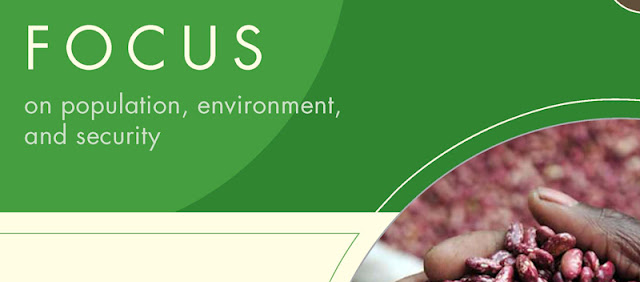
In FOCUS: To Get HELP, Add Livelihoods to Population, Health, and Environment
›January 20, 2011 // By Wilson Center StaffProponents of integrated development have always faced significant barriers, but with a new focus on international aid from the Obama administration, the tide may be turning. To fully harness this momentum, Gib Clarke argues in a new ECSP brief that the population-health-environment (PHE) community must solidify its research base, reach out to new partners, and push for flexible funding and programming.
In “Helping Hands: A Livelihood Approach to Population, Health, and Environment Programs,” he writes that PHE programs should also add livelihoods (i.e., ways to make a living) as a critical element. He suggests such programs adopt a new moniker: “HELP” – Health, Environment, Livelihoods, and Population.
“Helping Hands” comes at a time when the integrated approach is being touted at the highest levels:“We cannot simply confront individual preventable illnesses in isolation. The world is interconnected, and that demands an integrated approach to global health,” said President Barack Obama in May 2009, echoing what population-health-environment (PHE) practitioners have long argued: Integrated lives with integrated problems require integrated solutions. Proponents of integration face significant barriers: lack of funding, programmatic silos, and policy disinterest.
While the Administration’s newest development efforts (see, e.g., Feed the Future Initiative, Global Health Initiative, and release of the QDDR) all recognize the power of integration, the degree to which these initiatives will operate across sectors remains to be seen. Drawing on interviews with leading experts, Clarke outlines the continuing challenges to implementing more integrated PHE programs and offers four recommendations for overcoming them:
“Given the strong base of existing and recent PHE programs, the PHE community is well-positioned to work with lead partners in Obama’s Global Health Initiative, climate change adaptation efforts, food security programs, and other upcoming crosscutting work,” concludes Clarke, who is currently director of planning and development at Interfaith Community Health Center in Bellingham, Washington. For example, USAID Administrator Rajiv Shah stated that the Feed the Future program would be closely integrating its objectives with the Global Health Initiative – a potential opportunity for PHE programs that offer both health benefits and food security.- The PHE community should adopt a new name that highlights the all-important livelihood component, such as “HELP Plus.”
- PHE programs need to gather data and conduct operational research to justify the claims of the PHE field.
- The PHE community needs to “agree to disagree” on the issue of scaling up integrated programs.
- PHE programs should seek funding from a diverse array of donors.
“This increased interest in integration may also be the best opportunity for finding new funding, fostering replication, and scaling up. It is a promising moment for integrated approaches, whether we call them PHE, HELP Plus, or some other acronym,” writes Clarke.
“Helping Hands: A Livelihood Approach to Population, Health, and Environment Programs” along with previous FOCUS issues are available on ECSP’s publications page.
Image Credit: From the cover of “Helping Hands: A Livelihood Approach to Population, Health, and Environment Programs,” courtesy of the Wilson Center.