Showing posts from category population.
-
World Bank Pipeline Project in Chad Reveals Development Challenges
›
This scholar spotlight was originally featured in the Wilson Center’s Centerpoint, February 2011.
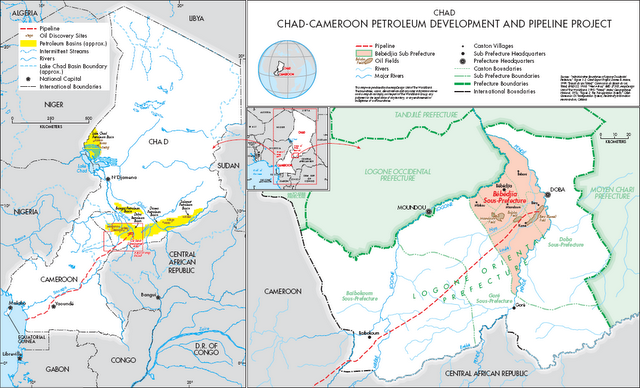
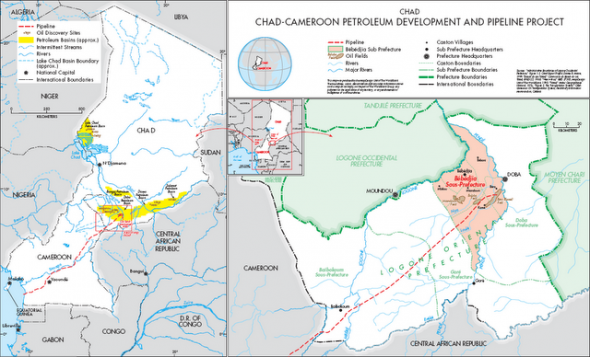
In 2000, the governments of Chad and Cameroon teamed up with a three-company oil consortium, with the help of a World Bank loan, to begin building an oil pipeline. By 2003, oil revenues were flowing. This multi-billion dollar pipeline project, which transports oil from Chad through a 640-mile underground pipeline in neighboring Cameroon, is one of Africa’s largest public-private development projects.“Unfortunately, the project fell short on its social and development-oriented objectives,” said Wilson Center Fellow Lori Leonard.
One of the World Bank’s conditions on granting the loan was compensation for the involuntary resettlement this project would cause. However, Leonard said, the World Bank failed to understand, or take into account, social norms around land use and property relations.
“The compensation plan introduced the idea of private property but there was no institutional or legal framework for it,” she said. “This led to a flood of disputes over land and created breaks in the social safety net and societal fabric in Chad.” Uprooting people led to unprecedented problems, from the loss of land and livelihoods to disputes over compensation payments.
The reality was that in Chad, one of the world’s poorest countries, about a quarter-million people were affected. “People in the oilfield region, like people everywhere, are deeply attached to the place where they live – tied to their land,” Leonard said. Suddenly, their property became monetized. “They were asked to think differently about crops, trees, kitchen gardens, everyday objects,” as everything was given a monetary value.
But all the land was populated so there was nowhere to move to and no other trade or skill to easily adopt. “The pipeline project did not create a local economy, that could absorb people who became land poor,” she said.
The World Bank, which withdrew from the project in 2008 when Chad paid off the loan, accused Chad of misspending oil revenues, but that is just part of the story, said Leonard. The problem is not purely economic. “The economy is not outside of society,” Leonard said. “[This project] put a market value on everyday objects and that reshapes societal relations. And it raises the ethical question: ‘How do I live now?’”
In Chad, a largely agrarian economy, large parcels of land became oil fields, wells, and pumping and collection stations.
“Fields were taken or divided up into small fragments and the people wonder what to do next,” said Leonard. “Fertility rates are high and each successive generation will have to divide up [smaller and smaller amounts of] land. And there is already incredible pressure on the land now. The soil is poor but there is not enough [viable land] to leave land fallow.”
Leonard, who teaches at the Bloomberg School of Public Health at Johns Hopkins University, first came to Chad as a Peace Corps volunteer during the post-civil war reconstruction period in the late 1980s.
“From the time of independence, oil was the promise of the future,” she said. “The lessons the World Bank learned do not inspire confidence that it would be different the next time around. We need a fundamental shift in this development model.”
Dana Steinberg is the editor of the Wilson Center’s Centerpoint.
Photo Credit: “Chad-Cameroon Petroleum Pipeline Development Project,” courtesy of the World Bank. -
Joan Castro on Integrated Population and Coastal Resource Management in the Southern Philippines
› In the southern Philippines, the innovative IPOPCORM program “worked in areas where there is high…marine biodiversity, high population, and high population momentum, which means…about 40 percent of the population are 15 years and below,” Joan Castro told ECSP in this interview. Castro, the executive vice president of PATH Foundation Philippines, Inc., recently spoke at the Wilson Center on the state of integrated development efforts in her country and elsewhere.
From 2000-2006, IPOPCORM (which stands for “integrated population and coastal resource management”) sought to integrate population, health, and environment (PHE) development efforts in Philippine communities. They had four primary objectives, said Castro: 1) improve the reproductive health of the community members; 2) improve management of the coastal resources; 3) increase knowledge of the linkages between population, health, and the environment; and 4) increase the capacity of community leaders to advocate for these links.
“The aspect of livelihoods was very essential,” said Castro, especially for empowering women in the communities. Through family planning services and micro-credit finance initiatives, women were able to better space their pregnancies and contribute to household incomes, she said. In addition, by establishing locally managed, marine protected areas, IPOPCORM increased the protection of high biodiversity zones and improved the likelihood that there will be enough fish to feed future generations.
The “Pop Audio” series is also available as podcasts on iTunes. -
Carrying Capacity: Should We Be Aiming to Survive or Flourish?
›“In the eyes of many governments, population has, as we all know, been a rather uncomfortable topic for a number of years,” said Nobel Laureate Sir John Sulston, FRS, chair of the Institute for Science, Ethics, and Innovation at the University of Manchester and chair of the Royal Society’s People and the Planet working group. At an event at the Wilson Center on February 22, Sulston and his co-panelists, Martha Campbell, president of Venture Strategies for Health and Development, and Professor Parfait Eloundou-Enyegue of Cornell University, encouraged active debate on a range of population dynamics and their connections to economic, environmental, and political futures. [Video Below]
The Nexus of Population and Consumption
The dialogue between population and environmental communities has been pushed aside for many years but has lately been climbing its way back onto national agendas, said Sulston. However, the debate remains polarized. Scientists need to “sort out the facts as best we can” to help bring the communities together, he said. The Royal Society’s People and the Planet study, which will be completed by early 2012, will “provide policy guidance to decision-makers as far as possible” and “play our part in engendering constructive dialogue,” he said.
“What we should be aiming to do is to ensure that every individual on the planet can come to enjoy the same high quality of life whilst living within the Earth’s natural limits,” said Sulston. Instead of talking about the maximum number of people the Earth can hold, we should also focus on “the quality of life of those people,” he said. People are happier, healthier, and wealthier than ever before, according to human development indexes. But, Sulston said, 200 million women worldwide have an unmet need for family planning, ecosystems are degraded, biodiversity has decreased, and there are widespread shortages of food and water.
For centuries humanity has pursued a policy of “competitive growth,” both in population and consumption. But in preparation for the UN “Rio+20” summit on sustainable development in 2012, policymakers should be discussing “pathways to sustainability within the context of population,” said Sulston.
“Humanity needs to learn to act collectively and constructively in the face of these long-term and therefore rather elusive threats, just as we do rather well when we’re faced with immediate and tangible ones,” Sulston said. “So we need the best technology, but we need it in the context of a thoughtful society, and then we can both survive and happily flourish.”
A Demographic Crossroads
“No longer is population growth or population size the only issue of the day,” said Parfait Eloundou-Enyegue. “You have to worry about both population growth and population decline, you have to worry about immigration, you have to worry about aging, you have to worry about HIV and adult mortality, et cetera.”
Some people, Eloundou-Enyegue said, take this diversity of demographic issues as “grounds for complacency” by thinking they do not share in others’ problems. Yet, he said, population and ecology are areas where the risks are shared by all.
These challenges demand a “more comprehensive framework” that details the interactions between population, affluence, environment, technology, and inequality, said Eloundou-Enyegue. Tensions persist between these different areas, and breaking them will require “call[ing] on other qualities of the human spirit,” he said. The world is, Eloundou-Enyegue concluded, at a “demographic crossroads.”
The Timing of Declining Fertility
The key to ending the sensitivity to the issue of population growth is to “understand that this is about options: options for women and options for families,” said Martha Campbell. Strong attention and funding support can meet needs and lead to declining birth rates, as in the case of Kenya before the mid-1990s. But with the broader emphasis on reproductive health and concerns about coercion that followed the 1994 United Nations International Conference on Population and Development (ICPD) in Cairo, funding for family planning declined. As a result, Kenya’s fertility rates leveled off instead of continuing to decline, said Campbell, contributing to an upward revision of global population projections.Campbell illustrated the impact of delays in achieving replacement-level fertility on the overall population size of individual states. In the case of Pakistan, for example, analysis by Venture Strategies for Health and Development and the African Institute for Development Policy projects that the country will have a total population of 350 million if replacement-level fertility is reached by 2020, and a population of almost 600 million if that same mark is reached by 2060.
Looking ahead to the “Rio+20” summit in 2012, Campbell emphasized the need for continued discussion about population growth and family planning. The silence on these issues after Cairo in 1994 and the subsequent global impact should serve as a warning for future generations, she said: “It is important for this next generation and the current generation to understand what happened so that it will never, ever happen again. The silence on population must not occur.”
Photo Credit: “Rush hour,” courtesy of flickr user Jekkone, and Pakistan fertility chart, courtesy of Martha Campbell and Venture Strategies. -
Youth Revolt in Egypt: A Country at the Turning Point
›March 2, 2011 // By Wilson Center StaffThe original version of this article, by Farzaneh Roudi-Fahimi, Shereen El Feki, and Tyjen Tsai, appeared at the Population Reference Bureau.
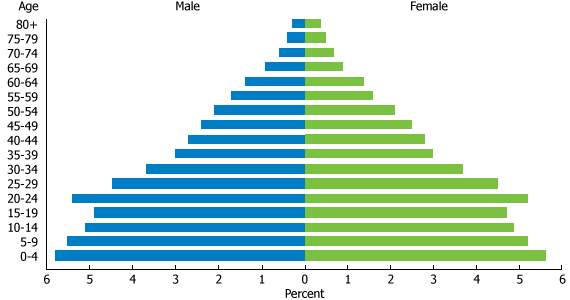
Egyptians know some dates by heart: July 26, 1952, marks the overthrow of Egypt’s last monarch; October 6, 1973, is the date of the country’s attack to reclaim the Sinai Peninsula. Now another date can be added to that list: January 25, 2011, the first day of anti-government protests that led to President Hosni Mubarak’s resignation 18 days later. Mubarak ruled Egypt for nearly 30 years, during which the country’s population grew by 90 percent – from 45 million to 85 million according to UN estimates, despite concerted government campaigns to slow population growth. The demographic strength of Egypt is undeniable, not just in absolute numbers but in its age distribution. Egypt is experiencing a “youth bulge:” One in five Egyptians is between ages 15 and 24, and one-half of the population is below age 25 (see figure above), a powerful engine of renewal for the country.
Youth as the Drivers of Change
Egyptians of all ages and walks of life participated in the protests, unified in aspirations and demands including political freedom, better wages, and better working conditions. But it was the astonishing numbers of young people participating in demonstrations that gave the uprising its momentum, and were key to sustaining it, as hundreds of thousands gathered in Tahrir (Liberation) Square in Cairo and other cities across the country. Egypt’s youth are the faces behind this leaderless revolution; the revolt, in large part, was spurred by their finesse in using social media to organize and make their voices heard.
Young people arguably have the most at stake in the outcome of this revolution. The results have immediate impact and future implications in how they construct their lives. Recent studies show the frustrations young Egyptians feel at the stagnancy of their lives. They are a generation waiting for better access to quality education, secure employment, and the financial stability necessary to get married and start their own families.
Continue reading at the Population Reference Bureau.
Sources: UN Population Division.
Image Credit: Population pyramid from PRB, data from the UN Population Division. -
Watch: Sir John Sulston on the Royal Society’s People and the Planet Study
›March 1, 2011 // By Christina Daggett“At the moment, the agendas of the growing population of people and the environment are too separate – people are thinking about one or the other,” said Sir John Sulston, Nobel laureate and chair of the Royal Society’s People and the Planet working group, in an interview with ECSP. “People argue about, ‘Should we consume less or should we have fewer people?’ The point is it’s both. We need to draw it together. It’s people and their activities.”
Sulston won the 2002 Nobel Prize in Physiology or Medicine for his work on mapping the human genome. He said that experience helped him appreciate the importance of utilizing science to the benefit of the wider public as he advocated for keeping the human genome in the public domain rather than allowing the knowledge to be privatized.
Sulston spoke at the Wilson Center on Febraury 22 on carrying capacity and the Royal Society’s People and the Planet study. He said “what we want to do is to see the issue of population in the open, dispassionately discussed on the environmental agenda, and then we’ll see where it goes.” The study will “draw together the strands, to summarize, and to put it down as a statement of the state of the art of our knowledge and where it’s going.” The study will be released in early 2012 with an eye to informing the UN “Rio+20” conference on sustainable development.
“We have one planet,” Sulston said, and “we have a lot of people, an increasing number of people. Now it’s not straightforward…but I think if you look at the facts dispassionately, you find that actually, because of our sheer numbers and because of our activities, the combination of those two things mean that we are putting an increasing burden on the planet and I think it is something we have to start thinking about.” -
Mapping Demographics in WWF Priority Conservation Areas
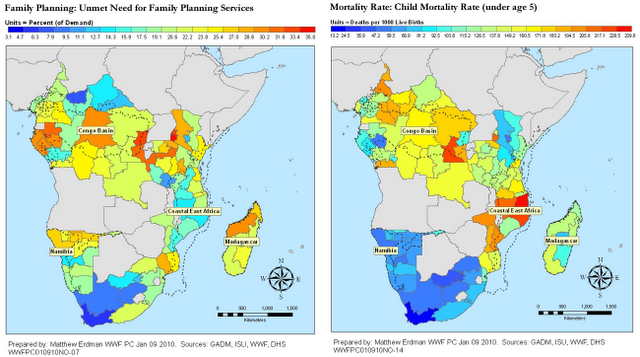
›February 25, 2011 // By Hannah Marqusee“The developing world is urbanizing at a dizzying pace,” yet rural populations living in developing countries are also rapidly increasing, threatening many of the planet’s most biodiverse regions, says a new study, Mapping Population onto Priority Conservation Areas, by David López-Carr, Matthew Erdman, and Alex Zvoleff.
Using comprehensive data from the USAID-sponsored Demographic Health Surveys (DHS), the researchers analyzed population, mortality, and fertility indicators for 10 of the 19 priority places for conservation identified by the World Wildlife Foundation (WWF). These biological hotspots represent parts of 25 countries throughout South Asia, sub-Saharan Africa, and South America, including the Democratic Republic of the Congo, Colombia, Guatemala, Indonesia, Kenya, Nepal, Madagascar, and Thailand.
Urban vs. Rural
The findings confirmed the researchers’ hypothesis that rural areas within WWF priority regions are at a lower state of demographic transition than their urban counterparts, meaning they have higher fertility and infant mortality rates and a younger age structure due to poor access to primary health care, including family planning. Furthermore, women in these regions desire more children than those in urban, non-priority areas, but experience a greater difference between ideal and actual number of children.
For many of the indicators, the differences between urban and rural, and priority and non-priority, regions of the developing world are striking. In urban Asia, the mean predicted population doubling time is 86.1 years; in rural Africa it is only 24.6 years. Urban Asia and South America also have total fertility rates of 1.8 children per woman, while rural Africa’s is 5.2. Infant mortality also ranged from a low of 20 deaths per every 1,000 births in some developing urban areas, to over 100 in rural parts of Coastal East Africa. In the developed world it is less than 10.
There is also consistently less desire among women in priority areas to limit their childbearing. Worldwide, 49.4 percent of women living within priority areas want to limit childbearing, compared to 56.2 percent outside priority areas.
Rural areas in all regions had the highest unmet need for family planning, with the exception of the Congo Basin, where high infant mortality has persisted and dampened women’s desire to limit childbearing. “If much needed health services were provided in the Congo Basin, along with family planning services, child survival rates would increase, and couples would be more inclined to limit overall births,” the study says.
Lower demand for family planning in priority areas is consistent with Caldwell’s theory of intergenerational wealth flows, the paper noted, which explains how in rural agricultural societies, children are economic assets who move wealth to their parents. As countries develop and people gain access to education, healthcare and female empowerment, wealth flows reverse and children become financial burdens. This transition decreases fertility and increases demand for family planning.
Setting Priorities
As WWF plans to scale up its population, health and environment (PHE) programs, this study will help to prioritize places within priority areas that are most in need of PHE intervention and “are most likely to help alleviate negative environmental and social impacts of rapid population growth.” The results of this study show that many areas are ripe for such intervention:Nearly a quarter of households in Coastal East Africa and the Mesoamerican Reef wish to have access to contraception yet their desire remains unfulfilled. Similarly, households within priority places in Coastal East Africa, the Mesoamerican Reef, Amazon and the Guianas, and the Eastern Himalayas wish to have nearly one child fewer than they currently have.
The findings of this study have already informed the planning of several of WWF’s projects in Madagascar and Namibia.
The limited availability and detail of the DHS data was the primary limitation of the study, the researchers noted. The 25 countries examined did not fully cover all WWF’s priority areas – 17 other countries within the priority areas lacked sufficiently comprehensive data for the study. Furthermore, the district or municipality was the smallest unit of analysis possible with DHS data, making it difficult to exactly pinpoint priority communities.
“Geography matters,” write the authors. “Only with further refined data accompanied by qualitative on-the-ground field research can we credibly answer remaining questions.”
Image Credit:“Family Planning: Unmet Need for Family Planning Services” and “Mortality Rate: Child Mortality Rate (Under Age 5)” courtesy of World Wildlife Fund.
Sources: Population Council, World Wildlife Fund. -
Watch: Laurie Mazur on a Pivotal Moment for the Global Environment and World Population
›February 24, 2011 // By Hannah Marqusee“It’s increasingly clear that we are living in a pivotal moment,” said Laurie Mazur, director of the Population Justice Project, in this interview with ECSP about her new book, A Pivotal Moment: Population, Justice, and the Environmental Challenge. Currently, “nearly half the world’s population – about three billion people – are under the age of 25,” she said, and the choices these young people make, and the choices that are available to them “will determine whether world population grows from the current almost 6.9 billion to anywhere between 8 billion and 11 billion.”
“Numbers do matter,” said Mazur. “Clearly, a world population of 8 billion would be better than 11 billion for both human beings and the environment.” What’s more, “everything we need to do to slow population growth is something we should be doing anyway.”
Investments in family planning, girls’ education, women’s empowerment, and sustainable, equitable development are all means to slowing population growth, as well as being an end in and of themselves. Population growth “is an issue of really broad appeal” and should be of concern to environmental and reproductive health advocates, people of faith, or anyone who cares about development, justice, and eliminating poverty, said Mazur. -
Deforestation, Population, and Development in a Warming World: A Roundtable on Latin America
›“Rural development and MCH [maternal child health] in the most remote, rural areas are going to largely explain the future of Latin American conservation, development, population, and urbanization,” said David Lopez-Carr, associate professor of geography at the University of California, Santa Barbara, at a recent Wilson Center roundtable on “Deforestation, Population, and Development in Latin America.”
Nearly 80 percent of Latin America’s people live in urban areas, yet the continent’s rural populations have a disproportionate effect on its forests. Panelists Liza Grandia, assistant professor of international development and social change at Clark University, and Jason Bremner, director of population, health, and environment at the Population Reference Bureau, argued that meeting the needs of these communities is therefore key to conserving Latin America’s forests. [Video Below]
Rural Populations Have Disproportionate Impact on Deforestation
“There are two Latin Americas,” said Carr. Countries like Argentina, Chile, and Uruguay are 90 percent urban, while countries like Guatemala, Ecuador, and Bolivia are about 50 percent urban. However, despite this rapid urbanization and declining population growth at the national level, rural areas in Latin America are still experiencing high fertility rates and significant forest loss. So how are these trends related?
In his analysis of more than 16,000 municipalities in Latin America, Carr found “no statistical significance between population change at the municipal level and woody vegetation change at the municipal level.” Yet this lack of connection does not mean population growth and deforestation are unrelated, but instead indicates “a problem of place and scale,” he said. Within countries or even within municipalities, there are huge variations in fertility rates. Rural areas, which generally have larger families, more agricultural expansion, higher population growth, and lower population density, account for higher impact per capita on forests.
“Less than one percent of the population of Guatemala moves to any rural frontier at all,” said Carr, “yet that small, tiny fraction of the population has a disproportionate impact on the forests, and that is true throughout Latin America.” Carr also distinguished between the private sector primarily converting secondary forest for corporate agriculture and subsistence farmers clearing old growth forest.
Indigenous Lands Are Key to the Future
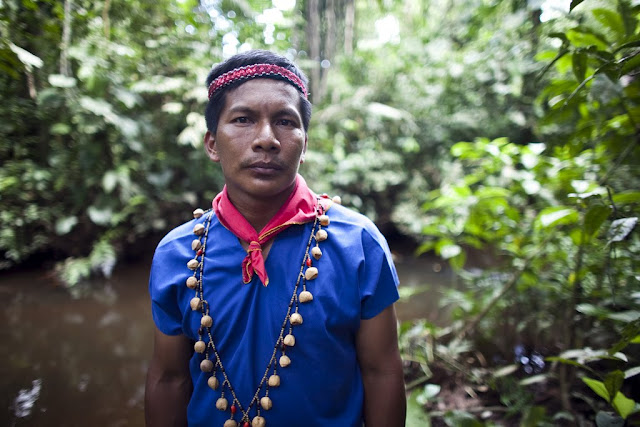
There are generally two groups of people on the frontier: indigenous people and “colonists,” who move in to take advantage of undeveloped land. Indigenous people, by and large, act as “stewards of the forests,” exhibiting lower rates of deforestation and forest fragmentation then colonists, Bremner said. “They do have a very protective effect, largely because they are excluding others from those lands.”
Indigenous communities tend to be “common property institutions” with an informal or cultural set of rules and traditions facilitating land use, said Bremner. They are “really good at mobilizing against external threats,” he said, which results in a protective effect over the forest. In the Amazon, for example, “indigenous lands, in the context of all of this colonization and deforestation that is happening, are now seen as key to the future,” he said.
However, as indigenous population growth and growing agricultural and industrial expansion change indigenous communities and livelihoods, more formal rules must be developed to govern land use. If indigenous communities “are the protective factor, then we need to know how to protect them,” said Bremner.
There are few demographic surveys of rural communities, but one of nearly 700 women in the Ecuadorian Amazon found the total fertility rate of indigenous women to be seven to eight children per woman. “Fifty percent of indigenous women didn’t want to have another child…of that 50 percent, 98 percent were not using a modern method of contraception,” Bremner said. “Responding to these women’s needs, I think, would go a long way in terms of changing the future of these communities.”
Guatemala: Reducing Fertility By Thinking Outside the Box
Grandia, with support from Conservation International and ProPeten, conducted a study of population and environment connections as part of the Demographic and Health Survey (DHS) of Peten, a sparsely populated and highly biodiverse municipality of Guatemala. The 90,000 people living in the protected area in this park had “literally no family planning services,” said Grandia, and their population was on track to double within 20 years.
Using the DHS data, Grandia and ProPeten created a “somewhat eclectic population and environment program” that integrated many of the concerns of indigenous Maya communities in Peten, called Remedios. Remedios focused on a diverse set of issues, including agriculture, education, maternal and child health, family planning, and gender issues, and included projects like a “traveling education-mobile” and Between Two Roads, a bilingual radio soap opera in Spanish and Q’eqchi’ Maya, which used the story of a conflict between midwife and cattle rancher in a frontier community “to touch on a whole range of social and environmental issues.”
“As a result of our efforts…the total fertility rate dropped from 6.8 in 1999 to 5.8 in 2002, and in the most recent DHS it had fallen to 4.3,” said Grandia. She credited this success in part to the fact that the programs were “so cross-cutting across many of those schools of thought.” Yet the integration of a diverse range of issues also caused a split between the field-based ProPeten and the DC-based Conservation International, who wanted a more “narrow focus” on family planning and conservation, she said.
“Sometimes working outside the box can have unexpected results,” said Grandia. The population-environment movement could learn from the American environmentalist movement’s evolution from “an elite movement” into a “broader-based socially dynamic movement that involved new constituencies,” she said.
“Population and environment has often begged the articulation of a third field,” said Grandia. “How you fill in that blank often reflects the kind of development interventions you deem appropriate.” Perhaps “justice” should be considered “a new critical third paradigm,” she said.
Sources: Population Reference Bureau, World Bank.
Photo Credit: “Chevron’s Toxic Legacy in Ecuador’s Amazon,” courtesy of flickr user Rainforest Action Network.