-
National Research Council Produces Climate and Security Analysis at Request of U.S. Intelligence Community
›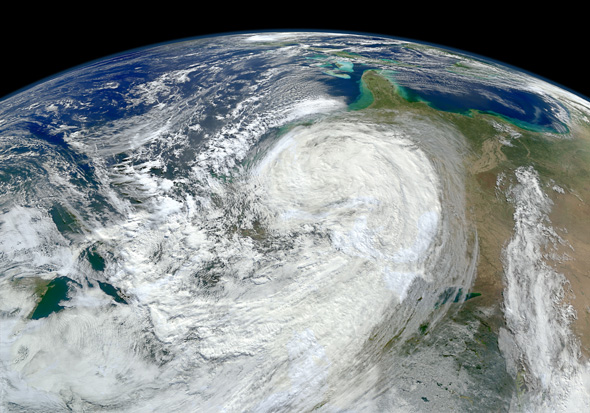
The CIA may have shut down its dedicated climate change center earlier this year, but a recently released report sponsored by the intelligence community reaffirms the deep connection between climate change and national security. New threats to U.S. national security – like increased food and water insecurity and more natural disasters requiring humanitarian assistance – have emerged as climate change creates unprecedented changes in the global environment.
-
The Challenges of the 21st-Century City (Policy Brief)
›The Wilson Center Policy Briefs are a series of short analyses of critical global issues facing the next administration that will run until inauguration day.
We live in a world that is different from that inhabited by our ancestors in many profound ways. Among the most important changes is that, for the first time, almost half of the world’s people live in cities. According to the United Nations, in 2008 the global urban population surpassed half of the world’s population of 6.7 billion compared with 13 percent a century ago and 3 percent a century before that. This trend will require profound changes in the way the U.S. government addresses everything from development policy to international security.
-
Autumn Spanne, The Daily Climate
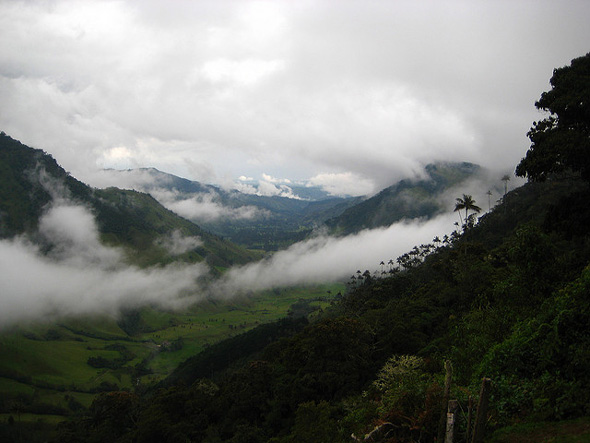
Colombia’s Unexplored Cloud Forests Besieged by Climate Change, Development
›December 13, 2012 // By Wilson Center Staff
The original version of this article, by Autumn Spanne, appeared on The Daily Climate.
Five hours by truck and mule from the nearest town, a rumbling generator cuts through the silent night to power large spotlights as botanists crouch and kneel on large blue tarps spread across a cow pasture. It’s nearly midnight, and the team works urgently to describe every detail of the dozens of colorful orchids, ferns, and other exotic plants they have collected that day in Las Orquídeas National Park, one of the single most biologically diverse places on the planet.
-
National Intelligence Council Releases ‘Global Trends 2030’: Prominent Roles Predicted for Demographic and Environmental Trends
›“We are at a critical juncture in human history, which could lead to widely contrasting futures,” writes the chairman of the National Intelligence Council (NIC) Christopher Kojm in the council’s latest forward-looking quadrennial report, Global Trends 2030: Alternative Worlds, released yesterday.
This year, principal author Mathew Burrows and his colleagues focus on a series of plausible global scenarios for the next 20 years and the trends or disruptions that may influence which play out. Among the most important factors in these projections are demography and the environment.
-
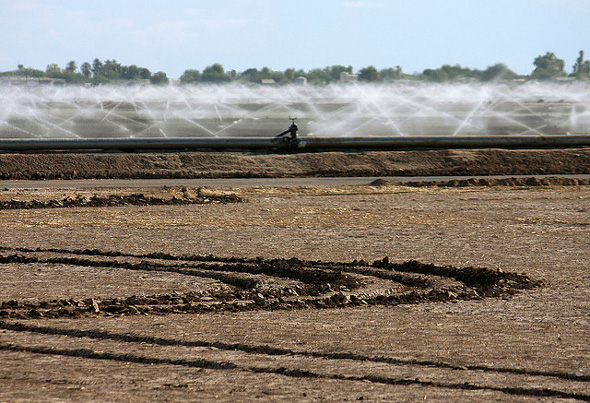
‘The Christian Science Monitor’ Explores the Global Water Crisis: Should We Charge More for Water?
›“There is as much of that water on the planet today as when the first amphibian flopped ashore; as much as when the ancient Greeks divined the future in the babble of brooks,” writes William Wheeler in The Christian Science Monitor. “So why do experts in science, economics, and development warn that a ‘global water crisis’ threatens the stability of nations and the health of billions?”
-
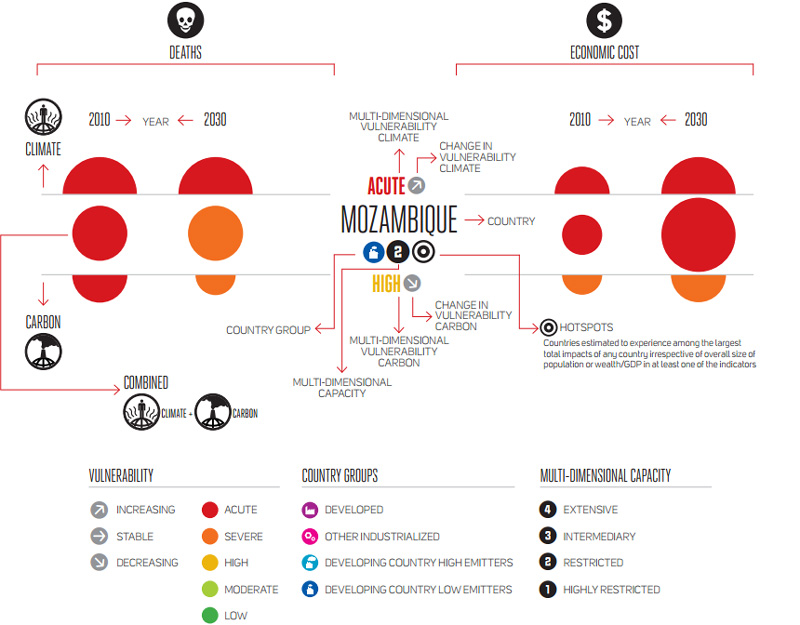
Does Climate Change Kill Five Million People A Year? DARA’s 2012 Climate Vulnerability Monitor
›Five million people die each year due to climate- or carbon-related causes, and total mortality by 2030 could total 100 million people, according to new report from DARA, a nonprofit organization that works to improve aid to those affected by conflict and climate change and quantify the global cost of climate change and carbon use. But the report has drawn some fire for being too alarmist.
-
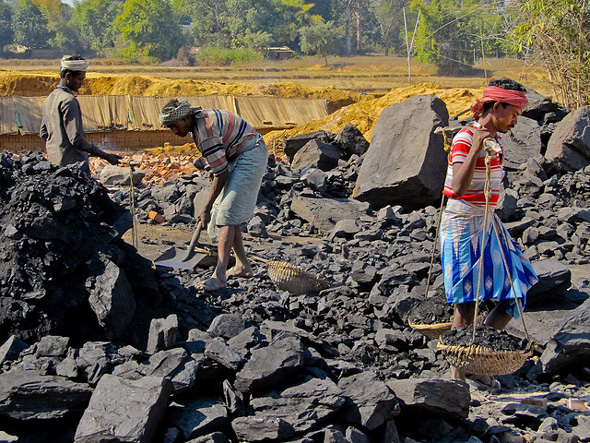
India’s Environmental Security Challenge: Water, Coal, Natural Gas, and Climate Change Fuel Friction
›November 23, 2012 // By Michael KugelmanThe original version of this article appeared in NATO Review.
Few regions are more environmentally insecure than South Asia.
The region faces rising sea levels and regularly experiences coastal flooding – of particular concern in a region with heavily populated and arable-land-rich coastal areas. Additionally, it is highly vulnerable to glacial melt. The Western Himalayas, which provide water supplies to much of South Asia, have experienced some of the most rapid melt in the world.
-
Climate and Conflict in East Africa, and UNEP’s Plan to Avoid Future Famines
›While climate change will undoubtedly have an impact on societies throughout the world, researchers are still debating whether or not it will cause conflict. John O’Loughlin, Frank D.W. Witmer, Andrew M. Linke, Arlene Laing, Andrew Gettelman, and Jimy Dudhia use a quantitative approach to tackle some of “sweeping generalizations” that have come to characterize this debate in a new study, “Climate Variability and Conflict Risk in East Africa, 1990-2009,” published last month in PNAS. They found that while there is “no statistically significant relationship” between precipitation and conflict, increased heat is correlated with more conflict in East Africa. Still, they also found that other factors, like population size and the space-time lag for violence, predict conflict more reliably than either of the climate-related elements.
Showing posts from category security.