-
Stewart M. Patrick, The Internationalist
Environmental Security Goes Mainstream: Natural Resources and National Interests
›March 29, 2013 // By Wilson Center StaffThe original version of this article, by Stewart M. Patrick, appeared on the Council on Foreign Relations’ The Internationalist blog.
Not long ago, concerns about environmental degradation were marginal in U.S. national security deliberations. What a difference climate change has made. Foreign policy officials and experts are starting to recognize profound linkages between planetary health, economic prosperity, and international security. These connections were on full view last Wednesday, when the Council on Foreign Relations (CFR) teamed up with Conservation International (CI) to convene a symposium, “Global Resources, the U.S. Economy, and National Security.”
-
Carl Gierstorfer, Pulitzer Center on Crisis Reporting
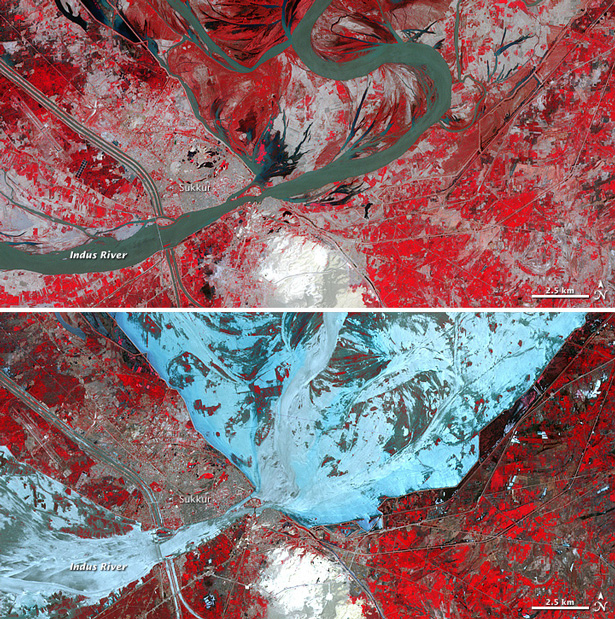
River Erosion a Push Factor for India’s Bride Trafficking
›March 27, 2013 // By Wilson Center Staff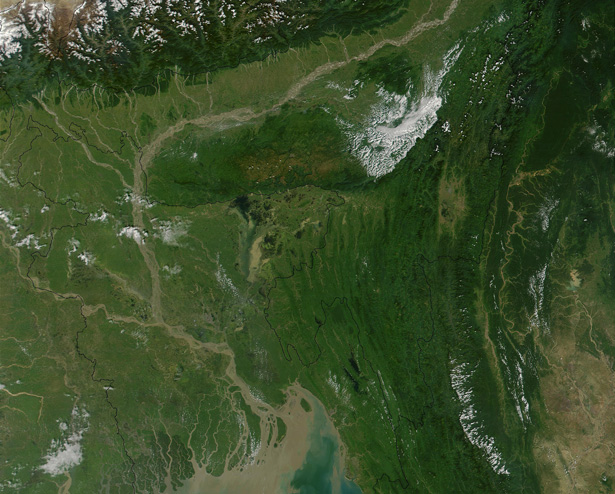
The original version of this article, by Carl Gierstorfer, appeared on the Pulitzer Center on Crisis Reporting.
After spending almost two weeks in India’s northwestern state of Haryana, the destination for many trafficked brides, we decided to head to the source area. It lies two hours by plane to the east, in the lush green hills of Assam. Here, as well as in the surrounding states of West Bengal, Bihar, and Nagaland, many women are trafficked from the towns and villages to live the lives of slaves more than a thousand miles away from their homes.
We wanted to find out why.
-
‘National Geographic’ Reports on “Water Grabbers” From Mali to India
›
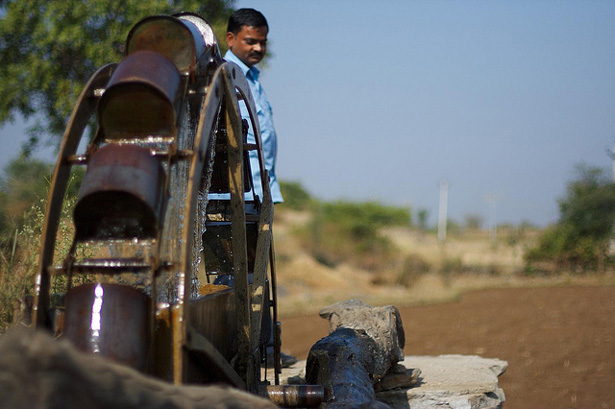
Much ink has been spilled on the growing trend of global land grabs – land purchased en masse in developing countries like Ethiopia by foreigners mainly for agricultural export. But along with land, investors often also gain the right to use local water, and sometimes with little consideration for local livelihoods. Fred Pearce recently looked into these “water grabs” in a series for National Geographic.
-
Demographic and Environmental Dynamics Shape ‘Global Trends 2030’ Scenarios
›“However rapid change has been over the past couple decades, the rate of change will accelerate in the future,” states the newest quadrennial report from the National Intelligence Council (NIC), Global Trends 2030: Alternative Worlds. Released late last year, the report identifies the “game-changers, megatrends, and black swans” that may determine the trajectory of world affairs over the next 15 years, including demographic dynamics and natural resource scarcity. [Video Below]
-
World Water Day Focuses on Cooperation in the Face of Growing Stress
›March 22, 2013 // By Schuyler NullCooperation, not conflict; that’s the theme of this year’s World Water Day. Collaboration over water has been the rule rather than the exception over the past 70 years, UNESCO explained in the launch of their International Year for Water Cooperation initiative earlier this year (which the rest of the UN is thoughtfully supporting).
But the fact that there’s need for such an initiative shows that water conflict and other water issues are not far from the minds of global policymakers. Scarcity, drought, climate change, food security, disease – water impacts people and their governments in so many ways. Here’s a rundown of some of our best related posts.
-
East Asia’s Many Maritime Disputes and the Imperative of Energy Access
›Friction between Japan and China in the East China Sea has escalated this year to the point where jets on both sides have been scrambled and Chinese military vessels have locked their fire control radar onto their Japanese counterparts multiple times. The source of this tension is the Senkaku (as they are known in Japan) or Diaoyu (if you’re in China) Islands – specifically, who owns them.
-
‘Global Trends 2030’ Author Mathew Burrows Describes Demographic and Environmental Megatrends
›“The world of 2030 will be radically transformed from our world today,” reads the opening of Global Trends 2030: Alternative Worlds, produced by the National Intelligence Council. In this podcast, principal author Mathew Burrows breaks down some of the scenarios discussed in the report, and describes how demographic and environmental trends – two of four “megatrends” – could play out over the next few decades.
-
Aqueduct Water Risk Atlas Shows Detailed View of Global Water Vulnerability
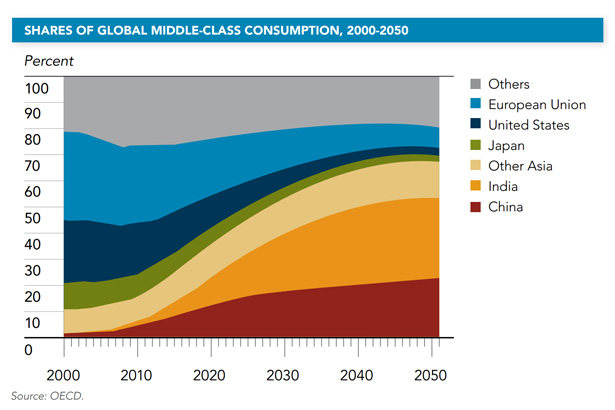
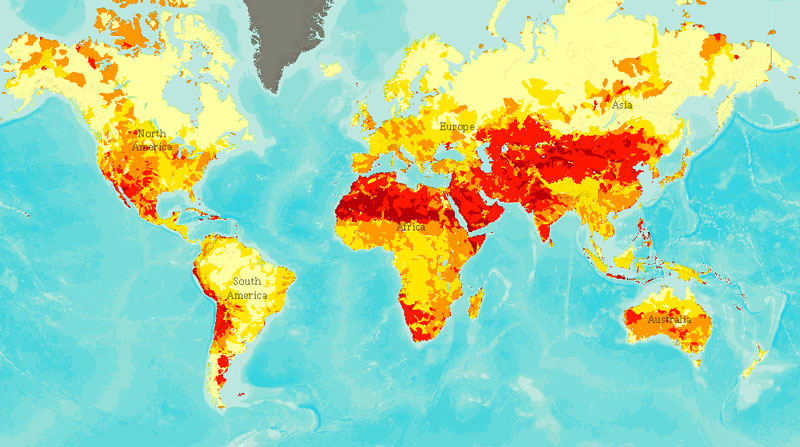
›As world population pushes towards nine billion by mid-century and millions are elevated to the global middle class every year, demand for water continues to grow as well. More people need more water for drinking and household use, but also for agriculture, mining, energy, and industry. With water often cited as a limit to growth and potential crisis point, the World Resources Institute has released the Aqueduct Water Risk Atlas, which details various types of water stress around the world in impressively detailed fashion.
Showing posts from category security.