Showing posts from category economics.
-
Andrew Morton, UNEP
Haiti 2011: Looking One Year Back and Twenty Years Forward
›January 14, 2011 // By Wilson Center StaffThis piece first appeared on the website of the Haiti Regeneration Initiative – a new collaborative venture between the UN, the government of Haiti, the Earth Institute at Columbia University, Catholic Relief Services, and a wide range of other implementing partners.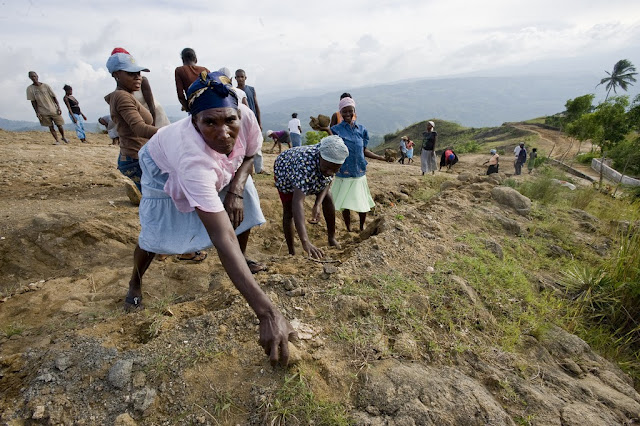
In 2010, Haiti endured a year like no other. The country was struck by a devastating earthquake, a cholera epidemic, floods, violence, and political uncertainty. At the same time, Haiti witnessed heroic rescue and relief efforts and an enormous demonstration of international goodwill. Today, recovery and reconstruction are taking place, albeit at a frustratingly slow pace and not currently at the scale of existing needs.
Just as importantly, 2010 brought a renewed awareness of the need for lasting solutions and improvements in the design and delivery of international aid. During the next few days, we will look back on the tragic events of January 12th, 2010, while at the same time, we must look forward, not just one year, but 20.
A Failed Recovery in a Fragile State
Already before the earthquake, Haiti was a fragile state trapped in a slow but vicious negative spiral. A tightly interconnected trio of chronic environmental, political, and socio-economic crises has gradually ensured that Haiti has had the lowest human development indicators in the Western Hemisphere, with life-long poverty, chronic hunger, and violence. Catastrophic events, such as natural disasters, epidemics, and political violence, have simply steepened the descent. Moreover, disaster recovery efforts to date have systematically failed to bring the country back to pre-disaster levels.
In spite of this depressing analysis and forecast, we should not resign ourselves to failure. The situation can be turned around but only with great effort and by foregoing “business as usual.”
The first step towards change is full recognition of the situation. In the case of Haiti, this means recognizing the marked failure of foreign recovery and development assistance to date. It is pointless to blame any particular institution or individual for this: The current state of Haiti is the culmination of generations of efforts and decisions, good and bad, combined with rapid population growth and an inherent vulnerability to natural hazards. (Editor’s note: according to the UN, Haiti’s fertility rate tripled in the immediate aftermath of the earthquake last year.)
The second step is planning. While relatively solid recovery plans have been developed by the government of Haiti with international assistance, their implementation has not so far met with success, due to four interlinked problems.
First, the humanitarian imperative for urgent and chronic relief is overrunning all good intentions for recovery and development – it is politically impossible, inhumane, and simply unwise to ignore the basic resource needs of a cholera epidemic and a million people living in tents.
Second, nothing suppresses development investments like political violence and uncertainty: Few donors, and even fewer companies, will invest while riots and political uncertainty paralyze the country and destroy its reputation.
Third, the planning process is necessarily democratic and participatory; as a result, however, virtually all of the country’s needs are listed with no reliable process of thematic or geographic prioritization.
Finally – and perhaps most importantly – although the plans are official and uncontested, they generally lack broad credibility and commitment. Weary aid workers, government officials, donors and the general public look back at the fate of previous plans and, not surprisingly, expect these latest efforts to fail just as others have before.
Regenerating Haiti
Unlike virtually all other aid organizations I have met in Haiti, the team behind the Haiti Regeneration Initiative (HRI) has fortunately been given the vital time and seed funding to reflect on these issues and try something really different. After two years of preparation, on January 4, 2010, we launched a long-term rural sustainable development initiative for the southwestern tip of Haiti. The Côte Sud Initiative aims to transform the lives and the degraded environment of 200,000 people living in one of the poorest yet most beautiful parts of Haiti.
This specific initiative will only directly assist two percent of the population of Haiti, but just as importantly, we aim to demonstrate that sustainable development is truly possible in this country. Because national-scale issues require national-scale efforts, we also aim to promote change through dialogue and assisting the government of Haiti to develop and deliver on sustainable development plans that work. This is the primary mission of the HRI.
We must arrest the long-term decline as soon as possible. This includes, but is not limited to, basic recovery from the earthquake. At the same time, we need to establish the foundations for the long-term radical changes that are an absolute prerequisite to achieving sustainable development in Haiti. We must prepare to turn the vicious circles into virtuous ones.
So what are the short- to medium-term priorities?
The first is political stabilization, as vital foreign aid and direct foreign investment will simply not arrive in the face of such negative news and uncertainty.
Second, a massive aid investment in potable water and sanitation is required to suppress cholera in the longer term. No country can develop in the midst of recurrent major epidemics. This investment needs to be designed for sustainability; in other words, infrastructure needs to be accompanied by realistic, locally financed mechanisms for maintenance. Otherwise it will become useless within weeks of installation.
Third, persistence is needed on the current debris clearance and rebuilding efforts; we know from many other countries that such efforts can take years to be completed.
Finally, development aid should move out of Port-au-Prince and into the regions. In 2010, the massive influx of earthquake relief and reconstruction aid actually increased the economic pull of the capital and exacerbated existing urban problems.
What to do to prepare for the long term? Implementing radical change requires political support and even cultural reform, so in addition to good ideas, the HRI partnership will work hard to develop a sense of national ownership of the solutions as well as the problems.
Many of the ideas are not new: mildly decentralized development, diversified and value-added agriculture, niche tourism, improved aid coordination, public-private partnerships, etc.
Many, however, are radical, including a proposed paradigm change on migration and remittances, education, food security and import policies, widespread privatization, harsh revisions and rebuttals of traditional development models and assumptions, and adaptation to the new types of religious NGOs. These are just a few of the concepts and opportunities we have identified and will work to make a reality in Haiti.
Over the next few years, the HRI hopes to foster an intelligent and useful dialogue on sustainable development in Haiti. We look forward to having all of those who are concerned about and interested in helping Haiti join us in the debate.
Andrew Morton is the Haiti Regeneration coordinator and a senior staff member at UNEP. For more information on the Haiti Regeneration Initiative please see www.haitiregeneration.org.
Sources: BBC, Haiti Regeneration Initiative, United Nations Development Programme.
Image Credit: “Rebuilding as a community,” courtesy of flickr user Save the Children. -
Peter Gleick on Peak Water
› “The purpose of the whole debate about peak water is to help raise awareness about the nature of the world’s water problems and to help drive toward solutions,” says the Pacific Institute’s Peter Gleick. But Gleick asserts that in the same way certain countries have been contending with “peak oil” concerns in recent years, they may soon also have to deal with “peak water” as well.
Unlike oil, water is largely a renewable resource, but countries in Asia, the Middle East, and elsewhere are pumping groundwater faster than aquifers can replenish naturally. Gleick explains “there will be a peak of production in many of those places and eventually the food that we grow with that water or the widgets that we make from the factories that use that water will be nonsustainable and production will have to drop.”
The world’s surface and groundwater resources can be used sustainably even in the face of continued global population growth, says Gleick, but only “if we are careful about the ecological consequences and the efficiency with which we use it.” However, to date, he says, “those issues have not adequately been brought into the discussion about water policy.”
The “Pop Audio” series is also available as podcasts on iTunes. -
A Crucial Connection: India’s Natural Security
›January 5, 2011 // By Michael KugelmanExcerpted from the original op-ed, “A Crucial Connection,” by Michael Kugelman in The Times of India:
With India’s soaring growth and rising global clout hogging media headlines, it is easy to forget the nation is beset by security challenges. Naxalite insurgency rages across more than two-thirds of India’s states, while long-simmering tensions in Jammu and Kashmir exploded once again this summer. Meanwhile, two years post-Mumbai, Pakistan remains unwilling or unable to dismantle the anti-India militant groups on its soil. Finally, China’s military rise continues unabated. As Beijing increases its activities across the Himalayan and Indian Ocean regions, fears about Chinese encirclement are rife.
It is even easier to forget that these challenges are intertwined with natural resource issues. Policy makers in New Delhi often fail to make this connection, at their own peril. Twenty-five per cent of Indians lack access to clean drinking water; about 40 per cent have no electricity. These constraints intensify security problems.
India’s immense energy needs – household and commercial – have deepened its dependence on coal, its most heavily consumed energy source. But India’s main coal reserves are located in Naxalite bastions. With energy security at stake, New Delhi has a powerful incentive to flush out insurgents. It has done so with heavy-handed shows of force that often trigger civilian casualties. Additionally, intensive coal mining has displaced locals and created toxic living conditions for those who remain. All these outcomes boost support for the insurgency.
Meanwhile, the fruits of this heavy resource extraction elude local communities, fuelling grievances that Naxalites exploit. A similar dynamic plays out in Jammu and Kashmir, where electricity-deficient residents decry the paltry proportion of power they receive from central government-owned hydroelectric companies. In both cases, resource inequities are a spark for violent anti-government fervor.
Continue reading on The Times of India.
For more on India’s Naxalite rebellion and its natural resource drivers, see The New Security Beat’s “India’s Maoists: South Asia’s ‘Other’ Insurgency.”
Michael Kugelman is program associate with the Asia Program at the Woodrow Wilson International Center for Scholars.
Photo Credit: “Mysore Coal Man,” courtesy of flickr user AdamCohn. -
Paradise Beneath Her Feet: How Women Are Transforming the Middle East
›Isobel Coleman, senior fellow for U.S. foreign policy at the Council on Foreign Relations, said she believes demographic changes are intensifying the notion that women’s empowerment is key to the growth and prosperity of the economies of Arab and Muslim-majority countries.
Coleman, author of the book Paradise Beneath Her Feet: How Women Are Transforming the Middle East, spoke at the Wilson Center in October, with Haleh Esfandiari moderating.
In addition to the Middle East’s demographics, Coleman also discussed how women in these traditional societies face challenges expanding their roles because women’s rights are often seen in a negative light. Coleman noted that things are changing, however, because women in the Muslim world are turning towards an Islamic discourse, which allows them to expand their rights within society’s religious framework. With this tactical shift and gradual gains in education, Coleman explained how women are slowly yet steadily transforming their societies.Coleman began her talk by focusing on the demographic changes in the region, noting that 50 percent of the Arab world’s population is under the age of 22. Furthermore, education was once the exclusive preserve of men in many Arab and Muslim states (in some cases, only decades ago). Today, however, women often constitute the majority of those enrolled in these countries’ educational institutions: Females outnumber males in Jordan’s secondary schools and constitute 70 percent of all university students in Iran. While the levels of educational attainment and achievement among women are increasing, normative and legal restrictions on their socioeconomic mobility remain. Coleman indicated that this contradictory scenario has led to greater opposition to impediments to women’s equality.
Coleman went on to address the tactics being used by the latest generation of reform-minded women in the Muslim world. She said today’s reformist women are more cognizant of the religious conservatism in their societies and are taking on religion in a way earlier feminists did not. By making feminist arguments from an Islamic perspective they avoid being “slandered” by conservatives and traditionalists as pro-Western or anti-Islamic. Coleman noted that some women adopt such a stance out of deep religious conviction, while others do it in the name of expediency. She indicated this new strategy of compromise has given more women influence in social affairs and led to significant engagement with governments.
With the advent of new social media and technology, women have become more visible and able to express their opinions about previously taboo gender-related issues. Female journalists and bloggers are more stridently supporting feminist discourses. Coleman mentioned Sweet Talk, the Arabic language equivalent of the American television show, The View, on which the female co-hosts have addressed topics such as polygamy, rape, incest, and the Saudi prohibition on women driving.
According to Coleman, these factors of change – demographic transitions, the role of media, and an awareness of growing extremism in society – are contributing to women making strides in the region and a “wearing away” of gender inequality in the Muslim world. Given the gains women have made so far, Coleman said she is “cautiously optimistic” for the future.
Luke Hagberg is an intern with the Middle East Program at the Wilson Center; Haleh Esfandiari is the director of the Middle East Program.
Photo Credit: Yemeni women in computer class, courtesy of flickr user World Bank Photo Collection, and David Hawxhurt/Wilson Center. -
Minister Izabella Teixeira at the Wilson Center
A Review of Brazil’s Environmental Policies and Challenges Ahead
›Stressing the need for concrete, tangible institutional policies, Izabella Teixeira, Brazil’s Minister of the Environment, discussed the challenges and goals of her ministry at the Wilson Center on October 20. Sustainable development, not just conservation, must be the focus, and that requires bringing lots of different players to the table, taking into account not only environmental but also social and economic agendas. To do this, she argued, one must take the rather ephemeral and hypothetical notions of environmental stewardship and put them into the realm of a practicable, institutionalized framework, built on a social pact that engages all sectors of society.The foundation of sustainable development and environmental policy must be biodiversity, according to Teixeira. Central concerns, such as food and energy security and combating climate change, all rely on a diverse array of natural resources. These need to be conserved, but they must also be developed in a responsible, sustainable way. A legal international framework toward this end, covering access to biodiversity and genetic resources, has yet to be implemented. Developing and developed countries need to find a middle ground on allocating the benefits that accrue from the use of genetic resources found in areas such as the Amazon, and this agreement must then be linked into existing political institutions.
Teixeira noted the strides Brazil has made toward protecting its environment – including having set aside the equivalent of 70 percent of all protected areas in the world in 2009 and the establishment of the Amazon Fund. Nevertheless, Brazil must continue to protect and maintain these nature preserves, not just establish them. Creating a program that pragmatically implements international goals in a national context is an ongoing process, and countries like Brazil now need to focus on the “how” of implementing these goals, rather than just the “what.”
Teixeira also highlighted the complexity of formulating environmental policy that integrates all the various points of view that must be taken into consideration. At recent meetings to discuss transitioning to a low-carbon economy, 17 different cabinet ministers had to be present to coordinate government positions and policies. The complexity is due in part to the need to create alternatives, not just to prevent certain activities. For example, one must not only use legal enforcement to stop illicit deforestation, but also create paths to legal, sustainable logging. Once again, attempting to balance environmental, social, and economic concerns is difficult, to say the least, but crucial for long-term effectiveness.
Also a unique challenge for Brazil is the natural diversity that exists within such a large country. While much of the attention paid to the environment goes (rightly so) to the Amazon, there are many other biomes and local environments that must be taken into consideration, Teixeira observed.
The cerrado, Brazil’s enormous savanna, requires a different strategy than the Amazon, which is different than the coastal Atlantic forest. Furthermore, urban areas need their own environmental policies that can take into account issues of human development and population density.
To illustrate the need for an inclusive, well-thought-out policy, Teixeira discussed–rather frankly–the controversy surrounding the recent proposed amendments to the Forest Code. She argued that the proposal makes blanket changes that do not take into consideration differences in biomes, differences between large agribusinesses and family farms, and between historic, settled communities and recent developments. The implications of this proposal, according to the minister, could have enormous social costs. Teixeira said she believes that it would be virtually impossible to enforce the amended Forest Code if it was approved by Congress. She used this example to underscore her role in offering legislative alternatives that seek to provide a more nuanced, and ultimately more effective, institutional framework that can use Brazil’s many natural resources to help its population to the greatest extent possible.
J.C. Hodges is an intern with the Brazil Institute at the Wilson Center; Paulo Sotero is the director of the Brazil Institute.
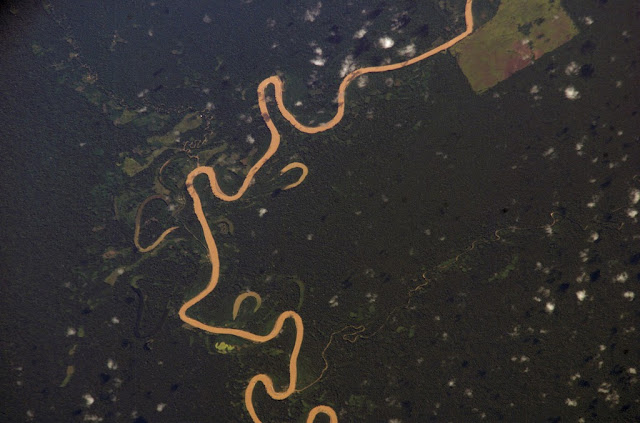
Photo Credit: “Rio Jurua, Brazil (NASA, International Space Station Science, 05/29/07),” courtesy of flickr user NASA’s Marshall Space Flight Center, and David Hawxhurst/Wilson Center. -
Emily Gertz, Momentum Magazine
U of M’s ‘Momentum’ on Water Scarcity, Population, and Climate Change
›December 20, 2010 // By Wilson Center StaffExcerpted from the original article, “Water Tight,” by Emily Gertz in the University of Minnesota’s Momentum magazine.
The next time you stop off at a pub for a quick bite, think about this: It took around 630 gallons of water to make your burger. Your pint of beer used around 20 gallons. Manufacturing your blue jeans and t-shirt drank up about 1,218 gallons of water: 505 and 713 gallons, respectively.
Total: nearly 1,900 gallons of water – and that’s without fries on the side.
These quantities are the “water footprint” of each product: the total amount of freshwater used in its manufacture, including producing the ingredients.
For many products, that footprint is Paul Bunyan–sized: With water seemingly cheap and plentiful, there has been little incentive to try to keep it small.
But today, that’s changing. Even though much of the water we use for growing food and making products is replenished by natural hydrological cycles, freshwater will be less reliable and available in the coming century. Population growth is increasing both demand for water and pollution of potable supplies. At the same time, climate change is disrupting historical precipitation patterns, shrinking freshwater sources such as glaciers and snowpack, and creating unprecedented droughts and floods.
According to an analysis published in Nature in September 2010, the freshwater supplies of most of the world’s population are at high risk.
“If you look at the global distribution of people and the global distribution of threat levels to human water security, the places with the highly threatened water security represent about 80 percent of the world population, over four billion people,” says study co-author Peter McIntyre, assistant professor at the University of Wisconsin’s Center for Limnology.
In the United States, a 2010 analysis by the consulting firm Tetra Tech for the Natural Resources Defense Council found that more than 1,100 counties – fully two-thirds of all counties in the lower 48 states – will contend with higher water risk by 2050 due to climate change alone. Fourteen states can expect extremely serious problems with freshwater supply, including Florida, Mississippi, New Mexico, and California.
It’s not surprising, then, that businesses are increasingly considering their corporate water footprint. They encounter water risk – and opportunities to reduce it – at many stages of their operations, from growing crops to running retail stores. Factoring such risks into their present and future planning is helping companies present themselves as good environmental stewards to the public, and potentially reduce risks to their earnings from water scarcity.
“It’s often said that water is going to be the oil of the 21st century, in the sense of becoming an ever-more scarce commodity,” McIntyre says. “In the grand scheme of things, you can live without oil, but you can’t live without water. Water is fundamental for all life. And that’s certainly true for business as well.”
Continue reading on Momentum.
Sources: Natural Resources Defense Council, Nature.
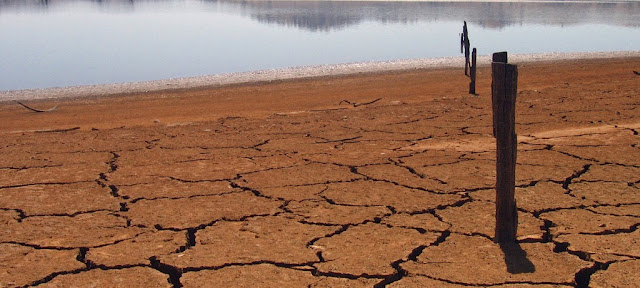
Photo Credit: Adapted from “Lake Hume at 4%,” courtesy of flickr user suburbanbloke. -
Too Few or Too Many? Joel E. Cohen on How Education Can Address Both
›December 17, 2010 // By Wilson Center Staff“So which is it: Is it too many people or is it too few people?” asks Joel E. Cohen of the Rockefeller University in this interview with ECSP. “The truth is, both are real problems, and the fortunate thing is that we have enough information to do much better in addressing both of those problems than we are doing – we may not have silver bullets, but we’re not using the knowledge we have.”
Cohen has studied the population-resources equation, trying to determine how best to support global demographics in a sustainable, equitable way. He points to the cross-cutting power of education to both curb rapid population growth in the developing world and ease the cost of aging populations in the developed.
“On continuing rapid population growth, we know that more education is associated with reductions in fertility,” said Cohen. And when combined with voluntary family planning, it’s also cheap “compared to the costs of having children that are not well cared for – the opportunity costs,” he said.
On aging, “we know that people who are educated well in their youth – both at primary, secondary, and especially tertiary levels – have better health in old age,” said Cohen. “So the costs of an aging population are diminished when people are educated. They take better care of themselves and they have options – they can use their minds as their bodies mature.”
Education is a long-term solution, but shorter-term policy options, like France’s bump of the retirement age to 62 that prompted rioting this fall, will also be necessary. “Sixty-two is only a way station,” Cohen said. “The retirement age has to move up, because people are living longer, they’re more productive, they’re in better health, and they’re going to have to keep working to take care of themselves.” -
Watch: Joel E. Cohen on Solving the Resource-Population Equation in the Developing World
›December 14, 2010 // By Wilson Center Staff“It’s very hard to put a number on a quantity that depends on future events, processes we don’t understand, and values that may change over time,” said Joel E. Cohenof the Rockefeller University in this interview with ECSP. “That doesn’t mean we have no problems and it doesn’t mean there’s nothing we can do.”
There are three schools of thought or proposed “panaceas,” when it comes to balancing natural resources and population, said Cohen: a bigger pie (new technology to increase productivity), fewer forks (reduced consumption), and better manners (reduced irrational market inequities and better governance).
In the 15 years since his book How Many People Can the Earth Support? was published, Cohen’s approach has changed. While the 1996 book lacked a definitive policy recommendation, he is now analyzing options. “The evolution of my thought has moved from ‘how many people can the Earth support?’ to ‘what do we need to solve problems?’” he said.
You need adequate child and maternal nutrition to produce potential problem solvers and you need education to give them the tools to do it with, said Cohen, who studied the impact of universal primary and secondary education with colleagues at the American Academy of Arts and Sciences.
“If you look at a map of stunting in the world, there are parts of South Asia and sub-Saharan Africa where more than half the children are stunted – that means two standard deviations [of] height below normal for their age,” said Cohen. “Those populations are handicapped at the starting gate because they don’t have the problem solvers.”