

Showing posts from category climate change.
-
Weekly Reading
›The U.S. Global Change Research Program, which integrates federal government research on climate change, released Global Climate Change Impacts in the United States this week. The report examines climate’s likely impacts on various regions of the country.
The Guardian examines ongoing conflicts over natural resources between indigenous people and governments.
In her final dispatch from the Bonn climate negotiations, Population Action International climate director Kathleen Mogelgaard notes the conspicuous absence of demography in international climate discussions.
A webcast is now available of the Johns Hopkins University-Population Reference Bureau symposium “Climate Change and Urban Adaptation: Managing Unavoidable Health Risks in Developing Countries.”
A new policy paper from the World Bank seeks to answer the question, “Do the households in game management areas enjoy higher levels of welfare relative to the conditions they would have been in had the area not been designated as a game management area?”
A Commission on Climate and Tropical Forests, led by John Podesta, president and CEO of the Center for American Progress, and Lincoln Chafee, former Republican senator from Rhode Island, has been formed to advise President Obama on how to reduce tropical deforestation through U.S. climate change policies, reports Mongabay.com. -
Retired Generals, Admirals Warn of Energy’s Security Risks
›June 18, 2009 // By Rachel Weisshaar “Some, I think, probably are surprised to hear former generals and admirals talk about energy efficiency and renewable energy, but they shouldn’t be,” said General Charles Wald, USAF (Ret.), chairman of the CNA Military Advisory Board (MAB), a group of 12 retired three- and four-star admirals and generals. “Force protection isn’t just about protecting weak spots; it’s about reducing vulnerabilities before you get into harm’s way.”
Wald was joined by fellow MAB member Vice Admiral Dennis McGinn, USN (Ret.), and CNA General Counsel Sherri Goodman for a discussion of MAB’s latest report, Powering America’s Defense: Energy and the Risks to National Security, at a meeting on May 28, 2009. Two years ago, Wald, Goodman, and two other members of the MAB spoke at another Environmental Change and Security Program-hosted event on the MAB’s first report, National Security and the Threat of Climate Change.
Energy, Climate, and the Military“Our over-dependence on fossil fuels” and “our dependence on a vulnerable electric grid…present an urgent and serious risk to our national security,” said Goodman, who served as deputy under secretary of defense for environmental security from 1993-2000.
Powering America’s Defense argues that U.S. dependence on foreign oil “tethers America to unstable and hostile regimes, subverts foreign policy goals, and requires the U.S. to stretch its military presence across the globe.”
The U.S. military’s energy use presents unique risks. “Our inefficient use of oil adds to the already-great risk assumed by our troops. It reduced combat effectiveness. It puts our troops more directly and more often in harm’s way,” said Wald. “Many of our casualties—and you’ve all heard of the IEDs and EIDs that have done so much harm to so many of our young people—many of those people are in convoys carrying fuel to the battlefield” in Iraq and Afghanistan.
A major U.S. blackout in August 2003—which shut down water and sewage plants, gas stations, telecommunications outlets, and some elements of border check systems—emphasized the vulnerability of the nation’s electrical grid. “The situation can be exploited as a threat by those to wish to do us harm,” said Wald.
Innovative Solutions, With DoD in the Lead
The report recommends that:- Energy-security and climate-change goals should be integrated into national-security and military planning processes;
- The Department of Defense (DoD) should design and deploy energy-efficient systems on the battlefield;
- DoD should monitor its energy use at all levels of operations;
- DoD should improve the energy efficiency of its installations;
- DoD should increase renewable-energy generating capacity; and
- DoD should invest in the development of low-carbon liquid fuels—such as those produced by algae—that can replace oil.
A Direct Appeal
Recalling the sacrifices Americans made on the home front during World War II—saving scrap metal, conserving fuel, planting victory gardens—McGinn urged Americans today to take a similar approach to meeting the nation’s energy and climate challenges.
“There are individual steps that every American can take: using less energy, being more efficient with the energy that we do use, supporting new policies to help our country take a new energy path,” he said. “They may cost money, yes, but if we don’t spend the money now, primarily thinking of that as an investment, we’ll still pay, and we’ll pay much more later. In fact, very likely, we’ll pay in American lives lost,” he said. -
Weekly Reading
›In Search of Shelter: Mapping the Effects of Climate Change on Human Migration and Displacement, launched at the climate negotiations this week in Bonn, represents a major step forward in the effort to determine how environmental shocks and stresses precipitated by climate change will compel populations to migrate.
According to Family Planning and Economic Well-Being: New Evidence From Bangladesh, a report from the Population Reference Bureau, “long-term investment in an integrated family planning and maternal and child health (FPMCH) program contributes to improved economic security for families, households, and communities through larger incomes, greater accumulation of wealth, and higher levels of education.”
A YouTube video from the UN Office of the High Commissioner for Refugees (UNHCR) shows how Darfuri refugees are struggling to manage scarce natural resources in refugee camps in Chad.
Facing Global Environmental Change: Environmental, Human, Energy, Food, Health, and Water Security Concepts, the fourth volume of the Hexagon Series on Human and Environmental Security and Peace, was launched at a side event to the 17th Session of the Commission on Sustainable Development.
The Obama Plan for Energy and Climate Security: Conference Proceedings and Final Recommendations lays out the Center for a New American Security’s recommendations to President Obama for achieving his climate and energy goals. -
At Heavy-Hitting Conference, CNAS Launches Natural Security Program, Blog
›June 11, 2009 // By Rachel WeisshaarToday’s Center for a New American Security (CNAS) annual conference was replete with heavy hitters like General David Petraeus discussing the world’s top security challenges, including Iraq, Afghanistan, Pakistan, and North Korea. But at an afternoon panel, CNAS’s Sharon Burke argued that although environmental and natural-resource issues may not get their own section in the Presidential Daily Briefing, they are intimately intertwined with many of the high-profile security issues that do.
President Obama recently called for a stronger focus on agricultural development in Afghanistan, said Burke, as part of a broader approach to increasing stability and improving Afghans’ quality of life. But decades of war have contributed to severe deforestation and land degradation, and farmers “can’t plant their seeds if the land is barren, and that’s where we are right now,” she said.
The panel also served as the launch for CNAS’s new Natural Security program (see working paper) and blog, which aim to study the “national-security implications of natural resources use,” said Burke. The program grows out of CNAS’s investigation of the security impacts of climate change and energy over the past several years. Burke explained that it was difficult to discuss energy and climate change without also talking about water, land, biodiversity, and a host of other related issues, so CNAS decided to create a program that would not attempt to separate these interconnected issues.
Burke was joined by former U.S. Senator John Warner, Peter Gleick of the Pacific Institute, Roderick Eggert of the Colorado School of Mines, and Commander E. J. McClure of the Office of the Secretary of Defense. -
Weekly Reading
›The International Institute for Sustainable Development has released two reports on climate change and security: Rising Temperatures, Rising Tensions: Climate change and the risk of violent conflict in the Middle East and Climate Change and Security in Africa.
In “The Changing Face of Israel,” a Foreign Policy web exclusive, Richard Cincotta and Eric Kaufmann explain how Israel’s demographics are influencing the country’s politics.
CNN’s Inside Africa reports on a bill in the U.S. Congress that seeks to quell the violence in the Democratic Republic of the Congo by forcing American companies to disclose the sources of their minerals.
Population Action International’s Kathleen Mogelgaard reports from international climate change negotiations in Bonn, Germany, on how climate change disproportionately affects women and the poor.
A Christian Science Monitor op-ed on global demographic trends cites Wilson Center Senior Scholar Martin Walker.
On Grist, Earth Policy Institute Founder Lester Brown explores the massive migration that would be precipitated by even partial melting of the Antarctic and Greenland ice sheets. -
Climate-Security Links Recognized by UN General Assembly
›June 4, 2009 // By Geoffrey D. DabelkoThe security threat of sea level rise to small island states appears to have proven so obvious as to overcome the common objections of many countries (notably P5 members China and Russia) to framing climate change as a threat to security. Just yesterday, the UN General Assembly passed by consensus a non-binding resolution linking climate and security. The final version of the resolution (GA/10830) is not yet online, but the May 18 draft resolution gives you an idea of the final language.
Symbolic, yes, but perhaps this will make it easier for climate security questions to come before the UN Security Council again. The April 2007 Security Council session on climate change and security, at the behest of the British chair at the time, was, shall we say, met with a mixed reception, but 2009 is already different than 2007 in so many ways. It will be interesting to watch where the discussion goes from here at the UN and in national capitals.
Graphic: Symbol of the Alliance of Small Island States (AOSIS). -
‘Earth 2100’ To Explore Climate, Natural Resources, Population Growth
›June 2, 2009 // By Rachel WeisshaarABC’s Earth 2100 documentary, airing tonight at 9:00 p.m. EST, will feature many ECSP speakers—including Jared Diamond and Peter Gleick—as well as the Center for a New American Security’s (CNAS) Clout and Climate Change War Game. Held in Washington, D.C., in July 2008, the war game focused on the national security implications of climate change.
Earth 2100 explores possible worst-case scenarios for this century that could be triggered by a “perfect storm” of population growth, resource depletion, and climate change. Environmental security expert Thomas Homer-Dixon tells host Bob Woodruff that “energy, climate food, population, economic pressures—any one of these challenges might be very serious in and of itself. But because they are happening all simultaneously, it’s going to be very difficult for our governments to cope.”
During the climate-change war game, “every country sort of hewed to what you would expect,” said CNAS Vice President for Natural Security Sharon Burke at an ECSP event earlier this year.
“The EU team spent the first two hours debating whether they could really be a country; the Indian team instantly came up with a negotiating strategy that sounded cooperative and brilliant but was completely impossible to execute; the Chinese team was, ‘No, we’re not going to do anything unless you pay us’; and the American team was keen to lead, only nobody was following,” she said.
One of the key lessons from the game, Burke added, was that “everything comes down to what China is prepared to do.” She also described insights from the war game in a New Security Beat guest post.
Several war-game participants are now members of the Obama administration, including Todd Stern, the lead U.S. negotiator on climate change; Michèle Flournoy, under secretary of defense for policy; and David Sandalow, assistant secretary for international affairs at the Department of Energy.
An ABC producer working on Earth 2100 consulted ECSP Director Geoff Dabelko earlier this year. -
VIDEO: Environment Key to Resolving Conflicts, Building Peace, Says UN Environment Programme Director Achim Steiner
›June 2, 2009 // By Rachel Weisshaar“Addressing the issue of the environment in the context of conflict resolution, conflict prevention, peacekeeping, [and] peacebuilding becomes ever more important because we know from everything we have learned—and are learning every day—about climate change that one thing is for certain: The world is going to be under more stress,” says UN Environment Programme (UNEP) Director Achim Steiner in a short expert interview on YouTube.
Yet in another original Environmental Change and Security Program (ECSP) video, Steiner emphasizes that environmental issues do not lead inexorably to conflict. “History shows that human societies are not prone to looking for conflict but rather for conflict resolution, particularly when it comes to fundamental elements of life support systems, be it water, or be it clean air or other issues—we have seen the model of cooperation emerge.”
Steiner was at the Wilson Center in March 2009 for the launch of From Conflict to Peacebuilding: The Role of Natural Resources and the Environment, a new report by UNEP’s Disasters and Conflicts Programme. According to From Conflict to Peacebuilding:- Forty percent of intrastate conflicts within the past 60 years have been strongly linked to natural resources.
- Such conflicts are twice as likely to relapse within the first five years of peace.
- Less than a quarter of peace agreements for these conflicts address natural-resource issues.
- Forty percent of intrastate conflicts within the past 60 years have been strongly linked to natural resources.
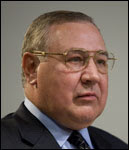 “Some, I think, probably are surprised to hear former generals and admirals talk about energy efficiency and renewable energy, but they shouldn’t be,” said General Charles Wald, USAF (Ret.), chairman of the CNA
  “Our over-dependence on fossil fuels” and “our dependence on a vulnerable electric grid…present an urgent and serious risk to our national security,” said Goodman, who served as deputy under secretary of defense for environmental security from 1993-2000.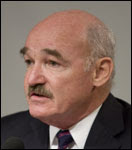
 The security threat of sea level rise to small island states appears to have proven so obvious as to overcome the common objections of many countries (notably P5 members China and Russia) to framing climate change as a threat to security. Just

