Showing posts from category climate change.
-
The United States and China: Clean Energy Friends or Foes?
›July 7, 2010 // By Joshua Nickell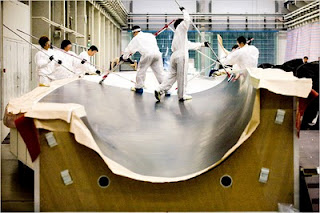 As the world moves toward clean energy alternatives, companies in the United States and China are working to develop new, more cost-efficient manufacturing processes and increase their shares of the domestic and export markets for new renewable energy technologies. Controlling production lines and growing market share will certainly have important economic implications for both countries. But over the long term, a broader perspective suggests that cooperative initiatives to increase the capacity and reduce the cost of renewable energy technologies may produce benefits on both sides of the Pacific.
At an event co-hosted by the Wilson Center on the Hill and the China Environment Forum last month, John Romankiewicz, a senior analyst for China Clean Energy and Carbon Markets at Bloomberg New Energy Finance, and Ethan Zindler, head of North American Research at Bloomberg New Energy Finance, considered the big picture implications for U.S.-China clean energy cooperation and development.
Coming from an investment background, Zindler said that he looks at clean energy development “not as a social project, but as an industry.” The end goal, he asserted, is to produce clean energy more cheaply than fossil fuels. Zindler argued that if clean energy remains prohibitively expensive and uncompetitive without subsidies, it will be more difficult to implement and less likely to produce the desired environmental benefits.
Romankiewicz discussed China’s current supply of and growing demand for energy, pointing out that China’s power grid has grown by more than 70 gigawatts per year during each of the past 5 years, and that “at some point next year, the total installed capacity of China’s grid will surpass that of the United States.”
While coal and hydropower continue to play a significant role in meeting this growing demand, Romankiewicz noted that China also has set ambitious investment targets for wind farms, solar farms, biomass power plants, and other renewable energy sources.
China Looks to Go Global With Renewables
China is investing in clean energy not only to serve growing domestic energy demands, but also to become a major force in the international market, Romankiewicz asserted. Already, China has made impressive advances in clean energy industries: Of the top 15 wind turbine producers, four are Chinese and only two are American. Of the top 10 crystalline-silicon solar cell producers, six are Chinese.
But how will the United States impact China’s drive to become a major player in exporting clean energy technologies? Romankiewicz argued that breaking into the American market could prove exceedingly difficult for Chinese companies given the stiff competition from U.S. companies and other foreign firms.
The speakers also emphasized the importance of understanding the complex global economic implications of clean energy development. “If the Chinese are helping to drive down the cost… then they make solar less expensive,” said Zindler, “which means you can create more jobs in California or New Jersey.” Romankiewicz cautioned against reading too much into the “Made in China” label on clean energy technologies, as the supply chain could include parts from all over the world.
Though he maintained that focusing on the long-term benefits of clean energy investment in the United States would prove beneficial, Zindler advocated for a modicum of urgency. “I think a lot of opportunity would be missed potentially because there is innovation that doesn’t just come from a lab but comes from building newer and newer assembly lines,” Zindler remarked. But in the end, he characterized the U.S.-China battle for influence in the world’s renewable energy market as “a marathon, not a sprint,” asserting that “we’ve got a long way to go to determine who the winner will be in the clean energy race here.”
Joshua Nickell is a staff intern with the Program on America & the Global Economy at the Woodrow Wilson Center.
Photo Credit: <Wind Turbine Manufacture (in China),” courtesy of flickr user ANR2008. -
Rough Waters Ahead: Our Changing Ocean
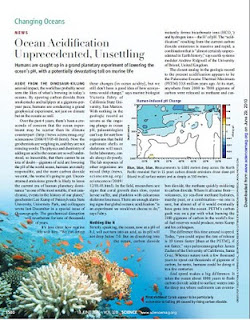
›From the ocean-themed June issue of Science comes “Sea-Level Rise and Its Impact on Coastal Zones“, by Robert J. Nicholls and Anny Cazenave. While sea-level rise will “almost certainly accelerate through the 21st century and beyond because of global warming,” Nicholls and Cazenave state that its magnitude remains uncertain. Small islands as well as the coasts of Africa, India, Southeast Asia, and China are identified as vulnerable areas because of their “dense populations, low elevations, appreciable rates of subsidence, and/or inadequate adaptive capacity.” Nicholls and Cazenave call for more research and analysis into adaptation, which “remains a major uncertainty.” “Ocean Acidification: Unprecedented, Unsettling,” by Richard A. Kerr, also appears in the June issue of Science. “Humans are caught up in a grand planetary experiment of lowering the ocean’s pH, with a potentially devastating toll on marine life,” begins Kerr, who aims to convince climate change-focused readers to also look at the world’s oceans. Rising pH levels, caused by ocean waters absorbing higher levels of carbon dioxide, are damaging shelled creatures, coral, and the organisms that rely on them for sustenance (which includes people, especially coastal populations dependent on the oceans for protein). An Australian survey recently found that calcification in the Great Barrier Reef had declined 14.2 percent since 1990 – a severe decline that has not been matched in the last 400 years. Kerr claims that “aside from the dinosaur-killing asteroid impact, the world has probably never seen the likes of what’s brewing in today’s oceans.”
 -
Is the Third Pole the Next Site for Water Crisis?
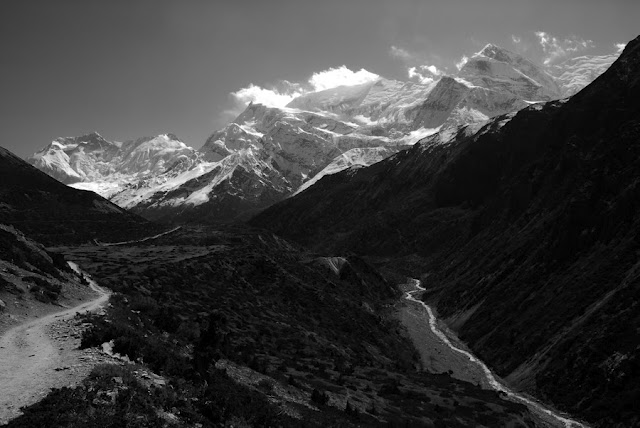
›July 1, 2010 // By Tara InnesThe Hindu-Kush Himalaya area may host future water crises as glaciers melt, population rapidly increases, and competition over scarce water resources intensifies, says a recent report from the Humanitarian Futures Programme at King’s College.
Himalayan glaciers – often called the “third pole” because they house the greatest volume of frozen water outside the polar regions – provide the headwaters for 10 major river systems in Asia. Despite clear evidence that the HKH glaciers are receding, recent controversy over the 2007 IPCC report has sidetracked the discussion from the degree of glacial melt and its impacts on the surrounding environment.
Glacial melt sends more water into the rivers in the rainy season, and less water in the dry season. This variability will increase both floods and droughts, which in turn can damage agriculture and create food shortages. Melting glaciers can also create “glacial lakes” that are prone to sudden bursting, causing disastrous flooding downstream (ppt).
According to The Waters of the Third Pole: Sources of Threat, Sources of Survival, climate change is already having significant impacts in the Himalayan region, intensifying natural disasters and the variability of the summer monsoon rains, and increasing the number of displaced people and government attempts to secure water supplies from its neighbors.
Rivers of People: Environmental Migrants
One of the major consequences, the report argues, could be “growing numbers of environmental migrants,” which the authors define as “people moving away from drying or degraded farmland or fisheries, and the millions displaced by ever-larger dams and river-diversion projects”—and including the Chinese government’s forced “‘re-location of people from ecologically fragile regions.”
Today, about 30 million (15 percent) of the world’s migrants are from the Himalayan region, the report says, warning that “in the next decade, should river flows reduce significantly, migration out of irrigated areas could be massive.” But the authors acknowledge that reliable estimates are rare – a problem pointed out in The New Security Beat.
However, it is clear that the region’s population is growing and urbanizing rapidly: By 2025, one-half of all Asians will live in cities, whereas one generation ago, the figure was one in 10. This incredible shift, says the report, places “some of the greatest pressures on water through increased demand and pollution.”
Water War or Water Peace?
The Waters of the Third Pole warns that growing scarcity could “raise the risk of conflict in a region already fraught with cross-border tensions.” While interstate tensions over water have been minimal to date, they could potentially increase in areas where significant percentages of river flow originate outside of a country’s borders – in 2005 Bangladesh relied on trans-boundary water supplies for 91 percent of its river flow, Pakistan for 76 percent, and India for 34 percent. Intra-state conflict is also expected to increase. The report notes, “In China alone, it has been reported that domestic uprisings have continued to increase in protest about water management or water-quality issues.”
However, the water-conflict link remains shaky within the scholarly community. As Dabelko recently told Diane Rehm about the region, “There are prospects for tensions, but quite frankly, water is difficult to [obtain] through war. It’s hard to pick it up and take it home.”
The report points out some areas in which water may actually pose an opportunity for regional cooperation rather than conflict, such as developing knowledge-sharing networks like the International Center for Integrated Mountain Development. The presence of such networks may help establish channels of communication and aid in diffusing other cross-border tensions. But the authors caution that “environmental cooperation generally lags far behind economic cooperation in the HKH region.”
The report concludes that policymakers must move the region higher on the humanitarian agenda; construct a framework for action that includes non-intrusive international support; and more thoroughly address knowledge and communication gaps.
Photo Credit: “Annapurna ways, Nepal,” courtesy of flickr user rakustow. -
U.S. Navy Task Force on Implications of Climate Change
›What about climate change will impact us? That’s the question the Navy’s Task Force Climate Change is trying to answer. Rear Admiral David Titley explains the task force’s objectives in this interview by the American Geophysical Union (AGU) at their recent “Climate Change and National Security” event on the Hill.
The task force is part of the military’s recent efforts to try to better understand what climate change will mean for the armed forces, from rising sea levels and ocean acidification to changing precipitation patterns. In the interview, Admiral Titley points out that for the Navy in particular, it is important to understand and anticipate what changes may occur since so many affect the maritime environment.
The Navy’s biggest near-term concern is the Arctic, where Admiral Titley says they expect to face significant periods of almost completely open ocean during the next two to three decades. “That has huge implications,” says Titley, “since as we all know the Arctic is in fact an ocean and we are the United States Navy. So that will be an ocean that we will be called upon to be present in that right now we’re not.”
Longer term, the admiral points to resource scarcity and access issues and sea level rise (potentially 1-2 meters) as the most important contributing factors to instability, particularly in places like Asia, where even small changes can have huge impacts on the stability of certain countries. The sum of these parts plus population growth, an intersection we examine here at The New Security Beat, is something that deserves more attention, according to Titley. “The combination of climate, water, demographics, natural resources – the interplay of all those – I think needs to be looked at,” he says.
Check out the AGU site for more information, including an interview with Jeffrey Mazo – whose book Climate Conflict we recently reviewed – discussing climate change winners and losers and the developing world (hint: the developing world are the losers).
Sources: American Geophysical Union, New York Times.
Video Credit: “What does Climate Change mean for the US Navy?” courtesy of YouTube user AGUvideos. -
Backdraft: The Conflict Potential of Climate Mitigation and Adaptation
›The European Union’s biofuel goal for 2020 “is a good example of setting a target…without really thinking through [the] secondary, third, or fourth order consequences,” said Alexander Carius, co-founder and managing director of Adelphi Research and Adelphi Consult. While the 2007-2008 global food crisis demonstrated that the growth of crops for fuels has “tremendous effects” in the developing world, analysis of these threats are underdeveloped and are not incorporated into climate change policies, he said. [Video Below]
-
Women Deliver in the Climate Change Debate
›One of the hottest topics at the “Women Deliver” conference earlier this month—where panels ran the gamut from HIV prevention and family planning to gender-based violence and maternal health—was the intersection of women’s reproductive health, global population growth, and climate change.
As panelists at three of the conference’s climate-focused events noted, women in poor, rural areas are especially vulnerable to the impacts of climate change. In many developing countries across Africa, Asia, and Latin America, women take on much of the burden of farming, gathering fuel, and supplying fresh water for their communities. As a result, they bear the brunt of hardships when climate change alters seasonal precipitation patterns, or increases scarcity of key natural resources.
In addition, “the more assets, the less vulnerable one person is,” said Lorena Aguilar of the International Union for Conservation of Nature. “Worldwide, compared to men, women tend to have more limited access to resources that would enhance their capacity to adapt to climate change—including land, credit, agricultural inputs, decision-making bodies, technology, and training services.”
Women’s hardship in the face of climate change can also have a negative effect on reproductive health. Aguilar remarked that during the dry season in parts of rural India and Africa, 30 percent or more of women’s daily caloric intake is spent on fetching water alone. The enormous physical strain placed on women’s bodies because of those tasks has resulted in higher miscarriage rates among those populations, she noted.
Educating Girls to Protect the Environment
Organizations like the United Nations and the Global Gender and Climate Alliance have been working in recent years to bridge the gap between women’s rights and climate change, and reframe climate change in terms of human development. But to date, women’s struggles with climate change have not translated into meaningful economic, educational, or healthcare support at the local government level, with women’s welfare “at the very bottom of the priority list” for most developing countries, according to Nickie Imanguli with Advocates for Youth.
The unmet need for family planning tools and services is perhaps the movement’s principal challenge going forward. With an estimated 200 million women having an unmet need for family planning, unintended pregnancies could be exacerbating environmental problems such as depletion of forests, water, and other finite resources. But most panelists expressed optimism that the growing recognition of a connection between climate change and women’s reproductive health might lead to a boost in funding for family planning initiatives in underserved areas of the world.
Speakers at Women Deliver emphasized that reproductive health can be bolstered by improving educational opportunities for girls in poor rural areas. Joy Nayiga with Uganda’s Ministry of Finance Planning Economic Development noted that “girls are more likely than boys to drop out of school to help their mothers gather fuel, wood, and water.” This trend, she said, robs females of an opportunity for educational advancement, and heightens the likelihood they will end up starting families of their own while very young.
Nayiga and other panelists asserted that empowering females through education leads them to take greater control over their own sexual health, making it easier for them to start their families later in life, or perhaps have a smaller number of children.
Encouraging women to take a more active role in family planning in this regard serves as “a win-win situation for women, their communities, and the nations of the world,” by “bending down the overall trajectory of population growth,” asserted the Worldwatch Institute’s Robert Engelman.
Some speakers also argued that enabling women to delay motherhood if they want could yield direct environmental benefits for nations of the Global South that are struggling to adapt to climate change. Since women are often responsible for overseeing agriculture and forest resource management practices in their communities, they help create localized carbon sinks across the developing world.
“Women pull carbon out of the atmosphere and bury it, in farm soils, in trees that they grow,” noted the Worldwatch Institute’s Engelman, who even suggested women’s aggregate impact removing carbon could be more effective than cap-and-trade plans.
Moving Slowly From Talk to Action
Given both their vulnerability to the effects of climate change—and their potential to help offset those same impacts—“women are critical stakeholders in climate change moving forward,” said Population Action International’s Kathleen Mogelgaard. So far, however, while there may be growing discussion about giving women a more prominent seat at the table when developing climate change adaptation and mitigation plans, that has not yet happened.
“We’re not seeing big government investment in empowering women on the issue of climate change,” remarked Leo Bryant, with Marie Stopes International, a U.K.-based NGO specializing in sexual and reproductive health. Instead, Bryant said, it has been NGOs that have been doing much of the heavy lifting of bringing women into the conversation.
But many panelists felt that, in time, governments will recognize it is in their enlightened self-interest to link issues of gender rights and climate change. “By upholding women’s rights,” concluded the IUCN’s Lorena Aguilar, “we are in fact making one of the most crucial preparations associated to climate change that any society can make.”
Click here for additional New Security Beat coverage of reproductive health talks at the Women Deliver conference, or here for more coverage of the interplay between traditional gender roles and family planning.
Sources: International Institute for Sustainable Development, International Union for the Conservation of Nature, Marie Stopes International, Population Action International, Population Reference Bureau, The Times (U.K.), United Nations Development Programme, Women Deliver, Worldwatch Institute.
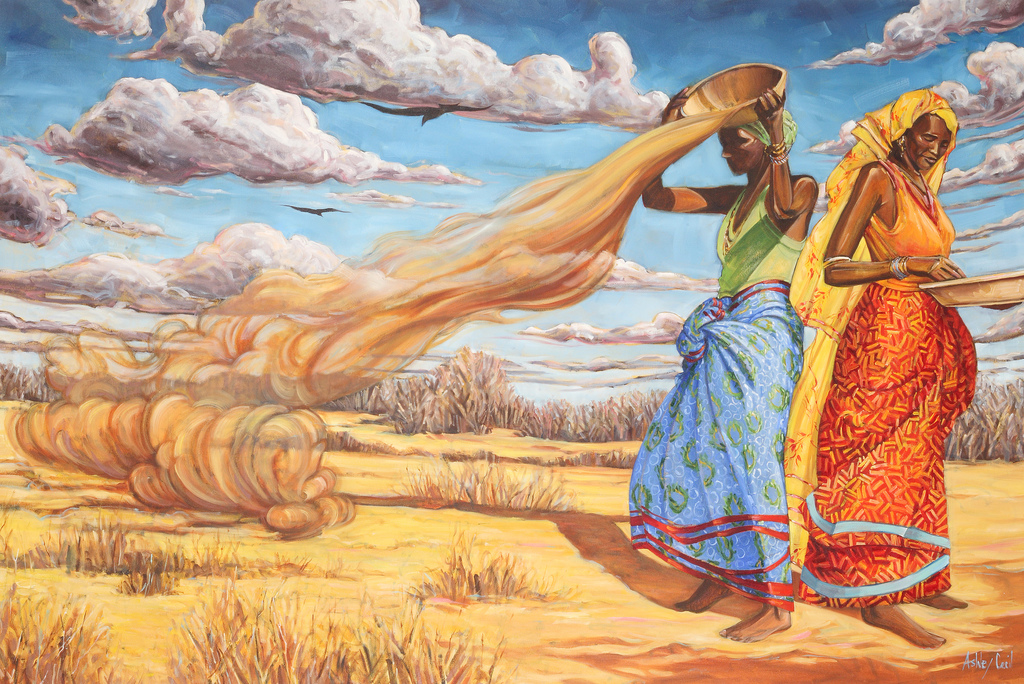
Photo Credit: “Climate Change Canvas” courtesy of Amnesty International. -
Protect Nature to Protect Us: Biodiversity and Adaptation to Climate Change
›June 17, 2010 // By Dan Asin“We believe that changes in biodiversity, either through local extinction or biological invasions, is the single most important and dramatic problem in contemporary ecology,” reads the mission of the Naeem Lab, led by Professor Shahid Naeem of Columbia University and editor of Biodiversity, Ecosystems Functioning, and Human Wellbeing: An Ecological and Economic Perspective. As Naeem told a group of USAID employees last week, this problem is even more important today, because biodiversity is a key factor in determining the resilience of life–and could be an important ally in the fight against the impacts of climate change.
At the talk, Naeem described an experiment funded by the National Science Foundation that tested the effect of carbon dioxide, nitrogen, and diversity of plant species on rates of plant growth. The scientists found both carbon dioxide and nitrogen exposure to increase plant growth, but the impact of biodiversity to be even greater.
In the monoculture trials, exposure to carbon dioxide, nitrogen, and both increased vegetation growth by by 7 percent, 2 percent, and 17 percent, respectively. When the plot was expanded to include 16 species, however, rates of plant growth jumped to 22, 25, and 36 percent.
Real-World Implications
Naeem’s message aligned with an earlier World Bank report, Biodiversity, Climate Change, and Adaptation, which in 2008 noted that “Climate change is already impacting on ecosystems and livelihoods, but enhanced protection and management of biological resources can mitigate these impacts and contribute to solutions.”
The report, which examines the importance of biodiversity to mitigating and adapting to climate change, cites real-world examples, such an analysis of a forest management project in Madagascar that would cost $97 million but generate $150-180 million in revenue from direct payments for conservation activities, ecotourism, and watershed protection.
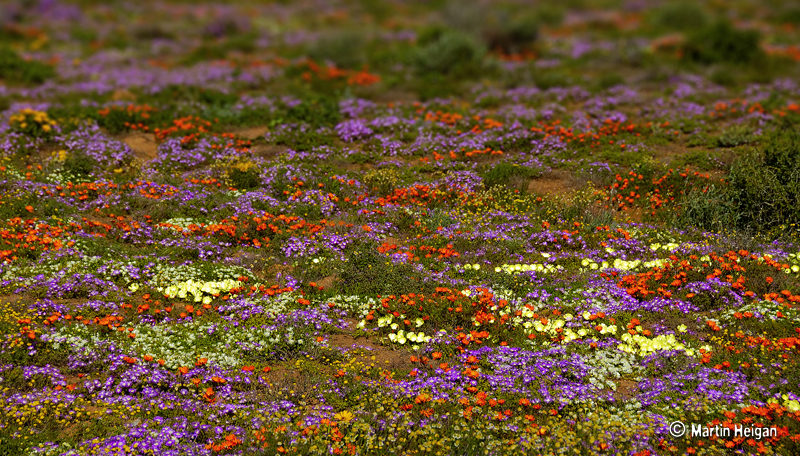
Another example focuses on a farmer in South Africa’s Bokkeveld Plateau, who 30 years ago switched from cultivating cereals and pasture crops to nurturing indigenous vegetation. “With the diversity of indigenous plants, McGregor was able to maintain productivity for much longer through the dry summer season,” the report says. Further, he was able to eliminate the need for pesticides and increase the productivity of sheep grazing. The flowering of the natural plants attracted tourists to his farm, generating greater income for both himself and his district, and has since become South Africa’s ninth botanical garden.
Bringing Science to Bear on Policy
Still, Naeem said that although the scientific evidence connecting biodiversity, resilience, and adaptation has long been established, it is in large part failing to affect environmental and development policy. Naeem said scientists have completed their leg of the race but aren’t able to reach the policymakers who need to carry-on the baton. Along the chain connecting research and policy-making the message becomes lost or diluted.
“How do we translate the science?” Naeem asked the USAID practitioners in the audience. The knowledge of biodiversity’s important role in climate adaptation is available, but how can scientists ensure that it impacts policy? Members of the audience cited both Congressional funding mandates and departmental silos as significant barriers to efforts to address the link between biodiversity and adaptation.
One promising avenue could be programs that already work across departmental silos to integrate environment and health initiatives in areas of the world with high biodiversity. These population-health-environment (PHE) programs, which seek to preserve biodiversity while improving community livelihoods and human health, could be effective mechanisms for exploring the contribution of biodiversity to climate adaptation.
Photo credit: Wildflowers bloom in Namaqualand, South Africa, courtesy Flickr user Martin Heigan. Near the Bokkeveld Plateau, the wildflowers in the two regions are resilient to changes in rainfall and temperature patterns and each year attract tourists from all over the globe. -
Book Review: ‘Climate Conflict: How Global Warming Threatens Security and What to Do About It’ by Jeffrey Mazo
›June 8, 2010 // By Dan AsinThe heated back-and-forth over climate conflict in the blogosphere and popular press prompts the questions: In the debate over the security threat of a warming planet, who is spewing the hot air? Does climate change precipitate conflict, and if so, who is most at risk?
In Climate Conflict: How Global Warming Threatens Security and What to Do About It, Jeffrey Mazo unabashedly argues that weak–but not yet failed–states are at the greatest risk of climate-driven conflict. Packed into only 166 pages, the book takes readers on a crash course through climate science; 10,000 years of human-environmental history; case studies of the pre-modern South Pacific and modern-day Colombia, Indonesia, and Darfur; and analysis of geopolitical instability and stressors. This tour d’horizon all builds up to one point: Global warming and climate change threaten our security.
Key to Mazo’s work is the important but oft-overlooked insight that it is not the magnitude of climate change, but the difference between the rate of climate change and a society’s ability to adapt that threatens stability. He also confronts the all-too-common assertion that accepting climate change as a threat multiplier absolves individuals of culpability, and is explicit that intrastate–rather than interstate–conflict is the norm.
The Weakest Are Not the Greatest Threat
Mazo weaves threads of non-traditional and human security throughout the text, asserting that “there is no real contradiction between humanitarian and security goals” (pg. 132). However, his primary concern is the security of the nation-state and the international system. He argues that the next two to four decades are the most relevant time for strategic planning.
Within this context, Mazo claims global warming’s central security challenge will be the threat it poses to stability in states that are either unable or unwilling to adapt. Few will be surprised, therefore, when he says weak, fragile, and failing states appear the most vulnerable.
Mazo suggests that already fragile or failed states lying in climate-sensitive areas–namely a handful of states in sub-Saharan Africa, plus Haiti, Iraq, and Afghanistan–are the most likely to experience increased volatility as a result of warming-induced climate change. Yet he departs from received wisdom when he suggests that global warming’s greatest threat to international security is actually how it will impact more resilient states like Burkina Faso, Colombia, and Indonesia.
Precisely because they are less at risk, the onset of instability in these states would have a greater impact. Exacerbating conflict or instability in a fragile or failed state, such as the Democratic Republic of Congo, would not ripple through the international security framework in dramatically new ways. But the results of new conflict or instability in relatively stable states, such as Colombia, would. Mazo believes that the greater quantitative and qualitative impact of conflict in more resilient states renders them greater areas of concern.
Climate Factor Is One of Many
In no instance will climate change be the sole factor in conflict or state collapse. In already fragile or failed states, such as Sudan, instability is the product of a complex range of factors–political, social, and economic–many of which are non-environmental. “No single factor is necessary or sufficient,” writes Mazo (p. 126).
As it becomes increasingly pronounced, climate change may play a larger role in contributing toward volatility and instability. It is unlikely, however, to precipitate conflict where other risk factors do not already exist.
Adaptation Is Key
To address the threat to otherwise stable countries, Mazo advocates improving their latent capacity for adaptation. Good governance, rule of law, education, economic development: each is a key factor in a state’s ability to adapt. Variations across these factors may explain why death tolls from natural disasters in Bangladesh have fallen in recent years while those in Burma have risen.
Adaptation efforts should prioritize weak or recovering states that “have proved able to cope but are at particular risk,” Mazo writes (p. 133). Failing or failed states are either too susceptible to other conflict factors or too far advanced along the path of instability for adaptation to be of use to forestalling threats to international security. His argument is not to consign those in the most dire circumstances to a perpetual state of misery but, from a security perspective, to focus constrained resources on states where they will have the greatest impact. In states with the capacity to effectively absorb inflows, adaptation can preempt conflict, not simply reduce it.
Mazo does not ignore mitigation, and recognizes that it works in tandem with adaptation: Mitigation “is the only way of avoiding the most dire consequences of global warming, which would exceed the capacity of individuals, nations or the international system to adapt,” he notes (p. 124). Nevertheless, he argues that mitigation strategies “take much longer to bear fruit,” and that a certain amount of warming in the short- to medium-term is inevitable (p. 133). Against this warming, resilient adaptation is our best defense.
Case in Point: Indonesia
One otherwise stable state whose stability is threatened by climate change is Indonesia. Having suffered political and social unrest following the Asian financial crisis in 1997 and sectarian violence following Timor Leste’s independence in 1999, Indonesia avoided both failure and collapse to emerge as a flawed but vibrant democracy and Southeast Asia’s largest economy.
Indonesia is now home to the largest Muslim population in the world and is a key to regional security, yet its success “is potentially threatened by climate change,” writes Mazo; “food insecurity will be the greatest risk” (pg. 116).
Annual mean temperatures in Indonesia rose by 0.3°C between 1990 and 2005, and are predicted to rise an additional 0.36-0.47°C by 2020. The rainy seasons will shorten, increasing the risk of either flooding or drought. El Nino weather patterns–which in 1997 damaged over 400,000 hectares of rice and coffee, cocoa, and rubber cash crops–are expected to become more extreme and frequent in the future.
Climate change will further widen the substantial wealth gap between Indonesia’s rich and poor and, when it has differential impacts in different regions, “could lead to a revival of separatism” (pg. 117). While Mazo says threats from climate change will not be enough to push Indonesia into instability by themselves, he warns that if other destabilizing factors begin to emerge, “the added stress of climate change could accelerate the trend” (pg. 117).
Short and Sweet
Unlike some popular commentators on climate and security, Mazo does not confound brevity with hyperbole. While its concise format best lends itself to policymakers, students, and curious readers who are short on time, Climate Conflict’s content and its compendium of more than 320 citations make it deserving of a spot on everyone’s bookshelf.