Showing posts from category climate change.
-
Watch: Cynthia Brady on Natural Resources, Climate Change, and Conflict at USAID
›“While we know that natural resources alone are neither necessary nor sufficient to drive conflict, we do know that competition over resources and their revenues often helps to drive conflict and to sustain it over time,” said Cynthia Brady, a senior conflict advisor at USAID’s Office of Conflict Management and Mitigation. “We also know that climate change impacts are going to interact with those dynamics, so we need to better understand how, in order to really program effectively against it in the future.”
Brady spoke to an audience of peacebuilding professionals at the 2010 Alliance for Peacebuliding Conference in Annapolis, Maryland, this fall. She noted that the issue of climate security is a relatively new one and when talking about the risks of climate-related conflict, it’s important to avoid hyperbole.
“The science of analyzing both the risks of climate impacts and the risks of conflict is pretty uncertain – they’re both still evolving,” Brady said. “There’s a very limited evidence base of real-world analysis from which we draw about this intersection.”
“I think it’s really important that we avoid over-simplification and we really focus, as peacebuilding and conflict practitioners, on the reality that conflict is such a complex phenomenon, and that opens a lot of opportunities for various points of intervention,” said Brady. -
Women and Climate Change
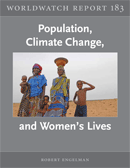
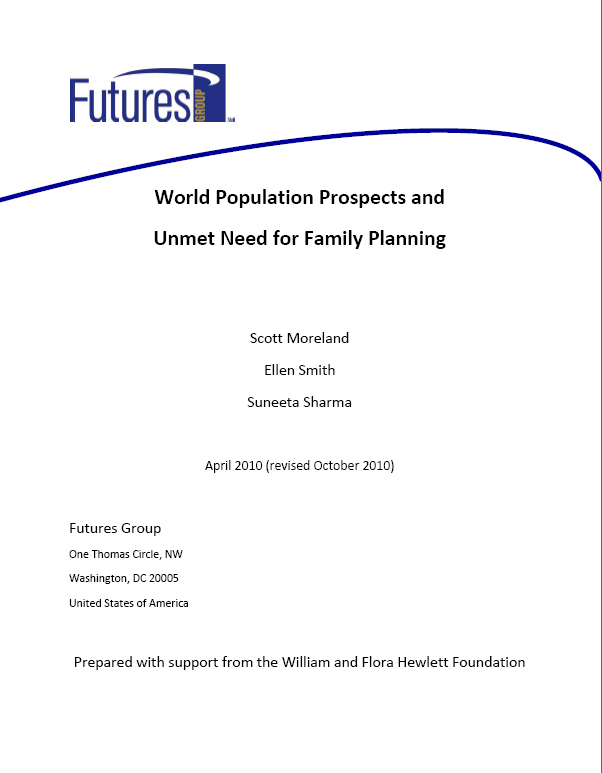
›A new Worldwatch Institute report, “Population, Climate Change, and Women’s Lives,” by Robert Engelman, discusses the relationship between women’s equality and climate change. Slowing population growth will reduce greenhouse gas emissions and help societies adapt to climate change, says Engelman. What’s more, this can only be done through an investment in women’s rights and education. Population change comes primarily through reducing unintended pregnancies by offering men and women access to family planning services, improving education for all (especially girls and women), and promoting full gender equality. “Population change should be viewed as one element of the historic effort to bring women into equal standing with men,” writes Engelman. A recent report by Scott Moreland, Ellen Smith, and Suneeta Sharma of the Futures Group analyzes just what the impact of meeting the unmet need for family planning would be on global population growth. Looking at 99 developing countries and the United States, the report, titled World Population Prospects and Unmet Need for Family Planning, found that by gradually meeting the global demand for family planning, population would be reduced to 6.3 billion people by 2050, below current world population and well below the UN medium fertility variant prediction, which is derived from past trends but does not take into account meeting unmet need for family planning. Meeting this need would only cost $3.7 billion more per year than the UN medium fertility variant scenario and less than the low scenario. $1.4 billion of this would cover the unmet demand in the United States.
 -
Watch: Annie Wallace on Connecting PHE Approaches With Climate and Poverty
›“It’s really important to link the integrated PHE approach with the policies and strategies of the country,” says Annie Wallace, who worked as a PHE technical advisor with USAID’s Global Health Fellows Program in Ethiopia. “Because if you don’t have political buy-in from the decision-makers and the leaders, then it’s going to be really difficult to justify the allocation of different funds for these projects to be expanded to other regions, or expanded in scale, or even to expand outside of the country.”
With Ethiopia in particular, Wallace stressed the importance of PHE practitioners connecting their integrated approach with how it will help address the country’s poverty alleviation and climate change adaptation strategies. “The prime minister is a leader in Africa talking about climate change,” Wallace said, “and we really need to talk about how an integrated approach can help with adaptation and reducing a community’s vulnerability to climate change.”
On the funders’ side, Wallace noted that as monitoring and evaluation becomes more important, donors also need to be able to support building capacity in organizations in order to meet the new requirements. During her work with The David and Lucile Packard Foundation (via USAID), Wallace helped set up the PHE Ethiopia Consortium to facilitate such capacity-building efforts. -
Minister Izabella Teixeira at the Wilson Center
A Review of Brazil’s Environmental Policies and Challenges Ahead
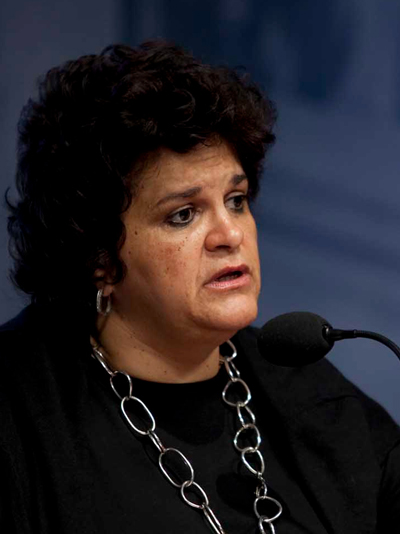
›Stressing the need for concrete, tangible institutional policies, Izabella Teixeira, Brazil’s Minister of the Environment, discussed the challenges and goals of her ministry at the Wilson Center on October 20. Sustainable development, not just conservation, must be the focus, and that requires bringing lots of different players to the table, taking into account not only environmental but also social and economic agendas. To do this, she argued, one must take the rather ephemeral and hypothetical notions of environmental stewardship and put them into the realm of a practicable, institutionalized framework, built on a social pact that engages all sectors of society.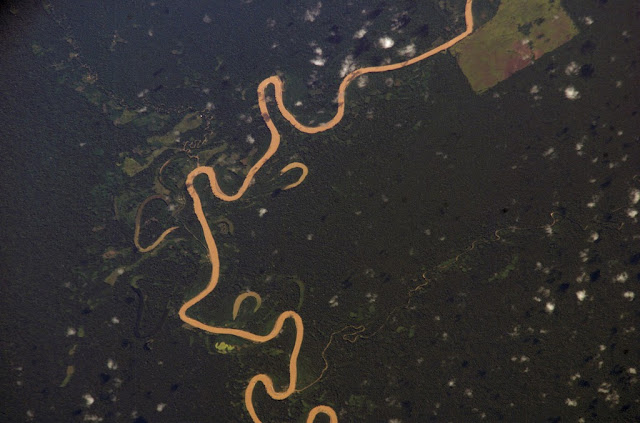 The foundation of sustainable development and environmental policy must be biodiversity, according to Teixeira. Central concerns, such as food and energy security and combating climate change, all rely on a diverse array of natural resources. These need to be conserved, but they must also be developed in a responsible, sustainable way. A legal international framework toward this end, covering access to biodiversity and genetic resources, has yet to be implemented. Developing and developed countries need to find a middle ground on allocating the benefits that accrue from the use of genetic resources found in areas such as the Amazon, and this agreement must then be linked into existing political institutions.
Teixeira noted the strides Brazil has made toward protecting its environment – including having set aside the equivalent of 70 percent of all protected areas in the world in 2009 and the establishment of the Amazon Fund. Nevertheless, Brazil must continue to protect and maintain these nature preserves, not just establish them. Creating a program that pragmatically implements international goals in a national context is an ongoing process, and countries like Brazil now need to focus on the “how” of implementing these goals, rather than just the “what.”
Teixeira also highlighted the complexity of formulating environmental policy that integrates all the various points of view that must be taken into consideration. At recent meetings to discuss transitioning to a low-carbon economy, 17 different cabinet ministers had to be present to coordinate government positions and policies. The complexity is due in part to the need to create alternatives, not just to prevent certain activities. For example, one must not only use legal enforcement to stop illicit deforestation, but also create paths to legal, sustainable logging. Once again, attempting to balance environmental, social, and economic concerns is difficult, to say the least, but crucial for long-term effectiveness.
Also a unique challenge for Brazil is the natural diversity that exists within such a large country. While much of the attention paid to the environment goes (rightly so) to the Amazon, there are many other biomes and local environments that must be taken into consideration, Teixeira observed.
The cerrado, Brazil’s enormous savanna, requires a different strategy than the Amazon, which is different than the coastal Atlantic forest. Furthermore, urban areas need their own environmental policies that can take into account issues of human development and population density.
To illustrate the need for an inclusive, well-thought-out policy, Teixeira discussed–rather frankly–the controversy surrounding the recent proposed amendments to the Forest Code. She argued that the proposal makes blanket changes that do not take into consideration differences in biomes, differences between large agribusinesses and family farms, and between historic, settled communities and recent developments. The implications of this proposal, according to the minister, could have enormous social costs. Teixeira said she believes that it would be virtually impossible to enforce the amended Forest Code if it was approved by Congress. She used this example to underscore her role in offering legislative alternatives that seek to provide a more nuanced, and ultimately more effective, institutional framework that can use Brazil’s many natural resources to help its population to the greatest extent possible.
J.C. Hodges is an intern with the Brazil Institute at the Wilson Center; Paulo Sotero is the director of the Brazil Institute.
Photo Credit: “Rio Jurua, Brazil (NASA, International Space Station Science, 05/29/07),” courtesy of flickr user NASA’s Marshall Space Flight Center, and David Hawxhurst/Wilson Center. -
The Role of Population Dynamics in Climate Adaptation
›December 21, 2010 // By Wilson Center StaffThis post is a synthesis of a panel discussion at the UNFPA Population Dynamics and Climate Change conference in Mexico City with Marcia Castro, of the Harvard School of Public Health; Heather D’Agnes, of USAID; and Lori Hunter, of the University of Colorado at Boulder.
It is well-known that environmental change — including climate change — has important impacts on human health. However, it is less well understood how health systems shape the responses of individuals and households to environmental change. Population dynamics — such as fertility, migration, and mortality and morbidity — influence community health and greatly affect community resilience in the face of environmental changes, including the capacity to adapt to climate change.
Mortality and Morbidity
Morbidity and mortality dramatically shape a household’s ability to adapt its livelihood strategies to a changing climate. For example, in areas of high HIV prevalence, such as sub-Saharan Africa, adult mortality seriously undermines livelihood options. In the face of such loss, the household’s reliance on local natural resources intensifies. If environmental change reduces the amount of available resources, the household has fewer options for energy and sustenance.
Morbidity also affects adaptive capacity, and morbidity itself can be shaped by environmental change. For example, environmental scarcity can increase poverty, which can lead to an increase in risky transactional sex, further fueling the HIV pandemic. Malnutrition resulting from drought and environmental shocks can suppress the immune systems of HIV-positive people, making them more vulnerable to illness and less able to adapt to other external changes.
Fertility and Family Planning
Healthier households are more resilient households, so increasing access to health services, including reproductive health services, is essential for building adaptive capacity. High fertility poses challenges to a family’s livelihood and has negative health effects on women and children. Providing reproductive health services is an effective way to improve the capacity of these vulnerable groups to adapt to climate change. For example, a recent study argues that lowering fertility rates in the Himalayan region could increase community resilience to the predicted fluctuations in water quantity.
However, there is a high level of unmet demand for contraception across the globe. How can community adaptation programs help meet this need? Importantly, research from the Philippines suggests that integrating population, health, and environment programs in a package approach to community development is more effective than single-sector interventions. Including family planning and reproductive health services in community-based climate adaptation programs could not only more effectively meet the community’s needs, but could also improve its adaptive capacity better than health or climate programs alone.
Migration
Another population process, migration, can both impact health and affect the capacity for adaptation. For example, internal migration in the Brazilian Amazon appears associated with the spread of malaria, which negatively impacts the adaptive capacity of households. To mitigate climate change’s health impacts, states should more effectively plan settlements and health systems, including health impact assessments for infrastructure and development projects. (Editor’s Note – northern Nigeria and Niger present another example of similar climate-related migratory patterns that significantly impact health and economic resilience.)
In summary, the scientific evidence is clear that population dynamics — such as mortality, fertility, and migration — and environmental trends are linked. Projects intended to improve a community’s ability to adapt to a changing climate should consider and address these linkages in their design and implementation.
Sources: Foundation for Environmental Conservation, UNFPA, USAID.
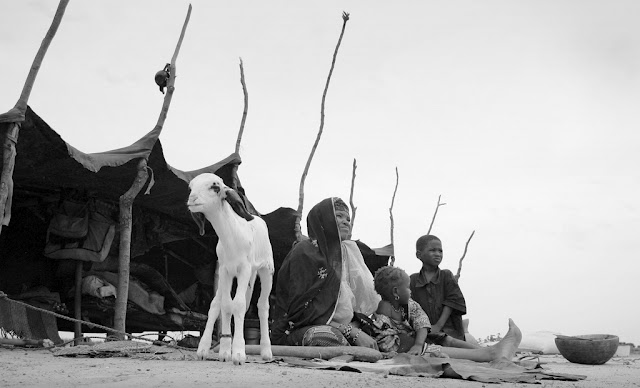
Photo Credit: “Toureg family in Niger,” courtesy of flickr user ILRI. -
Emily Gertz, Momentum Magazine
U of M’s ‘Momentum’ on Water Scarcity, Population, and Climate Change
›December 20, 2010 // By Wilson Center StaffExcerpted from the original article, “Water Tight,” by Emily Gertz in the University of Minnesota’s Momentum magazine.
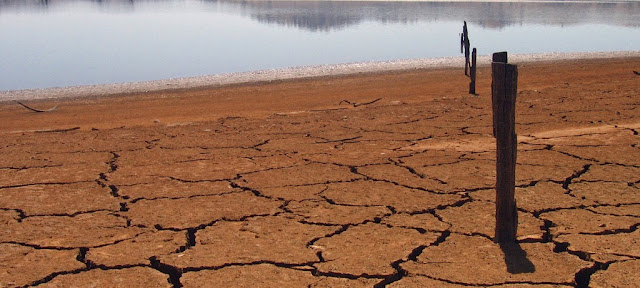
The next time you stop off at a pub for a quick bite, think about this: It took around 630 gallons of water to make your burger. Your pint of beer used around 20 gallons. Manufacturing your blue jeans and t-shirt drank up about 1,218 gallons of water: 505 and 713 gallons, respectively.
Total: nearly 1,900 gallons of water – and that’s without fries on the side.
These quantities are the “water footprint” of each product: the total amount of freshwater used in its manufacture, including producing the ingredients.
For many products, that footprint is Paul Bunyan–sized: With water seemingly cheap and plentiful, there has been little incentive to try to keep it small.
But today, that’s changing. Even though much of the water we use for growing food and making products is replenished by natural hydrological cycles, freshwater will be less reliable and available in the coming century. Population growth is increasing both demand for water and pollution of potable supplies. At the same time, climate change is disrupting historical precipitation patterns, shrinking freshwater sources such as glaciers and snowpack, and creating unprecedented droughts and floods.
According to an analysis published in Nature in September 2010, the freshwater supplies of most of the world’s population are at high risk.
“If you look at the global distribution of people and the global distribution of threat levels to human water security, the places with the highly threatened water security represent about 80 percent of the world population, over four billion people,” says study co-author Peter McIntyre, assistant professor at the University of Wisconsin’s Center for Limnology.
In the United States, a 2010 analysis by the consulting firm Tetra Tech for the Natural Resources Defense Council found that more than 1,100 counties – fully two-thirds of all counties in the lower 48 states – will contend with higher water risk by 2050 due to climate change alone. Fourteen states can expect extremely serious problems with freshwater supply, including Florida, Mississippi, New Mexico, and California.
It’s not surprising, then, that businesses are increasingly considering their corporate water footprint. They encounter water risk – and opportunities to reduce it – at many stages of their operations, from growing crops to running retail stores. Factoring such risks into their present and future planning is helping companies present themselves as good environmental stewards to the public, and potentially reduce risks to their earnings from water scarcity.
“It’s often said that water is going to be the oil of the 21st century, in the sense of becoming an ever-more scarce commodity,” McIntyre says. “In the grand scheme of things, you can live without oil, but you can’t live without water. Water is fundamental for all life. And that’s certainly true for business as well.”
Continue reading on Momentum.
Sources: Natural Resources Defense Council, Nature.
Photo Credit: Adapted from “Lake Hume at 4%,” courtesy of flickr user suburbanbloke. -
Rebuilding Stronger, Safer, Environmentally Sustainable Communities After Disasters
The GRRT Toolkit for Humanitarian Aid
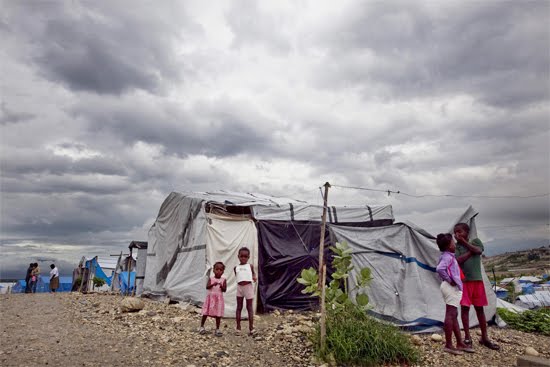
›Natural disasters present an immediate humanitarian crisis but are also an opportunity to rebuild societies to be more resilient and environmentally sustainable than they were before. The “Green Recovery and Reconstruction Training Toolkit” (GRRT), created by World Wildlife Fund (WWF) and the American Red Cross and launched at the Wilson Center on November 19, will help future humanitarian efforts integrate principles of environmental conservation into their disaster recovery strategies. This strategic partnership has been “an incredible effort and marriage between organizations that have different operating styles, different approaches to situations,” said WWF Chief Operating Officer Marcia Marsh. While implementing the GRRT may not be easy, “we need integrated solutions for integrated problems,” said Erika Clesceri, bureau environmental officer at USAID.
A Critical Partnership
In the midst of a crisis, humanitarian workers on the ground often do not have the time, skills, or funding to incorporate environmental concerns into relief efforts, said Robert Laprade, senior director for emergencies and humanitarian assistance at CARE. Humanitarian workers are “going a hundred miles an hour, they’re going on adrenaline and they’re there to save people’s lives – and the environment is just of secondary importance,” he said.
But “environmental sustainability is critical to the achievement of long-lasting recovery results,” said Roger Lowe, senior vice president of communications at American Red Cross. The Red Cross Principles of Conduct state that “relief aid must strive to reduce future vulnerabilities to disaster as well as meeting basic needs” and “avoid long-term beneficiary dependence upon external aid,” he said.
From Damnation, Purgatory, and Armageddon to Redemption
For many crisis-stricken regions, lack of an emphasis on environmental sustainability during disaster recovery efforts can mean “damnation in the present, purgatory in the near future, and Armageddon in the long term,” said Peter Walker, director of the Feinstein International Center at Tufts University. Stress on the environment caused by climate change or unsustainable resource consumption can often contribute to conflict, he explained.
In Darfur, “the environmental change was part and parcel of what led to that conflict,” Walker said. At one time an “environmental Eden” of diverse ecological zones, Darfur gradually became an environment that could not support a society of livestock herding. As the environment changed, some former herders became salaried, armed gunmen, known as the Janjaweed who felt they faced “a choice of no choice,” Walker said, to either “die as pastoralists or become pariahs as mercenaries.”
The challenge for humanitarian aid organizations is to not only help communities recover from disasters, but help them adapt to future environmental stress caused by globalization, climate change, or other factors. “If you cannot adapt,” Walker said, “that’s going to lead to violence.” To avoid aid dependency or resurgence in conflict it is critical to integrate environmental sustainability into disaster relief efforts from the beginning, he said:We used to believe that our world in the aid business was divided between relief on the left and long-term development on the right, and one would gradually go into the other in this relief-development continuum. But the reality is that you have a significant population – a population of millions of people – who are effectively trapped in a form of aid purgatory. They’re basically on a drip feed. Humanitarian assistance does not get you forward, it keeps you alive.
The GRRT offers organizations guidelines for implementing integrated disaster relief to provide a sustainable solution. While every crisis is different, the GRRT’s guidelines should be as applicable to “flooding in Boston as they are to flooding in Aceh,” said Walker.
Implementing Integrated Solutions
Securing funding for this integrated approach will be a challenge, as a significant portion will go towards staffing and training people on the ground, said Clesceri. A stand-alone, dedicated budget for environmental issues within humanitarian assistance programs must “be fought and re-fought for on a continual basis,” she said.
Local partnerships are essential. “Replicate” should be “stricken from the lexicon,” said Marsh. “You can’t replicate, and this toolkit isn’t meant to be a one-size-fits-all.” Instead, she said, the goal of the GRRT is to “create very practical approaches with communities.”
The key to helping communities recover from disasters is to form the kinds of strategic partnerships demonstrated by WWF and the American Red Cross in the creation of the GRRT. “Interdisciplinary groups are always, in my mind, going to get you a better solution in the end, but the risk is that they take more time…but it’s absolutely worth it,” she said.
Photo Credit: “Dark Clouds from Haiti’s Hurricane Tomas Loom over Camps,” courtesy of flickr user United Nations Photo. -
An Integrated Climate Dialogue
COP-16 Cancun Coverage Wrap-up
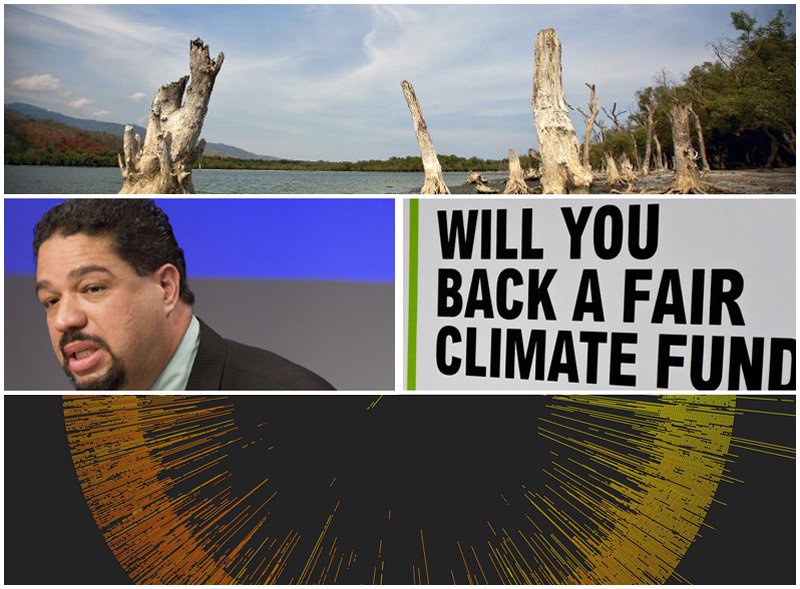
›December 13, 2010 // By Schuyler NullAfter focused last-minute negotiations, the UNFCCC COP-16 parties meeting in Mexico finally reached an agreement on a package being called “The Cancun Agreements” on Saturday. One of the most important impacts of the agreement (also referred to as the “balanced package”) is the establishment of a green climate fund which will help developing countries adapt to and mitigate the effects of climate change.
For more on the green fund as well as the integration of gender, population, development, and even a little bit of security in the broader climate dialogue, see The New Security Beat’s coverage of Cancun below.- Interview with Karen Hardee: Climate-Proofing Development
- Pop Audio: From Cancun: Roger-Mark De Souza on Women and Integrated Climate Adaptation Strategies
- Guest Contributor Alex Stark: From Cancun: Getting a Climate Green Fund
- The Number Left Out: Bringing Population Into the Climate Conversation
Kicking off our coverage was an email interview with Karen Hardee, visiting fellow with the Population Reference Bureau, on “climate-proofing” development. Hardee gives a brief overview of the UN National Adaptation Programmes of Action system and the current state climate adaptation integration in international development. She points out that one of the enduring positives from COP-15 was a renewed focus on financing tools that has permeated to the top levels of the UN.
Hardee also touched on the nascent but largely unfulfilled connection between population growth and resilience, noting that “of the first 41 programs submitted to the UNFCCC…37 noted that population growth exacerbated the effects of climate change, but only six explicitly stated that meeting an unmet demand for RH/FP should be a key priority for their adaptation strategy and only two proposed projects that included RH/FP.”
Next, Population Action International’s Roger-Mark De Souza was kind of enough to speak with us briefly over the phone from the conference itself, providing a run-down on a PAI-sponsored side event focusing on empowering women in climate debates.
“When you look at the negative impacts of climate change, the impacts on the poor and the vulnerable – particularly women – increase, so investing in programs that put women at the center is critical,” De Souza said.
Leaving gender issues, like child and maternal health and education, out of deliberations like those COP-16 are missed opportunities to get more “power for your peso,” he said.
Alex Stark, formerly of CNAS and now with the Adopt a Negotiator program in Cancun, provided an update and a strong argument for one of the most critical elements of the “balanced package” that many are hoping will come out of Cancun – the establishment of an international fund to help pay for adaptation and mitigation programs in developing countries.
Stark provides an insight into some of the chatter on the floor at COP-16 and also outlines the moral, development, and security advantages to supporting a green fund, pointing out that “by managing displacement, migration, and violent conflict driven by the effects of climate change, such as water scarcity, climate change adaptation can help bolster international security and stability.”
“Within the UN process itself,” she writes, “a robust, well-run, equitable green fund would help rebuild the trust lost between developed and developing countries at Copenhagen last year.”
Lastly, Bob Engelman, of the Worldwatch Institute, provides a broad argument for more inclusion of a key variable in climate debates – population (and not in the Ted Turner mold). He enumerates the common pitfalls of population debates, from sensitivities about personal choices to squeamishness about sexuality and reproductive health, and just plain gender bias.
But despite these barriers, says Engelman, population – and not just growth but demographics too – matters in the climate debate and therefore needs to be part of the conversation (an argument he makes more comprehensively in a new report, Population, Climate Change, and Women’s Lives). Echoing De Souza, he concludes by pointing out that although the discussion may be difficult, the solution is relatively simple: “On population, the most effective way to slow growth is to support women’s aspirations.”
“As societies, we have the ability to end the ongoing growth of human numbers – soon, and based on human rights and women’s intentions,” Engelman said. “This makes it easy to speak of women, population, and climate change in a single breath.”
Sources: Population Action International, Slate, UN Framework Convention on Climate Change, The Washington Post, Worldwatch Institute.
Photo Credit: Adapted from “Trees Dead on Shore of Timor-Leste Lake,” courtesy of flickr user United Nations Photo; Roger-Mark De Souza, courtesy of David Hawxhurst/Wilson Center; “Will you back a climate fund?,” courtesy of flickr user Oxfam International; and “Met Office Climate Data – Month by Month (September),” courtesy of flickr user blprnt_van.