

-
Teaching Demographic Security: Jennifer Sciubba on Explaining Population’s Conflict Links to Undergrads
›October 7, 2009 // By Wilson Center StaffFor students, looking at national security through the lens of demography can be challenging and frustrating, says Jennifer Dabbs Sciubba, a Mellon Environmental Fellow and professor at Rhodes College. “You really have to start at the beginning and explain the fundamentals of, ‘What is population in the first place?’” she told ECSP Director Geoff Dabelko of her undergraduate courses on population-environment and population-security connections.
However, Sciubba says her students seem equally interested in the courses’ demographic themes, including migration, youth, the demographic dividend, ageing, and urbanization. To her surprise, one of the most popular topics was population age structure.
Military audiences are quicker to understand the connections between population, peace, and conflict, says Sciubba. “You can assume a level of knowledge about demography that the undergraduates have not had,” she explains. -
VIDEO: Nicholas Kristof On Comprehensive Approaches to Family Planning
›October 2, 2009 // By Wilson Center Staff“Poor countries can’t begin to deal with food issues, with economic pressures, with conflict and shortages of water and grassland that may lead to social conflict, unless they begin to deal with population problems,” journalist Nicholas Kristof tells ECSP Director Geoff Dabelko in a video interview.
But “the single most effective contraceptive isn’t any kind of device,” Kristof says, “it’s girl’s education. And that has the most extraordinary impact on birthrates.” Unfortunately, this approach to family planning has “been neglected in the last 20 years.”
Empowering women and girls may be our best strategy for fighting poverty, claim Kristof and WuDunn in their new book, Half the Sky: Turning Oppression into Opportunity for Women Worldwide, which was launched at the Wilson Center.
Half the Sky tells the transformational stories of women and girls who are the “face of statistics” on four appalling realities: maternal mortality, sexual violence, and lack of education and economic opportunities. -
Missives From Marrakech: Enter the Environment
›October 2, 2009 // By Gib Clarke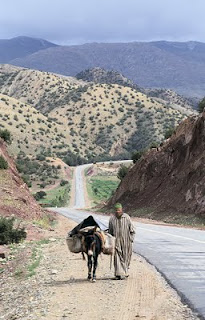
“Contraception is the cheapest way to combat climate change,” read the headline of The Telegraph in mid-September, announcing the release of “Fewer Emitters, Lower Emissions, Less Cost,”a study from the Optimum Population Trust (OPT) and the London School of Economics (LSE). Similar stories appeared in newspapers around the world.
Though there has been near-universal agreement that the OPT-LSE paper oversimplifies the link between demography and climate change, the buzz among the family planning and environment communities has continued during the IUSSP conference in Marrakech. Perhaps this is because demographers are not used to appearing in the press except when discussing census results. More likely it is the timing of the report, with the Copenhagen conference on climate change coming in December.The buzz hit a peak on Thursday at the IUSSP, with a plenary presentation examining the links. Wolfgang Lutz jumped right in, noting that it’s not as simple as the OPT-LSE study makes it. Population growth is important, but size is not the only thing that matters; other aspects such as age distribution, household structures, and levels of urbanization come into play as well.
In addition, between population size and climate change lie a number of intermediary factors, such as consumption levels, technology improvements, and greenhouse gas (GHG) emissions. Lutz argued that demography has a unique contribution to make to the climate discussion, for no other discipline understands the composition of different populations in different places both now and in the future. Therefore, demographers should explain how different groups will contribute to climate change, and how they will suffer the consequences, so that adaptive capacities can be strengthened and social programs can fill the gaps.
Leiwen Jiang described research conducted by some of the giants in climate and demography: National Center for Atmospheric Research, International Institute for Applied Systems Analysis, and Population Action International. Their work uses a “PET” model – Population, Environment, and Technology – which looks at how the PET elements impact four critical predictors of GHG emissions: consumption, energy use, labor, and savings. A forthcoming paper by this group will delineate the complete findings, including the potential for GHG “savings” brought by decreases in fertility and thus reduced population growth, as well as the added GHG due to future urbanization.
Susana Adamo took a step back to show the audience the view from 30,000 feet – literally, with maps demonstrating that population density is highest in areas most vulnerable to impacts of climate change, such as sea-level rises, droughts, floods, and other severe weather events.
Unfortunately, one of the stars of this research, Brian O’Neill, was unable to attend, due to health reasons. His research, to be published soon, is highly anticipated, and should add additional quantitative fuel to the fire.
Not Just Climate
Environmental links with population and demographic factors have also factored in other parts of this “demography” conference. A host of sessions, many organized by the Population-Environment Research Network, have explored linkages between population growth, migration, and urbanization on the demographic side; and deforestation, natural resource management, and environmental degradation on the environmental side. Questions concerning these and other environmental factors have surfaced at panels exclusively dedicated to other topics such as family planning. Some sessions examined how population and environment concerns can be jointly addressed.
It is encouraging to see demographers and reproductive health specialists taking climate and environmental factors so seriously. The response from the environmental community has been mixed, with some interest in population issues, but also some opposition from the climate community to including discussions of family planning in an already controversial topic. At a similarly large gathering of environmentalists and conservationists, the 2008 IUCN conference in Barcelona, only two sessions addressed health or population. So we have a long way to go progress to unite these communities of researchers and practitioners, and come together in a truly fruitful engagement.
Photo courtesy World Bank Photo Collection. -
Missives From Marrakech: 50 Years of Counting. And Counting.
›September 29, 2009 // By Gib Clarke Demographers often get a bad rap for being boring. There’s a saying that demography is all about sex—but the details aren’t as much fun. To find out, I’m in Marrakech, Morocco, reporting on the biennial gathering of number crunchers, the 26th conference of the International Union for the Scientific Study of Population (IUSSP). After the first day, I have only 4 days, 86 panels, 327 presentations, 5,340 PowerPoint slides, and 426 poster presentations left to go.
To most of you, this may not seem exciting. But it is terrifically important. For example, at a panel on maternal health, the presenters offered easier, more accurate, and less expensive ways to collect maternal mortality data, which led to a discussion of strategies for meeting MDG 5 and for improving maternal and infant health throughout the world. Similar panels addressed the challenges facing scientists and programmers working on issues as disparate as water, migration, and the effect of armed conflict on children.
For its 50th Anniversary, IUSSP also indulged in a bit of navel-gazing. Wolfgang Lutz called for more research on predictions and more policy recommendations—what he dubbed the “Demographers’ Transition” (an inside joke, to be sure). Ndola Prata’s “Opportunity Model” (developed jointly with Malcolm Potts and Martha Campbell), argues that use of contraceptives may increase simply if they are more available. Borrowing from marketing theory and such examples as remote controls and Post-It notes, the model generated quite an uproar. A UNFPA-hosted plenary on “After Cairo” closed the day with a strategic discussion about future population, family planning, reproductive health, and development strategies.
A Visit to the Hospital
At the Ibn Zohr Hospital’s crisis center in Marrakech, victims of sexual, physical, and psychological violence are treated and counseled free of charge. Though only founded in 2006, the clinic has defied expectations by helping hundreds of women and children each year, thanks in large part to an effective referral network comprising NGOs, media (especially radio), the police, hospitals, and health professionals. “Listening centers,” local outposts offering basic education on health and rights, are responsible for 56 percent of all referrals.
Ibn Zohr’s services are funded by the Moroccan government and UNFPA. Data has been collected since service delivery began, and shows that the overwhelming type of abuse suffered by women is physical (86 percent), while children under 15 report a mix of sexual (40 percent) and physical (43 percent) abuse, with more sexual abuse occurring among boys than girls.
Other IUSSP site visits included a rural reproductive health clinic, a center for abandoned children, and a house for female students. Too often, site visits are far away from the conference and before or after the main events, costing attendees extra time and money. Instead, the IUSSP site visits are here in Marrakech, where even the most experienced practitioners can learn more about Morocco’s unique blend of modernization and religious and cultural conservatism. These trips are truly unique and invaluable learning opportunities—organizers of similar conferences take note.
Gib Clarke reported from Marrakech, Morocco.
Photo courtesy flickr user DavidDennisPhotos. -
Columbia University’s Marc Levy on Mapping Population and Geographic Data
›September 24, 2009 // By Brian KleinAn interactive tool from Columbia University, the Gridded Population of the World (GPW) database, makes it easy to combine population and geographic data, explains Marc Levy, director of CIESIN at Columbia, in an interview with ECSP Director Geoff Dabelko.
“If you want to ask questions about how people are located with respect to drought hazards, for example, you can take your map of the location of droughts, overlay it with our map of population, and then you can get a sense of how many people are located in these drought zones,” Levy says. The user can do the same thing with infectious disease risk, vulnerability to sea-level rise, and other indicators.
GPW’s data is available to the public as:- A gallery of maps created by CIESIN;
- Raw data that can be downloaded in GIS format;
- An open web-mapping service that can be linked to Google Earth;
- TerraViva!, a program for user-generated maps.
-
Weekly Reading
›Climate change is “the biggest global health threat of the 21st century,” says the final report of a year-long commission held by The Lancet and University College London. A Lancet editorial, “Sexual and reproductive health and climate change,” says that rapid population growth “increases the scale of vulnerability to the consequences of climate change” and that meeting the unmet need for contraception “could slow high rates of population growth, thereby reducing demographic pressure on the environment.”
Following the escalation of hostilities in Gaza, the UN Environment Programme’s environmental assessment found that Gaza’s underground water supplies are “in danger of collapse as a result of years of over-use and contamination that have been exacerbated by the recent conflict.” IRIN reports that climate change has led to lower rainfall and “slowed the recharge rate of the aquifer” under Gaza, while “rapid population growth and suburban sprawl” have left “little space for rainwater catchment.”
In “Arctic Climate Feedbacks: Global Implications,” the World Wildlife Fund says that “warming in the Arctic will likely have far-reaching impacts throughout the world, resulting in a sharp increase in harmful greenhouse gases and significant shifts in global weather patterns that could disrupt the lives and livelihoods of hundreds of millions of people.”
The Obama Administration’s Interagency Ocean Policy Task Force Interim Report—now open for a 30-day review and comment period—“proposes a new National Policy that recognizes that America’s stewardship of the ocean, our coasts, and the Great Lakes is intrinsically and intimately linked to environmental sustainability, human health and well-being, national prosperity, adaptation to climate and other environmental change, social justice, foreign policy, and national and homeland security.”
The Economics of Climate Adaptation Working Group estimates that climate risks “could cost nations up to 19 percent of their GDP by 2030, with developing countries most vulnerable,” and warns that the “historic pace of population and GDP growth could put ever more people and value at risk.” However, the group also contends that “between 40 and 68 percent of the loss expected to 2030 in the case locations – under severe climate change scenarios – could be averted through adaptation measures whose economic benefits outweigh their costs.” -
Combating Climate Change with Condoms
›September 17, 2009 // By Meaghan ParkerMountains of reports and studies have proposed expensive technological responses to climate change. But the scientists and policymakers working to protect the planet may have overlooked one of the easiest, cheapest ways to reduce carbon emissions: contraception.
A recent study commissioned by the Optimum Population Trust estimates contraception would be almost five times cheaper than conventional green technologies. “Each $7 spent on basic family planning would reduce CO2 emissions by more than one ton,” researchers conclude, while low-carbon technologies would add an extra $25 per ton.
Slowing population growth could not only cut emissions, but also help poor families in vulnerable areas adapt to the impacts of climate change, such as land degradation, drought, and loss of food security. However, while governments of the poorest countries often cite population growth as a factor in environmental catastrophes, few address family planning as part of their adaptation strategies, IPS reports from a recent NGO forum in Berlin.
Enabling women to plan their families is not only climate-friendly, it’s also right. Currently, more than 100 million women worldwide want—and can’t get—modern methods of family planning. Better reproductive health care is “an end in itself,” with climate mitigation being the “side effect,” rather than the primary goal, Barbara Crossette writes in The Nation.
While many policymakers shy away from getting population in their environment, Secretary of State Hillary Clinton recently said, “It’s rather odd to talk about climate change and what we must do to stop and prevent the ill effects without talking about population and family planning.” At the Berlin forum, UNDP Administrator Helen Clark linked the goals of education, equality, and environmental sustainability in a “virtuous cycle.”
As the world’s largest per-capita emitter, the United States has a special obligation to examine its growth and consumption patterns. While the lives of Bangladesh’s 140 million people are acutely threatened by climate change, each new U.S. child and its descendants will be responsible for 160 times the carbon emissions of a Bangladeshi infant according to Oregon State University researchers writing in Global Environmental Change.
Unfortunately, condoms are unlikely to become heroes at Copenhagen. Some populous developing countries like India object to bringing population into the climate change debate without more focus on reducing consumption in developed countries. The Washington Post called the connection “unpopular,” and compared its odds to another “long shot”: geoengineering. Anti-contraceptive groups, development “silos,” sexism, and old-fashioned squeamishness are also formidable barriers to an open and nuanced discussion of how family planning can contribute to mitigation and adaptation.
Too bad, because as Suzanne Petroni writes in the latest issue of the Environmental Change and Security Program Report, “A careful discussion of the ways in which voluntary family planning can further individual rights, community development, and, to some extent, climate change mitigation, could increase awareness not only of the outsized contribution of developed nations to global emissions, but also of their appropriate role in the global community.”
A shorter version of this post will appear in the October issue of Centerpoint.
Photo courtesy Flickr user OsakaSteve. -
The Creek Runs Black in West Virginia – and Dry in Mexico City
›September 14, 2009 // By Meaghan ParkerTwo articles in the Sunday New York Times revealed that some residents of Mexico City and Charleston, West Virginia, share a common bond: lack of clean water. While drought and leaks have drained Mexico City’s reservoirs, pollution and run-off from coal plants has befouled water supplies in West Virginia’s small towns. But in both cases, the less powerful are the ones stuck up the creek without a paddle.
Showing posts from category population.
 Demographers often get a bad rap for being boring. There’s a saying that demography is all about sex—but the details aren’t as much fun. To find out, I’m in Marrakech, Morocco, reporting on the biennial gathering of number crunchers, the
  Mountains of reports and studies have proposed expensive technological responses to climate change. But the scientists and policymakers working to protect the planet may have overlooked one of the easiest, cheapest ways to reduce carbon emissions: contraception.


