-
Backdraft #8: Simon Nicholson on Climate Engineering
› When the Paris Agreement set an ambitious goal of limiting the global temperature rise to 1.5 degrees Celsius above pre-industrial levels, the negotiators put climate engineering on the table, says Simon Nicholson, professor at American University, in this week’s episode of Backdraft. Once the purview of science fiction, a majority of the models run by the Intergovernmental Panel on Climate Change (IPCC) required large-scale use of climate engineering technologies to keep additional warming below 2 degrees.
 -
Fire & Ice: Unlikely Cooperation Between Iceland and China
›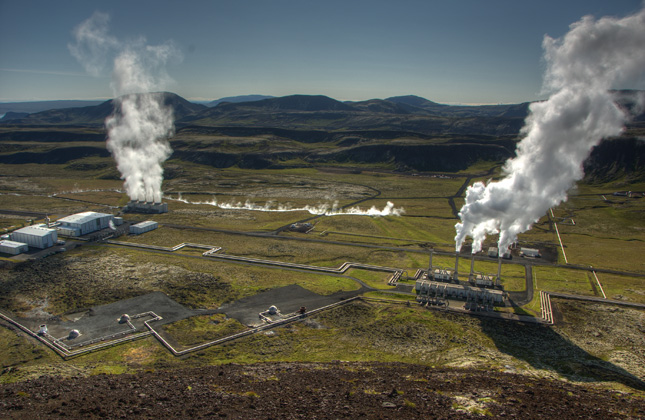
“All of Reykjavik might be able to fit in that apartment block,” remarks Einar Magnusson, the vice president of business development for Iceland-based Arctic Green Energy Corporation (AGEC), as he drives past miles and miles of Beijing’s residential skyscrapers. Following Jiang Zemin’s visit to Iceland in 2002 – the first-ever by a Chinese President – the two nations opened a new chapter in their partnership, which was originally founded upon shared strategic interests. China’s interest in cleaner energy sources has led to a fruitful area of cooperation with Iceland, where geothermal plants generate 66 percent of the country’s primary energy and provide nine in ten households with heat.
-
People not Polar Bears: National Security and the Changing Climate
›“If we really cared about the polar bears, we would have done something,” quipped retired U.S. Navy Rear Admiral David Titley, who gave an Environmental Research and Education Distinguished Lecture at the National Science Foundation on June 27, 2017. Titley framed climate change in terms of U.S. national security interests, focusing on infrastructure, the changing Arctic, and how environmental factors can exacerbate conflict.
-
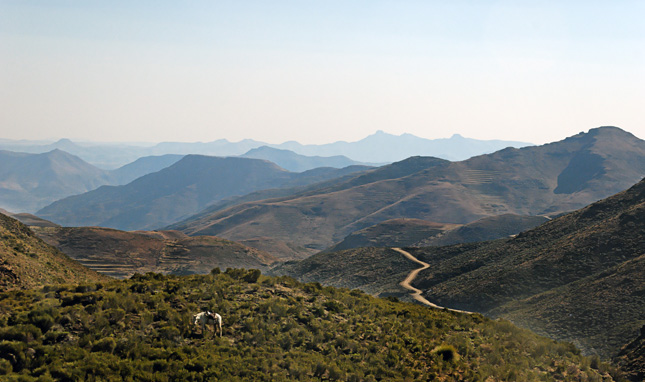
In Lesotho, Population Pressures Have Created a Perfect Storm of Human Insecurity
›Since declaring its independence in 1966, Lesotho has faced severe challenges to virtually every dimension of human security, writes Eugene Linden in a recent New York Times opinion article. In recent years, drought – coupled with widespread soil erosion and rapid population growth – has pushed a large portion of Lesotho’s two million people to the verge of starvation, which Linden calls “just one example of how fragile the future seems for Africa, large parts of which face the prospect of new famine and, in consequence, further catastrophic displacement within and among their growing populations.”
-
Patrick D. Nunn, The Conversation
Sidelining God: Why Secular Climate Projects in the Pacific Islands are Failing
›July 7, 2017 // By Wilson Center StaffUnless you are cocooned in a tourist bubble, it is hardly possible to miss God when you visit the Pacific Islands. In every village and on every main street there seems to be a church or temple, packed to bursting point on holy days. It is testament to the considerable influence of spirituality on the way people live in the Pacific.
-
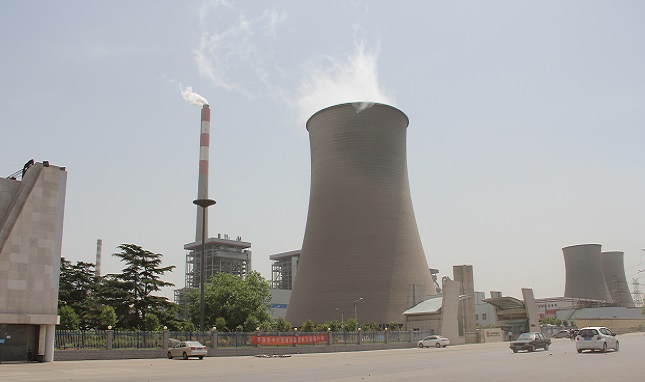
Thirsty Power: Measuring the Water Risk of China’s Coal Industry With Mingxuan Wang
›Coal — the reigning king of China’s energy sector — generates 74 percent of the country’s electricity and is the main source of the staggering air pollution blanketing Chinese cities. Prompted in large part by the air pollution problem, the Chinese leadership has begun to pivot away from coal by strengthening monitoring and enforcement to limit coal-fired power plant emissions, piloting CO2 emissions trading projects, accelerating expansion of renewables, and committing to CO2 reductions in the Paris climate agreement.
-
Top 5 Posts for June 2017
›Water, water everywhere but not a drop to drink: All five of the most popular posts last month focused on water scarcity.
The final two parts of our “Choke Point: Tamil Nadu” series, which explores the conflicting demands for water, food, and energy in the South Indian state, took the top spots. In June’s most popular post, Circle of Blue’s Keith Schneider reports on Tamil Nadu’s leadership in India’s transition to solar and wind energy, which use far less of the country’s scarce water resources than coal and nuclear power plants. Schneider also wrote “New Media Helps Galvanize Tamil Nadu to Fight a Toxic Legacy,” which describes an environmental activist’s fight against industrial water contamination.
-
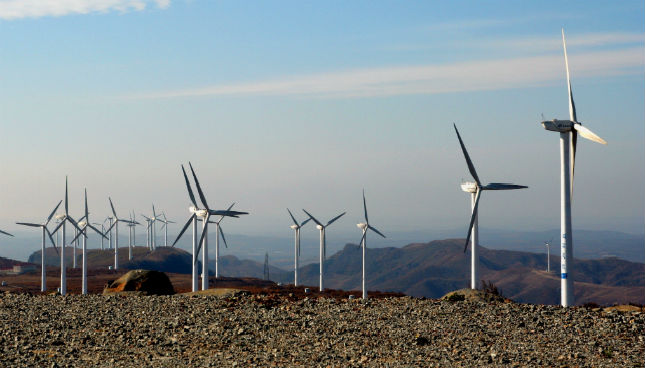
China’s Great Green Grid? Chris James on Capturing China’s “Wasted” Wind and Solar Power
›With a capacity of 3,300 MW, Sichuan’s Ertan Hydropower Plant—once China’s largest—promised to alleviate provincial energy shortages and spur economic growth when it began generating electricity in 2000. However, in what came to be known as the “Ertan Incident,” provincial officials halted all clean energy generation in Sichuan soon after the plant came online. The Sichuan power company was obligated by law to buy half of its power from coal-fired power plants, regardless of their inefficiency or environmental impacts. To keep the coal burning, the dam was forced to operate at a major financial loss.
Showing posts from category environment.
 When the Paris Agreement set an ambitious goal of limiting the global temperature rise to 1.5 degrees Celsius above pre-industrial levels, the negotiators put climate engineering on the table, says Simon Nicholson, professor at American University, in this week’s episode of Backdraft. Once the purview of science fiction, a majority of the models run by the Intergovernmental Panel on Climate Change (IPCC) required large-scale use of climate engineering technologies to keep additional warming below 2 degrees.