• woodrow wilson center
  • ecsp

New Security Beat

Subscribe:
  • rss
  • mail-to
  • Who We Are
  • Topics
    • Population
    • Environment
    • Security
    • Health
    • Development
  • Columns
    • China Environment Forum
    • Choke Point
    • Dot-Mom
    • Friday Podcasts
    • Navigating the Poles
    • Reading Radar
  • Multimedia
    • Water Stories (Podcast Series)
    • Backdraft (Podcast Series)
    • Tracking the Energy Titans (Interactive)
  • Films
    • Water, Conflict, and Peacebuilding (Animated Short)
    • Paving the Way (Ethiopia)
    • Broken Landscape (India)
    • Scaling the Mountain (Nepal)
    • Healthy People, Healthy Environment (Tanzania)
  • Publications
  • Events
  • Contact Us

NewSecurityBeat

The blog of the Wilson Center's Environmental Change and Security Program
Showing posts from category water.
  • China’s Risky Gamble on Coal Conversion

    ›
    China Environment Forum  //  Choke Point  //  January 9, 2020  //  By Richard Liu, Zhou Yang & Xinzhou Qian
    Header

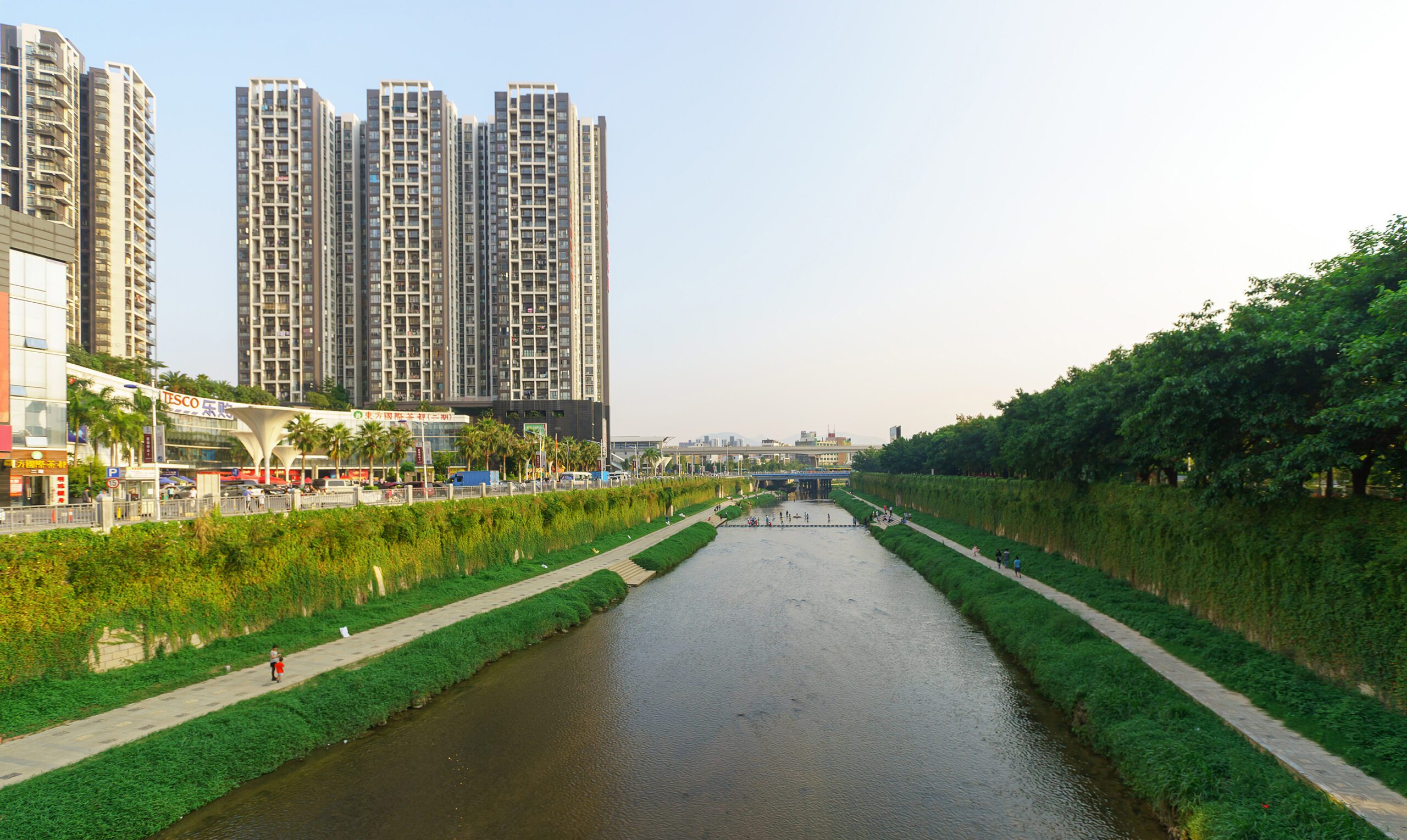
    At the September 2019 United Nations General Assembly (UNGA) Climate Summit, the U.S. delegation, under the shadow of intended withdrawal from Paris, did not volunteer a speaker. Attention instead focused on China. As the world’s largest carbon emitter, China was poised to assert leadership on the climate crisis.  However, perhaps lacking the sibling rivalry pressure that brought the U.S. and China together in 2014 on a joint climate agreement, State Councilor and Foreign Minister Wang Yi offered no new commitments: no carbon tax, no increased investment in renewables, and no announcement to set a more ambitious coal consumption cap.

    MORE
  • By, for, and of the People: How Citizen Science Enhances Water Security

    ›
    Water Security for a Resilient World  //  December 10, 2019  //  By Brigitte Hugh
    37358944522_d0cb505bc7_c

    This article is part of ECSP’s Water Security for a Resilient World series, a partnership with USAID’s Sustainable Water Partnership and Winrock International to share stories about global water security.

    In the Peruvian Andes, where cropland is irrigated and water availability is variable at best, knowledge of highland hydrology is crucial to survival. However, until recently, the locals did not have adequate information to be able to use their water efficiently. So the community worked with a nonprofit to develop a non-specialist/non-researcher run data-gathering project to monitor the water in the region to optimize its use: in short, they developed a citizen science project.

    MORE
  • Glass Half Full? Innovative Technologies Could Increase Global Water Security

    ›
    Water Security for a Resilient World  //  November 21, 2019  //  By Brigitte Hugh
    14613571770_80da34285d_c

    This article is part of ECSP’s Water Security for a Resilient World series, a partnership with USAID’s Sustainable Water Partnership and Winrock International to share stories about global water security.

    By 2050, the UN estimates that 52 percent of the world’s population will be at risk for water insecurity. Climate change is threatening water availability through increased temperatures and drought, unpredictable rain, and the growing threat of more pollution. Globally, most wastewater reenters the water cycle without being treated, introducing dangerous unseen particles including pharmaceuticals, diseases, and larger waste products such as plastics.

    MORE
  • Mohamed’s Story: The Climate Conflict Trap in the Lake Chad Basin

    ›
    Eye On  //  November 19, 2019  //  By Noah Gordon
    photo of comic

    Years ago, Mohamed’s family had enough to eat, despite being poor. His daughter owned a vegetable stall at a bustling market in northeastern Nigeria. The family had options: during the dry season, when Lake Chad was shallow, Mohamed could farm; and during the wet season, he could fish or graze his cattle.

    MORE
  • Gordon Mumbo on Water and Livelihoods in the Mara River Basin

    ›
    Friday Podcasts  //  Water Security for a Resilient World  //  Water Stories (Podcast Series)  //  November 15, 2019  //  By Benjamin Dills

    Gordon Mumbo imageThis article is part of ECSP’s Water Security for a Resilient World series, a partnership with USAID’s Sustainable Water Partnership and Winrock International to share stories about global water security.

    “If you live in the developed world or in some urban centers, then the supply of water is guaranteed,” said Gordon Mumbo, team leader for Sustainable Water for the Mara River Basin, a project of Winrock International and USAID’s Sustainable Water Partnership, in this week’s Water Stories podcast. When you wake up, you expect water to flow from your tap. “If you don’t find it flowing, you get upset and will probably call the utility company.” But people living in the Mara River Basin don’t have that luxury. “They have to walk to the river to get water and bring it home,” said Mumbo.

    MORE
  • Upcycling ‘Beach Snow’: Clearing Taiwan’s Oyster Farming Marine Debris

    ›
    China Environment Forum  //  Guest Contributor  //  October 31, 2019  //  By Grayson Shor
    HeaderImage

    “If you go to some Taiwan beaches, you can see snow,” said Chieh-Shen (Jason) Hu, Ocean Initiative Coordinator for Taiwan’s Society of Wilderness, a 6,000-member organization similar to Sierra Club. Hu was referring to pervasive Styrofoam marine debris from western Taiwan’s oldest industry, oyster aquaculture.

    MORE
  • Hydro-Nationalism: Future Water Woes Call for Radical New Borders

    ›
    Guest Contributor  //  October 23, 2019  //  By Zachary Q. McCarty & Elizabeth L. Chalecki
    38583503040_28872f748c_c

    International political boundaries are arbitrary creations. Today’s borders are better described as imaginary lines on maps, rather than hard barriers between states. Often using mountains, rivers, or other geographical landmarks, modern borders are entrenched in historic tradition rather than logic and fact. As a result, today’s international borders are poorly equipped to handle modern challenges, in particular climate change, which has already begun to threaten the most important state resource, fresh water.

    MORE
  • Hidden Forces: The Role of Water in Economic Prosperity

    ›
    From the Wilson Center  //  Water Security for a Resilient World  //  October 22, 2019  //  By Brigitte Hugh
    48822825343_0b7fcbfe4c_c

    This article is part of ECSP’s Water Security for a Resilient World series, a partnership with USAID’s Sustainable Water Partnership and Winrock International to share stories about global water security.

    “If you woke up one morning and found the taps in your house were dry, the first thing many of us here would do is pick up our phone and call the utility,” said Gordon Mumbo, Team Leader for Sustainable Water for the Mara River Basin, Winrock International. But for people living in the Mara River Basin, if their taps run dry, there is no utility to call, said Mumbo. Their only choice is to grab the water container and head down to the river where water quality may be poor. Mumbo spoke at the September 30th event, “Hidden Forces: The Role of Water in Economic Prosperity,” part of the “Water Security for a More Resilient World” series co-hosted by the Wilson Center, Winrock International, and the Sustainable Water Partnership.

    MORE
Newer Posts   Older Posts
View full site

Join the Conversation

  • RSS
  • subscribe
  • facebook
  • G+
  • twitter
  • iTunes
  • podomatic
  • youtube
Tweets by NewSecurityBeat

Trending Stories

  • unfccclogo1
  • Pop at COP: Population and Family Planning at the UN Climate Negotiations

Featured Media

Backdraft Podcast

play Backdraft
Podcasts

More »

What You're Saying

  • Volunteers,At,The,Lagos,Food,Bank,Initiative,Outreach,To,Ikotun, Pan-African Response to COVID-19: New Forms of Environmental Peacebuilding Emerge
    Rashida Salifu: Great piece 👍🏾 Africa as a continent has suffered this unfortunate pandemic.But it has also...
  • A desert road near Kuqa An Unholy Trinity: Xinjiang’s Unhealthy Relationship With Coal, Water, and the Quest for Development
    Ismail: It is more historically accurate to refer to Xinjiang as East Turkistan.
  • shutterstock_1779654803 Leverage COVID-19 Data Collection Networks for Environmental Peacebuilding
    Carsten Pran: Thanks for reading! It will be interesting to see how society adapts to droves of new information in...

What We’re Reading

  • Rising rates of food instability in Latin America threaten women and Venezuelan migrants
  • Treetop sensors help Indonesia eavesdrop on forests to cut logging
  • 'Seat at the table': Women's land rights seen as key to climate fight
  • A Surprise in Africa: Air Pollution Falls as Economies Rise
  • Himalayan glacier disaster highlights climate change risks
More »
  • woodrow
  • ecsp
  • RSS Feed
  • YouTube
  • Twitter
  • Facebook
  • Home
  • Who We Are
  • Publications
  • Events
  • Wilson Center
  • Contact Us
  • Print Friendly Page

© Copyright 2007-2021. Environmental Change and Security Program.

Woodrow Wilson International Center for Scholars. All rights reserved.

Developed by Vico Rock Media

Environmental Change and Security Program

Woodrow Wilson International Center for Scholars

Ronald Reagan Building and International Trade Center

  • One Woodrow Wilson Plaza
  • 1300 Pennsylvania Ave., NW
  • Washington, DC 20004-3027

T 202-691-4000