-
Deep Seabed Mining: Will It Rise to The Surface—and Where?
›
Norway recently announced that electric vehicles (EV) now outnumber gas-powered ones on its highways for the first time—and that these vehicles comprise 80 percent of its current new car sales. While internal combustion engines (ICE) will not disappear for several years, Norway’s sales of ICE-powered vehicles will end abruptly in 2025.
-
ECSP Weekly Watch | September 3 – 6
›
A window into what we’re reading at the Wilson Center’s Environmental Change and Security Program
Proliferation of Icebreakers in the Arctic (Foreign Policy)
As climate change-induced melting of ice sheets clears new pathways, the fast-melting Arctic now has a new strategic race: icebreakers. Russia covers over half of what is defined as “Arctic” territory, and it has the largest number of icebreakers in the region. Russia’s attempt to consolidate and expand has led the US and its NATO allies to redefine their own Arctic security strategy.
-
ECSP Weekly Watch | July 29 – August 2
›A window into what we are reading at the Wilson Center’s Environmental Change and Security Program
How One Loss and Damage Fund Bore Fruit (The Guardian)
The Loss and Damage Fund established during the UN COP27 was a monumental breakthrough in the climate finance realm and aimed to provide financial assistance to vulnerable nations impacted by climate change. Such damage can be catastrophic. When Cyclone Freddy hit Malawi in 2023, it killed 1,200 people and displaced 659,000 more. The estimated economic loss exceeded $1 billion, and it landed especially hard on farmers—including the women who make up more than 70% of Malawi’s agricultural workforce.
-
Earlier Assessments of Conflict Damage Can Spur Timely Relief
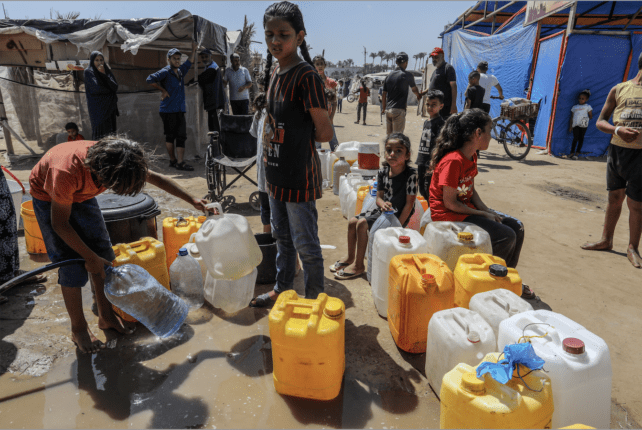
›The widespread destruction of infrastructure has been a calamitous and common feature across many of the recent wars in the Middle East and North Africa and Ukraine—and urban landscapes such as Aleppo, Raqqa, Kharkiv, Mariupol, and Gaza City have borne the brunt of attacks. Without clean drinking water, electricity, treated sewage, food supplies, and medical services, cities become uninhabitable, disrupting the infrastructure upon which populations depend for basic services, and often leading to their forcible displacement. Civilians are also at risk of malnutrition, starvation, and preventable diseases that spread from dirty water and raw sewage in urban centers.
-
Environmental Cooperation in the Middle East: A Conversation with Dr. Tareq Abu Hamed
›In today’s episode of New Security Broadcast, Wilson Center Global Fellow and environmental journalist Anneliese Palmer speaks with longtime leader in regional environmental diplomacy and Executive Director of the Arava Institute for Environmental Studies, Dr. Tareq Abu Hamed. In their conversation, Dr. Hamed unpacks the opportunities and challenges of climate and environmental diplomacy, environmental peacebuilding efforts in Gaza and the Middle East, as well as his role in Jumpstarting Hope, a project that works to provide essential services such as safe drinking water and sustainable electricity to communities in Gaza. -
Weaving Baskets of Change: Women Organizing in Kenya’s Fisheries and Aquaculture
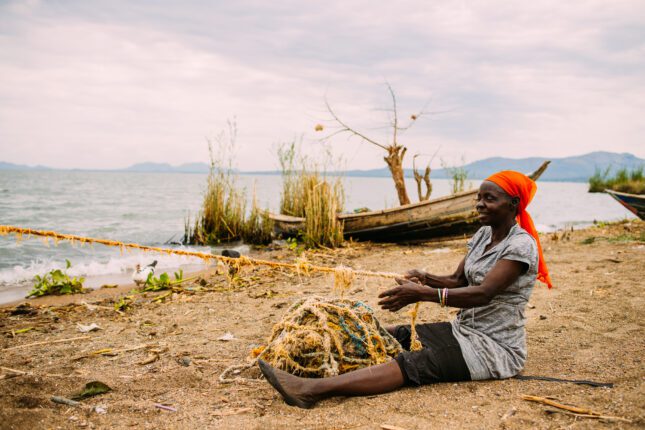
›Mildred is a fish trader in Kenya. I met her a few years ago, when I was conducting research. (“Mildred” is not her real name; I promised all my participants anonymity as I worked.) She mentors, trains, and educates young women on how to dry, gut, fry fish, and run successful fish businesses.
-
ECSP Weekly Watch | June 17 – 21
›A window into what we are reading at the Wilson Center’s Environmental Change and Security Program
Brazil Joins the Rare Earth Minerals Race to Curb Chinese Dominance (Reuters)
Brazil has the world’s third-largest reserves of rare earth minerals. Yet China dominates that market, accounting for 95% of global production. The mining giant is taking steps aims to break this supply chain dominance by creating a robust rare earth industry of its own. The country’s first rare earths mine, Serra Verde, began commercial production in 2024.
-
ECSP Weekly Watch | June 10 – 14
›A window into what we are reading at the Wilson Center’s Environmental Change and Security ProgramPublic Citizen, a consumer advocacy group, recently released a report outlining the plight of Latin American Indigenous communities battling against international mining corporations. The study details several examples of transgressions, including an episode from the early 2000s involving Bear Creek, a Canadian mining company awarded a license to explore Indigenous Aymara territories. Their activities sparked organized protests, road blockades, and even violent clashes with police that resulted in deaths and injuries—and forced Peru’s government to revoke Bear Creek’s license.
Showing posts from category natural resources.
 In today’s episode of New Security Broadcast, Wilson Center Global Fellow and environmental journalist Anneliese Palmer speaks with