-
Feminized Development in Latin America: Understanding the Confluence of Gender Equity and Cultural Tensions
›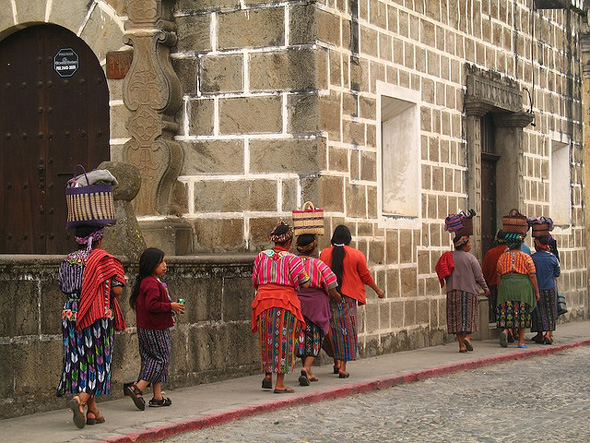
Poverty in Latin America has become increasingly “feminized,” said John Coonrod, executive vice president of The Hunger Project, at the Wilson Center on October 22. As a result, many governments and NGOs are starting to focus on the needs of women, especially indigenous women. [Video Below]
-
Linking Academia With Policy: Youth and Land Markets in Urban Development
›
“It’s always important when working in policy to consider what we can do beyond conception and look at more implementation,” said Valerie Stahl of New York University at the Wilson Center last month.
Stahl was one of three graduate students presenting their winning papers for an annual academic paper competition, “Reducing Urban Poverty,” co-sponsored by the Wilson Center, USAID, International Housing Coalition, Cities Alliance, and the World Bank. This year’s competition was the third in an effort to better link new academic work on urban issues to actual policymaking. [Video Below]
-
Social Interaction Key to Urban Resilience, Says Harvard’s Diane Davis
›November 7, 2012 // By Payal Chandiramani“Resilience is the capacity of individuals and institutions to cope and adapt in the stress of chronic violence in ways that allow them room for maneuver and hope for the future,” said Diane Davis, Harvard professor of urbanism and development, in an interview at the Wilson Center.
-
From Dirty Wells to Endocrine Disrupters: Covering Women, Water, and Health at SEJ 2012
›Access to safe water is often taken for granted in developed countries. But last week at the 22nd annual conference of the Society of Environmental Journalists, panelists argued that the impact of dirty water on women’s health is an important but neglected story, not only in developing countries like Nigeria, but also in the United States.
-
Urban Resilience: What Is It and How Can We Promote It?
›A new study on the intersection of violence and economic development in cities breaks new ground by examining how communities respond to and cope with extant violence, rather than focusing on the root causes of violence in a given area. Authors Diane Davis, Harvard professor of urbanism and development, and John Tirman, executive director of MIT’s Center for International Studies, spoke at length about the origins, methodology, and findings of the report, Urban Resilience in Situations of Chronic Conflict, at the Wilson Center on July 12. The report was supported by USAID’s Office of Conflict Management and Mitigation.
“We made the decision that we weren’t going to produce yet another research project or study on the root causes of violence, because there is a lot of incredibly good work on that [already],” said Davis. “We wanted to take a totally different angle…to try to think about taking a more pragmatic approach that builds on how everyday people, who live with violence, respond.”
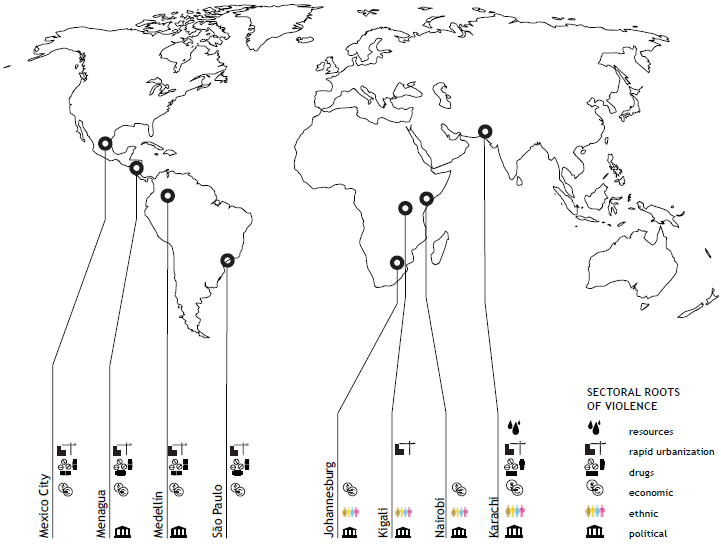
To do this, Davis and Tirman focused their research on seven cities around the world with histories of chronic violence, creating a case study for each and then comparing results. (An eighth city, Karachi, was jettisoned because it was deemed too unsafe for research.) The comparative process allowed Davis and Tirman to develop a basic theoretical framework for how different factors increase or decrease a community’s resilience to violence.
Defining Resilience
The term “resilience” lies at the heart of the new study. “The idea of ‘bouncing back,’ or returning to normalcy, is [generally] the measurement standard for looking at resilience,” Davis said.
However, she was quick to point out the problems with such a simplistic definition. “[In] cities of the developing world…things are in flux. So it’s really hard to know what a ‘bouncing back’ is if things are constantly changing.”“Also,” she added, “in many of the environments we were looking at, violence is a consequence of the way things were under normal conditions. So you don’t necessarily want to bounce back to those conditions that were producing the violence in the first place.”
Davis and Tirman sidestepped these problems by letting their research define successful resilience, rather than trying to fit their results to a prefabricated definition of the word. In doing so, they were able to identify several important commonalities in the cities and communities that displayed the most positive resilience to violence.
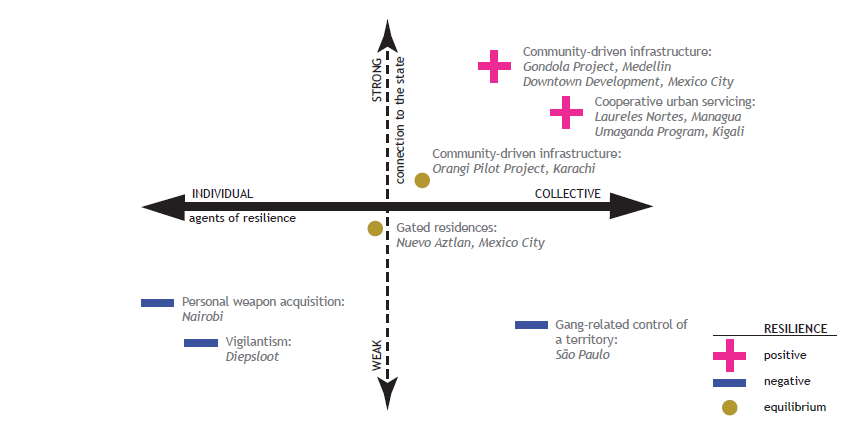
“Our findings suggest that resilience appears at the interface of civilian and state action,” Davis writes in the report. She underscored the significance of civilians as facilitators in both developing and implementing better security policies: “People who live in violence know more than academics or policymakers about what they can and can’t do to deal with the problem of violence,” she said.
Focus on Community
Davis and Tirman pointed out that the most successfully resilient cities they studied – Mexico City, Managua, and especially Medellín – seemed to have a number of civilian/state relationships defined “from below,” rather than the more problematic “top down” approach. This means that civilians and communities were participating on their own terms, collaborating with city planners and with law enforcement agencies to get their needs met rather than simply being what Davis called “yes men” to higher authorities.
Physical space – what Davis referred to as “the weight of the spatial” – also played a very significant role in Urban Resilience. She and Tirman made the conscious decision to incorporate physical planning and design into their research, eschewing the more typical sectoral approach to violence and security.
This methodological break from the existing literature was particularly useful in demonstrating that violence-plagued communities are often themselves the most important agents of resilience. “Citizens have to be able to make real decisions on their own,” Davis stressed in the Q&A; session that followed her and Tirman’s presentation. “[They] have to feel that ownership, that autonomy of the decisions in their neighborhood, even if they’re bad [decisions], because that’s what ties them to each other.”
“We think the starting point for generating resilience is really supporting and enabling communities to make dense horizontal relationships with others in their neighborhood, across sectors, that allow them to push back against perpetrators of violence.”
In other words, while the state can play a significant role in helping communities to mitigate violence, successful resilience ultimately requires the commitment and participation of the communities in question.
“The state might have a security program, it might have a planning program, but every decision has to be made with an understanding of what’s good for that particular neighborhood,” Davis said.
Places People Want to Protect
Davis was very succinct in offering recommendations based on the study. For policymakers and urban planners, she said resilience is formed by “a combination of good governance, security reform, and…inclusive urban planning.” Citing examples from Mexico City, Medellín, and elsewhere, Davis pointed to planning policies like mixed land use, greater pedestrian accessibility, and more parks and public spaces as ways that authorities could engender the kind of community pride so crucial to the development of positive urban resilience.
“[Focus on] generating vibrant public areas where people feel invested in protecting [them] and making them better,” she advised.
While many scholars have tended to look either at the state or local communities in isolation when considering violence and resilience, Davis argued that reducing violence was “a shared objective.” She thus stressed the importance of “co-production of security,” reiterating the overall notion that state and community actors need to work side-by-side in a form of what Davis and Tirman called “cooperative autonomy.”
In addition to Urban Resilience in Situations of Chronic Violence, Davis also authored the supplementary Toolkit for Urban Resilience in Situations of Chronic Violence. Both documents can be found on the MIT’s website. Davis and Tirman hope to add the seven individual case studies to the site soon.
Event Resources:Photo Credit: “Bogota at night,” courtesy of flickr user WanderingtheWorld (Christopher Schoenbohm); charts courtesy of Davis and Tirman. -
‘The Fence’ on U.S.-Mexico Border: Ineffective, Destructive, Absurd, Say Filmmakers
›April 5, 2011 // By Wilson Center StaffThe documentary The Fence, directed by Rory Kennedy, “shows a strong case against a single-minded approach to securing the border,” said Mexico Institute Program Associate Robert Donnelly at a Wilson Center screening on March 23. Part of the DC Environmental Film Festival, the screening was co-sponsored by the Environmental Change and Security Program and the Mexico Institute.
The film documents the $3 billion dollar construction of a 700-mile-long fence, which runs intermittently along the 2,000-mile-long U.S.-Mexico border. The barrier, a result of the Secure Fence Act of 2006, was intended to keep out terrorists, drug traffickers, and unauthorized border-crossers. Yet, according to the film, it is a solution in search of a problem. No terrorist has ever entered the country by illegally crossing the southern border; the 9-11 hijackers all had visas and arrived in the country by air, the film notes.
Physical barriers also have not reduced the rates of contraband drug smuggling into the United States, in spite of the claims of fence hawks, the film argues. And the numbers of undocumented immigrants in the United States actually rose over 1994-2009, the period covered in the film. At the same time, the construction and maintenance of physical barriers along the southern border have had adverse humanitarian, environmental, and fiscal consequences.
The film’s wry narration pokes fun at the “absurdity” of a fence that stops and starts at different places along the border. But this absurdist tone does not detract from one of the film’s more serious messages: that border fencing has coincided with an increase in migrant deaths from 1994 through 2009.
In a discussion following the screening, Geoff Dabelko, director of the Environment Change and Security Program, said that it is unlikely the fence will be torn down anytime soon given the money spent on its construction. Donnelly pointed out some adverse environmental effects of border fencing, such as the disruption of migration patterns for certain animal species. The film notes that the normal environmental review process for projects of its kind was waived by the Department of Homeland Security, which cited the importance of the border fence to national security.
The discussants acknowledged that the border fence is ill equipped to single-handedly stop the traffic in contraband or to significantly stem unauthorized migration. Instead, immigrant-sending and -receiving countries should work together to develop policy options that better address the root economic causes that prompt unauthorized migration.
Dana Deaton is an intern with the Mexico Institute at the Wilson Center. -
Environment, Development, and Growth
U.S.-Mexico Cooperation in Renewable Energies
›Mexico has vast untapped reserves in wind, solar, and geothermal and represents a natural power supplier for U.S. markets, especially those located along the country’s northern border. The renewables sector represents a growth industry in Mexico, where oil production has dropped off because of dwindling reserves and prohibitions exist on private investment in hydrocarbons. The Mexican government also appears to be charting a lower-carbon future for the country, setting ambitious renewable portfolio standards and reorienting the public policy focus toward alternative energy development – sometimes in partnership with the private sector, both foreign and domestic.Environment, Development, and Growth: U.S.-Mexico Cooperation in Renewable Energies – The Mexico Institute, Woodrow Wilson International Center for Scholars
For U.S.-Mexico relations, advances in renewables demonstrate the success of bi-national cooperation – a bright spot that security challenges threaten to overshadow. For example, technical studies by USAID have enabled the charting of wind patterns in southern Oaxaca state, holding the potential to benefit both countries, by enhancing rural electrification in Mexico and providing a new energy source for the North American grid.
This new report from the Wilson Center’s Mexico Institute, Environment, Development, and Growth: U.S.-Mexico Cooperation in Renewable Energies, provides a comprehensive overview of the Mexican sector, placing special emphasis on the business challenges facing enhanced investment along the U.S.-Mexico border. -
Environmental Security Along the U.S.-Mexico Border
›
In 2005, the U.S. Department of Homeland Security (DHS) began the construction of a massive earthen, concrete, and metal security barrier along much of the U.S.-Mexico border, from the Pacific Ocean to the Gulf of Mexico.
Framing it as an issue of national security, DHS used provisions in the Real ID Act to waive environmental laws and citizen review for the controversial infrastructure project.
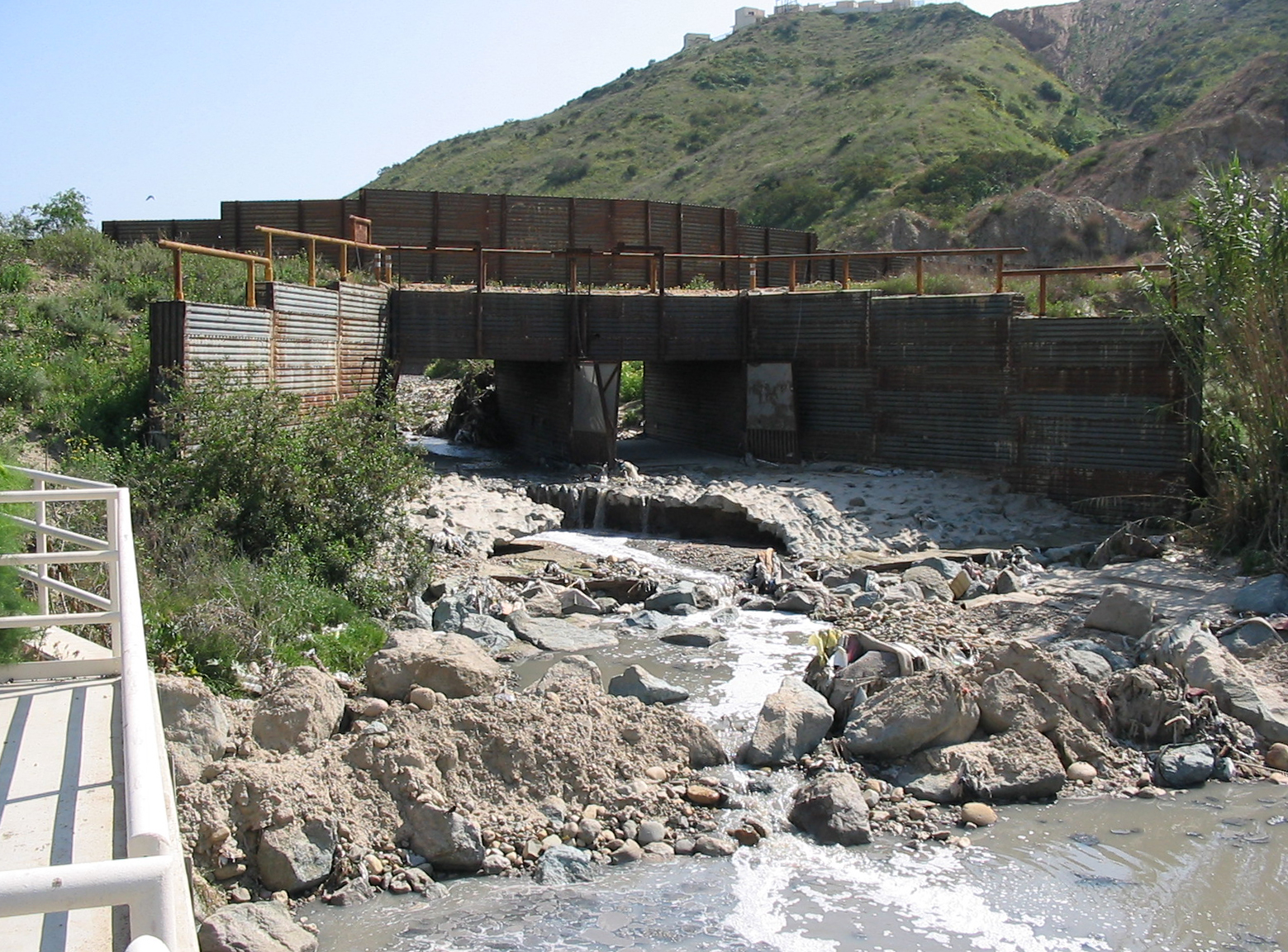
Unfortunately in Imperial Beach, California – my corner of the U.S.-Mexico border – the poorly engineered barrier has caused serious environmental mishaps and damage. In 2009 the Voice of San Diego reported that DHS circumvented numerous local and state laws in the course the barrier’s construction:Were it anyone else’s project, state regulators would’ve required irrigation to ensure that plants grew. But the federal government is responsible for the $59 million effort to complete and reinforce 3.5 miles of border fence separating San Diego and Tijuana. The Department of Homeland Security exempted itself from eight federal laws and any related state laws that would have regulated the project’s environmental impacts.
The Voice goes on to report that state water regulators also have no jurisdiction over the project since it has been exempted from the federal Clean Water Act.
“They did better engineering in 8th century China,” said Joe Sharkey of The New York Times, whom I took on a tour of the border, about the massive amphitheater of dirt that DHS dumped in Smuggler’s Gulch a few miles from the Pacific.
Ironically, while DHS has focused its efforts on the massive earthen and concrete wall, the agency has virtually ignored the tidal wave of polluted sewage water and garbage that flows across this section of the U.S.-Mexico border, a problem that makes the very people charged with safeguarding our security – border patrol agents and even Navy Seals – often unable to carry out their mission.
Over the past 20 years, border patrol agents have become ill from contact with the region’s polluted rivers, as well as the Pacific Ocean. In the Calexico-Mexicali region, border patrol agents worked directly with the Calexico New River Committee to clean up the New River – a drainage canal turned toxic hot spot.
Navy Seals based in Coronado, California, about 10 miles north of the U.S.-Mexico border, train in an area of the ocean that is directly impacted by polluted water flowing across the border from Mexico, bypassing the vaunted concrete and metal border barrier.
The organization I run, WiLDCOAST, is now working with U.S. agencies such as the International Boundary and Water Commission and the Environmental Protection Agency along with agencies in Mexico (e.g., CONANGUA and the state of Baja California) to reduce the threats to our military personnel and federal employees as well as border residents from cross-boundary pollution.
This cooperation has required a significant investment on the part of both the Mexican and U.S. governments in developing real solutions to our environmental security crisis on the border. Unfortunately the massive Berlin Wall-style barrier on our southern border is of little assistance in this effort.
Solving complex transboundary issues sometimes requires ignoring the cacophony of politics from distant capitals and instead working on the ground with colleagues from both nations who are experts in their shared geography. It appears the Obama administration is now slowly trying to repair some of the damage done to local communities, the cross-boundary relationship with Mexico, and our fragile shared environment.
But much more work and investment is needed to safeguard those we entrust to protect our security along the borderlands, as well as the residents of the region, from pollution that ignores international divisions and concrete walls. We must remember not only the national security component of our border-strengthening efforts but also the effect on human and environmental security as well.
Serge Dedina is the executive director of WiLDCOAST. He grew up and still lives on the U.S.-Mexico border in Imperial Beach, California. He is the author of Saving the Gray Whale and the forthcoming Wild Sea: Eco-Wars and Surf Stories From the Coast of the Californias.
Sources: Defenders of Wildlife, Environmental Protection Agency, University of Arizona, Voice of San Diego, WiLDCOAST.
Photo Credit: Serge Dedina.
Showing posts from category Mexico.