-
Beyond Carbon Credits: TIST Combines Reforestation, Health, and Livelihood Efforts
›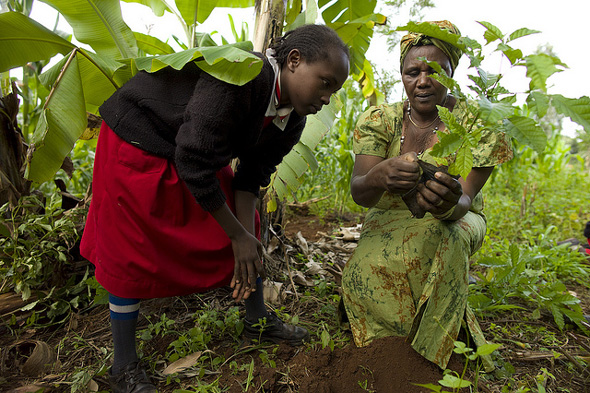
Carbon offsets have fallen in and out of favor since they were established with the Kyoto Protocol in 1997. Critics say they allow wealthy organizations to placate consumers and claim their products are “green” without making any real, lasting changes. But, if the scheme works properly, some action is supposed to be taken somewhere, so what is it like at one of these credit-producing organizations?
-
Edna Wangui on East Africa’s Changing Pastoralists
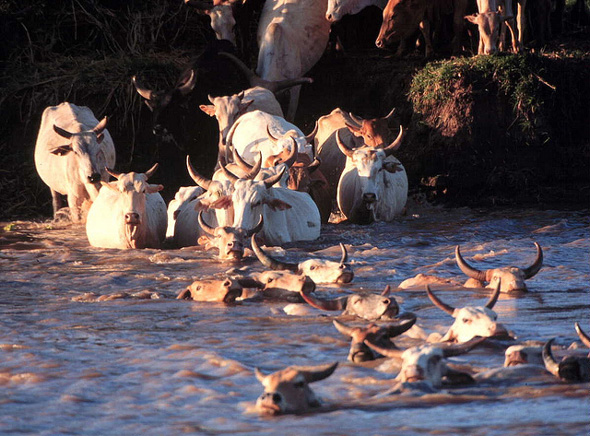
›November 20, 2012 // By Carolyn LamereThe fault line between nomadic pastoralists and sedentary agriculturalists in sub-Saharan Africa has emerged as one of the most dominant stories of climate-related conflict. But according to Edna Wangui, a professor at Ohio University who studies communities in Kenya and Tanzania, pastoralism is different from many people’s perceptions.
-
Making ‘Beyond Seven Billion’: Reporting on Population, Environment, and Security
›
“When I embarked on this series, I approached it as an environmental reporter: What does a growing number of us and growing consumption mean for our planet?” said Los Angeles Times reporter Ken Weiss at the Wilson Center on October 9. Weiss, along with photographer Rick Loomis, recently completed a five-part series and multimedia presentation on global population that was the culmination of a year of research and travel through more than six countries. [Video Below]
-
Social Interaction Key to Urban Resilience, Says Harvard’s Diane Davis
›November 7, 2012 // By Payal Chandiramani“Resilience is the capacity of individuals and institutions to cope and adapt in the stress of chronic violence in ways that allow them room for maneuver and hope for the future,” said Diane Davis, Harvard professor of urbanism and development, in an interview at the Wilson Center.
-
Water and Land Conflict in Kenya in the Wake of Climate Change
›Earlier this month, there was a flurry of stories about brutal mass killings in clashes between the Pokomo and Orma communities over water and land in southeast Kenya’s Tana River County. The Kenyan media reported that about 30 people, including eight security personnel, had been killed and scores wounded, and reports on the death toll since last month are more than 100.
-
Nile Basin at a Turning Point as Political Changes Roil Balance of Power and Competing Demands Proliferate
›September 4, 2012 // By Carolyn LamereIn 1979, Egyptian President Anwar Sadat famously said that “the only matter that could take Egypt to war again is water.” Sadat’s message was clear: the Nile is a matter of national security for Egypt.
Indeed, Egypt relies on the Nile for 95 percent of its water. But it is not the only state with an interest in the world’s longest river. There are 11 states in the Nile River basin, which stretches from Africa’s Great Lakes region – Tanzania, Uganda, Kenya, Rwanda, Burundi, and the Democratic Republic of the Congo – to the Ethiopian and Eritrean highlands through South Sudan, Sudan, and Egypt to the Mediterranean Sea.
-
Changing Cities: Climate, Youth, and Land Markets in Urban Areas
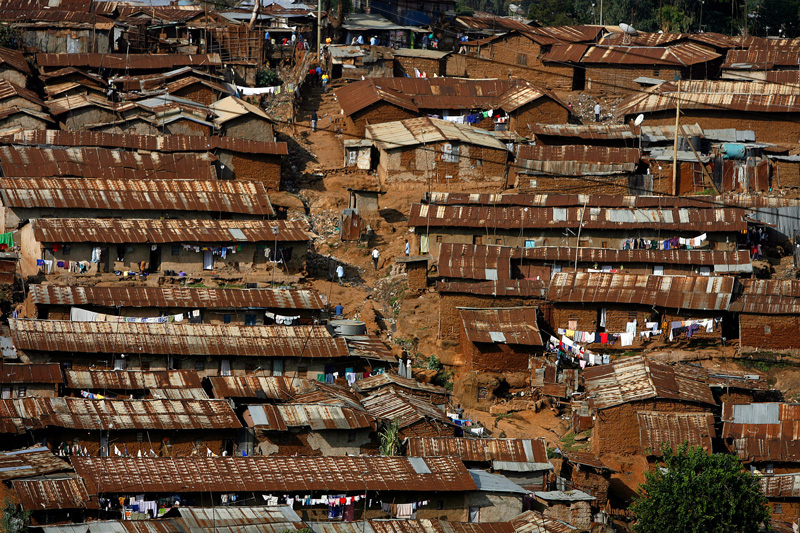
›The number of urban slum dwellers worldwide is staggering. According to UN-Habitat, 827.6 million people live in slums around the world. Despite meeting a Millennium Development Goal to significantly improve the lives of at least 100 million slum dwellers by 2020, the total number of people living in these areas still increased by 55 million between 2000 and 2010. By 2020, the world slum population is projected to reach 889 million. With the majority of people now living in cities, urban priorities are synonymous with human security and environmental sustainability and must be accounted for in the global development agenda.
-
Michael Kugelman, Sustainable Security
The Global Land Rush: Catalyst for Resource-Driven Conflict?
›July 31, 2012 // By Wilson Center StaffThe original version of this article, by Michael Kugelman, appeared on SustainableSecurity.org.
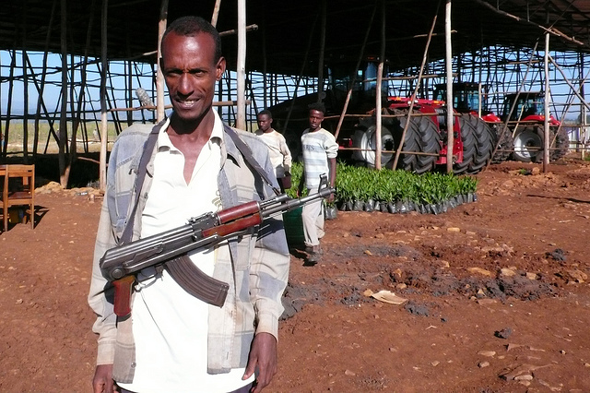
On May 11, the UN approved new international rules to govern how land is acquired abroad. These Voluntary Guidelines (VGs), the outcome of several years of protracted negotiations, are a response to growing global concern that nations and private investors are seizing large swaths of overseas agricultural land owned or used by small farmers and local communities for food, medicinal, or livelihood purposes. FAO head Jose Graziano da Silva describes the VGs as “a starting point that will help improve the often dire situation of the hungry and poor.”
It’s hard to quibble with the intent of the guidelines. They call for, among other things, protecting the land rights of local communities; promoting gender equality in land title acquisition; and offering legal assistance during land disputes.
Unfortunately, however, any utility deriving from the VGs will be strictly normative. As their name states explicitly, they are purely optional. A toothless set of non-obligatory rules will prove no match for a strategy that is striking both for its scale and for the tremendous power of its executioners.
Oxfam estimates that nearly 230 million hectares of land (an area equivalent to the size of Western Europe) have been sold or leased since 2001 (with most of these transactions occurring since 2008). According to GRAIN, a global land rights NGO, more than two million hectares were subjected to transactions during the first four months of 2012 alone. One of the largest proposed deals – an attempt by South Korea’s Daewoo corporation to acquire 1.3 million hectares of farmland in Madagascar – failed back in 2009. Still, even larger investments are being planned today, including a Brazilian effort to acquire a whopping six million hectares of land in Mozambique to produce corn and soy (Mozambique offered a concession last year).
Continue reading on SustainableSecurity.org.
Sources: BBC, Food and Agriculture Organization, GRAIN, MercoPress, Oxfam, Reuters.
Photo Credit: “Garde armé,” courtesy of flickr user Planète à vendre.
Showing posts from category Kenya.