-
ECSP Weekly Watch | December 2 – 6
›
A window into what we’re reading at the Wilson Center’s Environmental Change and Security Program
Famine Prevention Systems Prove Insufficient (Reuters)
The Integrated Food Security Phase Classification (or IPC) is a global partnership that monitors hunger levels. It is widely recognized for its five-phase classification system of food insecurity that ranges from “minimal” (Phase 1) to “famine” (Phase 5). While the IPC’s aim is to inform humanitarian organizations at an early stage of a crisis to allow them streamline the flow of aid, the worsening global hunger levels experienced this year have pointed to shortcomings in existing prevention systems.
-
The New Arctic: Amid Record Heat, Ecosystems Morph and Wildlife Struggle
›
This article, by Sharon Guynup, originally appeared on Mongabay.
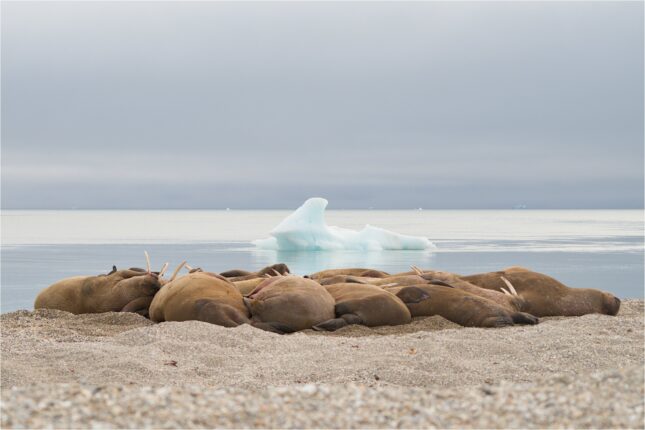
Walruses have traversed the Arctic for millennia, gregarious pinnipeds that rest en masse on drifting pack ice, diving to feed on crabs, clams and other seafloor delicacies. Icy platforms also serve as safe birthing and nursery grounds. But as the far north rapidly warms and sea ice disappears, some herds now huddle on overcrowded shorelines, with deadly consequences for young calves: Because more disturbances occur on shore than at sea, calves are regularly trampled during panicked stampedes by the 1-ton-plus adults.
-
Environmentalism for Sovereignty’s Sake
›Egypt’s Gebel Elba National Park is, by all accounts, a spectacular place. But it better be to justify the fuss it takes to visit. First you have to apply for a permit. If that’s approved (and almost none have been in recent years), you need to travel with an approved tour operator. Even then, you must be accompanied by police at all times.
-
A Land Like No Other: Afghanistan’s Post-Conflict Ecotourism Potential
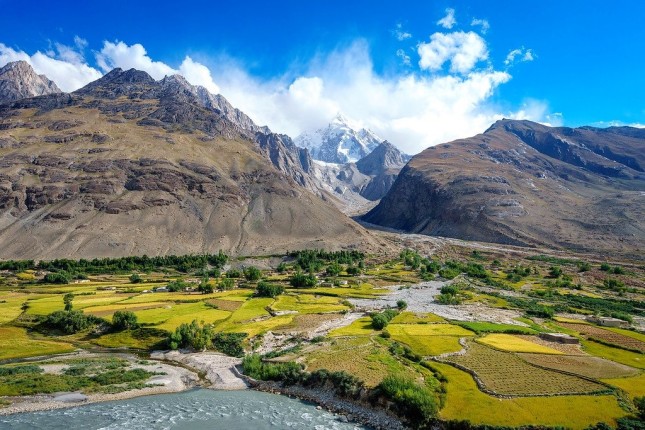
›Stunning cobalt-blue lakes with natural travertine dams in Band-e-Amir, the pristine, soaring Pamir Mountains, through which some of the world’s last snow leopards prowl—far from the simplistic, violent, and drab images preferred by the media, Afghanistan is a beautiful and multifaceted nation. Lonely Planet once described Afghanistan as a “vastly appealing country.” Having married into an Afghan family many years ago, I can attest that the culture is also extremely hospitable. Welcoming tourists to visit their beautiful nation is a logical extension of the Afghan culture.
-
How Biodiversity Conservation Promotes Economic Growth in Latin America
›What happens to economic output if we expand protected areas to 30 percent of land and sea worldwide? Anthony Waldron, the lead author of a new study about the economic benefits of land conservation, posed this question at a recent Wilson Center virtual event on the role of Latin America in global biodiversity conservation.
-
Evaluating Enterprise: Twenty Years of Conservation Through Sustainable Livelihoods
›“It’s not often that we have the opportunity to go back to a site 20 years later and see what happened,” said Cynthia Gill, Director of USAID’s Office of Forestry and Biodiversity during a recent Wilson Center event on a retrospective evaluation of the “conservation enterprise” approach to biodiversity. Conservation enterprises are income-generating activities that provide social and economic benefits and help meet conservation goals.
-
Religion and Climate Diplomacy in Small Island Developing States
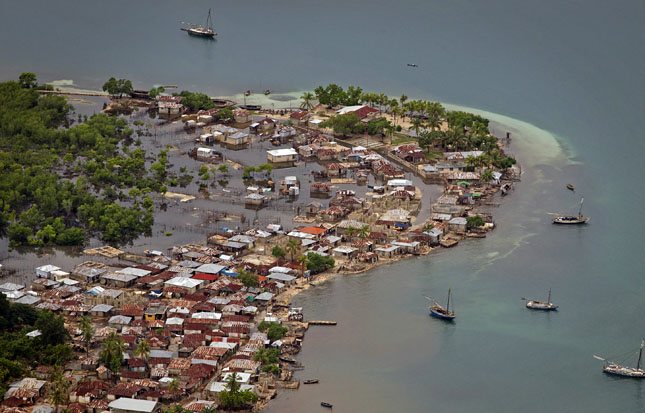
›Island states contribute only .03 percent to global emissions, but “nineteen major Caribbean cities are in the bullseye of the climate threat” and Pacific island states such as Kiribati and Tuvalu face an existential threat from sea level rise, said Selwin Hart, Barbados’ ambassador to the Organization of American States and the United States. At the same time, Small Island Developing States (SIDS) in the Pacific and the Caribbean are leading efforts to combat climate change, said experts at the Wilson Center on July 10.
-
Necessity Is the Mother of Invention: Islands as the Vanguard of Climate Adaptation
›“Climate change is one of the greatest challenges of our time and it calls for a comprehensive and cooperative international approach like we’ve never seen,” said Jainey Bavishi, associate director for climate preparedness at the White House Council on Environmental Policy, at the Wilson Center on October 5. “The leadership of the island nations is essential; they punch well above their weight on this issue.”
Showing posts from category eco-tourism.